JavaScript is disabled in your browser. Please enable JavaScript to view this website.
AB211319

Recombinant human NME4 protein (His tag N-Terminus)

Recombinant human NME4 protein (His tag N-Terminus)

Be the first to review this product! Submit a review

|

(0 Publication)

Recombinant human NME4 protein (His tag N-Terminus) is a Human Full Length protein, in the 33 to 187 aa range, expressed in Escherichia coli, with >90%, suitable for SDS-PAGE, FuncS, Mass Spec.

別名を表示する

NM23D, NME4, NDPK-D, Nucleoside diphosphate kinase 4, nm23-H4, NDK4
1 Images
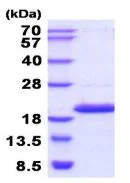
SDS-PAGE - Recombinant human NME4 protein (His tag N-Terminus) (AB211319)
  • SDS-PAGE

Supplier Data

SDS-PAGE - Recombinant human NME4 protein (His tag N-Terminus) (AB211319)

15% SDS-PAGE analysis of ab211319 (3μg).

Key facts

精製度

>90% SDS-PAGE

ab211319 was purified using conventional chromatography.

発現系

Escherichia coli

タグ

His tag N-Terminus

アプリケーション

FuncS, Mass Spec, SDS-PAGE

applications

生物活性

Yes

生物学的活性

Specific activity is > 120 units/mg, and is defined as the amount of enzyme that convert 1.0 umole each of ATP and TDP to ADP and TTP per minute at pH 7.5 at 25°C in a couple system with PK/LDH.

アクセッション番号

O00746

アニマルフリー

No

キャリアフリー

No

種

Human

バッファー組成

pH: 8 Constituents: 40% Glycerol (glycerin, glycerine), 1.17% Sodium chloride, 0.32% Tris HCl

storage-buffer

Reactivity data

{ "title": "Reactivity Data", "filters": { "stats": ["", "Reactivity", "Dilution Info", "Notes"] }, "values": { "SDS-PAGE": { "reactivity":"TESTED_AND_REACTS", "dilution-info":"", "notes":"<p></p>" }, "FuncS": { "reactivity":"TESTED_AND_REACTS", "dilution-info":"", "notes":"<p></p>" }, "Mass Spec": { "reactivity":"TESTED_AND_REACTS", "dilution-info":"", "notes":"<p></p>" } } }

配列情報

[{"linker":null,"sequence":"MGSSHHHHHHSSGLVPRGSHMPSWTRERTLVAVKPDGVQRRLVGDVIQRFERRGFTLVGMKMLQAPESVLAEHYQDLRRKPFYPALIRYMSSGPVVAMVWEGYNVVRASRAMIGHTDSAEAAPGTIRGDFSVHISRNVIHASDSVEGAQREIQLWFQSSELVSWADGGQHSSIHPA","proteinLength":"Full Length","predictedMolecularWeight":"19.6 kDa","actualMolecularWeight":null,"aminoAcidEnd":187,"aminoAcidStart":33,"nature":"Recombinant","expressionSystem":"Escherichia coli","accessionNumber":"O00746","tags":[{"tag":"His","terminus":"N-Terminus"}]}]

出荷温度及び保存条件

製品の状態
Liquid
出荷温度
Blue Ice
短期保存期間
1-2 weeks
短期保存温度
+4°C
長期保存温度
-20°C
分注に関する情報
Upon delivery aliquot
保管に関する情報
Avoid freeze / thaw cycle
True

補足情報

This supplementary information is collated from multiple sources and compiled automatically.

NME4 also known as nucleoside diphosphate kinase D is a mitochondrial protein with a mass of approximately 17 kDa. It is found in the inner mitochondrial membrane and is part of the NDP (nucleoside diphosphate) kinase family. This protein plays a role in transferring gamma-phosphates from nucleoside triphosphates to nucleoside diphosphates facilitating essential cellular energy transactions. NME4's catalytic activity helps maintain the balance and availability of nucleotides within the mitochondria.
Biological function summary

Nucleoside diphosphate kinase activity of NME4 contributes to energy homeostasis in cells. It assists in the generation of nucleoside triphosphates necessary for mitochondrial function and integrity. NME4 operates as part of multimeric complexes within the mitochondria ensuring efficient energy metabolism. Its role extends to contributing to cellular signaling pathways by providing the necessary energy substrates for a variety of cellular responses and activities.

Pathways

Researchers have found that NME4 is involved in the regulation of the mitochondrial apoptotic pathway. It interacts with other proteins involved in apoptosis such as Bcl-2 family members by influencing the mitochondrial outer membrane permeability. Additionally NME4 participates in pathways related to oxidative phosphorylation working alongside other proteins like ATP synthase to optimize energy production and utilization. These interactions underpin its versatility in sustaining cellular energy requirements and influencing cell survival.

Dysfunction in NME4 activity has been linked to mitochondrial diseases and cancer. In particular alterations in NME4 have implications in mitochondrial myopathy where energy production becomes compromised. Similarly cancer studies have shown changes in NME4 expression affect tumor growth and survival often in conjunction with proteins involved in metabolic regulation like p53. Understanding NME4's interactions and modifications can provide insights into its role in these diseases and potential therapeutic targets.

一般的な情報

機能

Mitochondria-specific nucleoside diphosphate kinase that catalyzes the transfer of a gamma-phosphoryl group from ATP to a nucleoside diphosphate via a ping-pong mechanism involving a phosphohistidine intermediate, participating in nucleoside triphosphate homeostasis (PubMed : 10799505, PubMed : 16313181, PubMed : 18635542, PubMed : 23150663). In vitro, purine nucleoside triphosphates are much more effective as donors and acceptors than pyrimidine nucleoside triphosphates, and ribonucleosides derivatives are superior to their deoxyribonucleosides counterparts (By similarity). Associates with cardiolipin-containing mitochondrial inner membrane and locally produces ADP in the mitochondrial intermembrane space, which is directly taken up via the ADP/ATP translocase (ANT) into the matrix to stimulate respiratory ATP regeneration (PubMed : 18635542, PubMed : 24970086). Also directly provides GTP for mitochondrial GTPases, such as the dynamin-related GTPase OPA1 (PubMed : 24970086). Additionally, catalyzes the anionic phospholipid transfer, namely cardiolipin, from the mitochondrial inner membrane (IM) to the outer membrane (OM) through the formation of contact sites between IM and OM, in a nucleoside diphosphate kinase-independent manner (PubMed : 17028143, PubMed : 23150663). The switch between the nucleoside diphosphate kinase and the phospholipid transfer activity may depend on the availability and accessibility of cardiolipin and other anionic phospholipids in the IM outer leaflet and OM inner leaflet (PubMed : 23150663).

配列の類似性

Belongs to the NDK family.

細胞内局在性

Mitochondrion intermembrane space

製品プロトコール

ターゲットの情報

Mitochondria-specific nucleoside diphosphate kinase that catalyzes the transfer of a gamma-phosphoryl group from ATP to a nucleoside diphosphate via a ping-pong mechanism involving a phosphohistidine intermediate, participating in nucleoside triphosphate homeostasis (PubMed : 10799505, PubMed : 16313181, PubMed : 18635542, PubMed : 23150663). In vitro, purine nucleoside triphosphates are much more effective as donors and acceptors than pyrimidine nucleoside triphosphates, and ribonucleosides derivatives are superior to their deoxyribonucleosides counterparts (By similarity). Associates with cardiolipin-containing mitochondrial inner membrane and locally produces ADP in the mitochondrial intermembrane space, which is directly taken up via the ADP/ATP translocase (ANT) into the matrix to stimulate respiratory ATP regeneration (PubMed : 18635542, PubMed : 24970086). Also directly provides GTP for mitochondrial GTPases, such as the dynamin-related GTPase OPA1 (PubMed : 24970086). Additionally, catalyzes the anionic phospholipid transfer, namely cardiolipin, from the mitochondrial inner membrane (IM) to the outer membrane (OM) through the formation of contact sites between IM and OM, in a nucleoside diphosphate kinase-independent manner (PubMed : 17028143, PubMed : 23150663). The switch between the nucleoside diphosphate kinase and the phospholipid transfer activity may depend on the availability and accessibility of cardiolipin and other anionic phospholipids in the IM outer leaflet and OM inner leaflet (PubMed : 23150663).
See full target information NME4

Abcam product promise

当社は、高品質な試薬を通じてお客様の研究を力強くサポートすることをお約束いたします。ご使用いただく各段階で、常にお客様をサポートできる体制を整えております。万が一、製品が期待通りに機能しない場合は、「Abcam Product Promise」による当社保証制度に基づき、安心してご利用いただけます。
保証に関する詳細については利用規約をご確認ください。

Please note: All products are 'FOR RESEARCH USE ONLY. NOT FOR USE IN DIAGNOSTIC OR THERAPEUTIC PROCEDURES'.

For licensing inquiries, please contact partnerships@abcam.com