JavaScript is disabled in your browser. Please enable JavaScript to view this website.
AB132303

Recombinant Human MD2 protein (GST tag N-Terminus)

Recombinant Human MD2 protein (GST tag N-Terminus)

Be the first to review this product! Submit a review

|

(0 Publication)

Recombinant Human MD2 protein (GST tag N-Terminus) is a Human Full Length protein, in the 19 to 160 aa range, expressed in Wheat germ, suitable for SDS-PAGE, ELISA, WB.

別名を表示する

ESOP1, MD2, LY96, Lymphocyte antigen 96, Ly-96, ESOP-1, Protein MD-2
1 Images
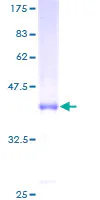
SDS-PAGE - Recombinant Human MD2 protein (GST tag N-Terminus) (AB132303)
  • SDS-PAGE

Unknown

SDS-PAGE - Recombinant Human MD2 protein (GST tag N-Terminus) (AB132303)

12.5% SDS-PAGE stained with Coomassie Blue showing ab132303.

Key facts

発現系

Wheat germ

タグ

GST tag N-Terminus

アプリケーション

ELISA, WB, SDS-PAGE

applications

生物活性

No

アクセッション番号

Q9Y6Y9

アニマルフリー

No

キャリアフリー

No

種

Human

バッファー組成

pH: 8 Constituents: 0.79% Tris HCl, 0.31% Glutathione

storage-buffer

Reactivity data

{ "title": "Reactivity Data", "filters": { "stats": ["", "Reactivity", "Dilution Info", "Notes"] }, "values": { "SDS-PAGE": { "reactivity":"TESTED_AND_REACTS", "dilution-info":"", "notes":"<p></p>" }, "ELISA": { "reactivity":"TESTED_AND_REACTS", "dilution-info":"", "notes":"<p></p>" }, "WB": { "reactivity":"TESTED_AND_REACTS", "dilution-info":"", "notes":"<p></p>" } } }

配列情報

[{"linker":null,"sequence":"QKQYWVCNSSDASISYTYCDKMQYPISINVNPCIELKGSKGLLHIFYIPRRDLKQLYFNLYITVNTMNLPKRKEVICRGSDDDYSFCRALKGETVNTTISFSFKGIKFSKGKYKCVVEAISGSPEEMLFCLEFVILHQPNSN","proteinLength":"Full Length","predictedMolecularWeight":"41.36 kDa","actualMolecularWeight":null,"aminoAcidEnd":160,"aminoAcidStart":19,"nature":"Recombinant","expressionSystem":"Wheat germ","accessionNumber":"Q9Y6Y9","tags":[{"tag":"GST","terminus":"N-Terminus"}]}]

出荷温度及び保存条件

製品の状態
Liquid
精製方法
Proprietary technique
出荷温度
Dry Ice
短期保存温度
-80°C
長期保存温度
-80°C
分注に関する情報
Upon delivery aliquot
保管に関する情報
Avoid freeze / thaw cycle
False

補足情報

This supplementary information is collated from multiple sources and compiled automatically.

MD2 also known as lymphocyte antigen 96 is a small glycoprotein with a mass of approximately 18 kDa. It is mainly found in myeloid cells including monocytes and macrophages where it plays an important role in immune response. MD2 serves as a co-receptor working closely with Toll-like receptor 4 (TLR4) to facilitate the recognition of bacterial lipopolysaccharides (LPS) the components of the outer membrane of Gram-negative bacteria. The interaction between MD2 and TLR4 is important for the initiation of downstream signaling that activates the immune system.
Biological function summary

MD2 acts as an integral part of the Toll-like receptor complex specifically the TLR4/MD2 complex. This complex recognizes pathogen-associated molecular patterns (PAMPs) found on microbes triggering the activation of innate immune responses. By binding to LPS MD2 undergoes a conformational change that enables TLR4 dimerization and subsequent recruitment of adapter proteins like MyD88 and TRIF. This recruitment leads to the activation of NF-kB and MAPK signaling pathways which promote the transcription of pro-inflammatory cytokines essential for an adequate immune response.

Pathways

MD2 and its associated TLR4 are central components of the innate immune signaling cascade. They contribute to the MyD88-dependent and TRIF-dependent pathways both pivotal to inflammation and immune defense. These pathways orchestrate a range of immune responses by mediating the production of cytokines and type I interferons respectively. MD2 also interacts with other proteins such as CD14 which increases the sensitivity of the TLR4/MD2 complex to LPS enhancing its ability to respond to bacterial invasion.

Alterations in MD2-mediated signaling are associated with sepsis and inflammatory diseases like rheumatoid arthritis. MD2/TLR4 interaction plays a pivotal role in the hyperinflammatory response observed during sepsis where excessive cytokine release can lead to tissue damage and organ failure. In rheumatoid arthritis MD2-related signaling contributes to chronic inflammation and joint destruction. Drugs targeting the MD2-TLR4 pathway are under investigation for managing these conditions revealing the critical role of MD2 in these disease mechanisms.

一般的な情報

機能

Binds bacterial lipopolysaccharide (LPS) (PubMed : 17569869, PubMed : 17803912). Cooperates with TLR4 in the innate immune response to bacterial lipopolysaccharide (LPS), and with TLR2 in the response to cell wall components from Gram-positive and Gram-negative bacteria (PubMed : 11160242, PubMed : 11593030). Enhances TLR4-dependent activation of NF-kappa-B (PubMed : 10359581). Cells expressing both LY96 and TLR4, but not TLR4 alone, respond to LPS (PubMed : 10359581).

翻訳後修飾

N-glycosylated; high-mannose.

製品プロトコール

ターゲットの情報

Binds bacterial lipopolysaccharide (LPS) (PubMed : 17569869, PubMed : 17803912). Cooperates with TLR4 in the innate immune response to bacterial lipopolysaccharide (LPS), and with TLR2 in the response to cell wall components from Gram-positive and Gram-negative bacteria (PubMed : 11160242, PubMed : 11593030). Enhances TLR4-dependent activation of NF-kappa-B (PubMed : 10359581). Cells expressing both LY96 and TLR4, but not TLR4 alone, respond to LPS (PubMed : 10359581).
See full target information LY96

Abcam product promise

当社は、高品質な試薬を通じてお客様の研究を力強くサポートすることをお約束いたします。ご使用いただく各段階で、常にお客様をサポートできる体制を整えております。万が一、製品が期待通りに機能しない場合は、「Abcam Product Promise」による当社保証制度に基づき、安心してご利用いただけます。
保証に関する詳細については利用規約をご確認ください。

Please note: All products are 'FOR RESEARCH USE ONLY. NOT FOR USE IN DIAGNOSTIC OR THERAPEUTIC PROCEDURES'.

For licensing inquiries, please contact partnerships@abcam.com