JavaScript is disabled in your browser. Please enable JavaScript to view this website.
AB131682

Recombinant Human MCL1 protein (His tag N-Terminus)

Recombinant Human MCL1 protein (His tag N-Terminus)

Be the first to review this product! Submit a review

|

(2 Publications)

Recombinant Human MCL1 protein (His tag N-Terminus) is a Human Fragment protein, in the 1 to 327 aa range, expressed in Escherichia coli, with >90%, suitable for SDS-PAGE, Mass Spec.

別名を表示する

BCL2L3, MCL1, Induced myeloid leukemia cell differentiation protein Mcl-1, Bcl-2-like protein 3, Bcl-2-related protein EAT/mcl1, mcl1/EAT, Bcl2-L-3

1 Images
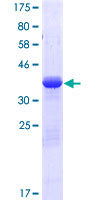
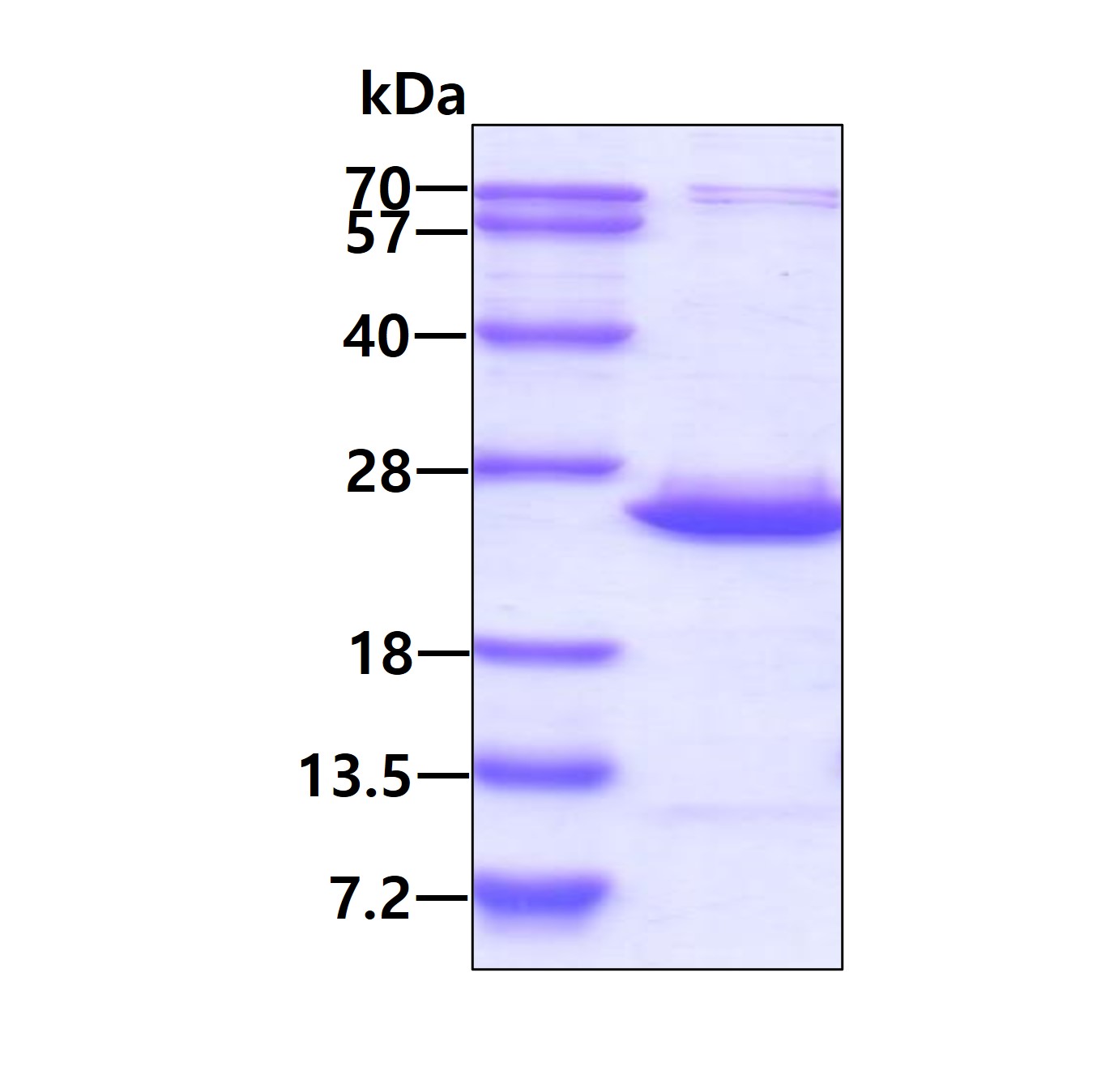
SDS-PAGE - Recombinant Human MCL1 protein (His tag N-Terminus) (AB131682)
  • SDS-PAGE

Supplier Data

SDS-PAGE - Recombinant Human MCL1 protein (His tag N-Terminus) (AB131682)

Key facts

精製度

>90% SDS-PAGE

ab131682 was purified using conventional chromatography techniques.

発現系

Escherichia coli

タグ

His tag N-Terminus

アプリケーション

SDS-PAGE, Mass Spec

applications

生物活性

No

アクセッション番号

Q07820

アニマルフリー

No

キャリアフリー

No

種

Human

バッファー組成

pH: 8 Constituents: 20% Glycerol (glycerin, glycerine), 1.17% Sodium chloride, 0.32% Tris HCl, 0.03% (R*,R*)-1,4-Dimercaptobutan-2,3-diol

storage-buffer

Reactivity data

{ "title": "Reactivity Data", "filters": { "stats": ["", "Reactivity", "Dilution Info", "Notes"] }, "values": { "SDS-PAGE": { "reactivity":"TESTED_AND_REACTS", "dilution-info":"", "notes":"<p></p>" }, "Mass Spec": { "reactivity":"TESTED_AND_REACTS", "dilution-info":"", "notes":"<p></p>" } } }

配列情報

[{"linker":null,"sequence":"MGSSHHHHHHSSGLVPRGSHMFGLKRNAVIGLNLYCGGAGLGAGSGGATRPGGRLLATEKEASARREIGGGEAGAVIGGSAGASPPSTLTPDSRRVARPPPIGAEVPDVTATPARLLFFAPTRRAAPLEEMEAPAADAIMSPEEELDGYEPEPLGKRPAVLPLLELVGESGNNTSTDGSLPSTPPPAEEEEDELYRQSLEIISRYLREQATGAKDTKPMGRSGATSRKALETLRRVGDGVQRNHETAFQGMLRKLDIKNEDDVKSLSRVMIHVFSDGVTNWGRIVTLISFGAFVAKHLKTINQESCIEPLAESITDVLVRTKRDWLVKQRGWDGFVEFFHVEDLEGG","proteinLength":"Fragment","predictedMolecularWeight":"37.2 kDa","actualMolecularWeight":null,"aminoAcidEnd":327,"aminoAcidStart":1,"nature":"Recombinant","expressionSystem":"Escherichia coli","accessionNumber":"Q07820","tags":[{"tag":"His","terminus":"N-Terminus"}]}]

出荷温度及び保存条件

製品の状態
Liquid
出荷温度
Blue Ice
短期保存期間
1-2 weeks
短期保存温度
+4°C
長期保存温度
-20°C
分注に関する情報
Upon delivery aliquot
保管に関する情報
Avoid freeze / thaw cycle
False

補足情報

This supplementary information is collated from multiple sources and compiled automatically.

MCL1 also known as myeloid cell leukemia sequence 1 is an anti-apoptotic member of the BCL-2 family. This protein plays an important role in regulating cell survival by inhibiting apoptosis. MCL1 has a molecular weight of approximately 37 kDa. It is primarily expressed in the mitochondria and can be found in various tissues including heart liver placenta and kidneys.
Biological function summary

MCL1 protein functions to maintain cell viability by counteracting pro-apoptotic stimuli. It interacts within the cell as part of a complex network involving other BCL-2 family proteins. MCL1 binds and sequesters BH3-only proteins and Bax therefore preventing them from initiating the apoptotic cascade. This interaction helps cells survive under stress conditions by temporarily inhibiting apoptosis.

Pathways

MCL1 plays a significant role in the intrinsic (mitochondrial) apoptosis pathway and the cell signaling pathways that facilitate cell survival and proliferation. In the mitochondrial pathway it works closely with other BCL-2 family members like BCL-xL and BCL-2 itself to control the permeability of the mitochondrial outer membrane and thereby influence cytochrome c release. The PI3K/AKT pathway can also regulate MCL1 leading to increases in its expression and stability which promotes cell survival.

Researchers have linked alterations in MCL1 expression to various cancers including leukemia and lymphoma. Overexpression of MCL1 can contribute to chemoresistance in cancer cells by preventing apoptosis. This protein's function is also connected to cardiomyopathies where altered MCL1 expression in cardiac tissue can influence cell death and survival outcomes. BCL-2 and BCL-xL closely related proteins also implicate in these conditions highlighting the central role of the apoptotic regulatory network in disease development.

一般的な情報

機能

Involved in the regulation of apoptosis versus cell survival, and in the maintenance of viability but not of proliferation. Mediates its effects by interactions with a number of other regulators of apoptosis. Isoform 1 inhibits apoptosis. Isoform 2 promotes apoptosis.

配列の類似性

Belongs to the Bcl-2 family.

翻訳後修飾

Cleaved by CASP3 during apoptosis. In intact cells cleavage occurs preferentially after Asp-127, yielding a pro-apoptotic 28 kDa C-terminal fragment.. Rapidly degraded in the absence of phosphorylation on Thr-163 in the PEST region.. Phosphorylated on Ser-159, by GSK3, in response to IL3/interleukin-3 withdrawal. Phosphorylation at Ser-159 induces ubiquitination and proteasomal degradation, abrogating the anti-apoptotic activity. Treatment with taxol or okadaic acid induces phosphorylation on additional sites.. Ubiquitinated. Ubiquitination is induced by phosphorylation at Ser-159 (PubMed:16543145). Deubiquitinated by USP20; leading to increased stability (PubMed:35063767).

細胞内局在性

Mitochondrion

製品プロトコール

ターゲットの情報

Involved in the regulation of apoptosis versus cell survival, and in the maintenance of viability but not of proliferation. Mediates its effects by interactions with a number of other regulators of apoptosis. Isoform 1 inhibits apoptosis. Isoform 2 promotes apoptosis.
See full target information MCL1

文献 (2)

Recent publications for all applications. Explore the full list and refine your search

Journal of medicinal chemistry 61:2962-2972 PubMed29584430

2018

Bicyclic Helical Peptides as Dual Inhibitors Selective for Bcl2A1 and Mcl-1 Proteins.

Applications

Unspecified application

Species

Unspecified reactive species

Aline D de Araujo,Junxian Lim,Kai-Chen Wu,Yibin Xiang,Andrew C Good,Renato Skerlj,David P Fairlie

Oncotarget 7:78958-78970 PubMed27738316

2016

Mitotic arrest-induced phosphorylation of Mcl-1 revisited using two-dimensional gel electrophoresis and phosphoproteomics: nine phosphorylation sites identified.

Applications

IP, WB

Species

Human, Human

Rong Chu,Sarah E Alford,Katherine Hart,Anisha Kothari,Samuel G Mackintosh,Matthew R Kovak,Timothy C Chambers
View all publications

Abcam product promise

当社は、高品質な試薬を通じてお客様の研究を力強くサポートすることをお約束いたします。ご使用いただく各段階で、常にお客様をサポートできる体制を整えております。万が一、製品が期待通りに機能しない場合は、「Abcam Product Promise」による当社保証制度に基づき、安心してご利用いただけます。
保証に関する詳細については利用規約をご確認ください。

Please note: All products are 'FOR RESEARCH USE ONLY. NOT FOR USE IN DIAGNOSTIC OR THERAPEUTIC PROCEDURES'.

For licensing inquiries, please contact partnerships@abcam.com