JavaScript is disabled in your browser. Please enable JavaScript to view this website.
AB313356

Recombinant Human IDO1 Protein (His tag) (E.Coli)

Recombinant Human IDO1 Protein (His tag) (E.Coli)

Be the first to review this product! Submit a review

|

(0 Publication)

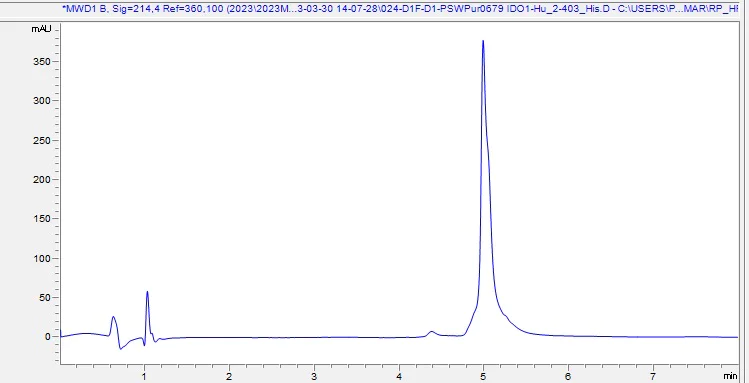
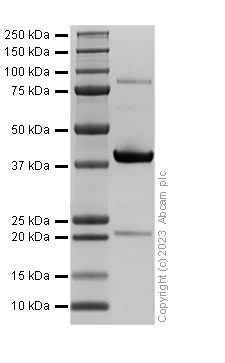
Recombinant Human IDO1 Protein (His tag) (E.Coli) is a Human Full Length protein, in the 2 to 403 aa range, expressed in Escherichia coli, with >95%, <0.1 EU/mg endotoxin level, suitable for HPLC, SDS-PAGE, Mass Spec.

別名を表示する

IDO, INDO, IDO1, IDO-1
3 Images
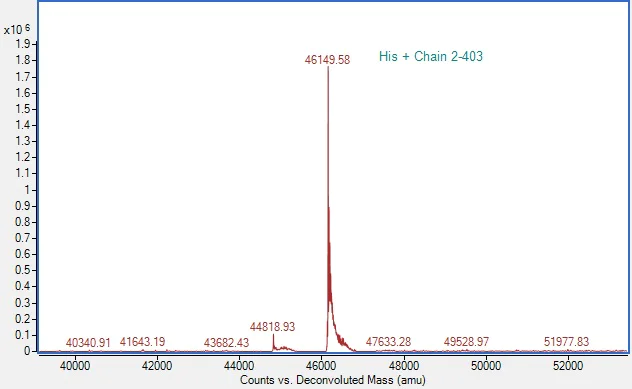
Mass Spectrometry - Recombinant Human IDO1 Protein (His tag) (E.Coli) (AB313356)
  • Mass Spec

Lab

Mass Spectrometry - Recombinant Human IDO1 Protein (His tag) (E.Coli) (AB313356)

Mass determination by ESI-TOF. Predicted MW is 46149.57 (+/- 10Da by ESI-TOF). Observed MW is 46149.58.
HPLC - Recombinant Human IDO1 Protein (His tag) (E.Coli) (AB313356)
  • HPLC

Lab

HPLC - Recombinant Human IDO1 Protein (His tag) (E.Coli) (AB313356)

HPLC analysis of ab313356
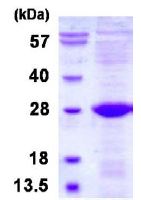
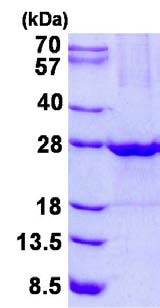
SDS-PAGE - Recombinant Human IDO1 Protein (His tag) (E.Coli) (AB313356)
  • SDS-PAGE

Supplier Data

SDS-PAGE - Recombinant Human IDO1 Protein (His tag) (E.Coli) (AB313356)

SDS-page analysis of ab313356

Key facts

精製度

>95% HPLC

エンドトキシンレベル

<0.1 EU/mg

発現系

Escherichia coli

タグ

His tag N-Terminus

アプリケーション

Mass Spec, HPLC, SDS-PAGE

applications

生物活性

No

アクセッション番号

P14902

アニマルフリー

Yes

キャリアフリー

No

種

Human

バッファー組成

pH: 8 Constituents: 10% Glycerol (glycerin, glycerine), 0.7293% Sodium chloride, 0.5769% Tris

storage-buffer

Reactivity data

{ "title": "Reactivity Data", "filters": { "stats": ["", "Reactivity", "Dilution Info", "Notes"] }, "values": { "HPLC": { "reactivity":"TESTED_AND_REACTS", "dilution-info":"", "notes":"<p></p>" }, "SDS-PAGE": { "reactivity":"TESTED_AND_REACTS", "dilution-info":"", "notes":"<p></p>" }, "Mass Spec": { "reactivity":"TESTED_AND_REACTS", "dilution-info":"", "notes":"<p></p>" } } }

配列情報

[{"linker":null,"sequence":"AHAMENSWTISKEYHIDEEVGFALPNPQENLPDFYNDWMFIAKHLPDLIESGQLRERVEKLNMLSIDHLTDHKSQRLARLVLGCITMAYVWGKGHGDVRKVLPRNIAVPYCQLSKKLELPPILVYADCVLANWKKKDPNKPLTYENMDVLFSFRDGDCSKGFFLVSLLVEIAAASAIKVIPTVFKAMQMQERDTLLKALLEIASCLEKALQVFHQIHDHVNPKAFFSVLRIYLSGWKGNPQLSDGLVYEGFWEDPKEFAGGSAGQSSVFQCFDVLLGIQQTAGGGHAAQFLQDMRRYMPPAHRNFLCSLESNPSVREFVLSKGDAGLREAYDACVKALVSLRSYHLQIVTKYILIPASQQPKENKTSEDPSKLEAKGTGGTDLMNFLKTVRSTTEKSLLKEG","proteinLength":"Full Length","predictedMolecularWeight":"46.1 kDa","actualMolecularWeight":"46.1 kDa","aminoAcidEnd":403,"aminoAcidStart":2,"nature":"Recombinant","expressionSystem":"Escherichia coli","accessionNumber":"P14902","tags":[{"tag":"His","terminus":"N-Terminus"}]}]

出荷温度及び保存条件

製品の状態
Liquid
出荷温度
Dry Ice
短期保存温度
-80°C
長期保存温度
-80°C
False

補足情報

This supplementary information is collated from multiple sources and compiled automatically.

Indoleamine 2 3-dioxygenase (IDO) also known as IDO1 is an enzyme involved in the catabolism of tryptophan to kynurenine. It weighs approximately 45 kDa and it is an important target in immunoregulatory processes. IDO is highly expressed in antigen-presenting cells such as dendritic cells and macrophages as well as in various tumor cells where it helps modulate immune responses. This enzyme can also be measured by using assays like IDO ELISA.
Biological function summary

IDO plays a role in immune response regulation by degrading tryptophan an essential amino acid needed for T-cell proliferation. The depletion of tryptophan and the accumulation of its metabolites such as kynurenine cause immunosuppressive effects within the tissue microenvironment. While IDO functions mostly as a standalone enzyme its activity influences the cellular surroundings by altering the balance of local immune reactions.

Pathways

IDO integrates into the tryptophan metabolism pathway and is important in the kynurenine pathway. Through this pathway it maintains immune homeostasis and cell defense mechanisms. Proteins like kynureninase and kynurenine 3-monooxygenase also participate in the same metabolic processes which further extend the effects of tryptophan metabolism on immune cell behavior.

IDO is linked with cancer and chronic inflammatory conditions. In cancer elevated IDO expression suppresses anti-tumor immunity aiding tumor cells to evade immune surveillance. It also plays a role in autoimmune disorders by regulating excessive immune activity. During cancer progression IDO often works in conjunction with immune checkpoint proteins like PD-L1 which further enhances its immunosuppressive capabilities within the tumor microenvironment.

一般的な情報

機能

Catalyzes the first and rate limiting step of the catabolism of the essential amino acid tryptophan along the kynurenine pathway (PubMed : 17671174, PubMed : 18026683). Involved in the peripheral immune tolerance, contributing to maintain homeostasis by preventing autoimmunity or immunopathology that would result from uncontrolled and overreacting immune responses (PubMed : 25691885). Tryptophan shortage inhibits T lymphocytes division and accumulation of tryptophan catabolites induces T-cell apoptosis and differentiation of regulatory T-cells (PubMed : 25691885). Acts as a suppressor of anti-tumor immunity (PubMed : 14502282, PubMed : 23103127, PubMed : 25157255, PubMed : 25691885). Limits the growth of intracellular pathogens by depriving tryptophan (PubMed : 25691885). Protects the fetus from maternal immune rejection (PubMed : 25691885).

配列の類似性

Belongs to the indoleamine 2,3-dioxygenase family.

製品プロトコール

ターゲットの情報

Catalyzes the first and rate limiting step of the catabolism of the essential amino acid tryptophan along the kynurenine pathway (PubMed : 17671174, PubMed : 18026683). Involved in the peripheral immune tolerance, contributing to maintain homeostasis by preventing autoimmunity or immunopathology that would result from uncontrolled and overreacting immune responses (PubMed : 25691885). Tryptophan shortage inhibits T lymphocytes division and accumulation of tryptophan catabolites induces T-cell apoptosis and differentiation of regulatory T-cells (PubMed : 25691885). Acts as a suppressor of anti-tumor immunity (PubMed : 14502282, PubMed : 23103127, PubMed : 25157255, PubMed : 25691885). Limits the growth of intracellular pathogens by depriving tryptophan (PubMed : 25691885). Protects the fetus from maternal immune rejection (PubMed : 25691885).
See full target information IDO1

Abcam product promise

当社は、高品質な試薬を通じてお客様の研究を力強くサポートすることをお約束いたします。ご使用いただく各段階で、常にお客様をサポートできる体制を整えております。万が一、製品が期待通りに機能しない場合は、「Abcam Product Promise」による当社保証制度に基づき、安心してご利用いただけます。
保証に関する詳細については利用規約をご確認ください。

Please note: All products are 'FOR RESEARCH USE ONLY. NOT FOR USE IN DIAGNOSTIC OR THERAPEUTIC PROCEDURES'.

For licensing inquiries, please contact partnerships@abcam.com