JavaScript is disabled in your browser. Please enable JavaScript to view this website.
AB131928

Recombinant Human CAPON/NOS1AP protein (GST tag N-Terminus)

Recombinant Human CAPON/NOS1AP protein (GST tag N-Terminus)

Be the first to review this product! Submit a review

|

(0 Publication)

Recombinant Human CAPON/NOS1AP protein (GST tag N-Terminus) is a Human Full Length protein, in the 1 to 506 aa range, expressed in Wheat germ, suitable for SDS-PAGE, ELISA, WB.

別名を表示する

CAPON, KIAA0464, NOS1AP, Carboxyl-terminal PDZ ligand of neuronal nitric oxide synthase protein, C-terminal PDZ ligand of neuronal nitric oxide synthase protein, Nitric oxide synthase 1 adaptor protein
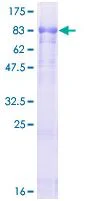
1 Images
SDS-PAGE - Recombinant Human CAPON/NOS1AP protein (GST tag N-Terminus) (AB131928)
  • SDS-PAGE

Unknown

SDS-PAGE - Recombinant Human CAPON/NOS1AP protein (GST tag N-Terminus) (AB131928)

12.5% SDS-PAGE analysis of ab131928 stained with Coomassie Blue.

Key facts

発現系

Wheat germ

タグ

GST tag N-Terminus

アプリケーション

WB, SDS-PAGE, ELISA

applications

生物活性

No

アクセッション番号

O75052

アニマルフリー

No

キャリアフリー

No

種

Human

バッファー組成

pH: 8 Constituents: 0.79% Tris HCl, 0.31% Glutathione

storage-buffer

Reactivity data

{ "title": "Reactivity Data", "filters": { "stats": ["", "Reactivity", "Dilution Info", "Notes"] }, "values": { "SDS-PAGE": { "reactivity":"TESTED_AND_REACTS", "dilution-info":"", "notes":"<p></p>" }, "ELISA": { "reactivity":"TESTED_AND_REACTS", "dilution-info":"", "notes":"<p></p>" }, "WB": { "reactivity":"TESTED_AND_REACTS", "dilution-info":"", "notes":"<p></p>" } } }

製品の詳細

This product was previously labelled as CAPON.

配列情報

[{"linker":null,"sequence":"MPSKTKYNLVDDGHDLRIPLHNEDAFQHGICFEAKYVGSLDVPRPNSRVEIVAAMRRIRYEFKAKNIKKKKVSIMVSVDGVKVILKKKKKLLLLQKKEWTWDESKMLVMQDPIYRIFYVSHDSQDLKIFSYIARDGASNIFRCNVFKSKKKSQAMRIVRTVGQAFEVCHKLSLQHTQQNADGQEDGESERNSNSSGDPGRQLTGAERASTATAEETDIDAVEVPLPGNDVLEFSRGVTDLDAVGKEGGSHTGSKVSHPQEPMLTASPRMLLPSSSSKPPGLGTETPLSTHHQMQLLQQLLQQQQQQTQVAVAQVHLLKDQLAAEAAARLEAQARVHQLLLQNKDMLQHISLLVKQVQELELKLSGQNAMGSQDSLLEITFRSGALPVLCDPTTPKPEDLHSPPLGAGLADFAHPAGSPLGRRDCLVKLECFRFLPPEDTPPPAQGEALLGGLELIKFRESGIASEYESNTDESEERDSWSQEELPRLLNVLQRQELGDGLDDEIAV","proteinLength":"Full Length","predictedMolecularWeight":"82.5 kDa","actualMolecularWeight":null,"aminoAcidEnd":506,"aminoAcidStart":1,"nature":"Recombinant","expressionSystem":"Wheat germ","accessionNumber":"O75052","tags":[{"tag":"GST","terminus":"N-Terminus"}]}]

出荷温度及び保存条件

製品の状態
Liquid
精製方法
Proprietary technique
出荷温度
Dry Ice
短期保存温度
-80°C
長期保存温度
-80°C
分注に関する情報
Upon delivery aliquot
保管に関する情報
Avoid freeze / thaw cycle
False

補足情報

This supplementary information is collated from multiple sources and compiled automatically.

CAPON also known as NOS1AP (nitric oxide synthase 1 adaptor protein) is an adaptor protein with a molecular weight of about 55 kDa. This protein interacts primarily with neuronal nitric oxide synthase (nNOS) modulating its activity. CAPON is expressed in the brain particularly in regions like the hippocampus and cerebral cortex where it plays roles in neuronal signaling. Its involvement in the brain implies its importance in neural functions and cognitive processes.
Biological function summary

CAPON influences signal transduction processes involving nitric oxide. As part of a molecular complex it binds with nNOS which leads to the modulation of nitric oxide production. This regulation impacts synaptic plasticity and neurotransmission hence affecting learning and memory. By interacting with other signaling proteins CAPON can affect the cellular response to various stimuli making it a significant player in neuronal communication.

Pathways

CAPON’s function fits into the nitric oxide signaling pathway which is important for neuron communication and vasodilation processes. It associates with the ERK/MAPK pathway which plays a role in cognition and neural development. Through nitric oxide modulation it influences other proteins such as PSD95 a postsynaptic density protein which impacts synaptic organization and function. This involvement showcases its role in maintaining neuronal integrity and function within these pathways.

CAPON has ties to neurologic and psychiatric conditions specifically schizophrenia and bipolar disorder. Alterations in its interaction with nNOS have been linked to the pathophysiology of these conditions. Additionally CAPON's connection with proteins like PSD95 suggests it may impact synaptic organization which can be disrupted in such mental health disorders. Understanding CAPON’s role could contribute to therapeutic approaches in these diseases.

一般的な情報

機能

Adapter protein involved in neuronal nitric-oxide (NO) synthesis regulation via its association with nNOS/NOS1. The complex formed with NOS1 and synapsins is necessary for specific NO and synapsin functions at a presynaptic level. Mediates an indirect interaction between NOS1 and RASD1 leading to enhance the ability of NOS1 to activate RASD1. Competes with DLG4 for interaction with NOS1, possibly affecting NOS1 activity by regulating the interaction between NOS1 and DLG4 (By similarity). In kidney podocytes, plays a role in podosomes and filopodia formation through CDC42 activation (PubMed : 33523862).

製品プロトコール

ターゲットの情報

Adapter protein involved in neuronal nitric-oxide (NO) synthesis regulation via its association with nNOS/NOS1. The complex formed with NOS1 and synapsins is necessary for specific NO and synapsin functions at a presynaptic level. Mediates an indirect interaction between NOS1 and RASD1 leading to enhance the ability of NOS1 to activate RASD1. Competes with DLG4 for interaction with NOS1, possibly affecting NOS1 activity by regulating the interaction between NOS1 and DLG4 (By similarity). In kidney podocytes, plays a role in podosomes and filopodia formation through CDC42 activation (PubMed : 33523862).
See full target information NOS1AP

Abcam product promise

当社は、高品質な試薬を通じてお客様の研究を力強くサポートすることをお約束いたします。ご使用いただく各段階で、常にお客様をサポートできる体制を整えております。万が一、製品が期待通りに機能しない場合は、「Abcam Product Promise」による当社保証制度に基づき、安心してご利用いただけます。
保証に関する詳細については利用規約をご確認ください。

Please note: All products are 'FOR RESEARCH USE ONLY. NOT FOR USE IN DIAGNOSTIC OR THERAPEUTIC PROCEDURES'.

For licensing inquiries, please contact partnerships@abcam.com