Recombinant Human AIP protein (His tag N-Terminus)
Recombinant Human AIP protein (His tag N-Terminus)
Be the first to review this product! Submit a review
|
(0 Publication)
Recombinant Human AIP protein (His tag N-Terminus) is a Human Full Length protein, in the 1 to 330 aa range, expressed in Escherichia coli, with >90%, suitable for SDS-PAGE, Mass Spec.
別名を表示する
XAP2, AIP, AH receptor-interacting protein, Aryl-hydrocarbon receptor-interacting protein, HBV X-associated protein 2, Immunophilin homolog ARA9, XAP-2
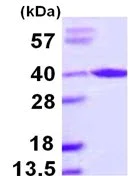
- SDS-PAGE
Unknown
SDS-PAGE - Recombinant Human AIP protein (His tag N-Terminus) (AB109934)
15% SDS-PAGE showing ab109934 at approximately 39.8 kDa (3µg).
組合せ製品
Reagents, Controls & Accessories
AB325996
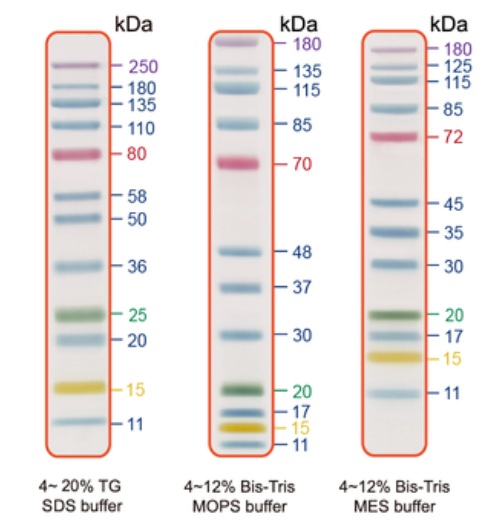
Prestained Protein Ladder - Broad molecular weight (11-250 kDa, 5-color, 12 bands)
- 0
- 0
Primary Antibodies
AB236941
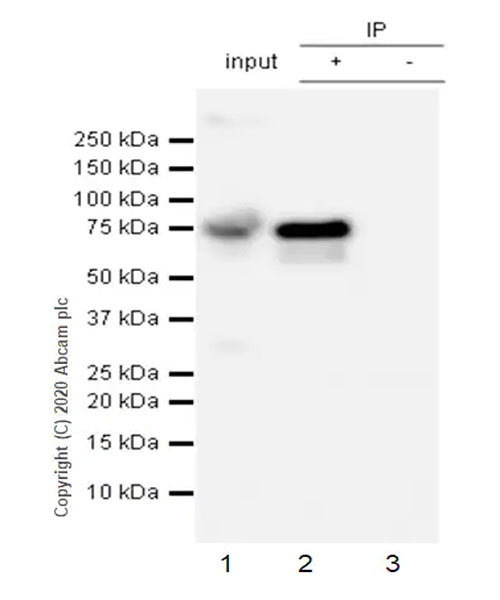
Anti-Human IgM antibody [EPR5539-65-4] - BSA and Azide free
RabMAb|Recombinant
- 0
- 0
Primary Antibodies
AB181236
Anti-Human IgG antibody [EPR12700]
RabMAb|Recombinant|Lab Essentials

- 0
- 0
Primary Antibodies
AB200699
Anti-Human IgG antibody [IG266]
BOND RX™ Validated|Lab Essentials|Recombinant

- 5
- 2
Reactivity data
配列情報
出荷温度及び保存条件
製品の状態
出荷温度
短期保存期間
短期保存温度
長期保存温度
分注に関する情報
保管に関する情報
補足情報
This supplementary information is collated from multiple sources and compiled automatically.
Biological function summary
AIP acts as a modulator of protein-protein interactions impacting several signaling pathways. It is a part of the larger protein complex involving heat shock proteins which helps prevent the degradation of its client proteins. AIP is essential for the activity and stability of receptors like the aryl hydrocarbon receptor (AHR) helping these receptors remain in a functional state until they get activated.
Pathways
AIP incorporates itself into the AHR signaling pathway which affects the regulation of xenobiotic metabolism. The protein is also involved in the regulation of the glucocorticoid receptor pathway working closely with proteins like Hsp90. Through these interactions AIP influences the ability of cells to respond to environmental toxins and physiological stress thereby playing a role in cellular homeostasis.
一般的な情報
機能
May play a positive role in AHR-mediated (aromatic hydrocarbon receptor) signaling, possibly by influencing its receptivity for ligand and/or its nuclear targeting.. Cellular negative regulator of the hepatitis B virus (HBV) X protein.
ターゲットの情報
Abcam product promise
Please note: All products are 'FOR RESEARCH USE ONLY. NOT FOR USE IN DIAGNOSTIC OR THERAPEUTIC PROCEDURES'.
For licensing inquiries, please contact partnerships@abcam.com