Recombinant ヒト 14-3-3 sigma/SFN protein (Tag Free)
Recombinant Human 14-3-3 sigma/SFN protein (Tag Free)
Be the first to review this product! Submit a review
|
(0 Publication)
Recombinant Human 14-3-3 sigma/SFN protein (Tag Free) is a Human Full Length protein, expressed in Escherichia coli, with >95%, suitable for SDS-PAGE, WB.
別名を表示する
HME1, SFN, 14-3-3 protein sigma, Epithelial cell marker protein 1, Stratifin
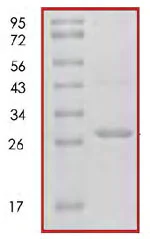
- SDS-PAGE
Unknown
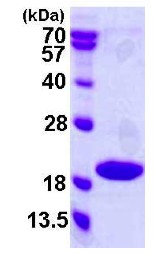
SDS-PAGE - Recombinant Human 14-3-3 sigma/SFN protein (Tag Free) (AB85271)
SDS-PAGE showing ab85271 at approximately 29kDa.
組合せ製品
Reagents, Controls & Accessories
AB116028
Prestained Protein Ladder - Broad molecular weight (10 - 245 kDa)

- 5
- 3
Primary Antibodies
AB281123
Anti-Polymeric immunoglobulin receptor/PIGR antibody [EPR23314-243] - BSA and Azide free (Detector)
RabMAb|Recombinant
- 0
- 0
Reactivity data
製品の詳細
配列情報
出荷温度及び保存条件
製品の状態
出荷温度
短期保存温度
長期保存温度
分注に関する情報
保管に関する情報
補足情報
This supplementary information is collated from multiple sources and compiled automatically.
Biological function summary
14-3-3 sigma contributes to cell cycle arrest and apoptosis. As part of a complex it interacts with other proteins to ensure proper cell division and prevent abnormal growth. It binds to phosphorylated serine/threonine residues on its target proteins influencing their activity and function. By doing this it exerts control over cell cycle checkpoints and influences DNA damage response mechanisms.
Pathways
14-3-3 sigma interacts with several pathways that are critical for maintaining cell stability and response to stress. It participates in the PI3K/AKT pathway working closely with proteins like AKT1 to facilitate cell survival and growth suppression under stress conditions. Its involvement in this pathway ties it to the regulation of cell proliferation and survival interconnecting with broader cellular networks.
一般的な情報
機能
Adapter protein implicated in the regulation of a large spectrum of both general and specialized signaling pathways (PubMed : 15731107, PubMed : 22634725, PubMed : 28202711, PubMed : 37797010). Binds to a large number of partners, usually by recognition of a phosphoserine or phosphothreonine motif (PubMed : 15731107, PubMed : 22634725, PubMed : 28202711, PubMed : 37797010). Binding generally results in the modulation of the activity of the binding partner (PubMed : 15731107, PubMed : 22634725, PubMed : 28202711, PubMed : 37797010). Promotes cytosolic retention of GBP1 GTPase by binding to phosphorylated GBP1, thereby inhibiting the innate immune response (PubMed : 37797010). Also acts as a TP53/p53-regulated inhibitor of G2/M progression (PubMed : 9659898). When bound to KRT17, regulates protein synthesis and epithelial cell growth by stimulating Akt/mTOR pathway (By similarity). Acts to maintain desmosome cell junction adhesion in epithelial cells via interacting with and sequestering PKP3 to the cytoplasm, thereby restricting its translocation to existing desmosome structures and therefore maintaining desmosome protein homeostasis (PubMed : 24124604). Also acts to facilitate PKP3 exchange at desmosome plaques, thereby maintaining keratinocyte intercellular adhesion (PubMed : 29678907). May also regulate MDM2 autoubiquitination and degradation and thereby activate p53/TP53 (PubMed : 18382127).
配列の類似性
Belongs to the 14-3-3 family.
翻訳後修飾
Ubiquitinated. Ubiquitination by RFFL induces proteasomal degradation and indirectly regulates p53/TP53 activation.
ターゲットの情報
Abcam product promise
Please note: All products are 'FOR RESEARCH USE ONLY. NOT FOR USE IN DIAGNOSTIC OR THERAPEUTIC PROCEDURES'.
For licensing inquiries, please contact partnerships@abcam.com