Anti-UQCRH 抗体 [EPR9039(B)] - BSA and Azide free
Anti-UQCRH antibody [EPR9039(B)] - BSA and Azide free
- RabMAb
- Recombinant
- 詳細を見る
Be the first to review this product! Submit a review
|
(0 Publication)
Rabbit Recombinant Monoclonal UQCRH antibody. Carrier free. Suitable for IHC-P, WB and reacts with Human samples.
別名を表示する
Complex III subunit 6, Complex III subunit VIII, Cytochrome c1 non-heme 11 kDa protein, Mitochondrial hinge protein, Ubiquinol-cytochrome c reductase complex 11 kDa protein, UQCRH
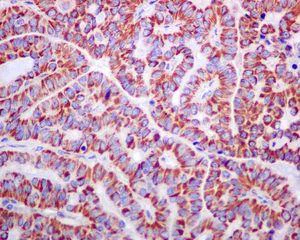
- IHC-P
Unknown
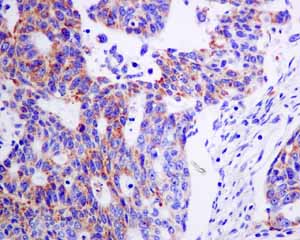
Immunohistochemistry (Formalin/PFA-fixed paraffin-embedded sections) - Anti-UQCRH antibody [EPR9039(B)] - BSA and Azide free (AB240090)
Immunohistochemical analysis of paraffin-embedded Human thyroid carcinoma tissue labelling UQCRH with ab134949 at 1/50 dilution.
This data was developed using the same antibody clone in a different buffer formulation containing PBS, BSA, glycerol, and sodium azide (ab134949).
Perform heat mediated antigen retrieval with citrate buffer pH 6 before commencing with IHC staining protocol.
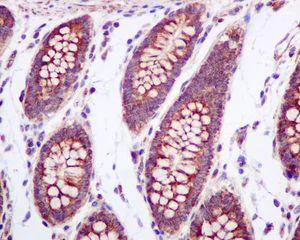
- IHC-P
Unknown
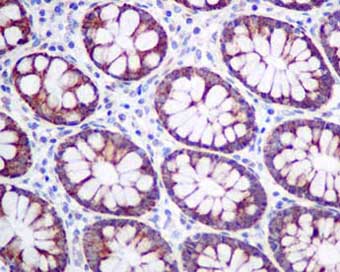
Immunohistochemistry (Formalin/PFA-fixed paraffin-embedded sections) - Anti-UQCRH antibody [EPR9039(B)] - BSA and Azide free (AB240090)
Immunohistochemical analysis of paraffin-embedded Human colon tissue labelling UQCRH with ab134949 at 1/50 dilution.
This data was developed using the same antibody clone in a different buffer formulation containing PBS, BSA, glycerol, and sodium azide (ab134949).
Perform heat mediated antigen retrieval with citrate buffer pH 6 before commencing with IHC staining protocol.
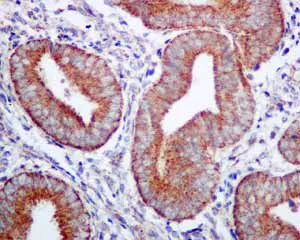
- IHC-P
Unknown
Immunohistochemistry (Formalin/PFA-fixed paraffin-embedded sections) - Anti-UQCRH antibody [EPR9039(B)] - BSA and Azide free (AB240090)
Immunohistochemical analysis using ab134949 showing positive staining in Normal uterus tissue.
This data was developed using the same antibody clone in a different buffer formulation containing PBS, BSA, glycerol, and sodium azide (ab134949).
Perform heat mediated antigen retrieval with citrate buffer pH 6 before commencing with IHC staining protocol.
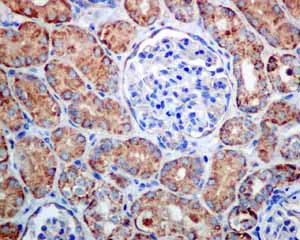
- IHC-P
Unknown
Immunohistochemistry (Formalin/PFA-fixed paraffin-embedded sections) - Anti-UQCRH antibody [EPR9039(B)] - BSA and Azide free (AB240090)
Immunohistochemical analysis using ab134949 showing positive staining in Normal kidney tissue.
This data was developed using the same antibody clone in a different buffer formulation containing PBS, BSA, glycerol, and sodium azide (ab134949).
Perform heat mediated antigen retrieval with citrate buffer pH 6 before commencing with IHC staining protocol.
関連する標識済み抗体及び組成の異なる製品 (1)
-
Anti-UQCRH antibody [EPR9039(B)]
代替製品
組合せ製品
Primary Antibodies
AB150422
Anti-Cytochrome C Oxidase subunit VIc/COX6C antibody [EPR9938]
20ul selling size|RabMAb|Recombinant
- 0
- 0
Primary Antibodies
AB183734
RabMAb|Recombinant|Lab Essentials|20ul selling size
- 5
- 24
Primary Antibodies
AB110252
Anti-Ubiquinol-Cytochrome C Reductase Core Protein I antibody [16D10AD9AH5]

- 5
- 1
Reactivity data
製品の詳細
ab240090 is the carrier-free version of ab134949.
Patented technology
Our RabMAb® technology is a patented hybridoma-based technology for making rabbit monoclonal antibodies. For details on our patents, please refer to RabMAb® patents.
What are the advantages of a recombinant monoclonal antibody?
This product is a recombinant monoclonal antibody, which offers several advantages including:
- - High batch-to-batch consistency and reproducibility
- - Improved sensitivity and specificity
- - Long-term security of supply
- - Animal-free batch production
For more information, read more on recombinant antibodies.
Conjugation ready
Our carrier-free antibodies are typically supplied in a PBS-only formulation, purified and free of BSA, sodium azide and glycerol. This conjugation-ready format is designed for use with fluorochromes, metal isotopes, oligonucleotides, and enzymes, which makes them ideal for antibody labelling, functional and cell-based assays, flow-based assays (e.g. mass cytometry) and Multiplex Imaging applications.
Use our conjugation kits for antibody conjugates that are ready-to-use in as little as 20 minutes with 1 minute hands-on-time and 100% antibody recovery: available for fluorescent dyes, HRP, biotin and gold.
Compatibility
This product is compatible with the Maxpar® Antibody Labeling Kit from Fluidigm, without the need for antibody preparation. Maxpar® is a trademark of Fluidigm Canada Inc.
出荷温度及び保存条件
製品の状態
精製方法
バッファー組成
出荷温度
短期保存温度
長期保存温度
保管に関する情報
補足情報
This supplementary information is collated from multiple sources and compiled automatically.
Biological function summary
The hinge protein acts as a critical component of the mitochondrial respiratory chain complex III. UQCRH ensures the efficient transfer of electrons within the complex which contributes to generating a proton gradient across the inner mitochondrial membrane. This proton gradient drives ATP synthesis. It is a vital component of the larger respiratory chain complex which is important for aerobic cellular energy metabolism and plays an important role in overall mitochondrial function.
Pathways
UQCRH is a significant player in the oxidative phosphorylation pathway which is central to the production of ATP. The protein closely interacts with components of Complex III and adjacent complexes of the electron transport chain such as NADH dehydrogenase (Complex I) and cytochrome c oxidase (Complex IV). These interactions help UQCRH integrate smoothly within the pathway ensuring the consistent flow of electrons and maintenance of ATP production.
製品プロトコール
- Visit the General protocols
- Visit the Troubleshooting
ターゲットの情報
Abcam product promise
Please note: All products are 'FOR RESEARCH USE ONLY. NOT FOR USE IN DIAGNOSTIC OR THERAPEUTIC PROCEDURES'.
For licensing inquiries, please contact partnerships@abcam.com