Anti-UQCRFS1/RISP 抗体 [EPR16289] - BSA and Azide free
Anti-UQCRFS1/RISP antibody [EPR16289] - BSA and Azide free
- RabMAb
- Recombinant
- 詳細を見る
Be the first to review this product! Submit a review
|
(0 Publication)
Rabbit Recombinant Monoclonal UQCRFS1/RISP antibody. Carrier free. Suitable for ICC/IF, IP, WB, Flow Cyt (Intra), IHC-P and reacts with Human, Rat, Mouse samples.
別名を表示する
Complex III subunit 5, Cytochrome b-c1 complex subunit 5, Rieske iron-sulfur protein, Rieske protein UQCRFS1, Ubiquinol-cytochrome c reductase iron-sulfur subunit, RISP, UQCRFS1
- IHC-P
Unknown
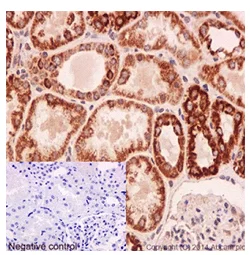
Immunohistochemistry (Formalin/PFA-fixed paraffin-embedded sections) - Anti-UQCRFS1/RISP antibody [EPR16289] - BSA and Azide free (AB251054)
This data was developed using ab191079, the same antibody clone in a different buffer formulation.
Immunohistochemical analysis of paraffin-embedded Human kidney tissue labeling UQCRFS1/RISP with ab191079 at 1/100 dilution followed by pre-diluted HRP Polymer for Rabbit IgG secondary antibody and counter-stained with Hematoxylin (inset : negative control).
Perform heat mediated antigen retrieval with Tris/EDTA buffer pH 9.0 before commencing with IHC staining protocol.
- Flow Cyt (Intra)
Unknown
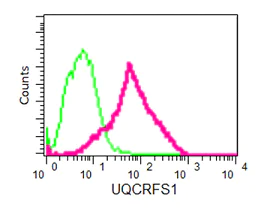
Flow Cytometry (Intracellular) - Anti-UQCRFS1/RISP antibody [EPR16289] - BSA and Azide free (AB251054)
This data was developed using ab191079, the same antibody clone in a different buffer formulation.
Intracellular flow cytometric analysis of HeLa cells (paraformaldehyde-fixed, 2%) labeling UQCRFS1/RISP with ab191079 at 1/280 dilution (red) or a rabbit IgG (negative) (green), followed by Goat anti rabbit IgG (FITC) secondary at 1/150 dilution.
- IP
Unknown
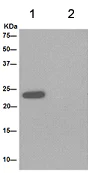
Immunoprecipitation - Anti-UQCRFS1/RISP antibody [EPR16289] - BSA and Azide free (AB251054)
This data was developed using ab191079, the same antibody clone in a different buffer formulation.
Western blot analysis of immunoprecipitation pellet from Human fetal heart lysate immunoprecipitated using ab191079 at 1/90 dilution (lane 1) or PBS control (lane 2).
Secondary : Anti-Rabbit IgG (HRP), specific to the non-reduced form of IgG at 1/1500 dilution.
All lanes:
Immunoprecipitation - Anti-UQCRFS1/RISP antibody [EPR16289] - BSA and Azide free (ab251054)
Predicted band size: 30 kDa
false
- WB
Supplier Data
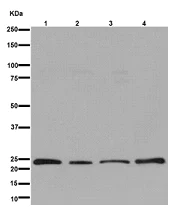
Western blot - Anti-UQCRFS1/RISP antibody [EPR16289] - BSA and Azide free (AB251054)
This data was developed using ab191079, the same antibody clone in a different buffer formulation.
All lanes:
Western blot - Anti-UQCRFS1/RISP antibody [EPR16289] - BSA and Azide free (ab251054) at 1/10000 dilution
Lane 1:
HeLa cell lysate at 20 µg
Lane 2:
Raji cell lysate at 20 µg
Lane 3:
293 cell lysate at 20 µg
Lane 4:
Human fetal heart lysate at 20 µg
Secondary
All lanes:
Goat Anti-Rabbit IgG, (H+L),Peroxidase conjugate at 1/1000 dilution
Predicted band size: 30 kDa
false
- WB
Supplier Data
Western blot - Anti-UQCRFS1/RISP antibody [EPR16289] - BSA and Azide free (AB251054)
This data was developed using ab191079, the same antibody clone in a different buffer formulation.
All lanes:
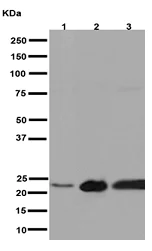
Western blot - Anti-UQCRFS1/RISP antibody [EPR16289] - BSA and Azide free (ab251054) at 1/1000 dilution
Lane 1:
PC12 cell lysate at 10 µg
Lanes 2 - 3:
Mouse brain lysate at 10 µg
Secondary
All lanes:
Goat Anti-Rabbit IgG, (H+L),Peroxidase conjugate at 1/1000 dilution
Predicted band size: 30 kDa
false
関連する標識済み抗体及び組成の異なる製品 (1)
-
Anti-UQCRFS1/RISP antibody [EPR16289] - C-terminal
組合せ製品
Primary Antibodies
AB203832
Anti-UQCRC2 antibody [EPR13051]
RabMAb|Recombinant|20ul selling size

- 5
- 1
Primary Antibodies
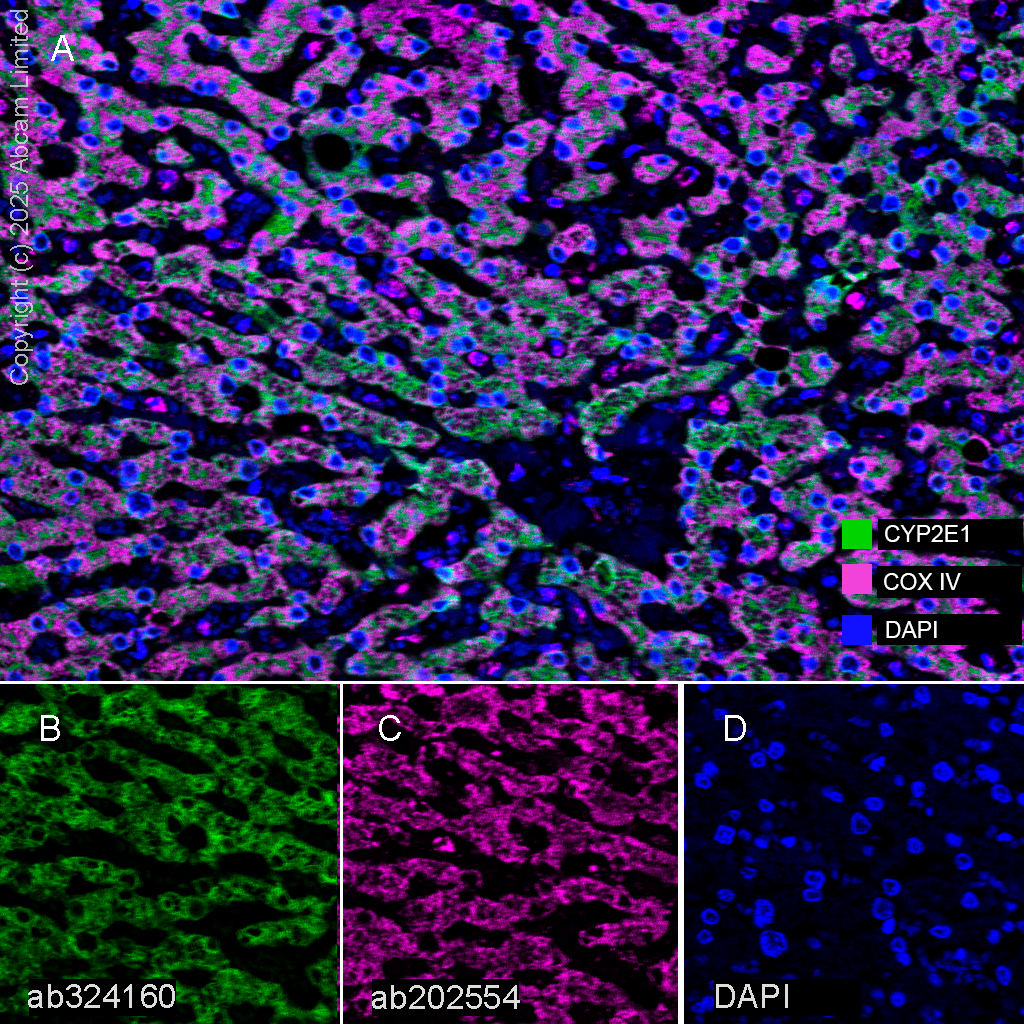
AB202554
Anti-COX IV antibody [EPR9442(ABC)] - Mitochondrial Loading Control
RabMAb|Recombinant|Lab Essentials|Advanced Validation|20ul selling size
- 5
- 2
Primary Antibodies
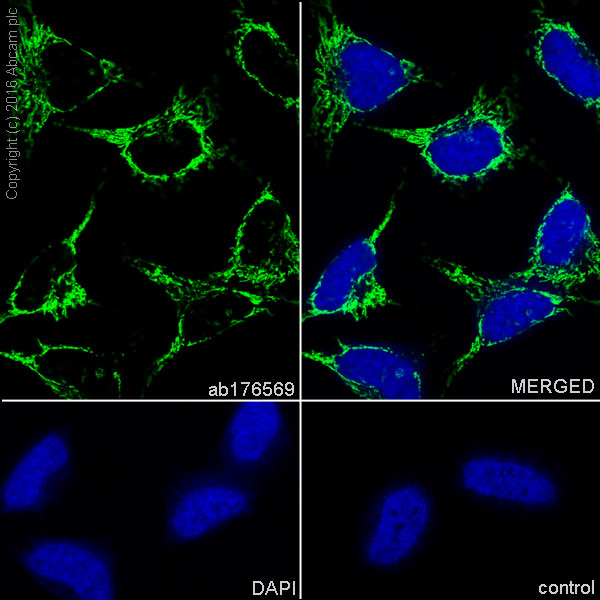
AB176569
Anti-ATP5A antibody [EPR13030(B)] - Mitochondrial Marker
RabMAb|Recombinant|Lab Essentials|20ul selling size
- 5
- 5
Reactivity data
製品の詳細
ab251054 is the carrier-free version of ab191079.
Patented technology
Our RabMAb® technology is a patented hybridoma-based technology for making rabbit monoclonal antibodies. For details on our patents, please refer to RabMAb® patents.
What are the advantages of a recombinant monoclonal antibody?
This product is a recombinant monoclonal antibody, which offers several advantages including:
- - High batch-to-batch consistency and reproducibility
- - Improved sensitivity and specificity
- - Long-term security of supply
- - Animal-free batch production
For more information, read more on recombinant antibodies.
Conjugation ready
Our carrier-free antibodies are typically supplied in a PBS-only formulation, purified and free of BSA, sodium azide and glycerol. This conjugation-ready format is designed for use with fluorochromes, metal isotopes, oligonucleotides, and enzymes, which makes them ideal for antibody labelling, functional and cell-based assays, flow-based assays (e.g. mass cytometry) and Multiplex Imaging applications.
Use our conjugation kits for antibody conjugates that are ready-to-use in as little as 20 minutes with 1 minute hands-on-time and 100% antibody recovery: available for fluorescent dyes, HRP, biotin and gold.
Compatibility
This product is compatible with the Maxpar® Antibody Labeling Kit from Fluidigm, without the need for antibody preparation. Maxpar® is a trademark of Fluidigm Canada Inc.
出荷温度及び保存条件
製品の状態
バッファー組成
出荷温度
短期保存温度
長期保存温度
保管に関する情報
補足情報
This supplementary information is collated from multiple sources and compiled automatically.
Biological function summary
RISP belongs to the cytochrome bc1 complex a large multimeric structure involved in mitochondrial respiratory function. By facilitating electron transfer it contributes to the establishment of the proton gradient across the inner mitochondrial membrane. This gradient drives ATP synthesis through oxidative phosphorylation highlighting its importance for cellular energy homeostasis. The reduction and oxidation of ubiquinone and cytochrome c ensure effective electron flow within this system.
Pathways
RISP integrates into essential processes within the respiratory chain and oxidative phosphorylation pathways. It directly interacts with other proteins in complex III such as UQCRH and UQCRC1 to facilitate protein complex stability and function. Additionally RISP supports the interaction between complex III and complex IV by aiding in the electron transfer ensuring efficient ATP production. This association clarifies the interprotein dynamics needed for proper mitochondrial respiratory operation.
製品プロトコール
- Visit the General protocols
- Visit the Troubleshooting
ターゲットの情報
Abcam product promise
Please note: All products are 'FOR RESEARCH USE ONLY. NOT FOR USE IN DIAGNOSTIC OR THERAPEUTIC PROCEDURES'.
For licensing inquiries, please contact partnerships@abcam.com