Anti-Ubiquitin (linkage-specific K48) 抗体 [EP8589] - BSA and Azide free
Anti-Ubiquitin (linkage-specific K48) antibody [EP8589] - BSA and Azide free
- RabMAb
- Recombinant
- 詳細を見る
Be the first to review this product! Submit a review
|
(1 Publication)
Rabbit Recombinant Monoclonal UBC Linkage-specific K48 antibody. Carrier free. Suitable for WB, IHC-P, ICC/IF, Flow Cyt (Intra) and reacts with Recombinant fragment, Human samples. Cited in 1 publication.
別名を表示する
Polyubiquitin-C, UBC
- Flow Cyt (Intra)
Unknown
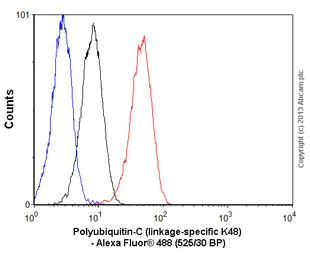
Flow Cytometry (Intracellular) - Anti-Ubiquitin (linkage-specific K48) antibody [EP8589] - BSA and Azide free (AB271911)
Overlay histogram showing HeLa cells stained with ab140601 (red line). The cells were fixed with 80% methanol (5 min) and then permeabilized with 0.1% PBS-Tween for 20 min. The cells were then incubated in 1x PBS / 10% normal goat serum / 0.3M glycine to block non-specific protein-protein interactions followed by the antibody (ab140601, 1/100 dilution) for 30 min at 22°C. The secondary antibody used was Alexa Fluor 488 goat anti-rabbit IgG (H&L) (ab150077) at 1/2000 dilution for 30 min at 22°C. Isotype control antibody (black line) was rabbit IgG (monoclonal) (1μg/1x106 cells) used under the same conditions. Unlabelled sample (blue line) was also used as a control. Acquisition of >5,000 events were collected using a 20mW Argon ion laser (488nm) and 525/30 bandpass filter.
This data was developed using the same antibody clone in a different buffer formulation containing PBS, BSA, glycerol, and sodium azide (ab140601).
- IHC-P
Lab
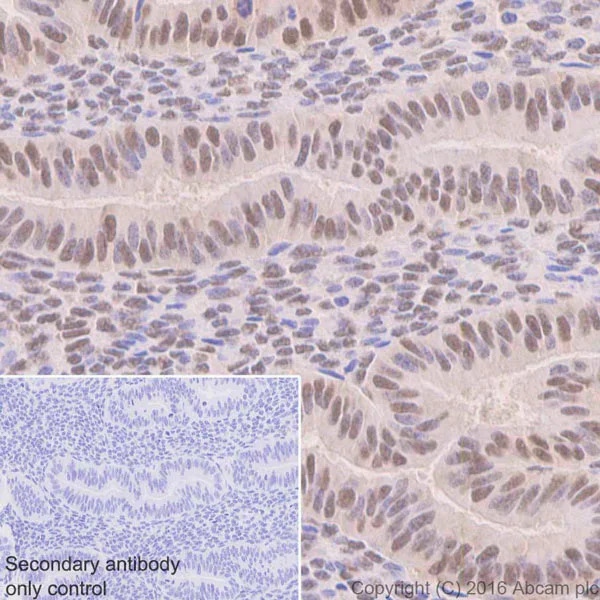
Immunohistochemistry (Formalin/PFA-fixed paraffin-embedded sections) - Anti-Ubiquitin (linkage-specific K48) antibody [EP8589] - BSA and Azide free (AB271911)
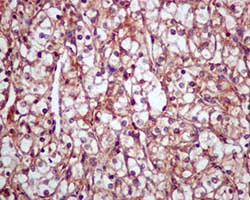
Purified ab140601 staining Ubiquitin (linkage-specific K48) in human endometrium carcinoma tissue sections by Immunohistochemistry (IHC-P - paraformaldehyde-fixed, paraffin-embedded sections). Tissue was fixed with paraformaldehyde and antigen retrieval was by heat mediation in a EDTA buffer. Samples were incubated with primary antibody at a dilution of 1/250. A goat anti-rabbit IgG H&L (HRP) ab97051 was used as the secondary antibody at a dilution of 1/500.
Negative control 1 : PBS in place of primary antibody.
This data was developed using the same antibody clone in a different buffer formulation containing PBS, BSA, glycerol, and sodium azide (ab140601).
- ICC/IF
Lab
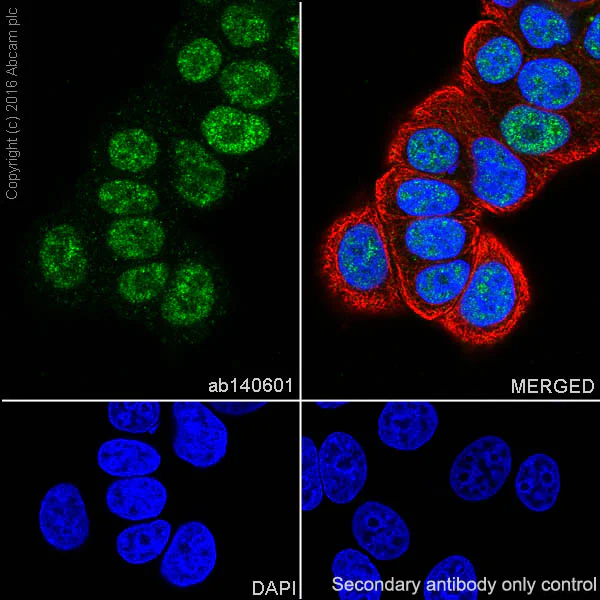
Immunocytochemistry/ Immunofluorescence - Anti-Ubiquitin (linkage-specific K48) antibody [EP8589] - BSA and Azide free (AB271911)
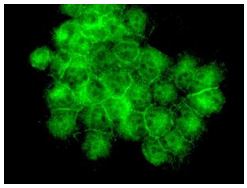
Purified ab140601 staining Ubiquitin (linkage-specific K48) in MCF7 (Human breast adenocarcinoma cell line) cells by ICC/IF (Immunocytochemistry/immunofluorescence). Cells were fixed with 4% Paraformaldehyde and permeabilized with 0.1% Triton X-100. Samples were incubated with primary antibody at a dilution of 1/500. A goat anti rabbit IgG (Alexa Fluor® 488) (ab150077) was used as the secondary antibody at a dilution of 1/1000. ab195889 was used as a counterstain for primary antibody ab133645 at 1/2000. DAPI was used as a nuclear counterstain and PBS as a negative control.
This data was developed using the same antibody clone in a different buffer formulation containing PBS, BSA, glycerol, and sodium azide (ab140601).
- ICC/IF
Unknown
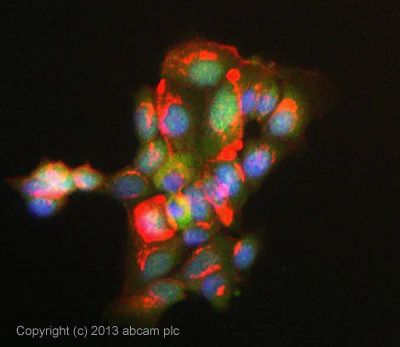
Immunocytochemistry/ Immunofluorescence - Anti-Ubiquitin (linkage-specific K48) antibody [EP8589] - BSA and Azide free (AB271911)
ICC/IF image of ab140601 stained MCF-7 cells. The cells were 100% methanol fixed (5 min) and then incubated in 1%BSA / 10% normal goat serum / 0.3M glycine in 0.1% PBS-Tween for 1h to permeabilise the cells and block non-specific protein-protein interactions. The cells were then incubated with the antibody ab140601 at 10μg/ml overnight at +4°C. The secondary antibody (green) was DyLight® 488 goat anti- rabbit (ab96899) IgG (H+L) used at a 1/250 dilution for 1h. Alexa Fluor® 594 WGA was used to label plasma membranes (red) at a 1/200 dilution for 1h. DAPI was used to stain the cell nuclei (blue) at a concentration of 1.43μM.
This data was developed using the same antibody clone in a different buffer formulation containing PBS, BSA, glycerol, and sodium azide (ab140601).
- IHC
Lab
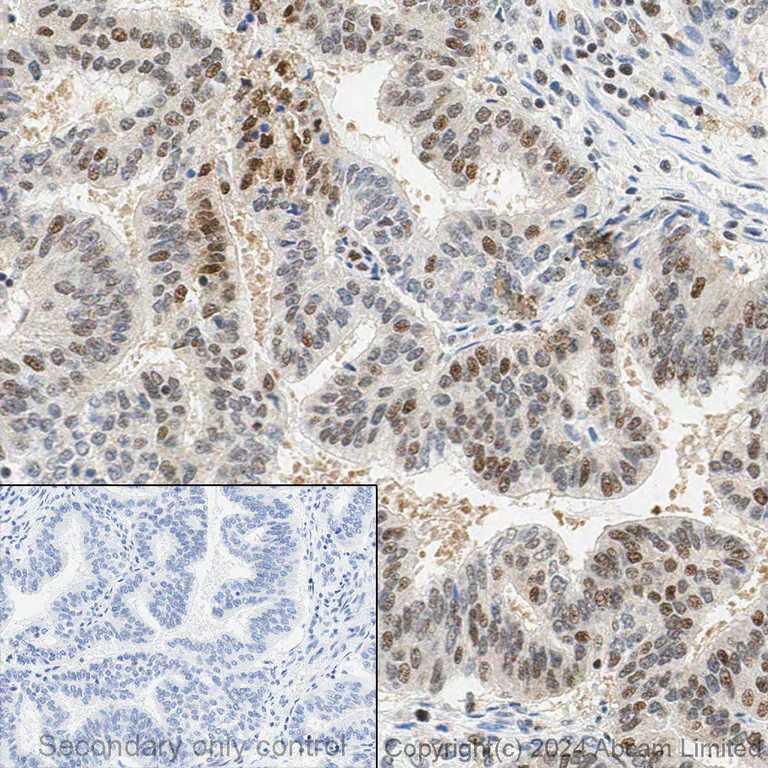
Immunohistochemistry - Anti-Ubiquitin (linkage-specific K48) antibody [EP8589] - BSA and Azide free (AB271911)
This data was developed using the same antibody clone in a different buffer formulation containing PBS, BSA, glycerol, and sodium azide (ab140601).
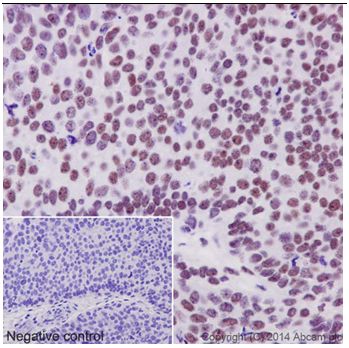
Immunohistochemical analysis of formalin fixed paraffin embedded human endometrial carcinoma labelling Ubiquitin (linkage-specific K48) with ab140601 at a concentration of 1µg/ml. The immunostaining was performed on a Ventana DISCOVERY ULTRA (Roche Tissue Diagnostics) instrument with a OptiView DAB IHC Detection Kit. Heat mediated antigen retrieval was performed with DISCOVERY cell conditioning solution (CC1) 100°C, pH 8.5 for 32 mins.
ab140601 anti-Ubiquitin (linkage-specific K48) [EP8589] was incubated for 16mins at 37°C. Sections were counterstained with Hematoxylin II. Image inset shows absence of staining in secondary antibody only control.
Customers are encouraged to optimise antigen retrieval conditions, antibody concentration, incubation times and temperature for best results in their own IHC assay workflow (automated and manual)
関連する標識済み抗体及び組成の異なる製品 (10)
-
Anti-Ubiquitin (linkage-specific K48) antibody [EP8589]
-
Anti-Ubiquitin (linkage-specific K48) antibody [EP8589] - Low endotoxin, Azide free
-
660 APC
APC Anti-Ubiquitin (linkage-specific K48) antibody [EP8589]
-
519 Alexa Fluor® 488
Alexa Fluor® 488 Anti-Ubiquitin (linkage-specific K48) antibody [EP8589]
-
565 Alexa Fluor® 555
Alexa Fluor® 555 Anti-Ubiquitin (linkage-specific K48) antibody [EP8589]
-
603 Alexa Fluor® 568
Alexa Fluor® 568 Anti-Ubiquitin (linkage-specific K48) antibody [EP8589]
-
617 Alexa Fluor® 594
Alexa Fluor® 594 Anti-Ubiquitin (linkage-specific K48) antibody [EP8589]
-
665 Alexa Fluor® 647
Alexa Fluor® 647 Anti-Ubiquitin (linkage-specific K48) antibody [EP8589]
-
775 Alexa Fluor® 750
Alexa Fluor® 750 Anti-Ubiquitin (linkage-specific K48) antibody [EP8589]
-
578 PE
PE Anti-Ubiquitin (linkage-specific K48) antibody [EP8589]
代替製品
Primary Antibodies
AB192489
Alexa Fluor® 647 Anti-Ubiquitin (linkage-specific K63) antibody [EPR8590-448]
RabMAb|Recombinant

- 0
- 0
Primary Antibodies
AB192539
Alexa Fluor® 488 Anti-Ubiquitin (linkage-specific K63) antibody [EPR8590-448]
RabMAb|Recombinant
- 0
- 0
Primary Antibodies
AB137025
Anti-Ubiquitin antibody [EPR8590]
20ul selling size|RabMAb|Recombinant
- 0
- 0
Primary Antibodies
AB134953
Anti-Ubiquitin antibody [EPR8830]
20ul selling size|RabMAb|Recombinant
- 4
- 3
Primary Antibodies
AB181537
Anti-Ubiquitin (linkage-specific K27) antibody [EPR17034]
20ul selling size|RabMAb|Recombinant
- 4
- 1
Primary Antibodies
AB220794
Anti-Ubiquitin (linkage-specific K63) antibody [EPR8590-448] - Low endotoxin, Azide free
RabMAb|Recombinant
- 0
- 0
Primary Antibodies
AB179434
Anti-Ubiquitin (linkage-specific K63) antibody [EPR8590-448]
20ul selling size|RabMAb|Recombinant

- 5
- 6
Primary Antibodies
AB230145
Anti-Ubiquitin antibody [EPR8830] - BSA and Azide free
RabMAb|Recombinant
- 0
- 0
組合せ製品
Sample Prep & Detection Kits
AB270709
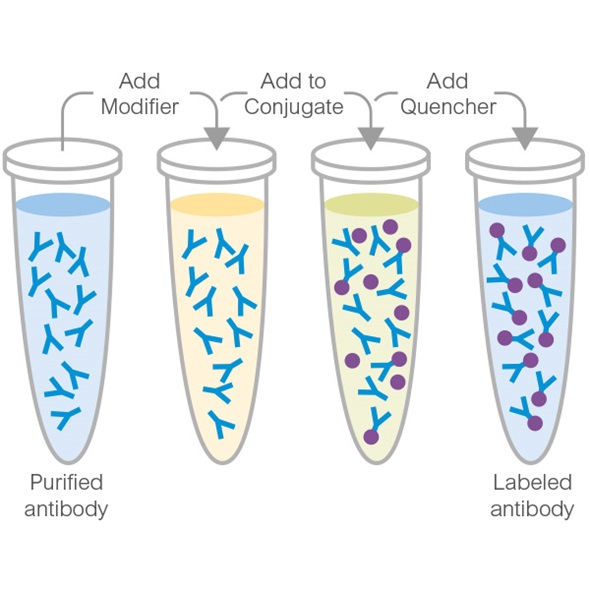
5’ Feature Barcode Antibody Conjugation Kit - Lightning-Link® - Oligos 21-30
- 0
- 0
Primary Antibodies
AB179434
Anti-Ubiquitin (linkage-specific K63) antibody [EPR8590-448]
20ul selling size|RabMAb|Recombinant
- 5
- 6
Primary Antibodies
AB109186
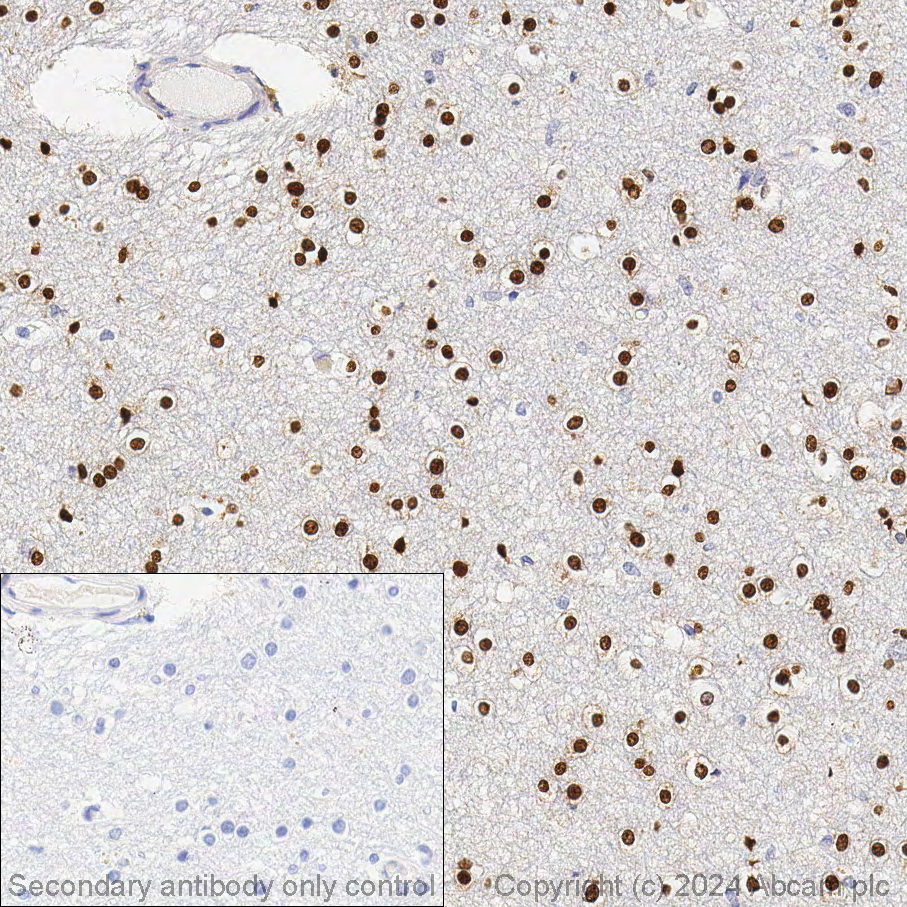
Anti-Olig2 antibody [EPR2673] - Oligodendrocyte Marker
BOND RX™ Validated|20ul selling size|Recombinant|RabMAb
- 5
- 22
Primary Antibodies
AB281586
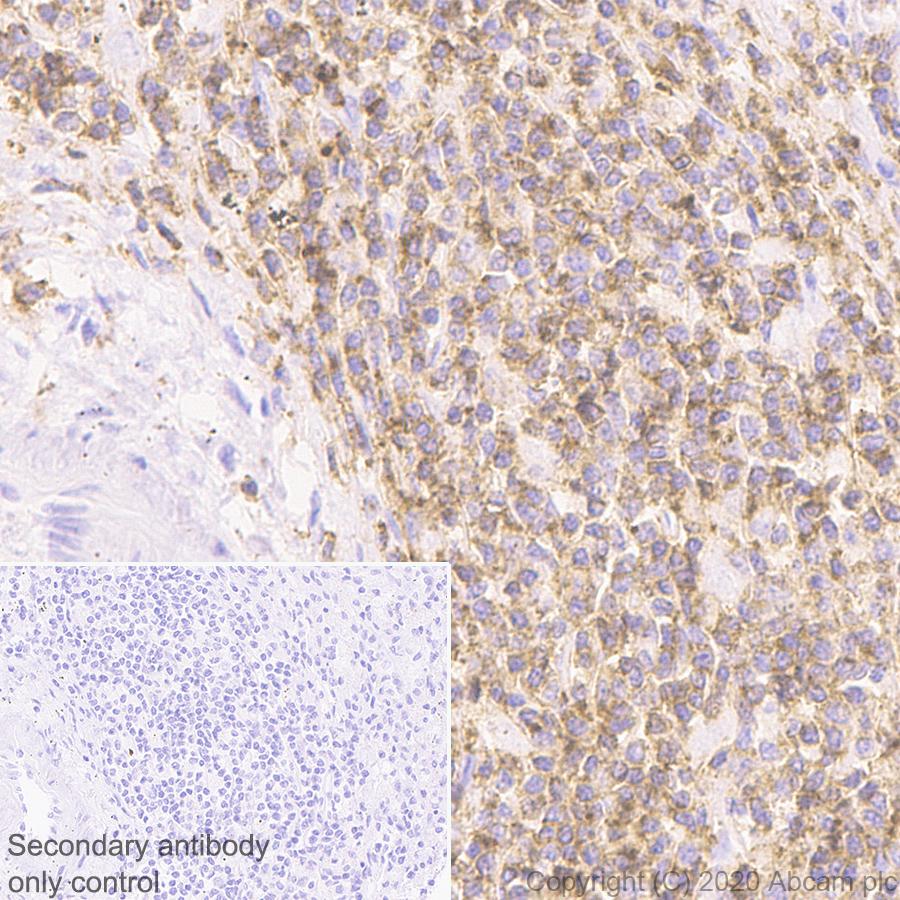
BOND RX™ Validated|20ul selling size|RabMAb|Recombinant
- 5
- 3
Primary Antibodies
AB75813
BOND RX™ Validated|20ul selling size|RabMAb|Recombinant

- 4
- 7
Reactivity data
製品の詳細
The mouse and rat recommendation is based on the WB results. This antibody may not be suitable for IHC with mouse or rat samples.
ab271911 is the carrier-free version of ab140601.
Patented technology
Our RabMAb® technology is a patented hybridoma-based technology for making rabbit monoclonal antibodies. For details on our patents, please refer to RabMAb® patents.
What are the advantages of a recombinant monoclonal antibody?
This product is a recombinant monoclonal antibody, which offers several advantages including:
- - High batch-to-batch consistency and reproducibility
- - Improved sensitivity and specificity
- - Long-term security of supply
- - Animal-free batch production
For more information, read more on recombinant antibodies.
Conjugation ready
Our carrier-free antibodies are typically supplied in a PBS-only formulation, purified and free of BSA, sodium azide and glycerol. This conjugation-ready format is designed for use with fluorochromes, metal isotopes, oligonucleotides, and enzymes, which makes them ideal for antibody labelling, functional and cell-based assays, flow-based assays (e.g. mass cytometry) and Multiplex Imaging applications.
Use our conjugation kits for antibody conjugates that are ready-to-use in as little as 20 minutes with 1 minute hands-on-time and 100% antibody recovery: available for fluorescent dyes, HRP, biotin and gold.
Compatibility
This product is compatible with the Maxpar® Antibody Labeling Kit from Fluidigm, without the need for antibody preparation. Maxpar® is a trademark of Fluidigm Canada Inc.
出荷温度及び保存条件
製品の状態
精製方法
バッファー組成
出荷温度
短期保存温度
長期保存温度
保管に関する情報
補足情報
This supplementary information is collated from multiple sources and compiled automatically.
Biological function summary
The ubiquitin system plays a critical role in regulating protein turnover and quality control within cells. It is part of a larger complex known as the ubiquitin-proteasome system (UPS) which is responsible for degrading proteins that need to be turned over. This process is essential for cell cycle control response to oxidative stress and DNA repair. Ubiquitin's role in tagging proteins for degradation or signaling allows cells to respond quickly to changes in their environment and maintain balance.
Pathways
Ubiquitin functions in several important biological pathways including the Wnt and NF-kB pathways. In the Wnt signaling pathway ubiquitination modulates the stability of key components thereby affecting the pathway's overall activity. In the NF-kB signaling pathway ubiquitin labels inhibitor proteins for degradation which releases and activates NF-kB. These pathways highlight ubiquitin's interaction with proteins such as beta-catenin in Wnt and IkB in NF-kB illustrating how it regulates diverse cellular processes.
製品プロトコール
- Visit the General protocols
- Visit the Troubleshooting
ターゲットの情報
文献 (1)
Recent publications for all applications. Explore the full list and refine your search
Signal transduction and targeted therapy 8:63 PubMed36765030
2023
Applications
Unspecified application
Species
Unspecified reactive species
Abcam product promise
Please note: All products are 'FOR RESEARCH USE ONLY. NOT FOR USE IN DIAGNOSTIC OR THERAPEUTIC PROCEDURES'.
For licensing inquiries, please contact partnerships@abcam.com