JavaScript is disabled in your browser. Please enable JavaScript to view this website.
AB2219

Anti-TRAIL 抗体 [2E5]

Anti-TRAIL antibody [2E5]

Be the first to review this product! Submit a review

|

(7 Publications)

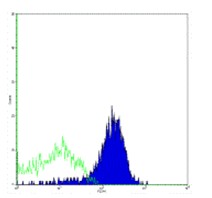
Mouse Monoclonal TRAIL antibody. Suitable for Flow Cyt and reacts with Human samples. Cited in 7 publications. Immunogen corresponding to Recombinant Fragment Protein within Human TNFSF10 aa 50-300.

別名を表示する

CD253, APO2L, TRAIL, TNFSF10, Tumor necrosis factor ligand superfamily member 10, Apo-2 ligand, TNF-related apoptosis-inducing ligand, Apo-2L, Protein TRAIL

関連する標識済み抗体及び組成の異なる製品 (1)

  • 578 PE

    PE Anti-TRAIL antibody [2E5]

Key facts

宿主種

Mouse

クローン性

Monoclonal

クローン番号

2E5

アイソタイプ

IgG1

軽鎖のタイプ

unknown

キャリアフリー

No

交差種

Human

アプリケーション

Flow Cyt

applications

免疫原

Recombinant Fragment Protein within Human TNFSF10 aa 50-300. The exact immunogen used to generate this antibody is proprietary information.

P50591

特異性

<p>This antibody is specific for TRAIL, Tumour necrosis factor (TNF) related apoptosis inducing ligand (TRAIL/ APO2-L)).</p>

Reactivity data

{ "title": "Reactivity Data", "filters": { "stats": ["", "Species", "Dilution Info", "Notes"], "tabs": { "all-applications": {"fullname" : "All Applications", "shortname": "All Applications"}, "FlowCyt" : {"fullname" : "Flow Cytometry", "shortname":"Flow Cyt"} }, "product-promise": { "all": "all", "testedAndGuaranteed": "tested", "guaranteed": "expected", "predicted": "predicted", "notRecommended": "not-recommended" } }, "values": { "Human": { "FlowCyt-species-checked": "testedAndGuaranteed", "FlowCyt-species-dilution-info": "1-5 µg/mL", "FlowCyt-species-notes": "<p></p>" }, "Mouse": { "FlowCyt-species-checked": "notRecommended", "FlowCyt-species-dilution-info": "", "FlowCyt-species-notes": "<p></p>" } } }

出荷温度及び保存条件

製品の状態
Liquid
精製方法
Affinity purification Protein A
精製に関する特記事項
Purified from TCS.
バッファー組成
pH: 7.4 Preservative: 0.1% Sodium azide Constituents: PBS
出荷温度
Blue Ice
短期保存期間
1-2 weeks
短期保存温度
+4°C
長期保存温度
-20°C
分注に関する情報
Upon delivery aliquot
保管に関する情報
Avoid freeze / thaw cycle

補足情報

This supplementary information is collated from multiple sources and compiled automatically.

TRAIL also known as TNF-related apoptosis-inducing ligand plays an important role in inducing apoptosis. This protein has a mass of around 32 kDa and is expressed across various tissues including immune cells. TRAIL interacts with specific receptors on the cell surface to initiate a signaling cascade that results in programmed cell death. It is an attractive therapeutic target because of its selective ability to induce apoptosis in cancer cells while sparing most normal cells.
Biological function summary

TRAIL's function extends beyond inducing cell death. It is an important member of the tumor necrosis factor (TNF) superfamily which regulates immune responses and inflammation. TRAIL can form a homotrimeric complex allowing it to bind effectively to death receptors on target cells specifically DR4 and DR5 triggering a series of downstream signaling events. This interaction is significant in modulating immune surveillance and tumor suppression.

Pathways

TRAIL is integral to both intrinsic and extrinsic apoptosis pathways. Through these pathways TRAIL is closely related to FADD and caspase-8 which are important for apoptosis induction. The extrinsic pathway involves binding to TRAIL death receptors leading to DISC formation while the intrinsic pathway involves mitochondrial events mediated by members of the Bcl-2 protein family.

TRAIL has a significant connection with cancer and autoimmune diseases. TRAIL plays a dual role in cancer where it acts as a tumor suppressor but can also promote tumor progression if cancer cells become resistant to its effects. In cancer TRAIL’s interaction with proteins like FLIP can alter the apoptotic potential of the cells. In autoimmune diseases TRAIL's dysregulation can contribute to tissue damage due to increased immune activity highlighting its complex role in maintaining immune balance.

製品プロトコール

For this product, it's our understanding that no specific protocols are required. You can visit:

ターゲットの情報

Cytokine that binds to TNFRSF10A/TRAILR1, TNFRSF10B/TRAILR2, TNFRSF10C/TRAILR3, TNFRSF10D/TRAILR4 and possibly also to TNFRSF11B/OPG (PubMed : 10549288, PubMed : 26457518). Induces apoptosis. Its activity may be modulated by binding to the decoy receptors TNFRSF10C/TRAILR3, TNFRSF10D/TRAILR4 and TNFRSF11B/OPG that cannot induce apoptosis.
See full target information TNFSF10

文献 (7)

Recent publications for all applications. Explore the full list and refine your search

Frontiers in microbiology 12:774490 PubMed35003007

2021

Optimized Attenuated Typhimurium Suppressed Tumor Growth and Improved Survival in Mice.

Applications

Unspecified application

Species

Unspecified reactive species

Kang Liang,Rui Zhang,Haiyan Luo,Jinlong Zhang,Zhenyuan Tian,Xiaofen Zhang,Yulin Zhang,Md Kaisar Ali,Qingke Kong

Cell death & disease 12:353 PubMed33824272

2021

Development of a bispecific immune engager using a recombinant malaria protein.

Applications

Unspecified application

Species

Unspecified reactive species

Mie A Nordmaj,Morgan E Roberts,Emilie S Sachse,Robert Dagil,Anne Poder Andersen,Nanna Skeltved,Kaare V Grunddal,Sayit Mahmut Erdoğan,Swati Choudhary,Tobias Gustsavsson,Maj Sofie Ørum-Madsen,Igor Moskalev,Weihua Tian,Zhang Yang,Thomas M Clausen,Thor G Theander,Mads Daugaard,Morten A Nielsen,Ali Salanti

Scientific reports 6:22661 PubMed26935795

2016

Membrane-proximal TRAIL species are incapable of inducing short circuit apoptosis signaling: Implications for drug development and basic cytokine biology.

Applications

Flow Cyt

Species

Unspecified reactive species

Katharina Tatzel,Lindsay Kuroki,Igor Dmitriev,Elena Kashentseva,David T Curiel,S Peter Goedegebuure,Matthew A Powell,David G Mutch,William G Hawkins,Dirk Spitzer

Proceedings of the National Academy of Sciences of the United States of America 113:608-13 PubMed26721399

2016

One-pot system for synthesis, assembly, and display of functional single-span membrane proteins on oil-water interfaces.

Applications

Unspecified application

Species

Unspecified reactive species

Peter J Yunker,Haruichi Asahara,Kuo-Chan Hung,Corey Landry,Laura R Arriaga,Ilke Akartuna,John Heyman,Shaorong Chong,David A Weitz

The Journal of investigative dermatology 134:2873-2882 PubMed24999588

2014

Complex changes in the apoptotic and cell differentiation programs during initiation of the hair follicle response to chemotherapy.

Applications

Unspecified application

Species

Unspecified reactive species

Tatyana Y Sharova,Krzysztof Poterlowicz,Natalia V Botchkareva,Nikita A Kondratiev,Ahmar Aziz,Jeffrey H Spiegel,Vladimir A Botchkarev,Andrey A Sharov

Cancer research 65:4799-808 PubMed15930300

2005

Synthetic triterpenoids cooperate with tumor necrosis factor-related apoptosis-inducing ligand to induce apoptosis of breast cancer cells.

Applications

Unspecified application

Species

Unspecified reactive species

Marc L Hyer,Rhonda Croxton,Maryla Krajewska,Stanislaw Krajewski,Christina L Kress,Meiling Lu,Nanjoo Suh,Michael B Sporn,Vincent L Cryns,Juan M Zapata,John C Reed

Leukemia 16:67-73 PubMed11840265

2002

TRAIL (Apo2L) suppresses growth of primary human leukemia and myelodysplasia progenitors.

Applications

Unspecified application

Species

Unspecified reactive species

M Plasilova,J Zivny,J Jelinek,R Neuwirtova,J Cermak,E Necas,L Andera,T Stopka
View all publications

Abcam product promise

当社は、高品質な試薬を通じてお客様の研究を力強くサポートすることをお約束いたします。ご使用いただく各段階で、常にお客様をサポートできる体制を整えております。万が一、製品が期待通りに機能しない場合は、「Abcam Product Promise」による当社保証制度に基づき、安心してご利用いただけます。
保証に関する詳細については利用規約をご確認ください。

Please note: All products are 'FOR RESEARCH USE ONLY. NOT FOR USE IN DIAGNOSTIC OR THERAPEUTIC PROCEDURES'.

For licensing inquiries, please contact partnerships@abcam.com