Anti-Tau (phospho S404) 抗体 [EPR2605]
Anti-Tau (phospho S404) antibody [EPR2605]
- BOND RX™ Validated
- 20ul selling size
- RabMAb
- Recombinant
- 詳細を見る
5
(4 Reviews)
|
(58 Publications)
Anti-Tau (phospho S404) antibody [EPR2605] (ab92676) is a rabbit monoclonal antibody detecting Tau in Western Blot, IP, IHC-P, IHC-Fr, ICC/IF, Dot Blot. Suitable for Human, Mouse, Rat.
- Biophysical QC for unrivalled batch-batch consistency
- Over 30 publications
- Trusted since 2010
別名を表示する
MAPTL, MTBT1, TAU, MAPT, Microtubule-associated protein tau, Neurofibrillary tangle protein, Paired helical filament-tau, PHF-tau, ptau, p tau, phospho tau, MAPTL, MTBT1, TAU, MAPT, Microtubule-associated protein tau, Neurofibrillary tangle protein, Paired helical filament-tau, PHF-tau
- IHC-P
Lab
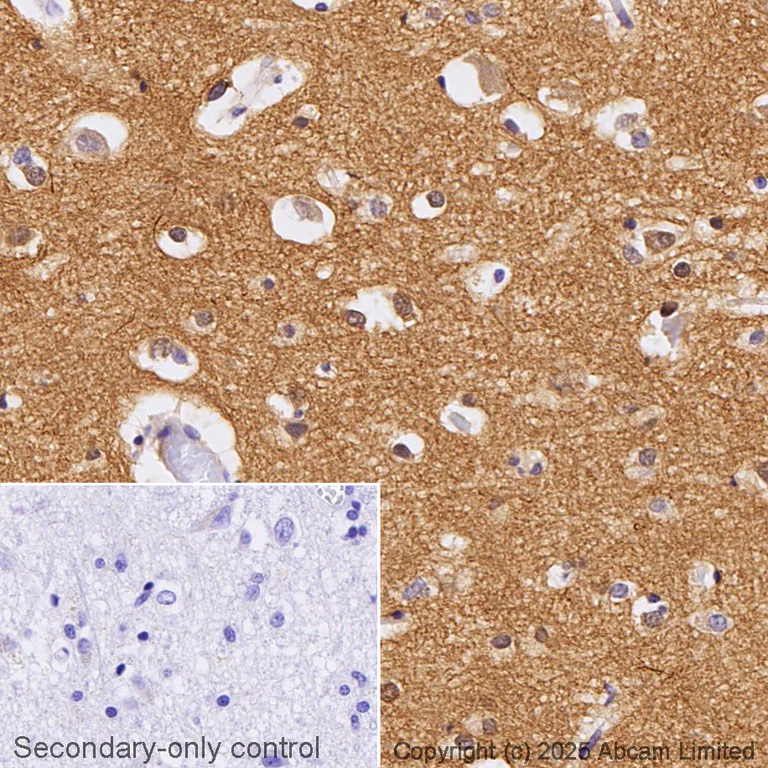
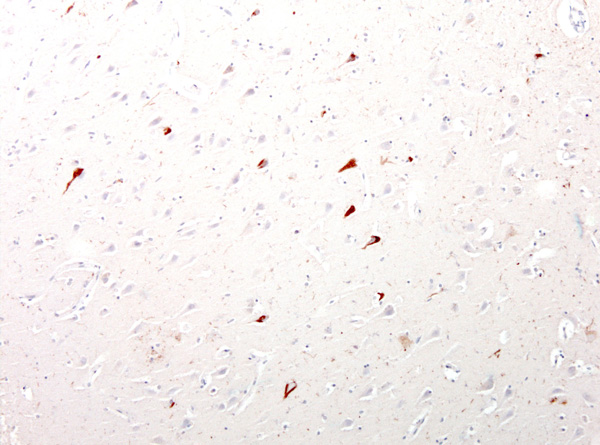
Immunohistochemistry (Formalin/PFA-fixed paraffin-embedded sections) - Anti-Tau (phospho S404) antibody [EPR2605] (AB92676)
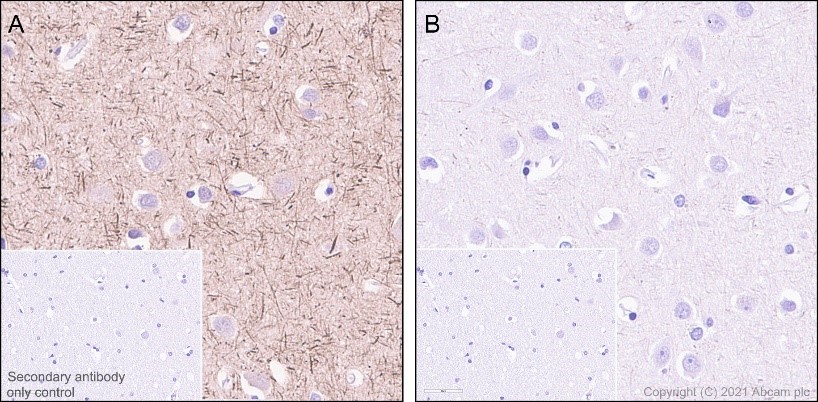
Immunohistochemical analysis of paraffin-embedded human Alzheimer's brain tissue* labelling Tau (phospho S404) with ab92676 at 1ug/ml followed by a ready to use LeicaDS9800 (Bond™ Polymer Refine Detection).
Positive staining in human Alzheimer's brain.
The section was incubated with ab92676 for 30 mins at room temperature. The immunostaining was performed on a Leica Biosystems BOND® RX instrument. Counterstained with Hematoxylin.
Secondary antibody only control : Secondary antibody is a ready to use LeicaDS9800 (Bond™ Polymer Refine Detection).
Heat mediated antigen retrieval with sodium citrate buffer (pH 6.0 epitope retrieval solution1) for 20 mins.
*Tissue obtained from the Human Research Tissue Bank, supported by the NIHR Cambridge Biomedical Research Centre.
- IHC-P
Lab
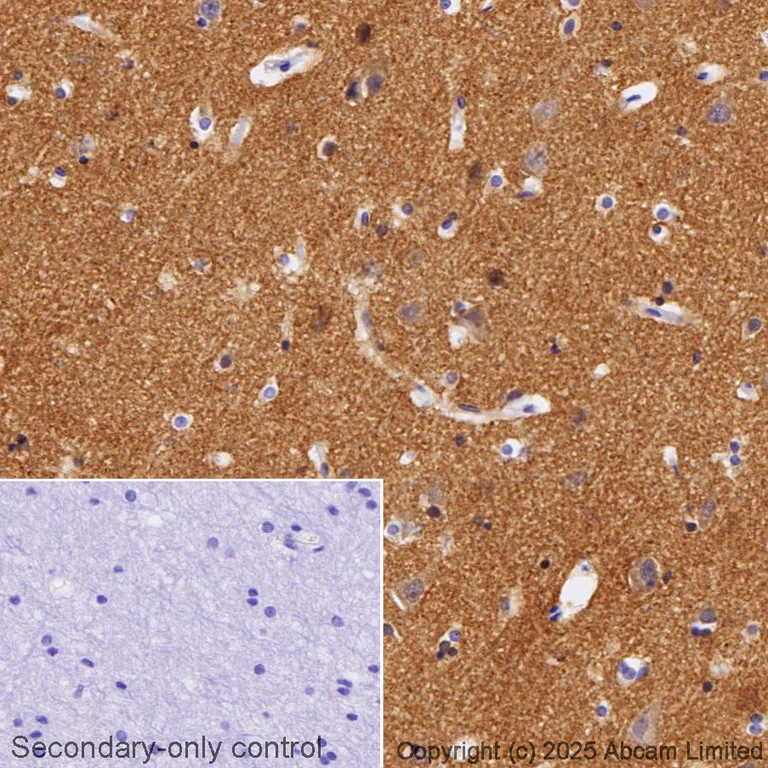
Immunohistochemistry (Formalin/PFA-fixed paraffin-embedded sections) - Anti-Tau (phospho S404) antibody [EPR2605] (AB92676)
Immunohistochemical analysis of paraffin-embedded human cerebral cortex tissue* labelling Tau (phospho S404) with ab92676 at 1ug/ml followed by a ready to use LeicaDS9800 (Bond™ Polymer Refine Detection).
Positive staining in human cerebral cortex.
The section was incubated with ab92676 for 30 mins at room temperature. The immunostaining was performed on a Leica Biosystems BOND® RX instrument. Counterstained with Hematoxylin.
Secondary antibody only control : Secondary antibody is a ready to use LeicaDS9800 (Bond™ Polymer Refine Detection).
Heat mediated antigen retrieval with sodium citrate buffer (pH 6.0 epitope retrieval solution1) for 20 mins.
*Tissue obtained from the Human Research Tissue Bank, supported by the NIHR Cambridge Biomedical Research Centre.
- IHC-P
Lab
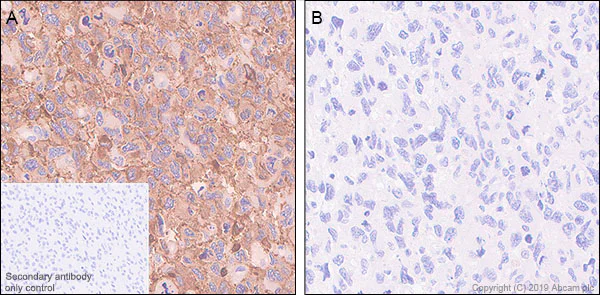
Immunohistochemistry (Formalin/PFA-fixed paraffin-embedded sections) - Anti-Tau (phospho S404) antibody [EPR2605] (AB92676)
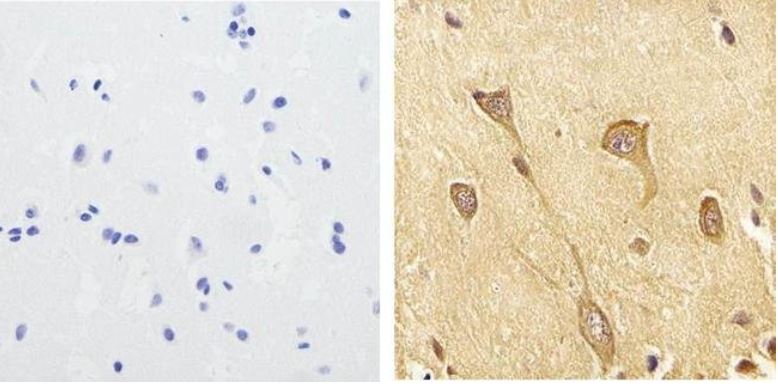
Immunohistochemistry (Formalin/PFA-fixed paraffin-embedded sections) analysis of Human glioma tissue sections labeling Tau with purified ab92676 at 1/200 dilution (0.53 µg/mL). Heat mediated antigen retrieval using Bond™ Epitope Retrieval Solution 2 (pH 9.0). The immunostaining was performed on a Leica Biosystems BOND® RX instrument. Rabbit specific IHC polymer detection kit HRP/DAB (ab209101) was used as the secondary antibody. Negative control : PBS instead of the primary antibody. Hematoxylin was used as a counterstain.
- IP
Lab
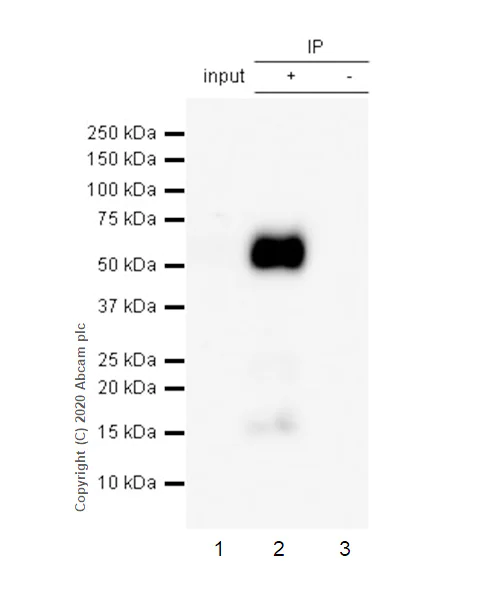
Immunoprecipitation - Anti-Tau (phospho S404) antibody [EPR2605] (AB92676)
Purified ab92676 at 1/20 dilution (0.5μg) immunoprecipitating Tau in Human brain lysate.
Lane 1 (input) : Human brain lysate 10μg
Lane 2 (+) : ab92676 + Human brain lysate.
Lane 3 (-) : Rabbit monoclonal IgG (ab172730) instead of ab92676 in Human brain lysate.
VeriBlot for IP Detection Reagent (HRP) (ab131366) (1/5000 dilution) was used for Western blotting.
Blocking Buffer and concentration : 5% NFDM/TBST.
Diluting buffer and concentration : 5% NFDM/TBST.
Observed band size : 50-70 kDa
All lanes:
Immunoprecipitation - Anti-Tau (phospho S404) antibody [EPR2605] (ab92676)
Predicted band size: 78 kDa
false
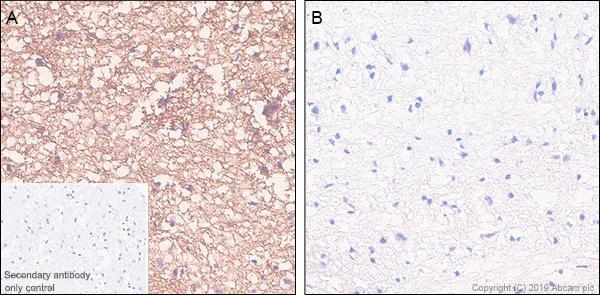
- IHC-P
Lab
Immunohistochemistry (Formalin/PFA-fixed paraffin-embedded sections) - Anti-Tau (phospho S404) antibody [EPR2605] (AB92676)
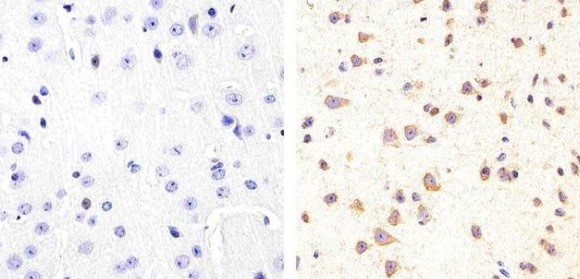
Immunohistochemistry (Formalin/PFA-fixed paraffin-embedded sections) analysis of Mouse cerebrum tissue sections labeling Tau with purified ab92676 at 1/200 dilution (0.53 µg/mL). Heat mediated antigen retrieval using Bond™ Epitope Retrieval Solution 2 (pH 9.0). The immunostaining was performed on a Leica Biosystems BOND® RX instrument. Rabbit specific IHC polymer detection kit HRP/DAB (ab209101) was used as the secondary antibody. Negative control : PBS instead of the primary antibody. Hematoxylin was used as a counterstain.
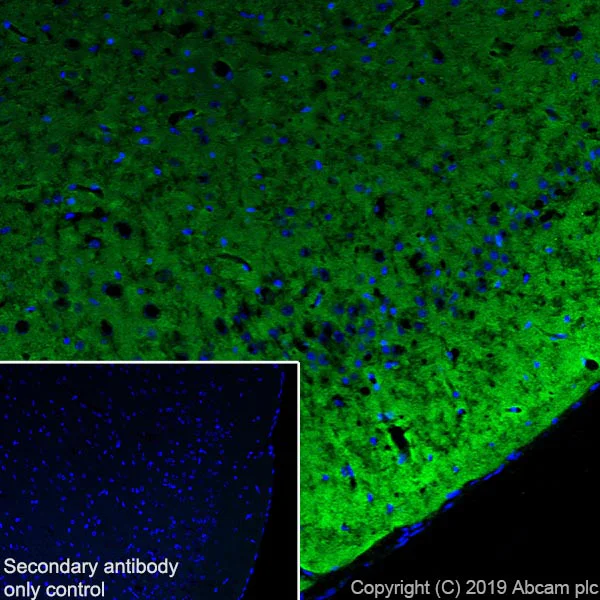
- IHC-Fr
Unknown
Immunohistochemistry (Frozen sections) - Anti-Tau (phospho S404) antibody [EPR2605] (AB92676)
Immunohistochemistry (Frozen sections) analysis of mouse cerebrum tissue sections labeling Tau with Purified ab92676 at 1/50 (1.9 μg/ml).Heat mediated antigen retrieval using sodium citrate buffer (10mM citrate pH 6.0 + 0.05% Tween-20). Goat anti rabbit IgG (Alexa Fluor® 488, ab150077) was used as the secondary antibody. Negative control : PBS instead of the primary antibody. DAPI was used as a counterstain.
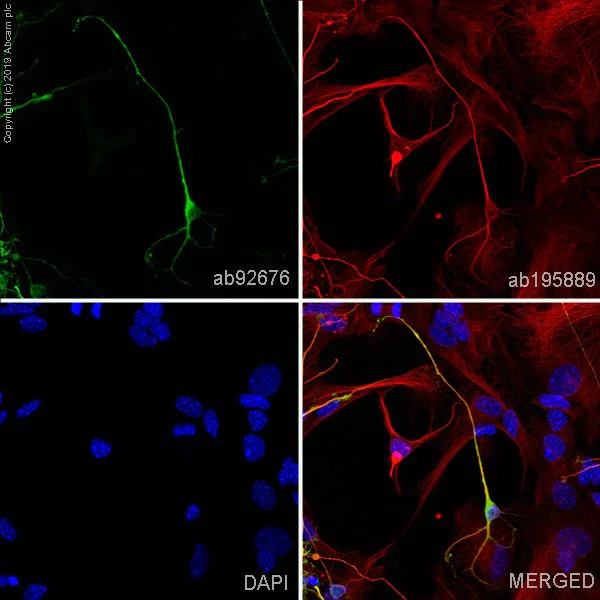
- ICC/IF
Lab
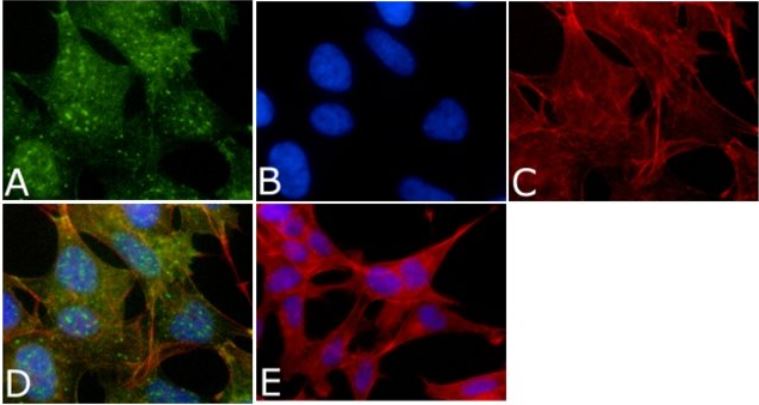
Immunocytochemistry/ Immunofluorescence - Anti-Tau (phospho S404) antibody [EPR2605] (AB92676)
Immunocytochemistry/ Immunofluorescence analysis of Embryonic mouse primary neural cells labeling Tau with purified ab92676 at 1 : 100 dilution (1 μg/ml). Cells were fixed in 4% Paraformaldehyde and permeabilized with 0.1% tritonX-100. Goat anti rabbit IgG (Alexa Fluor© 488, ab150077) was used as the secondary antibody at 1 : 1000 (2 μg/ml) dilution. DAPI (blue) was used as nuclear counterstain. Cells were counterstained with ab195889 Anti-alpha Tubulin antibody [DM1A] - Microtubule Marker (Alexa Fluor® 594) at 1 : 200 (2.5 μg/ml) dilution. DAPI (blue) was used as nuclear counterstain.
Confocal image showing positive staining in neuron.
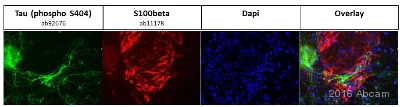
- ICC/IF
AbReview52565****
Immunocytochemistry/ Immunofluorescence - Anti-Tau (phospho S404) antibody [EPR2605] (AB92676)
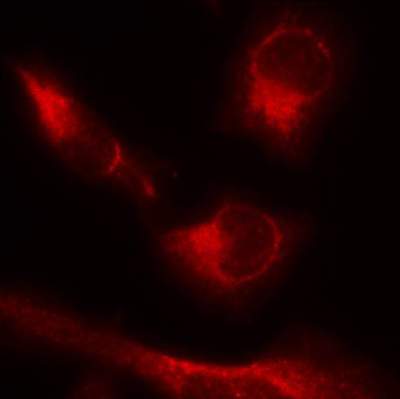
Mouse primary cortical cultures stained for Tau (phospho S404) (green) using ab92676 at 1/100 dilution in ICC/IF, followed by Donkey anti-Rabbit IgG (H+L) Alexa Fluor 488®.
This image is courtesy of an anonymous Abreview.
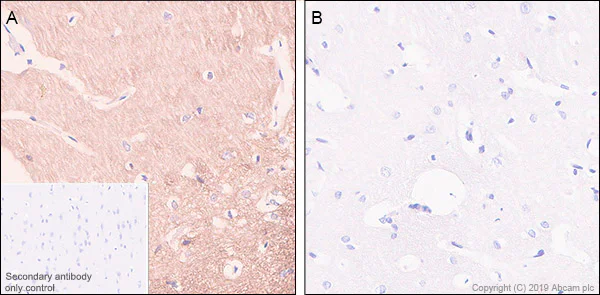
- IHC-P
Lab
Immunohistochemistry (Formalin/PFA-fixed paraffin-embedded sections) - Anti-Tau (phospho S404) antibody [EPR2605] (AB92676)
Immunohistochemistry (Formalin/PFA-fixed paraffin-embedded sections) analysis of Rat cerebrum tissue sections labeling Tau with purified ab92676 at 1/200 dilution (0.53 µg/mL). Heat mediated antigen retrieval using Bond™ Epitope Retrieval Solution 2 (pH 9.0). The immunostaining was performed on a Leica Biosystems BOND® RX instrument. Rabbit specific IHC polymer detection kit HRP/DAB (ab209101) was used as the secondary antibody. Negative control : PBS instead of the primary antibody. Hematoxylin was used as a counterstain.
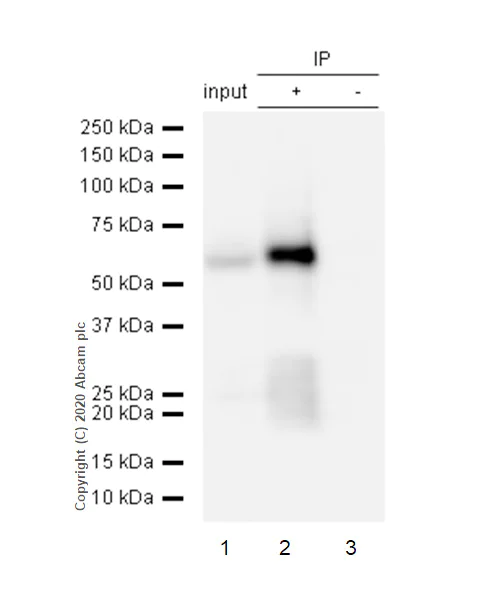
- IP
Lab
Immunoprecipitation - Anti-Tau (phospho S404) antibody [EPR2605] (AB92676)
Purified ab92676 at 1/20 dilution (0.5μg) immunoprecipitating Tau in Mouse brain lysate.
Lane 1 (input) : Mouse brain lysate 10μg
Lane 2 (+) : ab92676 + Mouse brain lysate.
Lane 3 (-) : Rabbit monoclonal IgG (ab172730) instead of ab92676 in Mouse brain lysate.
VeriBlot for IP Detection Reagent (HRP) (ab131366) (1/1000 dilution) was used for Western blotting.
Blocking Buffer and concentration : 5% NFDM/TBST.
Diluting buffer and concentration : 5% NFDM/TBST.
Observed band size : 50-70 kDa
All lanes:
Immunoprecipitation - Anti-Tau (phospho S404) antibody [EPR2605] (ab92676)
Predicted band size: 78 kDa
false
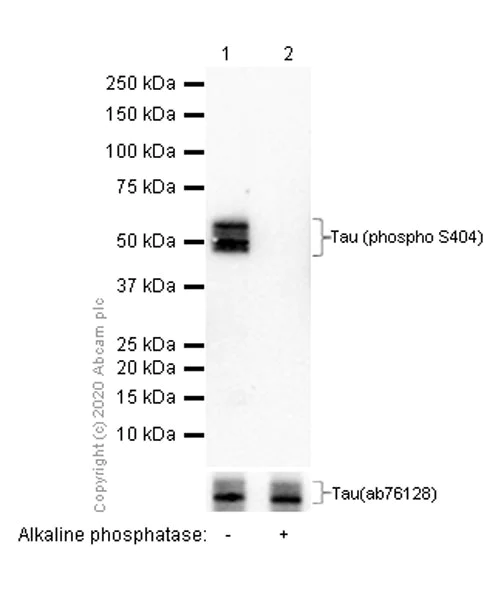
- WB
Unknown
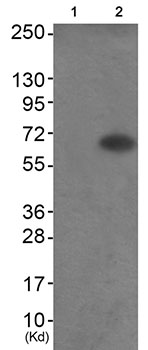
Western blot - Anti-Tau (phospho S404) antibody [EPR2605] (AB92676)
All lanes:
Western blot - Anti-Tau (phospho S404) antibody [EPR2605] (ab92676) at 1/1000 dilution
Lane 1:
Human brain lysate
Lane 2:
Human brain lysate, the menbrane treated with alkaline phosphatase for 1 hour
Secondary
All lanes:
Goat Anti-Rabbit IgG (HRP) with minimal cross-reactivity with human IgG at 1/2000 dilution
Predicted band size: 78 kDa
false
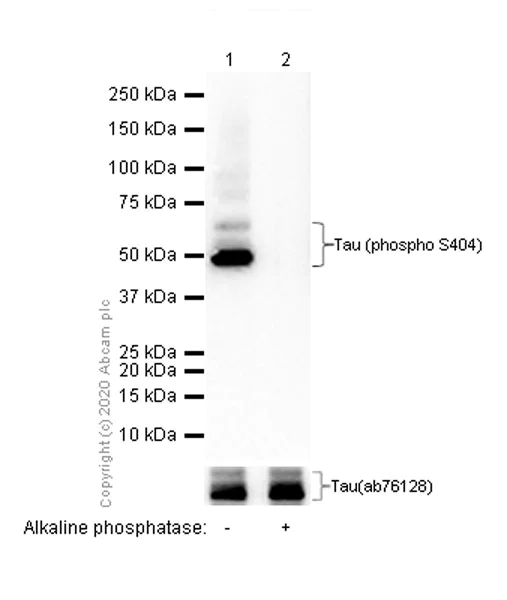
- WB
Unknown
Western blot - Anti-Tau (phospho S404) antibody [EPR2605] (AB92676)
All lanes:
Western blot - Anti-Tau (phospho S404) antibody [EPR2605] (ab92676) at 1/1000 dilution
Lane 1:
Mouse brain lysate
Lane 2:
Mouse brain lysate, the menbrane treated with alkaline phosphatase for 1 hour
Secondary
All lanes:
Goat Anti-Rabbit IgG (HRP) with minimal cross-reactivity with human IgG at 1/2000 dilution
Predicted band size: 78 kDa
false
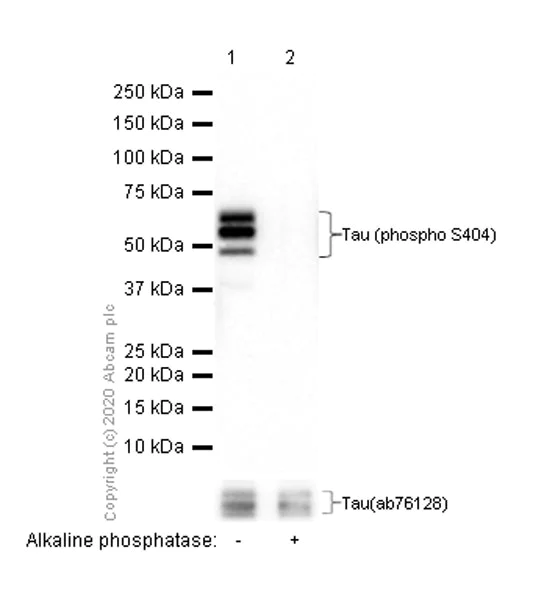
- WB
Unknown
Western blot - Anti-Tau (phospho S404) antibody [EPR2605] (AB92676)
All lanes:
Western blot - Anti-Tau (phospho S404) antibody [EPR2605] (ab92676) at 1/1000 dilution
Lane 1:
Rat brain lysate at 15 µg
Lane 2:
Rat brain lysate, the menbrane treated with alkaline phosphatase for 1 hour at 15 µg
Secondary
All lanes:
Goat Anti-Rabbit IgG (HRP) with minimal cross-reactivity with human IgG at 1/2000 dilution
Predicted band size: 78 kDa
false
- Dot
Unknown
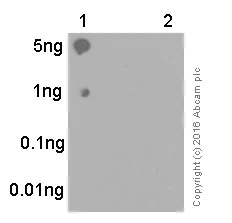
Dot Blot - Anti-Tau (phospho S404) antibody [EPR2605] (AB92676)
Dot blot analysis of Tau (pS404) phosopho peptide (Lane 1) and Tau non-phospho peptide (Lane 2) labelling Tau (phospho S404) with ab92676 at a dilution of 1/1000. ab97051 (Peroxidase conjugated goat anti-rabbit IgG (H+L)) was used as the secondary antibody at a dilution of 1/100000.
Blocking and dilution buffer : 5% NFDM/TBST.
Exposure time : 3 minutes.
関連する標識済み抗体及び組成の異なる製品 (6)
-
Anti-Tau (phospho S404) antibody [EPR2605] - BSA and Azide free
-
565 Alexa Fluor® 555
Alexa Fluor® 555 Anti-Tau (phospho S404) antibody [EPR2605]
-
603 Alexa Fluor® 568
Alexa Fluor® 568 Anti-Tau (phospho S404) antibody [EPR2605]
-
617 Alexa Fluor® 594
Alexa Fluor® 594 Anti-Tau (phospho S404) antibody [EPR2605]
-
665 Alexa Fluor® 647
Alexa Fluor® 647 Anti-Tau (phospho S404) antibody [EPR2605]
-
775 Alexa Fluor® 750
Alexa Fluor® 750 Anti-Tau (phospho S404) antibody [EPR2605]
代替製品
Proteins & Peptides
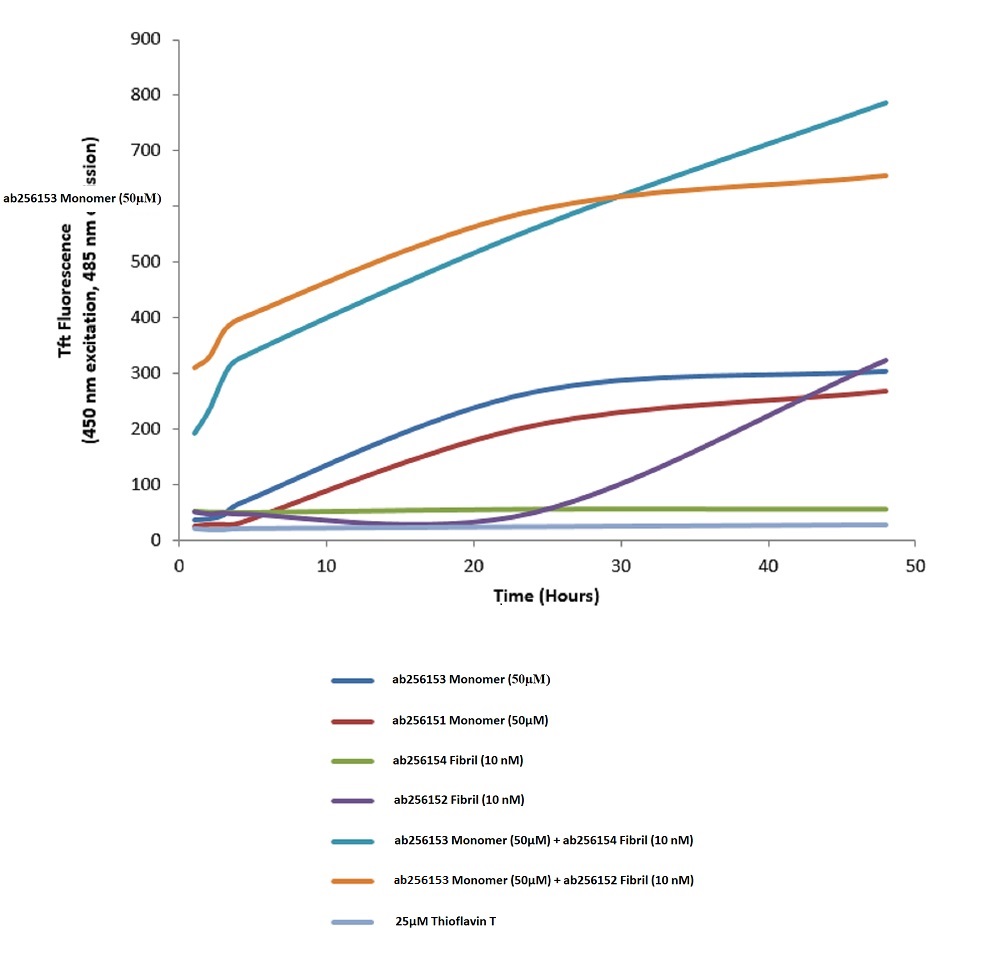
AB256153
Recombinant human Tau (mutated P301S) protein monomer (Active) (Tag Free)
- 0
- 0


組合せ製品
Primary Antibodies
AB32057
Anti-Tau (phospho S396) antibody [E178]
BOND RX™ Validated|20ul selling size|RabMAb|Recombinant
- 5
- 5
Primary Antibodies
AB151559
Anti-Tau (phospho T231) antibody [EPR2488]
BOND RX™ Validated|20ul selling size|RabMAb|Recombinant

- 5
- 6
Primary Antibodies
AB76128
BOND RX™ Validated|20ul selling size|RabMAb|Recombinant|KD Validated

- 5
- 1
Primary Antibodies
AB108387
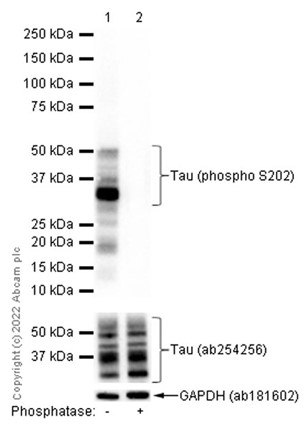
Anti-Tau (phospho S202) antibody [EPR2402]
20ul selling size|RabMAb|Recombinant
- 2
- 2
Reactivity data
製品の詳細
What is this antibody validated in?
Anti-Tau (phospho S404) antibody [EPR2605] (ab92676) is a rabbit recombinant monoclonal antibody and is validated for use in Western Blot (WB), Immunoprecipitation (IP), Immunohistochemistry (IHC-P), Immunohistochemistry (IHC-Fr), Immunocytochemistry/immunofluorescence (ICC/IF), Dot Blot in Human, Mouse, Rat samples.
What is the molecular weight of Tau?
Anti-Tau (phospho S404) [EPR2605] (ab92676) specifically detects a band for Tau (UniProt: P10636) at a molecular weight of 79kDa.
Trusted by the scientific community
Anti-Tau (phospho S404) [EPR2605] (ab92676) was first used in a scientific publication in 2010 and has been cited over 30 times in peer-reviewed journals.
Other related products
We have a range of other formats of antibody clone [EPR2605] also available for your convenience: ab92676, Carrier free - ab196364, Alexa Fluor® 647 - ab311070, Alexa Fluor® 594 - ab311656, Alexa Fluor® 568 - ab312929, Alexa Fluor® 555 - ab313142, Alexa Fluor® 750 - ab321768
Patented technology
Our RabMAb® technology is a patented hybridoma-based technology for making rabbit monoclonal antibodies. For details on our patents, please refer to RabMAb® patents.
What are the advantages of a recombinant monoclonal antibody?
This product is a recombinant monoclonal antibody, which offers several advantages including:
- - High batch-to-batch consistency and reproducibility
- - Improved sensitivity and specificity
- - Long-term security of supply
- - Animal-free batch production
For more information, read more on recombinant antibodies.
Trial sizes available!
Test your antibody or perform pre-screening before committing to a larger quantity. Sold in 20µl. Discover our selection of trial-size antibodies.
出荷温度及び保存条件
製品の状態
精製方法
バッファー組成
出荷温度
短期保存温度
長期保存温度
保管に関する情報
補足情報
This supplementary information is collated from multiple sources and compiled automatically.
Biological function summary
Tau is involved in the assembly and stabilization of microtubules essential for maintaining neuronal structure. It interacts with microtubule-binding domains (MBD) to bind and bundle microtubules facilitating intracellular transport. Tau forms a part of the neuronal cytoskeleton complex working closely with other cytoskeletal proteins to preserve the proper axonal transport and function. Abnormally phosphorylated Tau often termed phospho-Tau disrupts this complex affecting microtubule stability.
Pathways
Tau has critical involvement in several signaling cascades such as the microtubule-binding and transport pathways. Glycogen synthase kinase 3 beta (GSK3Β) and cyclin-dependent kinase 5 (CDK5) frequently phosphorylate Tau controlling its interaction with microtubules. Phosphorylated Tau accumulates leading to the formation of neurofibrillary tangles often observed in neurodegenerative conditions. Additionally Tau interacts with GAPDH impacting cellular energy regulation through potential pathway cross-talk involving oxidative stress responses.
製品プロトコール
- Visit the General protocols
- Visit the Troubleshooting
ターゲットの情報
文献 (58)
Recent publications for all applications. Explore the full list and refine your search
General physiology and biophysics 44:363-375 PubMed40923656
2025
Applications
Unspecified application
Species
Unspecified reactive species
Biomedicines 13: PubMed40426884
2025
Applications
Unspecified application
Species
Unspecified reactive species
Neuromolecular medicine 27:34 PubMed40374872
2025
Applications
Unspecified application
Species
Unspecified reactive species
Environment & health (Washington, D.C.) 3:199-212 PubMed40012869
2025
Applications
Unspecified application
Species
Unspecified reactive species
Alzheimer's research & therapy 17:20 PubMed39806490
2025
Applications
Unspecified application
Species
Unspecified reactive species
PloS one 19:e0312834 PubMed39475992
2024
Applications
Unspecified application
Species
Unspecified reactive species
International journal of molecular sciences 25: PubMed39125907
2024
Applications
Unspecified application
Species
Unspecified reactive species
Metabolic brain disease 39:1335-1351 PubMed39088109
2024
Applications
Unspecified application
Species
Unspecified reactive species
Life (Basel, Switzerland) 14: PubMed38792645
2024
Applications
Unspecified application
Species
Unspecified reactive species
Advanced biology 8:e2400123 PubMed38684459
2024
Applications
Unspecified application
Species
Unspecified reactive species
Abcam product promise
Please note: All products are 'FOR RESEARCH USE ONLY. NOT FOR USE IN DIAGNOSTIC OR THERAPEUTIC PROCEDURES'.
For licensing inquiries, please contact partnerships@abcam.com