JavaScript is disabled in your browser. Please enable JavaScript to view this website.
AB131354

Anti-Tau (phospho S262) 抗体

Anti-Tau (phospho S262) antibody

3

(2 Reviews)

|

(29 Publications)

Rabbit Polyclonal TAU phospho S262 antibody. Suitable for WB, IHC-P, ICC/IF and reacts with Mouse, Rat, Human samples. Cited in 29 publications.

別名を表示する

MAPTL, MTBT1, TAU, MAPT, Microtubule-associated protein tau, Neurofibrillary tangle protein, Paired helical filament-tau, PHF-tau, ptau, p tau, phospho tau, MAPTL, MTBT1, TAU, MAPT, Microtubule-associated protein tau, Neurofibrillary tangle protein, Paired helical filament-tau, PHF-tau

3 Images
Immunocytochemistry/ Immunofluorescence - Anti-Tau (phospho S262) antibody (AB131354)
  • ICC/IF

Unknown

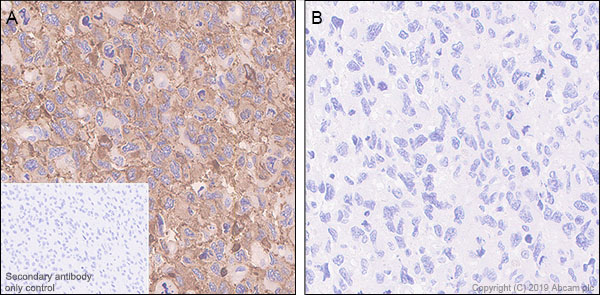
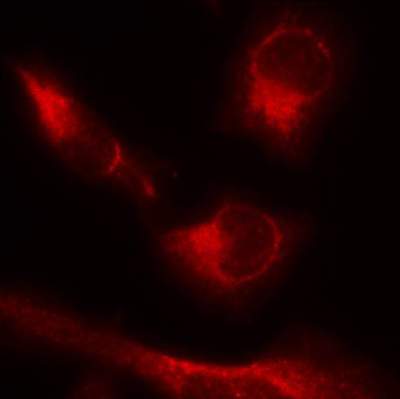
Immunocytochemistry/ Immunofluorescence - Anti-Tau (phospho S262) antibody (AB131354)

Immunofluorescence of methanol-fixed HeLa cells (ab29545) staining Tau (phospho S262) with ab131354 antibody at a dilution of 1/100.
Immunohistochemistry (Formalin/PFA-fixed paraffin-embedded sections) - Anti-Tau (phospho S262) antibody (AB131354)
  • IHC-P

Unknown

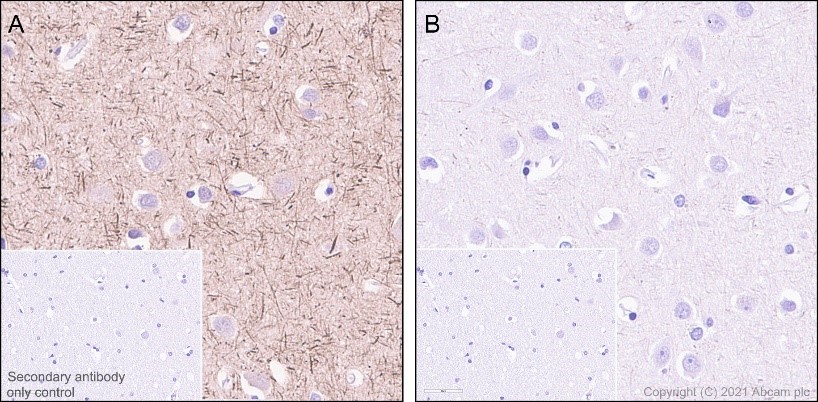
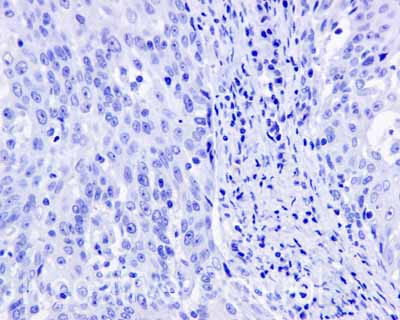
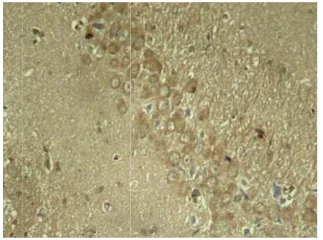
Immunohistochemistry (Formalin/PFA-fixed paraffin-embedded sections) - Anti-Tau (phospho S262) antibody (AB131354)

Immunohistochemical analysis of paraffin embedded Rat hippocampal region tissue from a model with Alzheimer's disease labelling Tau (phospho S262) with ab131354 antibody at a dilution of 1/50.
Western blot - Anti-Tau (phospho S262) antibody (AB131354)
  • WB

Unknown

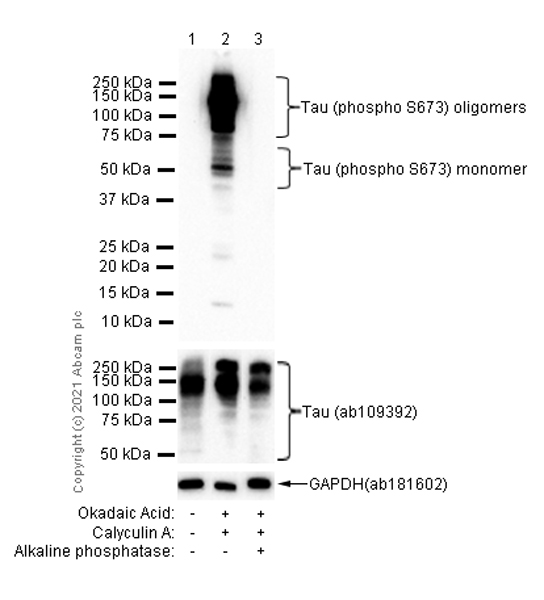
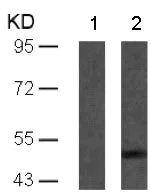
Western blot - Anti-Tau (phospho S262) antibody (AB131354)

All lanes:

Western blot - Anti-Tau (phospho S262) antibody (ab131354) at 1/500 dilution

Lane 1:

Mouse brain tissue extract with immunizing peptide

Lane 2:

Mouse brain tissue extract

Predicted band size: 78 kDa

false

Key facts

宿主種

Rabbit

クローン性

Polyclonal

アイソタイプ

IgG

キャリアフリー

No

交差種

Mouse, Rat, Human

アプリケーション

IHC-P, ICC/IF, WB

applications

免疫原

The exact immunogen used to generate this antibody is proprietary information.

特異性

The specificity of this antibody refers to P10636-8.

Reactivity data

{ "title": "Reactivity Data", "filters": { "stats": ["", "Species", "Dilution Info", "Notes"], "tabs": { "all-applications": {"fullname" : "All Applications", "shortname": "All Applications"}, "WB" : {"fullname" : "Western blot", "shortname":"WB"}, "IHCP" : {"fullname" : "Immunohistochemistry (Formalin/PFA-fixed paraffin-embedded sections)", "shortname":"IHC-P"}, "ICCIF" : {"fullname" : "Immunocytochemistry/ Immunofluorescence", "shortname":"ICC/IF"} }, "product-promise": { "all": "all", "testedAndGuaranteed": "tested", "guaranteed": "expected", "predicted": "predicted", "notRecommended": "not-recommended" } }, "values": { "Human": { "WB-species-checked": "guaranteed", "WB-species-dilution-info": "", "WB-species-notes": "", "IHCP-species-checked": "guaranteed", "IHCP-species-dilution-info": "", "IHCP-species-notes": "", "ICCIF-species-checked": "testedAndGuaranteed", "ICCIF-species-dilution-info": "1/100 - 1/200", "ICCIF-species-notes": "<p></p>" }, "Mouse": { "WB-species-checked": "testedAndGuaranteed", "WB-species-dilution-info": "1/500 - 1/1000", "WB-species-notes": "<p></p>", "IHCP-species-checked": "guaranteed", "IHCP-species-dilution-info": "", "IHCP-species-notes": "", "ICCIF-species-checked": "guaranteed", "ICCIF-species-dilution-info": "", "ICCIF-species-notes": "" }, "Rat": { "WB-species-checked": "guaranteed", "WB-species-dilution-info": "", "WB-species-notes": "", "IHCP-species-checked": "testedAndGuaranteed", "IHCP-species-dilution-info": "1/50 - 1/100", "IHCP-species-notes": "<p></p>", "ICCIF-species-checked": "guaranteed", "ICCIF-species-dilution-info": "", "ICCIF-species-notes": "" } } }

出荷温度及び保存条件

製品の状態
Liquid
精製方法
Affinity purification Immunogen
精製に関する特記事項
ab131354 was purified by affinity-chromatography using epitope-specific phosphopeptide. Non-phospho specific antibodies were removed by chromatography using non-phosphopeptide.
バッファー組成
pH: 7.4 Preservative: 0.02% Sodium azide Constituents: PBS, 50% Glycerol (glycerin, glycerine), 0.88% Sodium chloride
出荷温度
Blue Ice
短期保存期間
1-2 weeks
短期保存温度
+4°C
長期保存温度
-20°C
分注に関する情報
Upon delivery aliquot
保管に関する情報
Avoid freeze / thaw cycle

補足情報

This supplementary information is collated from multiple sources and compiled automatically.

Tau also known as microtubule-associated protein Tau (MAPT) plays an important role in stabilizing microtubules in neuronal cells. Tau is primarily found in the central nervous system but also exists in peripheral neurons. Human Tau protein comes in six isoforms due to alternative splicing with molecular weights ranging from 48 kDa to 67 kDa. This protein predominantly locates in the axons of neurons where it maintains the stability of microtubule tracks necessary for axonal transport.
Biological function summary

Tau is involved in the assembly and stabilization of microtubules essential for maintaining neuronal structure. It interacts with microtubule-binding domains (MBD) to bind and bundle microtubules facilitating intracellular transport. Tau forms a part of the neuronal cytoskeleton complex working closely with other cytoskeletal proteins to preserve the proper axonal transport and function. Abnormally phosphorylated Tau often termed phospho-Tau disrupts this complex affecting microtubule stability.

Pathways

Tau has critical involvement in several signaling cascades such as the microtubule-binding and transport pathways. Glycogen synthase kinase 3 beta (GSK3β) and cyclin-dependent kinase 5 (CDK5) frequently phosphorylate Tau controlling its interaction with microtubules. Phosphorylated Tau accumulates leading to the formation of neurofibrillary tangles often observed in neurodegenerative conditions. Additionally Tau interacts with GAPDH impacting cellular energy regulation through potential pathway cross-talk involving oxidative stress responses.

Tau is closely associated with Alzheimer's disease and frontotemporal dementia. In Alzheimer's disease hyperphosphorylated Tau aggregates into paired helical filaments forming neurofibrillary tangles while similar aggregates are observed in frontotemporal dementia. In these conditions Tau links to amyloid precursor protein (APP) where misregulated phosphorylation-driven interactions contribute to neurodegeneration. Identifying phospho-Tau and its altered interactions with related proteins aids in understanding and potentially treating these disorders.

製品プロトコール

For this product, it's our understanding that no specific protocols are required. You can visit:

ターゲットの情報

Promotes microtubule assembly and stability, and might be involved in the establishment and maintenance of neuronal polarity (PubMed : 21985311). The C-terminus binds axonal microtubules while the N-terminus binds neural plasma membrane components, suggesting that tau functions as a linker protein between both (PubMed : 21985311, PubMed : 32961270). Axonal polarity is predetermined by TAU/MAPT localization (in the neuronal cell) in the domain of the cell body defined by the centrosome. The short isoforms allow plasticity of the cytoskeleton whereas the longer isoforms may preferentially play a role in its stabilization.
See full target information MAPT pS262

文献 (29)

Recent publications for all applications. Explore the full list and refine your search

Frontiers in pharmacology 16:1616775 PubMed40969938

2025

Long-term gabapentin treatment impairs cognitive function in aged mice via tau hyperphosphorylation.

Applications

Unspecified application

Species

Unspecified reactive species

Suyun Xia,Zerong You,Xinbo Wu,Jinsheng Yang,Shiyu Wang,Na Li,Jiajia Dai,Yuanlin Dong,Lucy Chen,Min Yan,Shiqian Shen,Zhongcong Xie,Jianren Mao

International journal of molecular sciences 26: PubMed40332373

2025

Acanthopanax Senticosus Saponins Prevent Cognitive Decline in Rats with Alzheimer's Disease.

Applications

Unspecified application

Species

Unspecified reactive species

Xue-Min Cui,Wang Wang,Lin Yang,Bao-Wen Nie,Qian Liu,Xiao-Hui Li,Dong-Xiao Duan

Biomedicines 12: PubMed39595152

2024

Brain Injury and Neurodegeneration: Molecular, Functional, and Translational Approach 2.0.

Applications

Unspecified application

Species

Unspecified reactive species

Pankaj Ahluwalia,Pankaj Gaur,Meenakshi Ahluwalia,Kumar Vaibhav

PloS one 19:e0313507 PubMed39536002

2024

Palmitoyl-L-carnitine induces tau phosphorylation and mitochondrial dysfunction in neuronal cells.

Applications

Unspecified application

Species

Unspecified reactive species

Gwangho Yoon,Min Kyoung Kam,Young Ho Koh,Chulman Jo

Acta neuropathologica communications 12:94 PubMed38867338

2024

Cryo-EM structures reveal tau filaments from Down syndrome adopt Alzheimer's disease fold.

Applications

Unspecified application

Species

Unspecified reactive species

Ujjayini Ghosh,Eric Tse,Hyunjun Yang,Marie Shi,Christoffer D Caro,Feng Wang,Gregory E Merz,Stanley B Prusiner,Daniel R Southworth,Carlo Condello

Brain communications 6:fcae136 PubMed38712317

2024

ablation attenuates pathological phenotypes in a mouse model of tauopathy.

Applications

Unspecified application

Species

Unspecified reactive species

Grigorii Sultanakhmetov,Sophia Jobien M Limlingan,Aoi Fukuchi,Keisuke Tsuda,Hirokazu Suzuki,Iori Kato,Taro Saito,Adam Z Weitemier,Kanae Ando

British journal of anaesthesia 131:726-738 PubMed37537117

2023

Sevoflurane anaesthesia induces cognitive impairment in young mice through sequential tau phosphorylation.

Applications

Unspecified application

Species

Unspecified reactive species

Feng Liang,Mengzhu Li,Miao Xu,Yiying Zhang,Yuanlin Dong,Sulpicio G Soriano,Mary Ellen McCann,Guang Yang,Zhongcong Xie

Neural regeneration research 18:1795-1801 PubMed36751808

2023

Death-associated protein kinase 1 is associated with cognitive dysfunction in major depressive disorder.

Applications

Unspecified application

Species

Unspecified reactive species

Xiao-Hui Li,Hong-Can Zhu,Xue-Min Cui,Wang Wang,Lin Yang,Li-Bo Wang,Neng-Wei Hu,Dong-Xiao Duan

Cell reports 42:111912 PubMed36640304

2023

Axonal plasticity in response to active forces generated through magnetic nano-pulling.

Applications

Unspecified application

Species

Unspecified reactive species

Alessandro Falconieri,Sara De Vincentiis,Valentina Cappello,Domenica Convertino,Ravi Das,Samuele Ghignoli,Sofia Figoli,Stefano Luin,Frederic Català-Castro,Laura Marchetti,Ugo Borello,Michael Krieg,Vittoria Raffa

Molecular neurobiology 59:5856-5873 PubMed35804281

2022

DHCR24 Knockdown Induces Tau Hyperphosphorylation at Thr181, Ser199, Ser262, and Ser396 Sites via Activation of the Lipid Raft-Dependent Ras/MEK/ERK Signaling Pathway in C8D1A Astrocytes.

Applications

Unspecified application

Species

Unspecified reactive species

Meiting Mai,Xiaorou Guo,Yue Huang,Wenbin Zhang,Yixuan Xu,Ying Zhang,Xiaojing Bai,Junfeng Wu,Hengbing Zu
View all publications

Abcam product promise

当社は、高品質な試薬を通じてお客様の研究を力強くサポートすることをお約束いたします。ご使用いただく各段階で、常にお客様をサポートできる体制を整えております。万が一、製品が期待通りに機能しない場合は、「Abcam Product Promise」による当社保証制度に基づき、安心してご利用いただけます。
保証に関する詳細については利用規約をご確認ください。

Please note: All products are 'FOR RESEARCH USE ONLY. NOT FOR USE IN DIAGNOSTIC OR THERAPEUTIC PROCEDURES'.

For licensing inquiries, please contact partnerships@abcam.com