Anti-STK3/MST-2 抗体 [EP1466Y] - BSA and Azide free
Anti-STK3/MST-2 antibody [EP1466Y] - BSA and Azide free
- RabMAb
- Recombinant
- KO Validated
- 詳細を見る
Be the first to review this product! Submit a review
|
(1 Publication)
Rabbit Recombinant Monoclonal STK3/MST-2 antibody. Carrier free. Suitable for ICC/IF, WB, IP, IHC-P, Flow Cyt (Intra) and reacts with Mouse, Human, Rat samples. Cited in 1 publication.
別名を表示する
KRS1, MST2, STK3, Serine/threonine-protein kinase 3, Mammalian STE20-like protein kinase 2, STE20-like kinase MST2, Serine/threonine-protein kinase Krs-1, MST-2
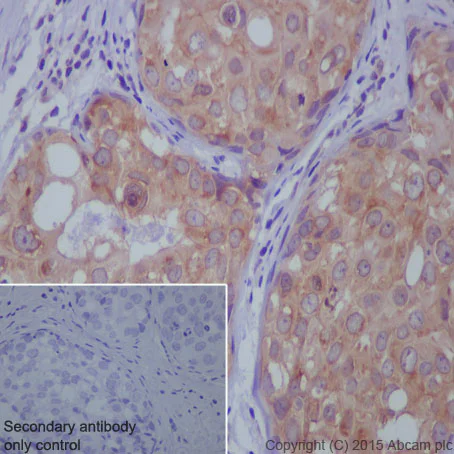
- IHC-P
Unknown
Immunohistochemistry (Formalin/PFA-fixed paraffin-embedded sections) - Anti-STK3/MST-2 antibody [EP1466Y] - BSA and Azide free (AB232323)
Immunohistochemical staining of paraffin embedded human breast carcinoma with purified ab52641 at a working dilution of 1/50. The secondary antibody used is ab97051, a goat anti-rabbit IgG (H&L) at a dilution of 1/500. The sample is counter-stained with hematoxylin. Antigen retrieval was perfomed using Tris-EDTA buffer, pH 9.0. PBS was used instead of the primary antibody as the negative control, and is shown in the inset.This data was developed using the same antibody clone in a different buffer formulation containing PBS, BSA, glycerol, and sodium azide (ab52641).
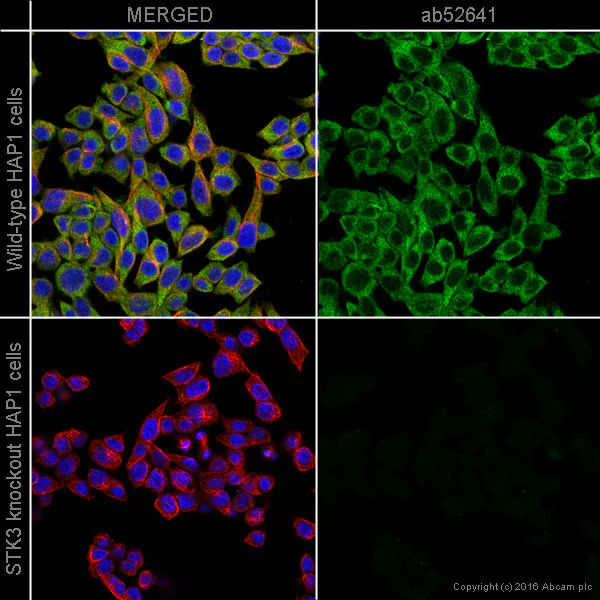
- ICC/IF
Supplier Data
Immunocytochemistry/ Immunofluorescence - Anti-STK3/MST-2 antibody [EP1466Y] - BSA and Azide free (AB232323)
ab52641 staining STK3 in wild-type HAP1 cells (top panel) and STK3 knockout HAP1 cells (bottom panel). The cells were fixed with 4% formaldehyde (10min), permeabilized with 0.1% Triton X-100 for 5 minutes and then blocked with 1% BSA/10% normal goat serum/0.3M glycine in 0.1% PBS-Tween for 1h. The cells were then incubated with ab52641 at 5μg/ml concentration and ab195889 at 1/250 dilution (shown in pseudo colour red) overnight at +4°C, followed by a further incubation at room temperature for 1h with a goat secondary antibody to Rabbit IgG (Alexa Fluor® 488) (ab150081) at 2 μg/ml (shown in green). Nuclear DNA was labelled in blue with DAPI.
This data was developed using the same antibody clone in a different buffer formulation containing PBS, BSA, glycerol, and sodium azide (ab52641).
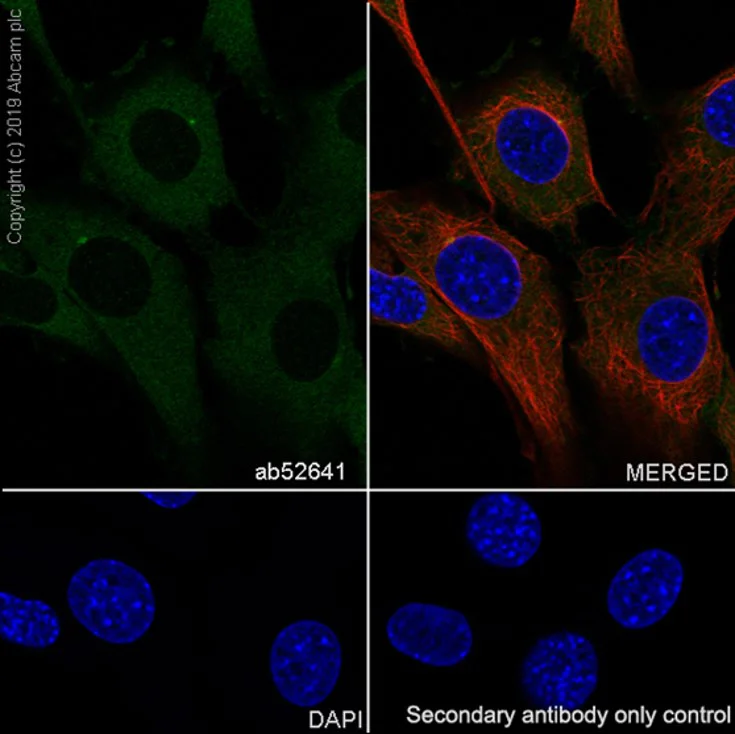
- ICC/IF
Lab
Immunocytochemistry/ Immunofluorescence - Anti-STK3/MST-2 antibody [EP1466Y] - BSA and Azide free (AB232323)
Confocal image showing cytoplasmic staining of STK3/MST-2 in NIH/3T3 (mouse embryonic fibroblast) cells using ab52641 . The cells were fixed with 4% paraformaldehyde and permeabilized with 0.1% Triton X-100. The cells were then incubated with ab52641 at 1/70 dilution and counterstained with Anti-alpha Tubulin antibody [DM1A] - Microtubule Marker (Alexa Fluor® 594) (ab195889) at 1/100 dilution (red). Goat anti Rabbit IgG (Alexa Fluor® 488) (ab150077) was used as the secondary antibody at 1/1000 dilution (green). Nuclei counterstained with DAPI (blue).
This data was developed using the same antibody clone in a different buffer formulation containing PBS, BSA, glycerol, and sodium azide (ab52641).
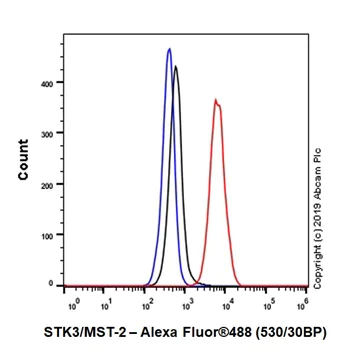
- Flow Cyt (Intra)
Lab
Flow Cytometry (Intracellular) - Anti-STK3/MST-2 antibody [EP1466Y] - BSA and Azide free (AB232323)
NIH/3T3 (Mouse embryonic fibroblast) cells were fixed with4% paraformaldehyde and permeabilised with 90% methanol. The primary antibody (ab52641) was used at a 1/70 dilution (1 μg) (red). A Goat anti rabbit IgG (Alexa Fluor® 488, ab150077) was used as the secondary antibody at a 1/2000 dilution. A Rabbit monoclonal IgG (ab172730) (black) was used as an isotype control.Cells without incubation with primary antibody and secondary antibody were used as an unlabelled control (blue).
This data was developed using the same antibody clone in a different buffer formulation containing PBS, BSA, glycerol, and sodium azide (ab52641).
- IP
Unknown
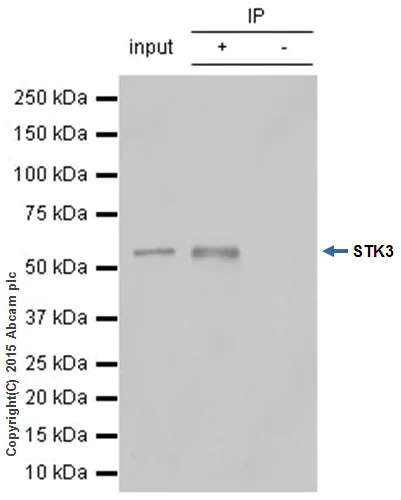
Immunoprecipitation - Anti-STK3/MST-2 antibody [EP1466Y] - BSA and Azide free (AB232323)
ab52641 (purified) at 1/50 immunoprecipitating STK3 / MST-2 in 10 μg C6 cell lysate (Lanes 1 and 2, observed at 56 kDa). Lane 3 - Rabbit monoclonal IgG (ab172730). For western blotting, VeriBlot for IP Detection Reagent (HRP) (ab131366), was used for detection at 1/10,000 dilution. Blocking buffer and concentration : 5% NFDM/TBST Dilution buffer and concentration : 5% NFDM/TBST
This data was developed using the same antibody clone in a different buffer formulation containing PBS, BSA, glycerol, and sodium azide (ab52641).
All lanes:
Immunoprecipitation - Anti-STK3/MST-2 antibody [EP1466Y] (<a href='/products/primary-antibodies/stk3-mst-2-antibody-ep1466y-ab52641'>ab52641</a>)
Predicted band size: 56 kDa
false
関連する標識済み抗体及び組成の異なる製品 (10)
-
Anti-STK3/MST-2 antibody [EP1466Y]
-
660 APC
APC Anti-STK3 / MST-2 antibody [EP1466Y]
-
519 Alexa Fluor® 488
Alexa Fluor® 488 Anti-STK3 / MST-2 antibody [EP1466Y]
-
565 Alexa Fluor® 555
Alexa Fluor® 555 Anti-STK3 / MST-2 antibody [EP1466Y]
-
603 Alexa Fluor® 568
Alexa Fluor® 568 Anti-STK3 / MST-2 antibody [EP1466Y]
-
617 Alexa Fluor® 594
Alexa Fluor® 594 Anti-STK3 / MST-2 antibody [EP1466Y]
-
665 Alexa Fluor® 647
Alexa Fluor® 647 Anti-STK3 / MST-2 antibody [EP1466Y]
-
775 Alexa Fluor® 750
Alexa Fluor® 750 Anti-STK3/MST-2 antibody [EP1466Y]
-
HRP Anti-STK3 / MST-2 antibody [EP1466Y]
-
578 PE
PE Anti-STK3 / MST-2 antibody [EP1466Y]
代替製品
Primary Antibodies
AB199091
Alexa Fluor® 488 Rabbit IgG, monoclonal [EPR25A] - Isotype Control
RabMAb|Recombinant
- 0
- 0
Primary Antibodies
AB199093
Alexa Fluor® 647 Rabbit IgG, monoclonal [EPR25A] - Isotype Control
RabMAb|Recombinant
- 0
- 0
Primary Antibodies
AB232814
APC Rabbit IgG, monoclonal [EPR25A] - Isotype Control
RabMAb|Recombinant
- 0
- 0
Primary Antibodies
AB232030
Anti-p150 CAF1/CAF antibody [EPR5576(2)] - BSA and Azide free
BOND RX™ Validated|RabMAb|Recombinant

- 0
- 0
Primary Antibodies
AB232020
Anti-Profilin 1 antibody [EPR6304] - BSA and Azide free
RabMAb|Recombinant|KO Validated

- 0
- 0
組合せ製品
Primary Antibodies
AB51134
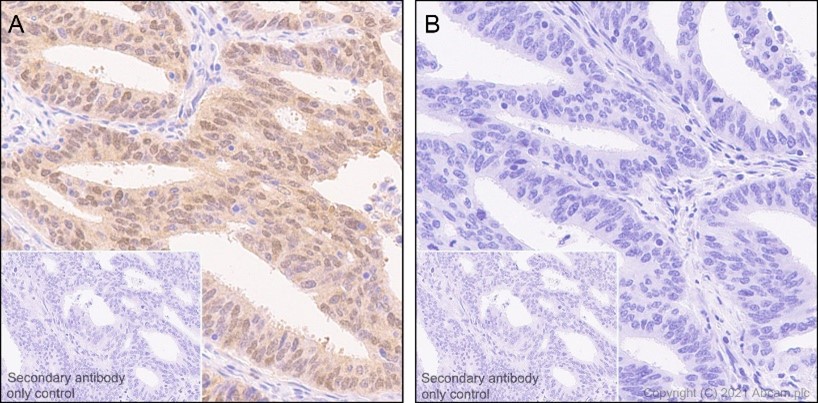
Anti-Serine/threonine-protein kinase 4/MST-1 antibody [EP1465Y]
RabMAb|Recombinant|KO Validated|20ul selling size
- 0
- 0
Primary Antibodies
AB76252
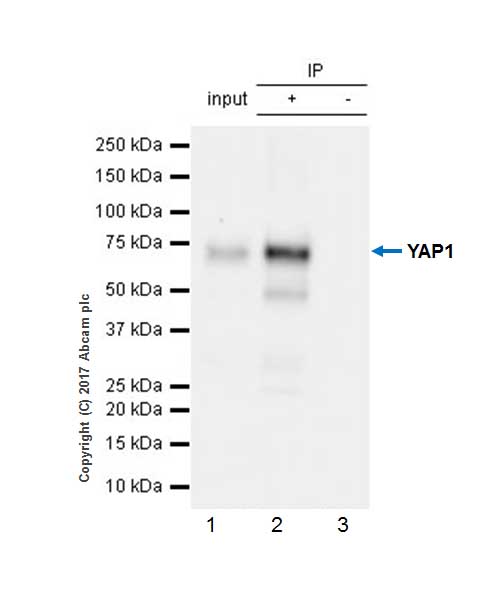
Anti-YAP1 (phospho S127) antibody [EP1675Y]
BOND RX™ Validated|20ul selling size|RabMAb|Recombinant
- 4
- 3
Reactivity data
製品の詳細
ab232323 is the carrier-free version of ab52641.
Patented technology
Our RabMAb® technology is a patented hybridoma-based technology for making rabbit monoclonal antibodies. For details on our patents, please refer to RabMAb® patents.
What are the advantages of a recombinant monoclonal antibody?
This product is a recombinant monoclonal antibody, which offers several advantages including:
- - High batch-to-batch consistency and reproducibility
- - Improved sensitivity and specificity
- - Long-term security of supply
- - Animal-free batch production
For more information, read more on recombinant antibodies.
Conjugation ready
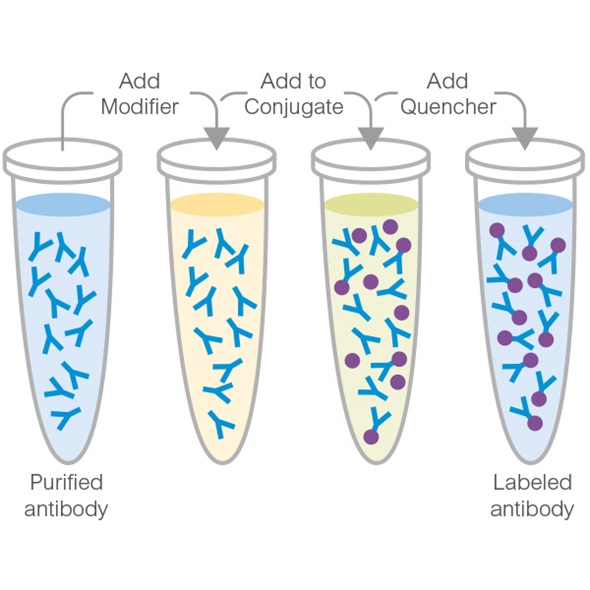
Our carrier-free antibodies are typically supplied in a PBS-only formulation, purified and free of BSA, sodium azide and glycerol. This conjugation-ready format is designed for use with fluorochromes, metal isotopes, oligonucleotides, and enzymes, which makes them ideal for antibody labelling, functional and cell-based assays, flow-based assays (e.g. mass cytometry) and Multiplex Imaging applications.
Use our conjugation kits for antibody conjugates that are ready-to-use in as little as 20 minutes with 1 minute hands-on-time and 100% antibody recovery: available for fluorescent dyes, HRP, biotin and gold.
Compatibility
This product is compatible with the Maxpar® Antibody Labeling Kit from Fluidigm, without the need for antibody preparation. Maxpar® is a trademark of Fluidigm Canada Inc.
出荷温度及び保存条件
製品の状態
精製方法
バッファー組成
出荷温度
短期保存温度
長期保存温度
保管に関する情報
補足情報
This supplementary information is collated from multiple sources and compiled automatically.
Biological function summary
STK3/MST-2 is a core component of the Hippo signaling pathway which controls organ size by regulating cell proliferation and apoptosis. MST-2 often interacts with other proteins and participates in functional complexes notably with MOB1 and LATS1/2. These interactions are essential for transmitting growth inhibitory signals. Through its kinase activity MST-2 phosphorylates and activates these molecules initiating a cascade that ultimately influences gene expression impacting cell cycle and cell death processes.
Pathways
MST-2 plays a pivotal role not only in the Hippo pathway but also in the MAPK signaling network. In the Hippo pathway MST-2 phosphorylates components like LATS1/2 subsequently affecting the translocation and activity of YAP/TAZ transcription factors which control cell proliferation and survival. In the MAPK pathway MST-2 can interact with other kinases such as ASK1 to influence stress response signaling. These interactions demonstrate how MST-2 integrates signals between pathways to mediate critical decisions in cell life and death.
製品プロトコール
- Visit the General protocols
- Visit the Troubleshooting
ターゲットの情報
文献 (1)
Recent publications for all applications. Explore the full list and refine your search
Translational lung cancer research 10:2523-2538 PubMed34295659
2021
Applications
Unspecified application
Species
Unspecified reactive species
Abcam product promise
Please note: All products are 'FOR RESEARCH USE ONLY. NOT FOR USE IN DIAGNOSTIC OR THERAPEUTIC PROCEDURES'.
For licensing inquiries, please contact partnerships@abcam.com