Anti-STARD4 抗体 [EPR17847]
Anti-STARD4 antibody [EPR17847]
- RabMAb
- Recombinant
- 詳細を見る
Be the first to review this product! Submit a review
|
(2 Publications)
Rabbit Recombinant Monoclonal STARD4 antibody. Suitable for WB, ICC/IF and reacts with Human samples. Cited in 2 publications.
別名を表示する
StAR-related lipid transfer protein 4, START domain-containing protein 4, StARD4, STARD4
- ICC/IF
Supplier Data
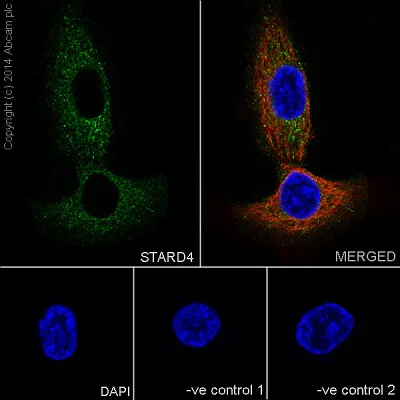
Immunocytochemistry/ Immunofluorescence - Anti-STARD4 antibody [EPR17847] (AB200344)
Immunocytochemistry/ Immunofluorescence analysis of SH-SY5Y (Human neuroblastoma from bone marrow cells) cells labeling STARD4 with ab200344 at a 1/100 dilution. ab150077 AlexaFluor®488 Goat anti-Rabbit secondary 1/500 dilution. Counterstained using ab7291 anti-Tubulin (mouse mAb) 1/1000 dilution and ab150120 AlexaFluor®594 Goat anti-Mouse secondary 1/500 dilution. Cells were fixed in 100% methanol and permeabilized using 0.1% Triton X-100. Nuclear stain DAPI.
- WB
Supplier Data
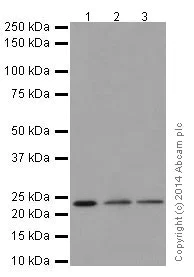
Western blot - Anti-STARD4 antibody [EPR17847] (AB200344)
All lanes:
Western blot - Anti-STARD4 antibody [EPR17847] (ab200344) at 1/1000 dilution
Lane 1:
Human fetal heart lysate at 10 µg
Lane 2:
Human fetal kidney lysate at 10 µg
Lane 3:
Human fetal liver lysate at 10 µg
Secondary
All lanes:
Anti-Rabbit IgG (HRP), specific to the non-reduced form of IgG at 1/1000 dilution
Predicted band size: 24 kDa
false
- WB
Supplier Data
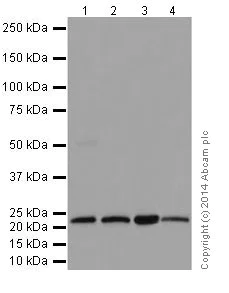
Western blot - Anti-STARD4 antibody [EPR17847] (AB200344)
All lanes:
Western blot - Anti-STARD4 antibody [EPR17847] (ab200344) at 1/1000 dilution
Lane 1:
SH-SY5Y (Human neuroblastoma from bone marrow cells) whole cell lysate at 20 µg
Lane 2:
HepG2 (Human liver hepatocellular carcinoma) whole cell lysate at 20 µg
Lane 3:
293 (Human epithelial cells from embryonic kidney) whole cell lysate at 20 µg
Lane 4:
U-937 (Human histiocytic lymphoma cells) whole cell lysate at 20 µg
Secondary
All lanes:
Goat Anti-Rabbit IgG, (H+L), Peroxidase conjugated at 1/1000 dilution
Predicted band size: 24 kDa
false
関連する標識済み抗体及び組成の異なる製品 (1)
-
Anti-STARD4 antibody [EPR17847] - BSA and Azide free
代替製品
組合せ製品
Primary Antibodies
AB272494
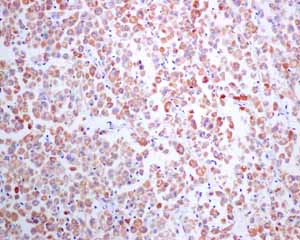
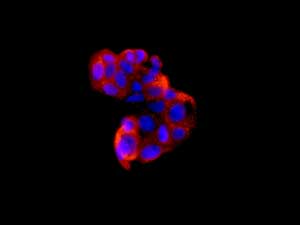
Anti-CYP11A1 antibody [EPR24868-86]
BOND RX™ Validated|20ul selling size|RabMAb|Advanced Validation|Recombinant

- 0
- 0

Reactivity data
製品の詳細
Patented technology
Our RabMAb® technology is a patented hybridoma-based technology for making rabbit monoclonal antibodies. For details on our patents, please refer to RabMAb® patents.
What are the advantages of a recombinant monoclonal antibody?
This product is a recombinant monoclonal antibody, which offers several advantages including:
- - High batch-to-batch consistency and reproducibility
- - Improved sensitivity and specificity
- - Long-term security of supply
- - Animal-free batch production
For more information, read more on recombinant antibodies.
出荷温度及び保存条件
製品の状態
精製方法
バッファー組成
出荷温度
短期保存期間
短期保存温度
長期保存温度
分注に関する情報
保管に関する情報
補足情報
This supplementary information is collated from multiple sources and compiled automatically.
Biological function summary
This protein participates in intracellular lipid trafficking as part of larger biosynthetic and regulatory processes. It does not function independently but rather interacts with several lipid-binding proteins to control cholesterol availability within the cell. These interactions are essential for maintaining membrane integrity and the synthesis of steroid hormones. The activity of STARD4 directly influences the regulation of lipid metabolism and energy homeostasis.
Pathways
STARD4 contributes to lipid metabolism and homeostasis pathways. It plays a role in the cholesterol transport pathway specifically in concert with proteins like STARD1 and STARD5 which also bind and transfer cholesterol. Its function ensures proper cholesterol distribution required for cellular signaling and membrane structure. The activity of STARD4 intersects with other proteins involved in these pathways such as apolipoproteins and other lipid-binding proteins to maintain lipid balance within tissues particularly in organs like the liver.
製品プロトコール
- Visit the General protocols
- Visit the Troubleshooting
ターゲットの情報
文献 (2)
Recent publications for all applications. Explore the full list and refine your search
Journal of experimental & clinical cancer research : CR 42:319 PubMed38008713
2023
Applications
Unspecified application
Species
Unspecified reactive species
iScience 26:106559 PubMed37123228
2023
Applications
Unspecified application
Species
Unspecified reactive species
Abcam product promise
Please note: All products are 'FOR RESEARCH USE ONLY. NOT FOR USE IN DIAGNOSTIC OR THERAPEUTIC PROCEDURES'.
For licensing inquiries, please contact partnerships@abcam.com