Anti-SIGLEC10 + SIGLEC11 抗体 [EPR29036-83] - BSA and Azide free
Anti-SIGLEC10 + SIGLEC11 antibody [EPR29036-83] - BSA and Azide free
- BOND RX™ Validated
- Recombinant
- RabMAb
- 詳細を見る
Be the first to review this product! Submit a review
|
(0 Publication)
Rabbit Recombinant Monoclonal SIGLEC10 antibody. Carrier free. Suitable for IHC-P, WB and reacts with Transfected cell line - Human, Human samples.
別名を表示する
SLG2, UNQ477/PRO940, SIGLEC10, Sialic acid-binding Ig-like lectin 10, Siglec-10, Siglec-like protein 2, UNQ9222/PRO28718, SIGLEC11, Sialic acid-binding Ig-like lectin 11, Sialic acid-binding lectin 11, Siglec-11
- IHC-P
Supplier Data
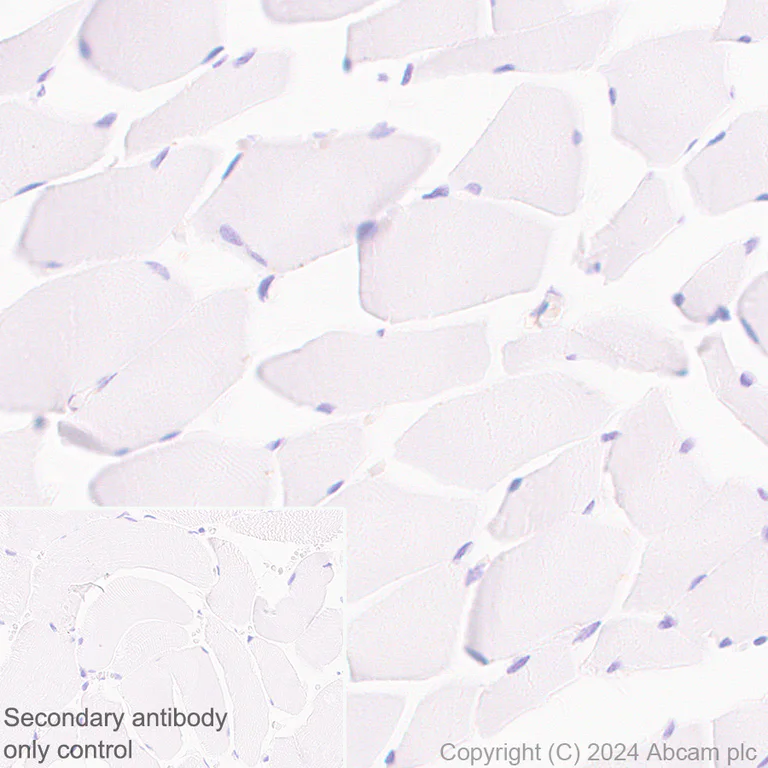
Immunohistochemistry (Formalin/PFA-fixed paraffin-embedded sections) - Anti-SIGLEC10 + SIGLEC11 antibody [EPR29036-83] - BSA and Azide free (AB317449)
This data was developed using ab317448, the same antibody clone in a different buffer formulation.
Immunohistochemical analysis of paraffin-embedded Human skeletal muscle tissue labeling SIGLEC10 + SIGLEC11 with ab317448 at 1/500 (1.004 ug/ml) dilution, followed by a ready to use LeicaDS9800 (Bond™ Polymer Refine Detection).
Negative control : no staining on human skeletal muscle. The section was incubated with ab317448 for 30 mins at room temperature.
The immunostaining was performed on a Leica Biosystems BOND® RX instrument
Counterstained with Hematoxylin.
Secondary antibody only control : Secondary antibody is a ready to use LeicaDS9800 (Bond™ Polymer Refine Detection).
Heat mediated antigen retrieval was performed with Tris-EDTA buffer (pH 9.0, Epitope Retrieval Solution2) for 20 mins
- IHC-P
Supplier Data
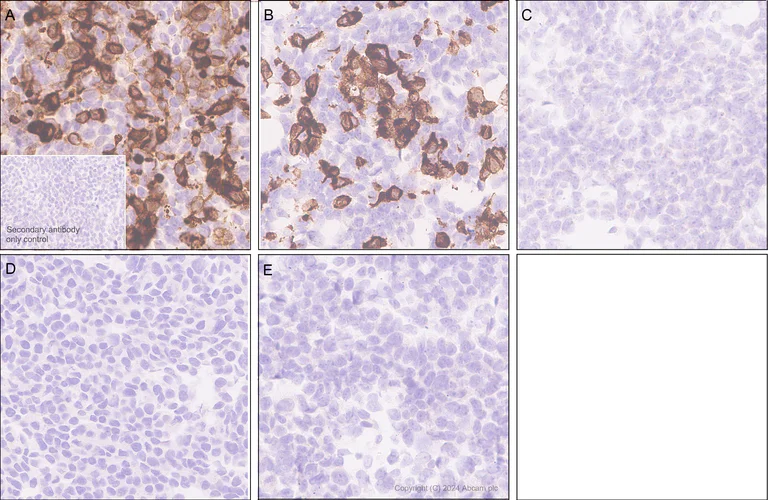
Immunohistochemistry (Formalin/PFA-fixed paraffin-embedded sections) - Anti-SIGLEC10 + SIGLEC11 antibody [EPR29036-83] - BSA and Azide free (AB317449)
This data was developed using ab317448, the same antibody clone in a different buffer formulation.
Immunohistochemical analysis of paraffin-embedded (A) HEK-293T (human epithelial cell line from embryonic kidney) transfected with a SIGLEC10 expression vector containing a Myc-His tag. (B) HEK-293T transfected with a SIGLEC11 expression vector containing a Myc-His tag. (C) HEK-293T transfected with a SIGLEC16 expression vector containing a Myc-His tag. (D) HEK-293T transfected with a SIGLEC5 expression vector containing a Myc-His tag. (E) HEK-293T transfected with empty vector containing a Myc-His tag. tissue labeling SIGLEC10 + SIGLEC11 with ab317448 at 1/2000 (0.251 ug/ml) dilution, followed by a ready to use LeicaDS9800 (Bond™ Polymer Refine Detection).
This antibody recognizes both SIGLEC10 and SIGLEC11. Positive staining on (A) HEK-293T (human epithelial cell line from embryonic kidney) transfected with a SIGLEC10 expression vector containing a Myc-His tag and (B) HEK-293T transfected with a SIGLEC11 expression vector containing a Myc-His tag, negative staining on (C) HEK-293T transfected with a SIGLEC16 expression vector containing a Myc-His tag, (D) HEK-293T transfected with a SIGLEC5 expression vector containing a Myc-His tag and (E) HEK-293T transfected with empty vector containing a Myc-His tag. The section was incubated with ab317448 for 30 mins at room temperature.
The immunostaining was performed on a Leica Biosystems BOND® RX instrument
Counterstained with Hematoxylin.
Secondary antibody only control : Secondary antibody is a ready to use LeicaDS9800 (Bond™ Polymer Refine Detection).
Heat mediated antigen retrieval was performed with Tris-EDTA buffer (pH 9.0, Epitope Retrieval Solution2) for 20 mins
- IHC-P
Supplier Data
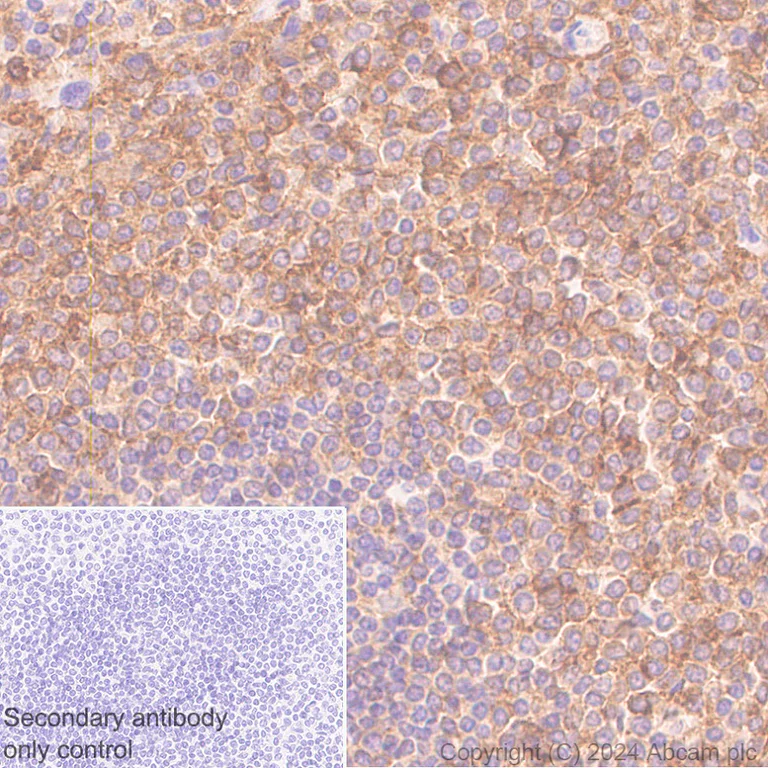
Immunohistochemistry (Formalin/PFA-fixed paraffin-embedded sections) - Anti-SIGLEC10 + SIGLEC11 antibody [EPR29036-83] - BSA and Azide free (AB317449)
This data was developed using ab317448, the same antibody clone in a different buffer formulation.
Immunohistochemical analysis of paraffin-embedded Human spleen tissue labeling SIGLEC10 + SIGLEC11 with ab317448 at 1/500 (1.004 ug/ml) dilution, followed by a ready to use LeicaDS9800 (Bond™ Polymer Refine Detection).
Positive staining on human spleen (PMID : 11358961; PMID : 11284738; PMID : 11733002). The section was incubated with ab317448 for 30 mins at room temperature.
The immunostaining was performed on a Leica Biosystems BOND® RX instrument
Counterstained with Hematoxylin.
Secondary antibody only control : Secondary antibody is a ready to use LeicaDS9800 (Bond™ Polymer Refine Detection).
Heat mediated antigen retrieval was performed with Tris-EDTA buffer (pH 9.0, Epitope Retrieval Solution2) for 20 mins
- IHC-P
Supplier Data
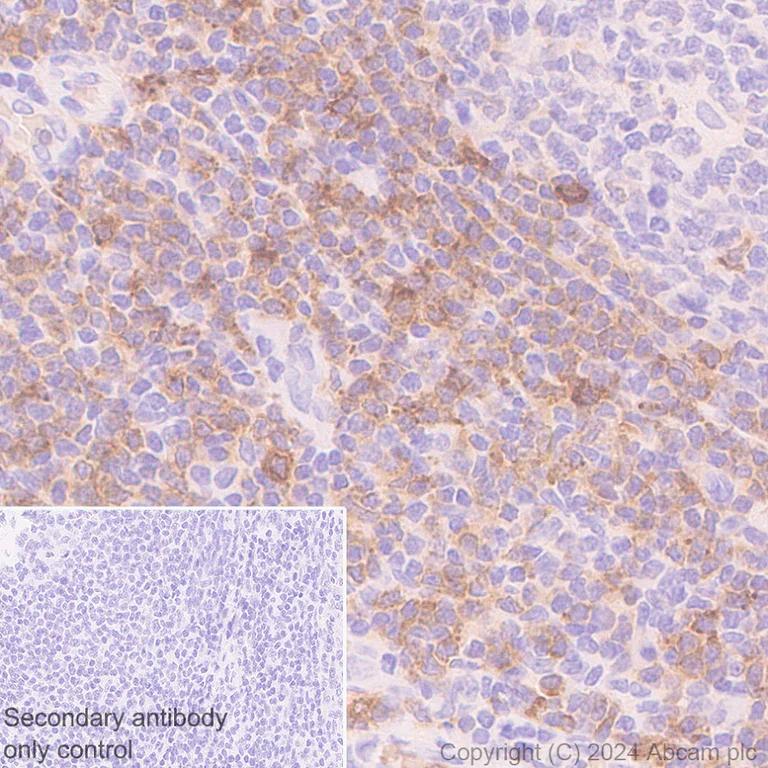
Immunohistochemistry (Formalin/PFA-fixed paraffin-embedded sections) - Anti-SIGLEC10 + SIGLEC11 antibody [EPR29036-83] - BSA and Azide free (AB317449)
This data was developed using ab317448, the same antibody clone in a different buffer formulation.
Immunohistochemical analysis of paraffin-embedded Human tonsil tissue labeling SIGLEC10 + SIGLEC11 with ab317448 at 1/500 (1.004 ug/ml) dilution, followed by a ready to use LeicaDS9800 (Bond™ Polymer Refine Detection).
Positive staining on human tonsil. The section was incubated with ab317448 for 30 mins at room temperature.
The immunostaining was performed on a Leica Biosystems BOND® RX instrument
Counterstained with Hematoxylin.
Secondary antibody only control : Secondary antibody is a ready to use LeicaDS9800 (Bond™ Polymer Refine Detection).
Heat mediated antigen retrieval was performed with Tris-EDTA buffer (pH 9.0, Epitope Retrieval Solution2) for 20 mins
- IHC-P
Supplier Data
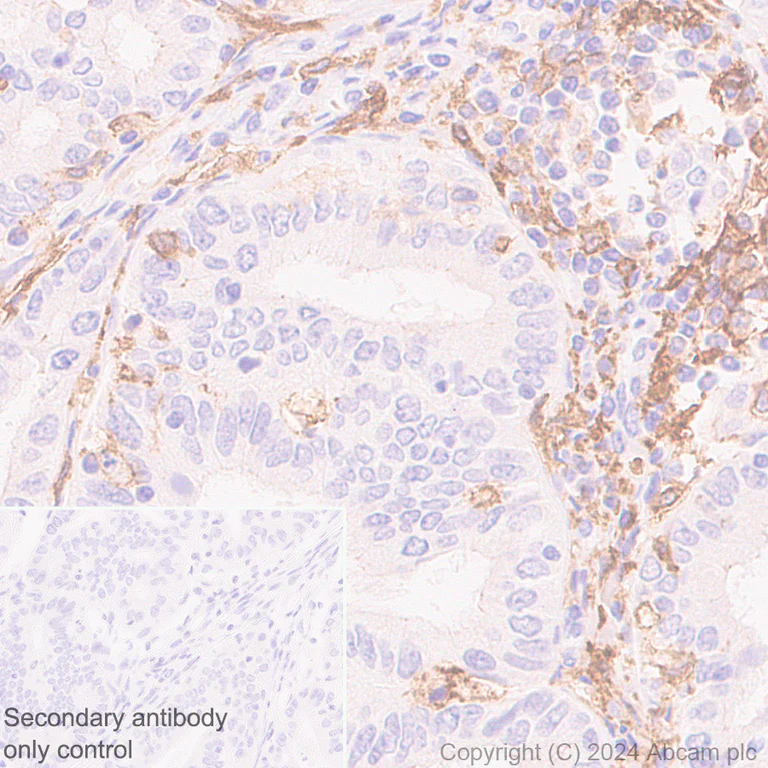
Immunohistochemistry (Formalin/PFA-fixed paraffin-embedded sections) - Anti-SIGLEC10 + SIGLEC11 antibody [EPR29036-83] - BSA and Azide free (AB317449)
This data was developed using ab317448, the same antibody clone in a different buffer formulation.
Immunohistochemical analysis of paraffin-embedded Human endometrial carcinoma tissue labeling SIGLEC10 + SIGLEC11 with ab317448 at 1/500 (1.004 ug/ml) dilution, followed by a ready to use LeicaDS9800 (Bond™ Polymer Refine Detection).
Positive staining on human endometrial carcinoma. The section was incubated with ab317448 for 30 mins at room temperature.
The immunostaining was performed on a Leica Biosystems BOND® RX instrument
Counterstained with Hematoxylin.
Secondary antibody only control : Secondary antibody is a ready to use LeicaDS9800 (Bond™ Polymer Refine Detection).
Heat mediated antigen retrieval was performed with Tris-EDTA buffer (pH 9.0, Epitope Retrieval Solution2) for 20 mins
- WB
Supplier Data
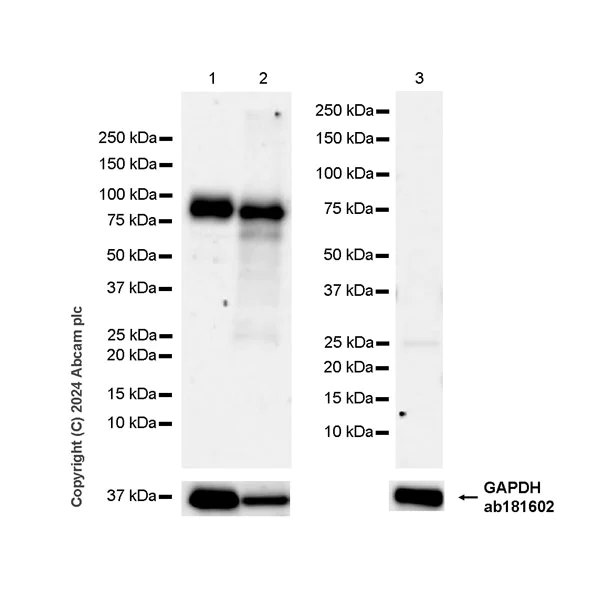
Western blot - Anti-SIGLEC10 + SIGLEC11 antibody [EPR29036-83] - BSA and Azide free (AB317449)
This data was developed using ab317448, the same antibody clone in a different buffer formulation.
Negative control : human skeletal muscle (PMID : 11733002).
In Western blot, Anti-GAPDH antibody [EPR16891] - Loading Control (ab181602) staining at 1/200000 dilution.
All lanes:
Western blot - Anti-SIGLEC10 + SIGLEC11 antibody [EPR29036-83] (<a href='/products/primary-antibodies/siglec10-siglec11-antibody-epr29036-83-ab317448'>ab317448</a>) at 1/1000 dilution
Lane 1:
Human tonsil tissue lysate at 20 µg
Lane 2:
Human spleen tissue lysate at 20 µg
Lane 3:
Human skeletal muscle tissue lysate at 20 µg
Secondary
All lanes:
Goat Anti-Rabbit IgG (HRP) with minimal cross-reactivity with human IgG at 1/2000 dilution
Observed band size: 76 kDa,36 kDa
false
Exposure time: 103s
関連する標識済み抗体及び組成の異なる製品 (2)
-
Anti-SIGLEC10 + SIGLEC11 antibody [EPR29036-83]
-
519 Alexa Fluor® 488
Alexa Fluor® 488 Anti-SIGLEC10 + SIGLEC11 antibody [EPR29036-83]
組合せ製品
Primary Antibodies
AB182422
Anti-CD163 antibody [EPR19518]
BOND RX™ Validated|20ul selling size|RabMAb|Advanced Validation|Recombinant

- 5
- 17

Primary Antibodies
AB133616
BOND RX™ Validated|RabMAb|Recombinant|Lab Essentials|20ul selling size
- 5
- 20
Reactivity data
製品の詳細
ab317449 is the carrirer-free version of ab317448.
Patented technology
Our RabMAb® technology is a patented hybridoma-based technology for making rabbit monoclonal antibodies. For details on our patents, please refer to RabMAb® patents.
What are the advantages of a recombinant monoclonal antibody?
This product is a recombinant monoclonal antibody, which offers several advantages including:
- - High batch-to-batch consistency and reproducibility
- - Improved sensitivity and specificity
- - Long-term security of supply
- - Animal-free batch production
For more information, read more on recombinant antibodies.
Conjugation ready
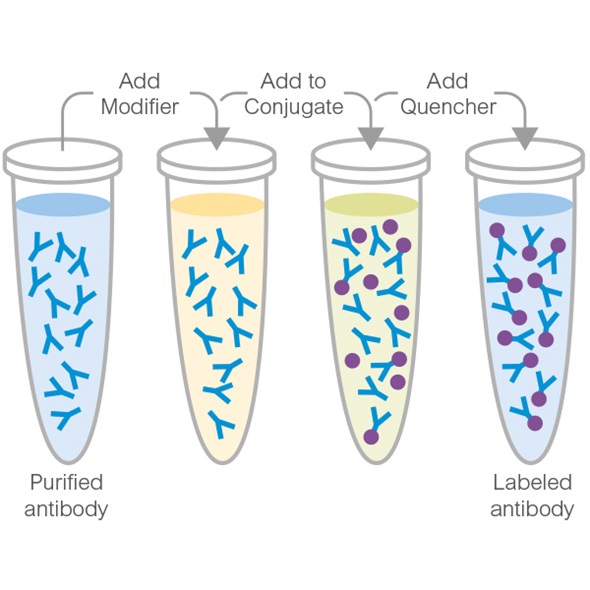
Our carrier-free antibodies are typically supplied in a PBS-only formulation, purified and free of BSA, sodium azide and glycerol. This conjugation-ready format is designed for use with fluorochromes, metal isotopes, oligonucleotides, and enzymes, which makes them ideal for antibody labelling, functional and cell-based assays, flow-based assays (e.g. mass cytometry) and Multiplex Imaging applications.
Use our conjugation kits for antibody conjugates that are ready-to-use in as little as 20 minutes with 1 minute hands-on-time and 100% antibody recovery: available for fluorescent dyes, HRP, biotin and gold.
Compatibility
This product is compatible with the Maxpar® Antibody Labeling Kit from Fluidigm, without the need for antibody preparation. Maxpar® is a trademark of Fluidigm Canada Inc.
出荷温度及び保存条件
製品の状態
精製方法
バッファー組成
出荷温度
短期保存温度
長期保存温度
補足情報
This supplementary information is collated from multiple sources and compiled automatically.
Biological function summary
SIGLEC10 and SIGLEC11 play important roles in the immune response by regulating inflammatory processes and helping the body distinguish between self and non-self cells. They function as part of the immune system to modulate immune cell activation damping down potentially harmful overreactions. These proteins can inhibit immune cell signaling when they engage with sialic acid-containing structures representing a form of immune checkpoint control. Their involvement in dampening inflammatory responses makes them part of the innate immune complex important in maintaining tissue homeostasis.
Pathways
SIGLEC10 and SIGLEC11 both interact with immunoregulatory pathways like the CD33-related and B cell receptor signaling pathways. Through these pathways they are involved in controlling immune responses and maintaining cellular communication balance. SIGLEC10 shows relationship with proteins such as SHP-1 and SHP-2 which are phosphatases that play critical roles in signal transduction. SIGLEC11 however interacts within microglial function pathways involving proteins associated with the innate immune response.
製品プロトコール
- Visit the General protocols
- Visit the Troubleshooting
ターゲットの情報
追加のターゲット
Abcam product promise
Please note: All products are 'FOR RESEARCH USE ONLY. NOT FOR USE IN DIAGNOSTIC OR THERAPEUTIC PROCEDURES'.
For licensing inquiries, please contact partnerships@abcam.com