Anti-SH3KBP1 抗体 [EPR7881(2)]
Anti-SH3KBP1 antibody [EPR7881(2)]
- RabMAb
- Recombinant
- 詳細を見る
Be the first to review this product! Submit a review
|
(5 Publications)
Rabbit Recombinant Monoclonal SH3KBP1 antibody. Suitable for IHC-P, WB and reacts with Human samples. Cited in 5 publications.
別名を表示する
CIN85, SH3KBP1, SH3 domain-containing kinase-binding protein 1, CD2-binding protein 3, Cbl-interacting protein of 85 kDa, Human Src family kinase-binding protein 1, CD2BP3, HSB-1
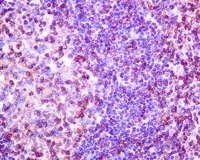
- IHC-P
Unknown
Immunohistochemistry (Formalin/PFA-fixed paraffin-embedded sections) - Anti-SH3KBP1 antibody [EPR7881(2)] (AB151574)
Immunohistochemical analysis of paraffin-embedded Human tonsil tissue labeling SH3KBP1 with ab151574 at 1/50 dilution.
Perform heat mediated antigen retrieval with citrate buffer pH 6 before commencing with IHC staining protocol.
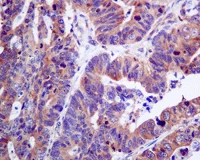
- IHC-P
Unknown
Immunohistochemistry (Formalin/PFA-fixed paraffin-embedded sections) - Anti-SH3KBP1 antibody [EPR7881(2)] (AB151574)
Immunohistochemical analysis of paraffin-embedded Human colonic adenocarcinoma tissue labeling SH3KBP1 with ab151574 at 1/50 dilution.
Perform heat mediated antigen retrieval with citrate buffer pH 6 before commencing with IHC staining protocol.
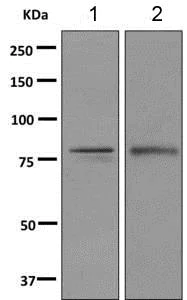
- WB
Unknown
Western blot - Anti-SH3KBP1 antibody [EPR7881(2)] (AB151574)
All lanes:
Western blot - Anti-SH3KBP1 antibody [EPR7881(2)] (ab151574) at 1/1000 dilution
Lane 1:
Jurkat cell lysate at 10 µg
Lane 2:
THP1 cell lysate at 10 µg
Secondary
All lanes:
Goat anti-rabbit HRP at 1/2000 dilution
Predicted band size: 73 kDa
false
関連する標識済み抗体及び組成の異なる製品 (1)
-
Anti-SH3KBP1 antibody [EPR7881(2)] - BSA and Azide free
代替製品
組合せ製品
Primary Antibodies
AB225720
Anti-PI 3 Kinase p85 alpha antibody [SP62]
20ul selling size|RabMAb|Recombinant

- 0
- 0
Primary Antibodies
AB76318
Anti-Cytokeratin 10 antibody [EP1607IHCY] - Cytoskeleton Marker
20ul selling size|RabMAb|Recombinant|Lab Essentials
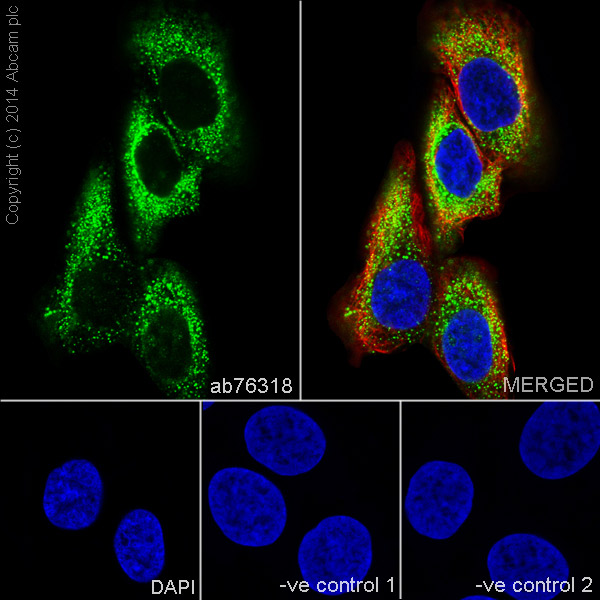
- 5
- 14
Primary Antibodies
AB16667
BOND RX™ Validated|KO Validated|RabMAb|Advanced Validation|Recombinant|20ul selling size

- 5
- 133
Primary Antibodies
AB32537
BOND RX™ Validated|KO Validated|RabMAb|Recombinant|Lab Essentials|20ul selling size
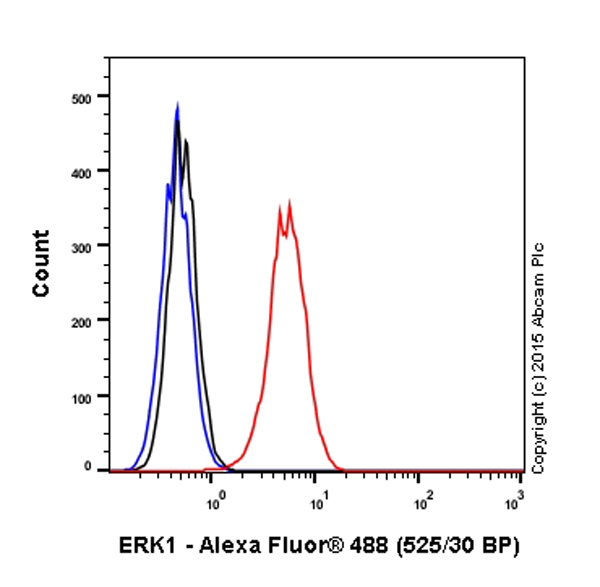
- 5
- 4
Reactivity data
製品の詳細
Species reactivity
Mouse, Rat: We have preliminary internal testing data to indicate this antibody may not react with these species.
Please contact us for more information.
Patented technology
Our RabMAb® technology is a patented hybridoma-based technology for making rabbit monoclonal antibodies. For details on our patents, please refer to RabMAb® patents.
What are the advantages of a recombinant monoclonal antibody?
This product is a recombinant monoclonal antibody, which offers several advantages including:
- - High batch-to-batch consistency and reproducibility
- - Improved sensitivity and specificity
- - Long-term security of supply
- - Animal-free batch production
For more information, read more on recombinant antibodies.
出荷温度及び保存条件
製品の状態
精製方法
バッファー組成
出荷温度
短期保存温度
長期保存温度
補足情報
This supplementary information is collated from multiple sources and compiled automatically.
Biological function summary
SH3KBP1 plays a role in cellular signaling and endocytosis. It forms part of a complex that participates in the regulation of membrane trafficking where it helps in internalization and down-regulation of receptor tyrosine kinases. SH3KBP1 interacts with other signaling molecules allowing it to coordinate the spatial and temporal dynamics of signaling pathways. This protein’s involvement in endocytic pathways highlights its significance in regulating cellular responses to external stimuli.
Pathways
SH3KBP1 is an integral part of the epidermal growth factor receptor (EGFR) signaling and the B-cell receptor (BCR) signaling pathways. In the EGFR pathway it facilitates receptor internalization affecting processes such as proliferation and survival. SH3KBP1 interacts with proteins like c-Cbl and Grb2 which are key players in receptor endocytosis and signal transduction. Through these interactions it modulates signal cascades that influence numerous cellular outcomes.
製品プロトコール
- Visit the General protocols
- Visit the Troubleshooting
ターゲットの情報
文献 (5)
Recent publications for all applications. Explore the full list and refine your search
Burns & trauma 13:tkae065 PubMed40040959
2025
Applications
Unspecified application
Species
Unspecified reactive species
Molecular medicine reports 23: PubMed33179079
2020
Applications
Unspecified application
Species
Unspecified reactive species
Journal of cellular and molecular medicine : PubMed32969198
2020
Applications
Unspecified application
Species
Unspecified reactive species
International journal of clinical and experimental 11:5667-5681 PubMed31949653
2018
Applications
Unspecified application
Species
Unspecified reactive species
Life science alliance 1:e201800070 PubMed30456350
2018
Applications
Unspecified application
Species
Unspecified reactive species
Abcam product promise
Please note: All products are 'FOR RESEARCH USE ONLY. NOT FOR USE IN DIAGNOSTIC OR THERAPEUTIC PROCEDURES'.
For licensing inquiries, please contact partnerships@abcam.com