Anti-SDHA 抗体
Anti-SDHA antibody
Be the first to review this product! Submit a review
|
(2 Publications)
Rabbit Polyclonal SDHA antibody. Suitable for WB, IHC-P and reacts with Rat, Mouse, Human samples. Cited in 2 publications. Immunogen corresponding to Recombinant Fragment Protein within Human SDHA aa 1-250.
別名を表示する
SDH2, SDHF, SDHA, Flavoprotein subunit of complex II, Malate dehydrogenase [quinone] flavoprotein subunit, Fp
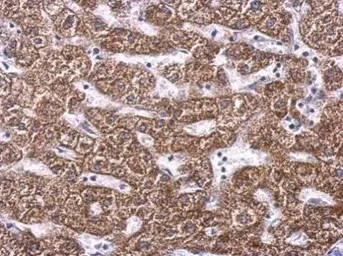
- IHC-P
Supplier Data
Immunohistochemistry (Formalin/PFA-fixed paraffin-embedded sections) - Anti-SDHA antibody (AB137756)
Immunohistochemical analysis of paraffin-embedded hepatoma tissue stained for SDHA protein with ab137756 at a 1/500 dilution.
Antigen retrieval : EDTA based, pH 8.
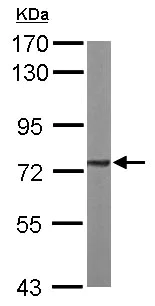
- WB
Unknown
Western blot - Anti-SDHA antibody (AB137756)
7.5% SDS PAGE
All lanes:
Western blot - Anti-SDHA antibody (ab137756) at 1/1000 dilution
All lanes:
mouse brain cell lysate at 50 µg
Predicted band size: 72 kDa
false
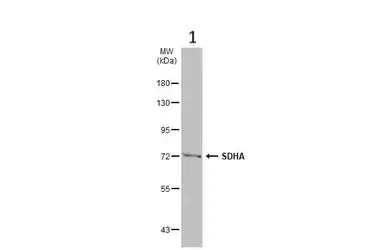
- WB
Supplier Data
Western blot - Anti-SDHA antibody (AB137756)
Samples were separated by 7.5% SDS-PAGE.
All lanes:
Western blot - Anti-SDHA antibody (ab137756) at 1/1000 dilution
All lanes:
Rat heart tissue extract at 50 µg
Secondary
All lanes:
HRP-conjugated anti-rabbit IgG
Predicted band size: 73 kDa
false
代替製品
Primary Antibodies
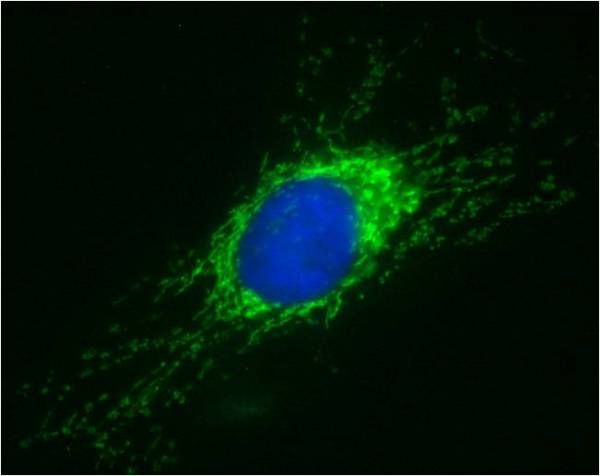
AB240098
Anti-SDHA antibody [EPR9043(B)] - BSA and Azide free
RabMAb|Recombinant|KO Validated
- 5
- 2
Primary Antibodies
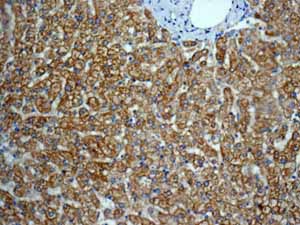
AB139181
Anti-SDHA antibody [EPR9042(B)]
RabMAb|Recombinant|KO Validated|20ul selling size
- 0
- 0
Primary Antibodies
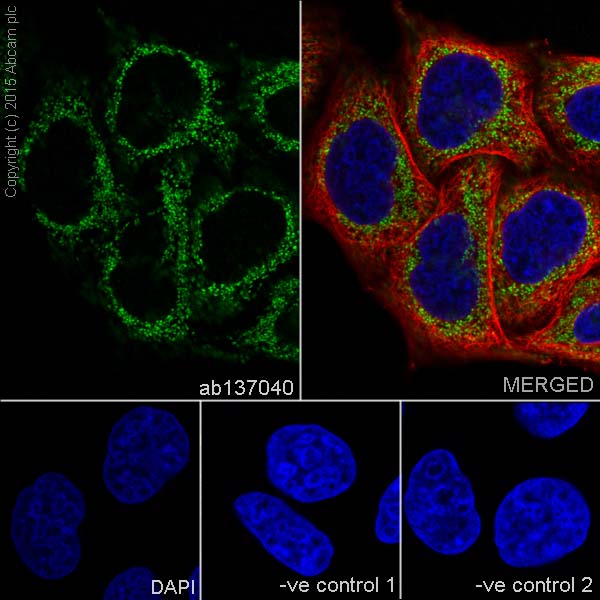
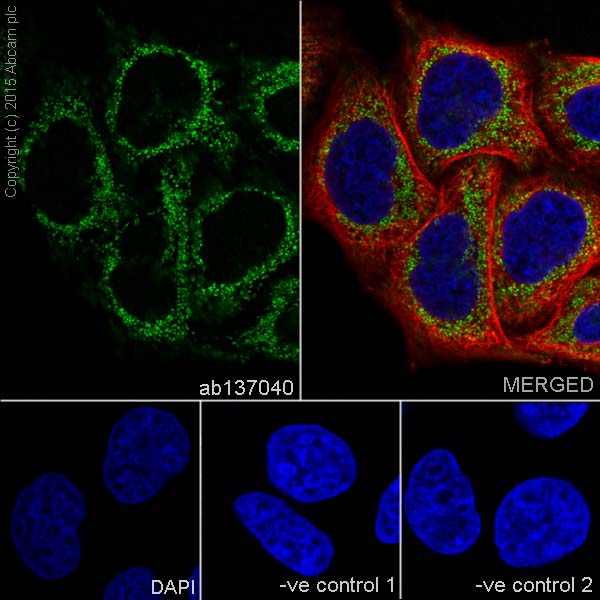
AB137040
Anti-SDHA antibody [EPR9043(B)]
20ul selling size|RabMAb|Recombinant|KO Validated
- 4
- 4
組合せ製品
Primary Antibodies
AB115777
Anti-beta Actin antibody [SP124] - Cytoskeleton Marker
20ul selling size|RabMAb|Lab Essentials|Recombinant
- 4
- 1

Primary Antibodies
AB175225
RabMAb|Recombinant|KO Validated|20ul selling size
- 0
- 0
Reactivity data
出荷温度及び保存条件
製品の状態
精製方法
バッファー組成
出荷温度
短期保存温度
長期保存温度
分注に関する情報
保管に関する情報
補足情報
This supplementary information is collated from multiple sources and compiled automatically.
Biological function summary
SDHA participates in the TCA cycle by accepting electrons from succinate which it donates to the coenzyme Q in the electron transport chain. This essential role connects SDHA to the regulation of ATP production in cells. SDHA operates as part of the larger succinate dehydrogenase (SDH) complex which includes other subunits such as SDHB SDHC and SDHD. This structurally integrated multisubunit complex influences mitochondrial integrity and cellular energy homeostasis.
Pathways
SDHA is deeply involved in the TCA cycle and oxidative phosphorylation pathway. As a part of these pathways it links to other critical enzymes such as fumarase and aconitase working in concert to drive the conversion of biochemical fuel into usable cellular energy. Its interactions with coenzyme Q and cytochrome complex enzymes are important for electron flow and proton gradient formation across the mitochondrial membrane. Such interactions are central to cellular respiration and energy generation.
製品プロトコール
- Visit the General protocols
- Visit the Troubleshooting
ターゲットの情報
文献 (2)
Recent publications for all applications. Explore the full list and refine your search
iScience 26:107790 PubMed37731615
2023
Applications
WB
Species
Human
Cell reports 35:108983 PubMed33852870
2021
Applications
Unspecified application
Species
Unspecified reactive species
Abcam product promise
Please note: All products are 'FOR RESEARCH USE ONLY. NOT FOR USE IN DIAGNOSTIC OR THERAPEUTIC PROCEDURES'.
For licensing inquiries, please contact partnerships@abcam.com