Anti-RRM2 抗体 [1E1]
Anti-RRM2 antibody [1E1]
4
(3 Reviews)
|
(45 Publications)
Mouse Monoclonal RRM2 antibody. Suitable for Flow Cyt, WB, IHC-P, ICC/IF and reacts with Human samples. Cited in 45 publications. Immunogen corresponding to Recombinant Fragment Protein within Human RRM2 aa 1-150.
別名を表示する
RR2, RRM2, Ribonucleoside-diphosphate reductase subunit M2, Ribonucleotide reductase small chain, Ribonucleotide reductase small subunit
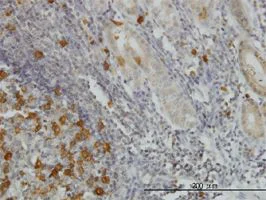
- IHC-P
Supplier Data
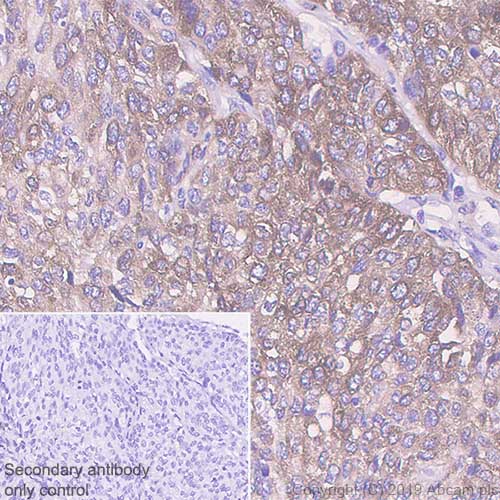
Immunohistochemistry (Formalin/PFA-fixed paraffin-embedded sections) - Anti-RRM2 antibody [1E1] (AB57653)
RRM2 antibody (ab57653) used in immunohistochemistry at 5ug/ml on formalin fixed and paraffin embedded human stomach.
This image was generated using the ascites version of the product.
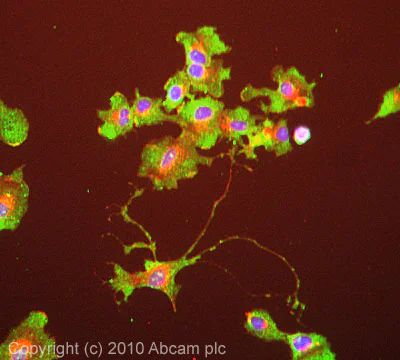
- ICC/IF
Unknown
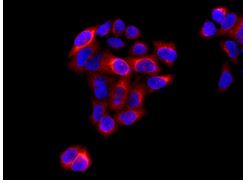
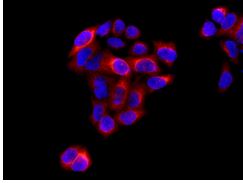
Immunocytochemistry/ Immunofluorescence - Anti-RRM2 antibody [1E1] (AB57653)
ICC/IF image of ab57653 stained HepG2 cells. The cells were 100% methanol fixed (5 min) and then incubated in 1%BSA / 10% normal goat serum / 0.3M glycine in 0.1% PBS-Tween for 1h to permeabilise the cells and block non-specific protein-protein interactions. The cells were then incubated with the antibody (ab57653, 10μg/ml) overnight at +4°C. The secondary antibody (green) was Alexa Fluor® 488 goat anti-mouse IgG (H+L) used at a 1/1000 dilution for 1h. Alexa Fluor® 594 WGA was used to label plasma membranes (red) at a 1/200 dilution for 1h. DAPI was used to stain the cell nuclei (blue) at a concentration of 1.43μM.
This image was generated using the ascites version of the product.
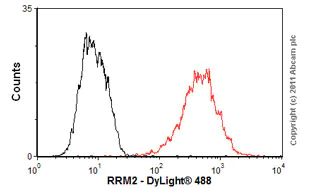
- Flow Cyt
Unknown
Flow Cytometry - Anti-RRM2 antibody [1E1] (AB57653)
Overlay histogram showing HepG2 cells stained with ab57653 (red line). The cells were fixed with 80% methanol (5 min) and then permeabilized with 0.1% PBS-Tween for 20 min. The cells were then incubated in 1x PBS / 10% normal goat serum / 0.3M glycine to block non-specific protein-protein interactions followed by the antibody (ab57653, 1μg/1x106 cells) for 30 min at 22°C. The secondary antibody used was DyLight® 488 goat anti-mouse IgG (H+L) (ab96879) at 1/500 dilution for 30 min at 22°C. Isotype control antibody (black line) was mouse IgG1 [ICIGG1] (ab91353, 2μg/1x106 cells) used under the same conditions. Acquisition of >5,000 events was performed.
This image was generated using the ascites version of the product.
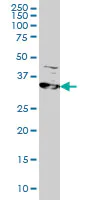
- WB
Supplier Data
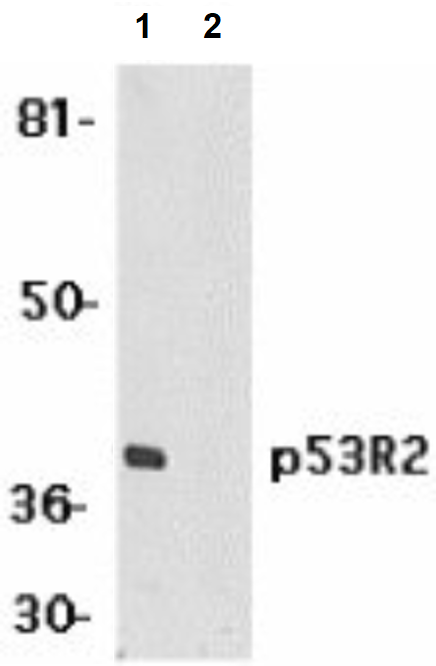
Western blot - Anti-RRM2 antibody [1E1] (AB57653)
RRM2 antibody (ab57653) at 1ug/lane + HeLa cell lysate at 25ug/lane.
This image was generated using the ascites version of the product.
All lanes:
Western blot - Anti-RRM2 antibody [1E1] (ab57653)
Predicted band size: 45 kDa
false
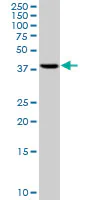
- WB
Supplier Data
Western blot - Anti-RRM2 antibody [1E1] (AB57653)
This image was generated using the ascites version of the product.
All lanes:
Western blot - Anti-RRM2 antibody [1E1] (ab57653) at 1 µg/mL
All lanes:
HepG2 (human liver hepatocellular carcinoma cell line) cell lysate
Predicted band size: 45 kDa
false
- WB
CiteAb
Western blot - Anti-RRM2 antibody [1E1] (AB57653)
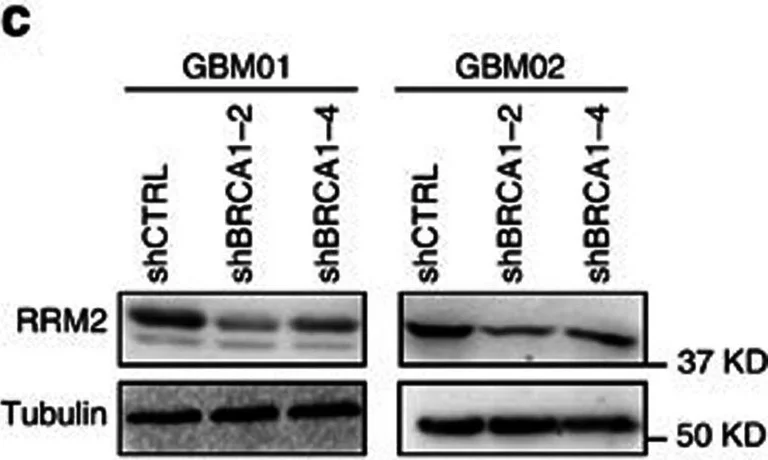
Western Blotting using Anti-RRM2 antibody [1E1], ab57653. Publication image from Bartek, J. et al., 2016, Nat Commun, 27845331. Legend direct from paper.
BRCA1 loss impedes replication fork progression by down-regulating RRM2 in GBM cells.(a) DNA fibre assay measuring the replication fork progression speed in GBM cells (GBM01 and GBM02) transduced with shCTRL or two independent BRCA1-targeting shRNAs (shBRCA1-2 and shBRCA1-4). See also Table 1. (b) Replication fork recovery assay showing the quantification of CldU tract length in GBM01 cells transduced with shCTRL or 2 non-overlapping BRCA1-targeting shRNAs (shBRCA1-2 and shBRCA1-4) and treated or not with 2 mM HU (4 h) prior CldU labelling. See also Table 2; Supplementary Table 1. (c) Immunoblot analysis of RRM2 protein levels in GBM cells transduced with shCTRL or two independent BRCA1-targeting shRNAs (shBRCA1-2 and shBRCA1-4). (d,e) RT-qPCR analysis of BRCA1 and RRM2 mRNA levels in GBM cells transduced with shCTRL or two independent BRCA1-targeting shRNAs (shBRCA1-2 and shBRCA1-4). (f) FACS analysis of RRM2 protein level changes throughout cell cycle in GBM cells (GBM01) transduced with shCTRL or two independent BRCA1-targeting shRNAs (shBRCA1-2 and shBRCA1-4). (g) Partial sequence of the human RRM2 promoter (GenBank accession number AY032750)33, which was used to design Chip primers : P1 primer forward (F)/reverse (R) and P2 primer forward (F)/reverse (R). Positions are numbered from the downstream transcription initiation site (+1). Putative binding sites for transcription factors are color-coded and identified above the sequence. (h) Chip immunoprecipitation of BRCA1 binding RRM2 promoter in GBM01-03 cells using primer set P1 and P2. (i) Chip immunoprecipitation of BRCA1 binding RRM2 promoter in NHA-DRB and BJ cells using primer set P1 and P2. (j) Chip immunoprecipitation of BRCA1 binding RRM2 promoter in PC3, HELA, OVCAR and Cal51 cells using primer set P1 and P2. Statistical significance was calculated by one-way ANOVA and Tukey's multiple comparisons test in d–f,h–j or Student's t test (a,b) and all data are shown as means±s.d. and performed as technical triplicates. (*P<0.05, **P<0.005, ***P<0.005, ****P<0.0001; NS represents non-significance).
false
- WB
CiteAb
Western blot - Anti-RRM2 antibody [1E1] (AB57653)
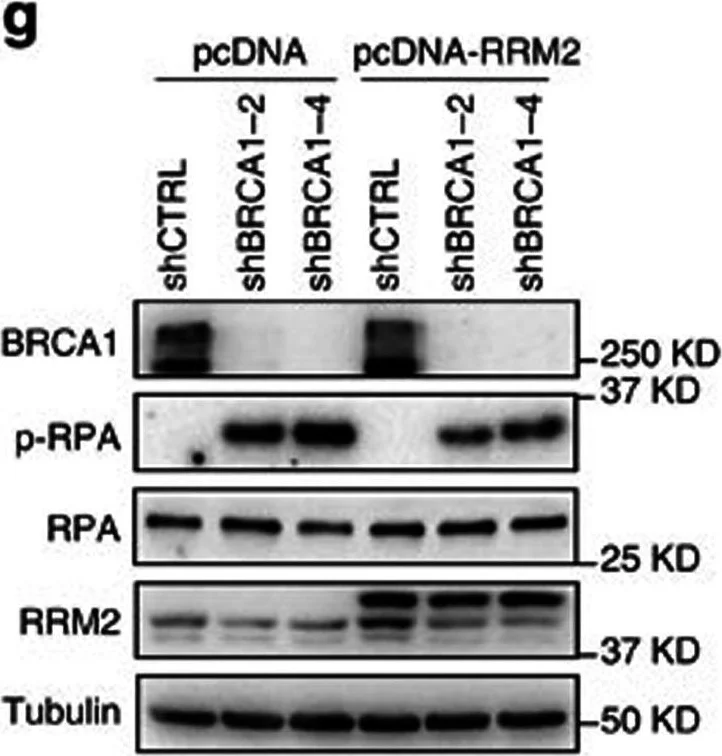
Western Blotting using Anti-RRM2 antibody [1E1], ab57653. Publication image from Bartek, J. et al., 2016, Nat Commun, 27845331. Legend direct from paper.
BRCA1 regulates RRM2 expression via E2F1 and RRM2 overexpression rescues BRCA1-loss phenotype in GBM cells.(a) Luciferase assay of transcriptional activation of the RRM2 promoter in GBM01 transduced with shCTRL or shBRCA1-2/shBRCA1-4. (b) Luciferase assay of transcriptional activation of the RRM2 promoter in GBM01 after siRNA-mediated knockdown of Sp1; AP-1 and E2F1 in comparison to BRCA1. (c) Luciferase assay of transcriptional activation of the RRM2 promoter in GBM01 after siRNA-mediated knockdown of BRCA1 and E2F1 alone or on combination. (d) Chip immunoprecipitation of E2F1 binding RRM2 promoter in GBM01 cells using primer set P1 and P2. (e) Chip immunoprecipitation of BRCA1 binding RRM2 promoter in GBM01 cells transfected with siCTRL and siE2F1 using primer set P1 and P2. (f) DNA fibre assay measuring the replication fork progression speed in GBM cells lacking BRCA1 (shBRCA1-2 and shBRCA1-4) or not (shCTRL) transfected with either control vector (pcDNA) or vector expressing RRM2 (pcDNA-RRM2). See also Table 3. (g) Cell viability of GBM cells lacking BRCA1 (shBRCA1-2 and shBRCA1-4) or not (shCTRL) transfected with either control vector (pcDNA) or vector expressing RRM2 (pcDNA-RRM2). (h) Immunoblot analysis of BRCA1, p-RPA, RPA and RRM2 in GBM cells lacking BRCA1 (shBRCA1-2 and shBRCA1-4) or not (shCTRL) transfected with either control vector (pcDNA) or vector expressing RRM2 (pcDNA-RRM2). (i) Viability-based assessment of EC50 triapine concentrations in GBM01, GBM02 and GBM03 cells. (j) DNA fibre assay measuring the replication fork progression speed in GBM cells treated with DMSO or EC50 triapine. See also Table 4. Statistical significance was calculated by one-way ANOVA and Tukey's multiple comparisons test in a–d,f,h or Student's t test (e,i) and all data are shown as means ±s.d. and performed as technical triplicates. (*P<0.05, **P<0.005, ***P<0.005, ****P<0.0001; NS represents non-significance).
false
代替製品
Primary Antibodies
AB240166
Anti-RRM2 antibody [EPR11820] - BSA and Azide free
BOND RX™ Validated|RabMAb|Recombinant
- 0
- 0
組合せ製品
Primary Antibodies
AB109520
RabMAb|Recombinant|KO Validated|Lab Essentials|20ul selling size

- 5
- 17
Primary Antibodies
AB76495
Anti-Thymidine Kinase 1/TK1 antibody [EPR3193]
20ul selling size|BOND RX™ Validated|RabMAb|Recombinant|KO Validated
- 4
- 2
Reactivity data
製品の詳細
出荷温度及び保存条件
製品の状態
精製度
精製方法
バッファー組成
出荷温度
短期保存温度
長期保存温度
分注に関する情報
保管に関する情報
補足情報
This supplementary information is collated from multiple sources and compiled automatically.
Biological function summary
The ribonucleotide reductase enzyme facilitates the critical function of DNA replication and repair. RRM2 forms a complex with RRM1 the large subunit necessary for enzyme activity. This complex regulates the balance of deoxyribonucleotide pools necessary for DNA synthesis. Variations or dysregulations in the activity of RRM2 can influence genetic stability and cell proliferation emphasizing its importance in cellular function.
Pathways
Ribonucleotide reductase and RRM2 participate significantly in the DNA synthesis and repair pathway. It is pivotal for maintaining DNA fidelity during replication. RRM2 actions relate to pathways involving other DNA replication proteins such as RRM1 and the replication factor C family. The synthesis pathway necessitates close cooperation between these proteins to ensure proper DNA replication and cell cycle progression.
製品プロトコール
- Visit the General protocols
- Visit the Troubleshooting
ターゲットの情報
文献 (45)
Recent publications for all applications. Explore the full list and refine your search
Molecular therapy. Nucleic acids 36:102525 PubMed40248217
2025
Applications
Unspecified application
Species
Unspecified reactive species
Genome medicine 17:14 PubMed39994739
2025
Applications
Unspecified application
Species
Unspecified reactive species
Journal of experimental & clinical cancer research : CR 43:255 PubMed39243109
2024
Applications
Unspecified application
Species
Unspecified reactive species
Nature communications 15:2485 PubMed38509117
2024
Applications
Unspecified application
Species
Unspecified reactive species
Cancers 15: PubMed37444452
2023
Applications
Unspecified application
Species
Unspecified reactive species
Annals of translational medicine 10:1374 PubMed36660663
2023
Applications
Unspecified application
Species
Unspecified reactive species
Bioengineered 13:12912-12926 PubMed35609310
2022
Applications
Unspecified application
Species
Unspecified reactive species
Thoracic cancer 13:1974-1985 PubMed35599447
2022
Applications
Unspecified application
Species
Unspecified reactive species
Orphanet journal of rare diseases 17:119 PubMed35248107
2022
Applications
Unspecified application
Species
Unspecified reactive species
Frontiers in oncology 12:810526 PubMed35311093
2022
Applications
Unspecified application
Species
Unspecified reactive species
Abcam product promise
Please note: All products are 'FOR RESEARCH USE ONLY. NOT FOR USE IN DIAGNOSTIC OR THERAPEUTIC PROCEDURES'.
For licensing inquiries, please contact partnerships@abcam.com