AB253079
redFluor™ 710 Anti-HLA-DR 抗体 [L243]
redFluor™ 710 Anti-HLA-DR antibody [L243]
Be the first to review this product! Submit a review
|
(0 Publication)
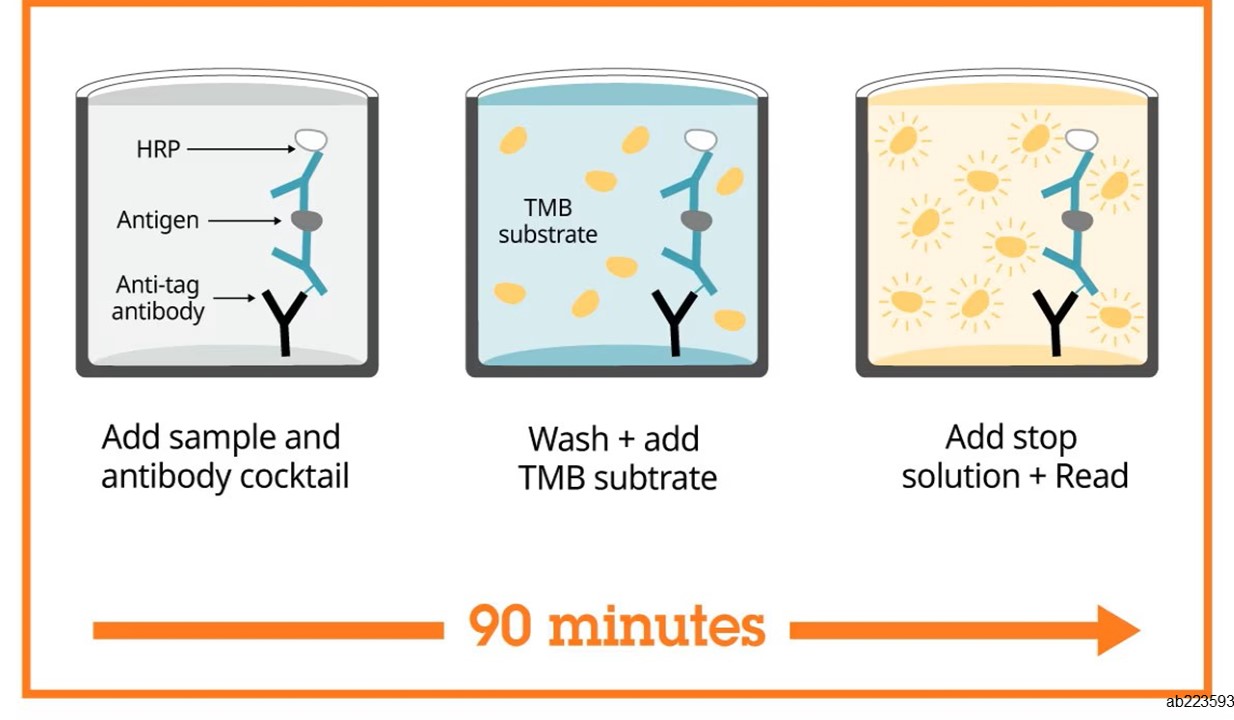
Anti-HLA-DR antibody [L243] conjugated to redFluor™ 710 - suitable for ELISA, and reacts with human samples. Clone [L243] is a mouse monoclonal antibody.
別名を表示する
HLA-DRA1, HLA-DRA, MHC class II antigen DRA
関連する標識済み抗体及び組成の異なる製品 (4)
-
Anti-HLA-DR antibody [L243]
-
660 APC
APC Anti-HLA-DRA antibody [L243]
-
519 Alexa Fluor® 488
Alexa Fluor® 488 Anti-HLA-DRA antibody [L243]
-
578 PE
PE Anti-HLA-DRA antibody [L243]
組合せ製品
Primary Antibodies
AB302698
Alexa Fluor® 647 Anti-CD14 antibody [SP192]
BOND RX™ Validated|RabMAb|Recombinant
- 0
- 0

Reactivity data
{ "title": "Reactivity Data", "filters": { "stats": ["", "Species", "Dilution Info", "Notes"], "tabs": { "all-applications": {"fullname" : "All Applications", "shortname": "All Applications"}, "ELISA" : {"fullname" : "ELISA", "shortname":"ELISA"} }, "product-promise": { "all": "all", "testedAndGuaranteed": "tested", "guaranteed": "expected", "predicted": "predicted", "notRecommended": "not-recommended" } }, "values": { "Human": { "ELISA-species-checked": "guaranteed", "ELISA-species-dilution-info": "", "ELISA-species-notes": "<p></p>" } } }
出荷温度及び保存条件
製品の状態
Liquid
精製方法
Affinity purification
精製に関する特記事項
Purified from tissue culture supernatant. The purified antibody was conjugated under optimal conditions, with unreacted dye removed from the preparation.
バッファー組成
pH: 7.2 Preservative: 0.09% Sodium azide Constituents: 0.87% Sodium chloride, 0.16% Sodium phosphate, 0.1% Gelatin
出荷温度
Blue Ice
短期保存温度
+4°C
長期保存温度
+4°C
保管に関する情報
Store in the dark
製品プロトコール
For this product, it's our understanding that no specific protocols are required. You can visit:
- Visit the General protocols
- Visit the Troubleshooting
ターゲットの情報
An alpha chain of antigen-presenting major histocompatibility complex class II (MHCII) molecule. In complex with the beta chain HLA-DRB, displays antigenic peptides on professional antigen presenting cells (APCs) for recognition by alpha-beta T cell receptor (TCR) on HLA-DR-restricted CD4-positive T cells. This guides antigen-specific T-helper effector functions, both antibody-mediated immune response and macrophage activation, to ultimately eliminate the infectious agents and transformed cells (PubMed : 15265931, PubMed : 15322540, PubMed : 17334368, PubMed : 22327072, PubMed : 24190431, PubMed : 27591323, PubMed : 29884618, PubMed : 31495665, PubMed : 8145819, PubMed : 9075930). Typically presents extracellular peptide antigens of 10 to 30 amino acids that arise from proteolysis of endocytosed antigens in lysosomes (PubMed : 8145819). In the tumor microenvironment, presents antigenic peptides that are primarily generated in tumor-resident APCs likely via phagocytosis of apoptotic tumor cells or macropinocytosis of secreted tumor proteins (PubMed : 31495665). Presents peptides derived from intracellular proteins that are trapped in autolysosomes after macroautophagy, a mechanism especially relevant for T cell selection in the thymus and central immune tolerance (PubMed : 17182262, PubMed : 23783831). The selection of the immunodominant epitopes follows two processing modes : 'bind first, cut/trim later' for pathogen-derived antigenic peptides and 'cut first, bind later' for autoantigens/self-peptides (PubMed : 25413013). The anchor residue at position 1 of the peptide N-terminus, usually a large hydrophobic residue, is essential for high affinity interaction with MHCII molecules (PubMed : 8145819).
Abcam product promise
当社は、高品質な試薬を通じてお客様の研究を力強くサポートすることをお約束いたします。ご使用いただく各段階で、常にお客様をサポートできる体制を整えております。万が一、製品が期待通りに機能しない場合は、「Abcam Product Promise」による当社保証制度に基づき、安心してご利用いただけます。
保証に関する詳細については利用規約をご確認ください。
Please note: All products are 'FOR RESEARCH USE ONLY. NOT FOR USE IN DIAGNOSTIC OR THERAPEUTIC PROCEDURES'.
For licensing inquiries, please contact partnerships@abcam.com