JavaScript is disabled in your browser. Please enable JavaScript to view this website.
AB131460

Anti-PKC mu/PKD 抗体

Anti-PKC mu/PKD antibody

Be the first to review this product! Submit a review

|

(2 Publications)

Rabbit Polyclonal PKC mu/PKD antibody. Suitable for WB, ICC/IF and reacts with Human samples. Cited in 2 publications. Immunogen corresponding to Synthetic Peptide within Human PRKD1 aa 700-750 conjugated to Keyhole Limpet Haemocyanin.

別名を表示する

PKD, PKD1, PRKCM, PRKD1, Serine/threonine-protein kinase D1, Protein kinase C mu type, Protein kinase D, nPKC-D1, nPKC-mu
2 Images
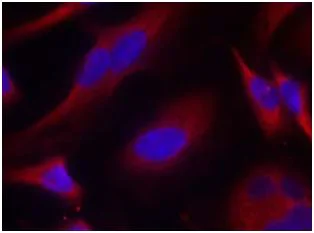
Immunocytochemistry/ Immunofluorescence - Anti-PKC mu/PKD antibody (AB131460)
  • ICC/IF

Unknown

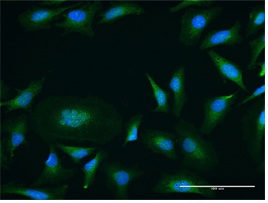
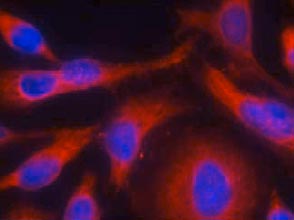
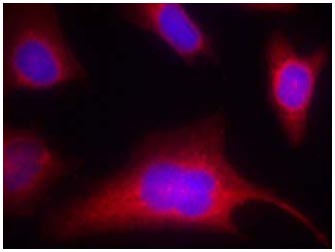
Immunocytochemistry/ Immunofluorescence - Anti-PKC mu/PKD antibody (AB131460)

Immunocytochemistry/ Immunofluorescence analysis of methanol-fixed HeLa cells labelling PKC mu/PKD with ab131460 at 1/100 dilution.
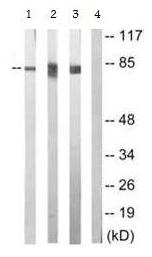
Western blot - Anti-PKC mu/PKD antibody (AB131460)
  • WB

Unknown

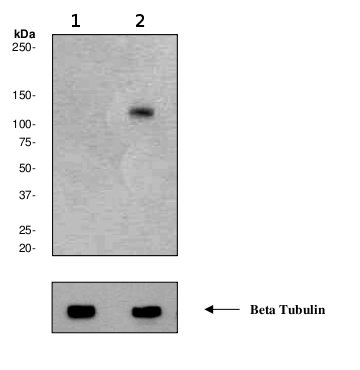
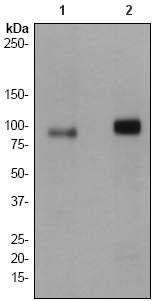
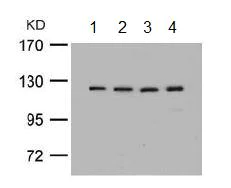
Western blot - Anti-PKC mu/PKD antibody (AB131460)

All lanes:

Western blot - Anti-PKC mu/PKD antibody (ab131460) at 1/500 dilution

Lane 1:

HeLa cell extract

Lane 2:

293 cell extract

Lane 3:

THP1 cell extract

Lane 4:

Jurkat cell extract

Predicted band size: 102 kDa

false

Key facts

宿主種

Rabbit

クローン性

Polyclonal

アイソタイプ

IgG

キャリアフリー

No

交差種

Human

アプリケーション

ICC/IF, WB

applications

免疫原

Synthetic Peptide within Human PRKD1 aa 700-750 conjugated to Keyhole Limpet Haemocyanin. The exact immunogen used to generate this antibody is proprietary information.

Q15139

Reactivity data

{ "title": "Reactivity Data", "filters": { "stats": ["", "Species", "Dilution Info", "Notes"], "tabs": { "all-applications": {"fullname" : "All Applications", "shortname": "All Applications"}, "WB" : {"fullname" : "Western blot", "shortname":"WB"}, "ICCIF" : {"fullname" : "Immunocytochemistry/ Immunofluorescence", "shortname":"ICC/IF"} }, "product-promise": { "all": "all", "testedAndGuaranteed": "tested", "guaranteed": "expected", "predicted": "predicted", "notRecommended": "not-recommended" } }, "values": { "Human": { "WB-species-checked": "testedAndGuaranteed", "WB-species-dilution-info": "1/500 - 1/1000", "WB-species-notes": "<p></p>", "ICCIF-species-checked": "testedAndGuaranteed", "ICCIF-species-dilution-info": "1/100 - 1/200", "ICCIF-species-notes": "<p></p>" } } }

出荷温度及び保存条件

製品の状態
Liquid
精製方法
Affinity purification Immunogen
精製に関する特記事項
ab131460 was purified by affinity chromatography using epitope specific peptide.
バッファー組成
pH: 7.4 Preservative: 0.02% Sodium azide Constituents: PBS, 50% Glycerol (glycerin, glycerine), 0.88% Sodium chloride
出荷温度
Blue Ice
短期保存温度
+4°C
長期保存温度
-20°C
保管に関する情報
Stable for 12 months at -20°C

補足情報

This supplementary information is collated from multiple sources and compiled automatically.

PKC mu also known as Protein Kinase D (PKD) is a serine/threonine protein kinase with a notable role in various cellular processes. It is also referred to as PKD 62 due to its molecular mass of approximately 62 kDa. This kinase expresses widely in human tissues with high levels observed in the liver skeletal heart muscle and pancreas. During key cellular actions PKC mu moves between different cellular compartments mediating essential signaling events.
Biological function summary

PKC mu influences several cellular processes including cell proliferation migration and survival. It forms part of a larger protein complex involved in diverse signaling pathways. PKC mu regulates gene expression by affecting various transcription factors. Its activity impacts pathways connected to cell growth and responses to stress demonstrating an essential role in maintaining cellular homeostasis.

Pathways

PKC mu plays an important role in both the MAPK and NF-kB signaling pathways. Through these pathways it interacts with proteins such as Ras and IKK contributing to cell growth and inflammation. PKC mu acts as a bridge allowing signals to be transmitted efficiently ensuring appropriate responses to extracellular stimuli.

PKC mu has been linked to cancer and cardiac hypertrophy. Alterations in PKC mu activity contribute to pathological states due to its involvement in pathways that manage cell growth and stress responses. For instance its overexpression or hyperactivity associates with tumor development and progression. PKC mu's relationship with proteins like Akt in cancer pathways further implicates it in oncogenic processes.

製品プロトコール

For this product, it's our understanding that no specific protocols are required. You can visit:

ターゲットの情報

Serine/threonine-protein kinase that converts transient diacylglycerol (DAG) signals into prolonged physiological effects downstream of PKC, and is involved in the regulation of MAPK8/JNK1 and Ras signaling, Golgi membrane integrity and trafficking, cell survival through NF-kappa-B activation, cell migration, cell differentiation by mediating HDAC7 nuclear export, cell proliferation via MAPK1/3 (ERK1/2) signaling, and plays a role in cardiac hypertrophy, VEGFA-induced angiogenesis, genotoxic-induced apoptosis and flagellin-stimulated inflammatory response (PubMed : 10764790, PubMed : 12505989, PubMed : 12637538, PubMed : 17442957, PubMed : 18509061, PubMed : 19135240, PubMed : 19211839). Phosphorylates the epidermal growth factor receptor (EGFR) on dual threonine residues, which leads to the suppression of epidermal growth factor (EGF)-induced MAPK8/JNK1 activation and subsequent JUN phosphorylation (PubMed : 10523301). Phosphorylates RIN1, inducing RIN1 binding to 14-3-3 proteins YWHAB, YWHAE and YWHAZ and increased competition with RAF1 for binding to GTP-bound form of Ras proteins (NRAS, HRAS and KRAS). Acts downstream of the heterotrimeric G-protein beta/gamma-subunit complex to maintain the structural integrity of the Golgi membranes, and is required for protein transport along the secretory pathway. In the trans-Golgi network (TGN), regulates the fission of transport vesicles that are on their way to the plasma membrane. May act by activating the lipid kinase phosphatidylinositol 4-kinase beta (PI4KB) at the TGN for the local synthesis of phosphorylated inositol lipids, which induces a sequential production of DAG, phosphatidic acid (PA) and lyso-PA (LPA) that are necessary for membrane fission and generation of specific transport carriers to the cell surface. Under oxidative stress, is phosphorylated at Tyr-463 via SRC-ABL1 and contributes to cell survival by activating IKK complex and subsequent nuclear translocation and activation of NFKB1 (PubMed : 12505989). Involved in cell migration by regulating integrin alpha-5/beta-3 recycling and promoting its recruitment in newly forming focal adhesion. In osteoblast differentiation, mediates the bone morphogenetic protein 2 (BMP2)-induced nuclear export of HDAC7, which results in the inhibition of HDAC7 transcriptional repression of RUNX2 (PubMed : 18509061). In neurons, plays an important role in neuronal polarity by regulating the biogenesis of TGN-derived dendritic vesicles, and is involved in the maintenance of dendritic arborization and Golgi structure in hippocampal cells. May potentiate mitogenesis induced by the neuropeptide bombesin or vasopressin by mediating an increase in the duration of MAPK1/3 (ERK1/2) signaling, which leads to accumulation of immediate-early gene products including FOS that stimulate cell cycle progression. Plays an important role in the proliferative response induced by low calcium in keratinocytes, through sustained activation of MAPK1/3 (ERK1/2) pathway. Downstream of novel PKC signaling, plays a role in cardiac hypertrophy by phosphorylating HDAC5, which in turn triggers XPO1/CRM1-dependent nuclear export of HDAC5, MEF2A transcriptional activation and induction of downstream target genes that promote myocyte hypertrophy and pathological cardiac remodeling (PubMed : 18332134). Mediates cardiac troponin I (TNNI3) phosphorylation at the PKA sites, which results in reduced myofilament calcium sensitivity, and accelerated crossbridge cycling kinetics. The PRKD1-HDAC5 pathway is also involved in angiogenesis by mediating VEGFA-induced specific subset of gene expression, cell migration, and tube formation (PubMed : 19211839). In response to VEGFA, is necessary and required for HDAC7 phosphorylation which induces HDAC7 nuclear export and endothelial cell proliferation and migration. During apoptosis induced by cytarabine and other genotoxic agents, PRKD1 is cleaved by caspase-3 at Asp-378, resulting in activation of its kinase function and increased sensitivity of cells to the cytotoxic effects of genotoxic agents (PubMed : 10764790). In epithelial cells, is required for transducing flagellin-stimulated inflammatory responses by binding and phosphorylating TLR5, which contributes to MAPK14/p38 activation and production of inflammatory cytokines (PubMed : 17442957). Acts as an activator of NLRP3 inflammasome assembly by mediating phosphorylation of NLRP3 (By similarity). May play a role in inflammatory response by mediating activation of NF-kappa-B. May be involved in pain transmission by directly modulating TRPV1 receptor (PubMed : 15471852). Plays a role in activated KRAS-mediated stabilization of ZNF304 in colorectal cancer (CRC) cells (PubMed : 24623306). Regulates nuclear translocation of transcription factor TFEB in macrophages upon live S.enterica infection (By similarity).
See full target information PRKD1

文献 (2)

Recent publications for all applications. Explore the full list and refine your search

iScience 24:102724 PubMed34337357

2021

Microscopic image-based covariation network analysis for actin scaffold-modified insulin signaling.

Applications

Unspecified application

Species

Unspecified reactive species

Yoshiyuki Noguchi,Fumi Kano,Nobuhiko Maiya,Chisako Iwamoto,Shoko Yamasaki,Yosuke Otsubo,Daiki Nakatsu,Rina Kunishige,Masayuki Murata

Journal of cellular biochemistry 119:10338-10350 PubMed30171710

2018

Characterization of potential TRPP2 regulating proteins in early Xenopus embryos.

Applications

Unspecified application

Species

Unspecified reactive species

Mélinée Futel,Ronan Le Bouffant,Isabelle Buisson,Muriel Umbhauer,Jean-François Riou
View all publications

Abcam product promise

当社は、高品質な試薬を通じてお客様の研究を力強くサポートすることをお約束いたします。ご使用いただく各段階で、常にお客様をサポートできる体制を整えております。万が一、製品が期待通りに機能しない場合は、「Abcam Product Promise」による当社保証制度に基づき、安心してご利用いただけます。
保証に関する詳細については利用規約をご確認ください。

Please note: All products are 'FOR RESEARCH USE ONLY. NOT FOR USE IN DIAGNOSTIC OR THERAPEUTIC PROCEDURES'.

For licensing inquiries, please contact partnerships@abcam.com