JavaScript is disabled in your browser. Please enable JavaScript to view this website.
AB256453

Anti-Perforin 抗体 [EPR22829-42]

Anti-Perforin antibody [EPR22829-42]

Be the first to review this product! Submit a review

|

(7 Publications)

Rabbit Recombinant Monoclonal Perforin antibody. Suitable for IP, WB and reacts with Mouse, Rat, Human, Recombinant fragment - Mouse samples. Cited in 7 publications.

別名を表示する

PFP, PRF1, Perforin-1, P1, Cytolysin, Lymphocyte pore-forming protein
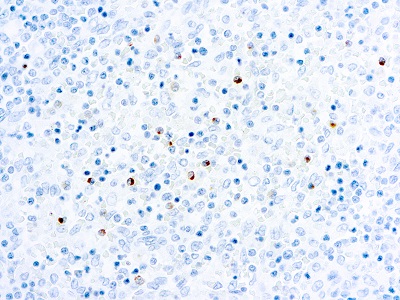
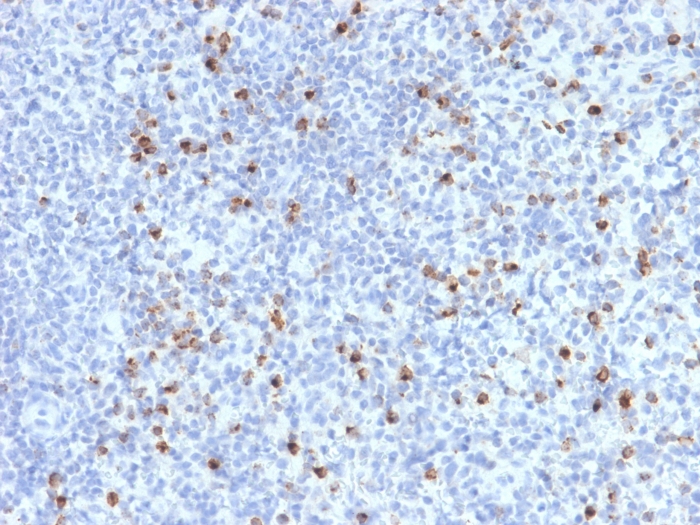
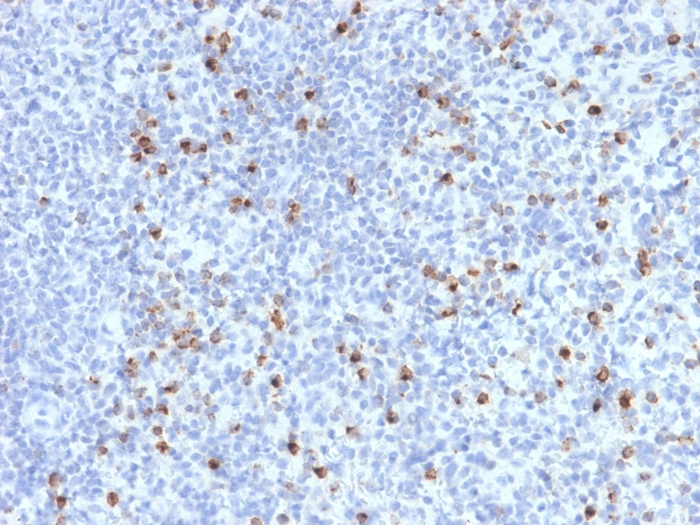
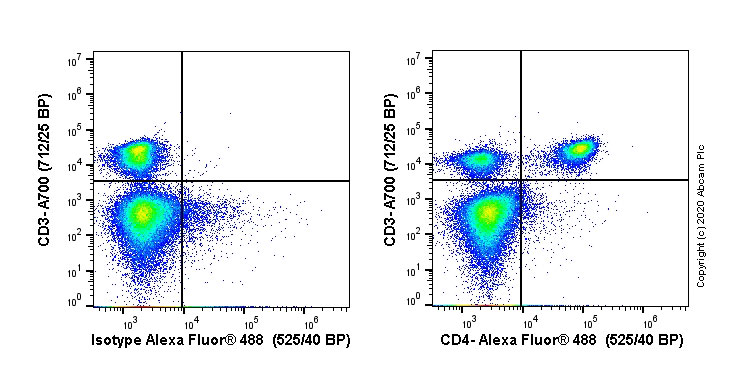
4 Images
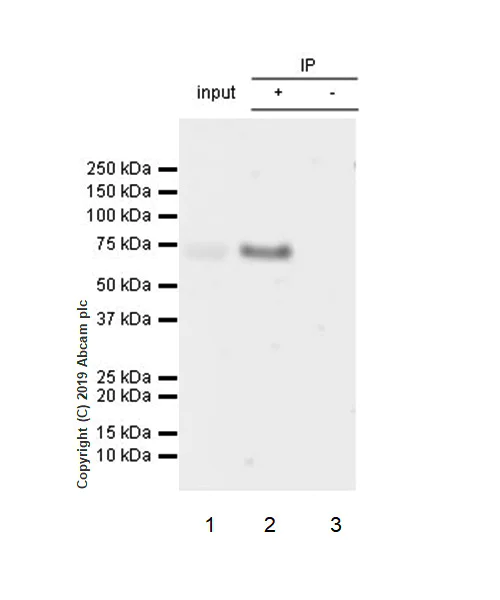
Immunoprecipitation - Anti-Perforin antibody [EPR22829-42] (AB256453)
  • IP

Unknown

Immunoprecipitation - Anti-Perforin antibody [EPR22829-42] (AB256453)

PRF1 was immunoprecipitated from 0.35 mg Mouse spleen lysate 10ug with ab256453 at 1/30 dilution (2ug in 0.35mg lysates). Western blot was performed on the immunoprecipitate using ab256453 at 1/500 dilution. VeriBlot for IP Detection Reagent (HRP) (ab131366) was used at 1/1000 dilution. Lane 1 : Mouse spleen lysate 10ug

Lane 2 : ab256453 IP in Mouse spleen lysate

Lane 3 : Rabbit monoclonal IgG (ab172730) instead of ab256453 in Mouse spleen lysate

Blocking and dilution buffer and concentration : 5% NFDM/TBST.

Exposure time : 3 min

This data was developed using the same antibody clone in a different buffer formulation containing PBS, BSA, glycerol, and sodium azide (ab256453).

All lanes:

Immunoprecipitation - Anti-Perforin antibody [EPR22829-42] (ab256453)

Predicted band size: 61 kDa

Observed band size: 70 kDa

false
Western blot - Anti-Perforin antibody [EPR22829-42] (AB256453)
  • WB

Lab

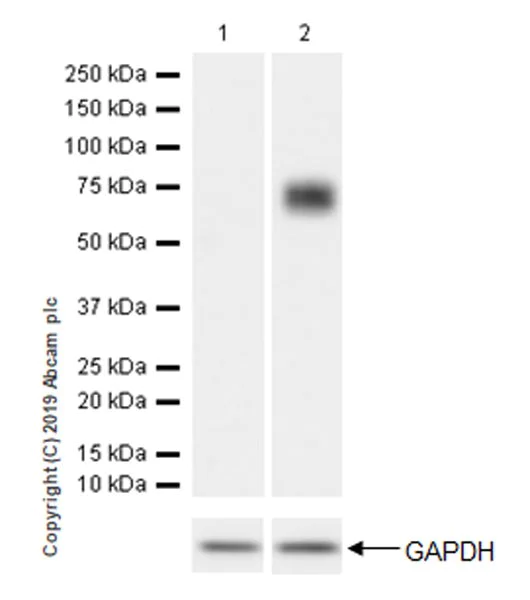
Western blot - Anti-Perforin antibody [EPR22829-42] (AB256453)

Blocking and diluting buffer and concentration : 5% NFDM/TBST.

Exposure time : 26 seconds.

All lanes:

Western blot - Anti-Perforin antibody [EPR22829-42] (ab256453) at 1/1000 dilution

Lane 1:

Untreated mouse primary spleen whole cell lysate at 10 µg

Lane 2:

Mouse primary spleen treated with 10 ng/ml human IL-2 for 3 days, whole cell lysate at 10 µg

Secondary

All lanes:

Western blot - Goat Anti-Rabbit IgG H&L (HRP) (<a href='/products/secondary-antibodies/goat-rabbit-igg-h-l-hrp-ab97051'>ab97051</a>) at 1/100000 dilution

Predicted band size: 61 kDa

Observed band size: 70 kDa

false
Western blot - Anti-Perforin antibody [EPR22829-42] (AB256453)
  • WB

Lab

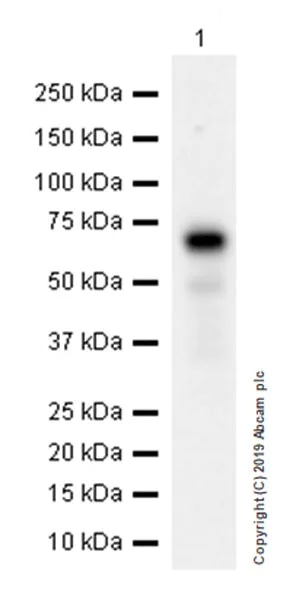
Western blot - Anti-Perforin antibody [EPR22829-42] (AB256453)

Blocking and diluting buffer and concentration : 5% NFDM/TBST.

Exposure time : 6 seconds.

All lanes:

Western blot - Anti-Perforin antibody [EPR22829-42] (ab256453) at 1/1000 dilution

All lanes:

Rat spleen lysate at 20 µg

Secondary

All lanes:

Western blot - Goat Anti-Rabbit IgG H&L (HRP) (<a href='/products/secondary-antibodies/goat-rabbit-igg-h-l-hrp-ab97051'>ab97051</a>) at 1/100000 dilution

Predicted band size: 61 kDa

Observed band size: 70 kDa

false
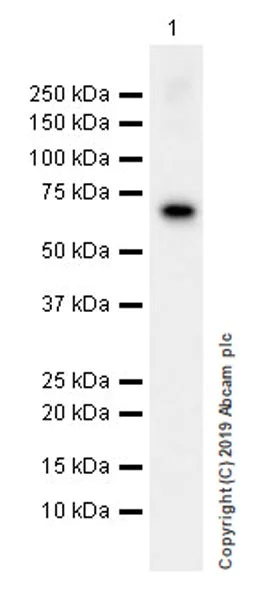
Western blot - Anti-Perforin antibody [EPR22829-42] (AB256453)
  • WB

Lab

Western blot - Anti-Perforin antibody [EPR22829-42] (AB256453)

Blocking and diluting buffer and concentration : 5% NFDM/TBST.

The recombinant protein was expressed from a E. coli inclusion body.

Exposure time : 8 seconds.

All lanes:

Western blot - Anti-Perforin antibody [EPR22829-42] (ab256453) at 1/1000 dilution

All lanes:

His-tagged mouse PRF1 recombinant protein (21-554), 10 ng

Secondary

All lanes:

Western blot - Goat Anti-Rabbit IgG H&L (HRP) (<a href='/products/secondary-antibodies/goat-rabbit-igg-h-l-hrp-ab97051'>ab97051</a>) at 1/100000 dilution

Predicted band size: 61 kDa

Observed band size: 60 kDa

false

関連する標識済み抗体及び組成の異なる製品 (1)

  • Carrier free

    Anti-Perforin antibody [EPR22829-42] - BSA and Azide free

Key facts

宿主種

Rabbit

クローン性

Monoclonal

クローン番号

EPR22829-42

アイソタイプ

IgG

キャリアフリー

No

交差種

Mouse, Rat, Human

アプリケーション

WB, IP

applications

免疫原

The exact immunogen used to generate this antibody is proprietary information.

Reactivity data

{ "title": "Reactivity Data", "filters": { "stats": ["", "Species", "Dilution Info", "Notes"], "tabs": { "all-applications": {"fullname" : "All Applications", "shortname": "All Applications"}, "IP" : {"fullname" : "Immunoprecipitation", "shortname":"IP"}, "FlowCyt" : {"fullname" : "Flow Cytometry", "shortname":"Flow Cyt"}, "WB" : {"fullname" : "Western blot", "shortname":"WB"}, "IHCP" : {"fullname" : "Immunohistochemistry (Formalin/PFA-fixed paraffin-embedded sections)", "shortname":"IHC-P"}, "ICCIF" : {"fullname" : "Immunocytochemistry/ Immunofluorescence", "shortname":"ICC/IF"} }, "product-promise": { "all": "all", "testedAndGuaranteed": "tested", "guaranteed": "expected", "predicted": "predicted", "notRecommended": "not-recommended" } }, "values": { "Human": { "IP-species-checked": "guaranteed", "IP-species-dilution-info": "1/30", "IP-species-notes": "<p></p>", "FlowCyt-species-checked": "notRecommended", "FlowCyt-species-dilution-info": "", "FlowCyt-species-notes": "", "WB-species-checked": "guaranteed", "WB-species-dilution-info": "1/1000", "WB-species-notes": "<p></p>", "IHCP-species-checked": "notRecommended", "IHCP-species-dilution-info": "", "IHCP-species-notes": "<p></p>", "ICCIF-species-checked": "notRecommended", "ICCIF-species-dilution-info": "", "ICCIF-species-notes": "" }, "Mouse": { "IP-species-checked": "testedAndGuaranteed", "IP-species-dilution-info": "1/30", "IP-species-notes": "<p></p>", "FlowCyt-species-checked": "notRecommended", "FlowCyt-species-dilution-info": "", "FlowCyt-species-notes": "<p></p>", "WB-species-checked": "testedAndGuaranteed", "WB-species-dilution-info": "1/1000", "WB-species-notes": "<p></p>", "IHCP-species-checked": "notRecommended", "IHCP-species-dilution-info": "", "IHCP-species-notes": "<p></p>", "ICCIF-species-checked": "notRecommended", "ICCIF-species-dilution-info": "", "ICCIF-species-notes": "<p></p>" }, "Rat": { "IP-species-checked": "guaranteed", "IP-species-dilution-info": "", "IP-species-notes": "", "FlowCyt-species-checked": "notRecommended", "FlowCyt-species-dilution-info": "", "FlowCyt-species-notes": "", "WB-species-checked": "testedAndGuaranteed", "WB-species-dilution-info": "1/1000", "WB-species-notes": "<p></p>", "IHCP-species-checked": "notRecommended", "IHCP-species-dilution-info": "", "IHCP-species-notes": "<p></p>", "ICCIF-species-checked": "notRecommended", "ICCIF-species-dilution-info": "", "ICCIF-species-notes": "" }, "Recombinant fragment - Mouse": { "IP-species-checked": "notRecommended", "IP-species-dilution-info": "", "IP-species-notes": "", "FlowCyt-species-checked": "notRecommended", "FlowCyt-species-dilution-info": "", "FlowCyt-species-notes": "", "WB-species-checked": "testedAndGuaranteed", "WB-species-dilution-info": "1/1000", "WB-species-notes": "<p></p>", "IHCP-species-checked": "notRecommended", "IHCP-species-dilution-info": "", "IHCP-species-notes": "", "ICCIF-species-checked": "notRecommended", "ICCIF-species-dilution-info": "", "ICCIF-species-notes": "" } } }

製品の詳細

Patented technology
Our RabMAb® technology is a patented hybridoma-based technology for making rabbit monoclonal antibodies. For details on our patents, please refer to RabMAb® patents.

What are the advantages of a recombinant monoclonal antibody?
This product is a recombinant monoclonal antibody, which offers several advantages including:

  • - High batch-to-batch consistency and reproducibility
  • - Improved sensitivity and specificity
  • - Long-term security of supply
  • - Animal-free batch production

For more information, read more on recombinant antibodies.

出荷温度及び保存条件

製品の状態
Liquid
精製方法
Affinity purification Protein A
バッファー組成
pH: 7.2 - 7.4 Preservative: 0.01% Sodium azide Constituents: PBS, 40% Glycerol (glycerin, glycerine), 0.05% BSA
出荷温度
Conditional Ambient
短期保存期間
1-2 weeks
短期保存温度
+4°C
長期保存温度
-20°C
分注に関する情報
Upon delivery aliquot
保管に関する情報
Avoid freeze / thaw cycle

補足情報

This supplementary information is collated from multiple sources and compiled automatically.

Perforin also referred to as PRF1 is a pore-forming protein that plays an important role in immune response. It appears as a 67-kDa protein and is mainly expressed in cytotoxic T cells and natural killer (NK) cells. The function of perforin involves the formation of transmembrane pores in the membranes of target cells aiding in the delivery of pro-apoptotic molecules. This mechanism is essential for the destruction of virus-infected cells and tumor cells. Techniques like perforin IHC and perforin ELISA are suitable for detecting and quantifying this protein in various samples.
Biological function summary

Perforin helps the immune system respond effectively against infected or malignant cells. It works in conjunction with granzymes forming a complex that perforates target cell membranes allowing granzymes to enter and induce apoptosis. Perforin's role in immune surveillance prevents the propagation of harmful cells within the body. Deficiency or malfunction in perforin can lead to compromised immune function or immune cell dysregulation.

Pathways

Perforin integrates into the cytotoxic T lymphocyte (CTL) and NK cell-mediated cytotoxicity pathways. These pathways include critical interactions with proteins like granzymes and Fas ligand (FasL) which orchestrate the apoptosis of abnormal cells. Through these pathways perforin ensures the body's ability to identify and eliminate threats. The granule exocytosis pathway in particular heavily depends on perforin's activity to execute effective immune responses.

Mutations or defects in perforin are linked to familial hemophagocytic lymphohistiocytosis (FHL) and some types of cancer. These conditions arise when perforin's ability to function correctly is impaired. For instance in FHL defective perforin hampers the immune cells' ability to kill target cells leading to uncontrolled immune activation. Furthermore in the context of cancer the proper functioning of perforin alongside proteins like granzyme B is critical for the surveillance and elimination of tumor cells.

製品プロトコール

For this product, it's our understanding that no specific protocols are required. You can visit:

ターゲットの情報

Pore-forming protein that plays a key role in granzyme-mediated programmed cell death, and in defense against virus-infected or neoplastic cells (PubMed : 20889983, PubMed : 21037563, PubMed : 24558045, PubMed : 9058810, PubMed : 9164947). Plays an important role in killing other cells that are recognized as non-self by the immune system, e.g. in transplant rejection or some forms of autoimmune disease (PubMed : 9058810). Can insert into the membrane of target cells in its calcium-bound form, oligomerize and form large pores (PubMed : 20889983, PubMed : 21037563). Promotes cytolysis and apoptosis of target cells by mediating the passage and uptake of cytotoxic granzymes (PubMed : 20038786, PubMed : 20225066, PubMed : 24558045, PubMed : 32299851). Facilitates the delivery of cationic cargo protein, while anionic or neural proteins are not delivered efficiently (PubMed : 24558045). Perforin pores allow the release of mature caspase-7 (CASP7) into the extracellular milieu (By similarity).
See full target information PRF1

文献 (7)

Recent publications for all applications. Explore the full list and refine your search

Respiratory research 26:275 PubMed41024125

2025

ZNF184-mediated transcriptional activation of SAE1 drives the cell cycle entry and immune evasion in non-small cell lung cancer.

Applications

Unspecified application

Species

Unspecified reactive species

Feng Shi,Luquan Zhang,Chunli Wang,Qingwei Meng

Frontiers in oncology 14:1440906 PubMed39346724

2024

Cleft lip and palate transmembrane protein 1-like is a putative regulator of tumorigenesis and sensitization of cervical cancer cells to cisplatin.

Applications

Unspecified application

Species

Unspecified reactive species

Weipeng Liu,Fengdan Huang,Yueting Yao,Yan Liang,Zhiling Yan,Lili Guo,Xinwen Zhang,Li Shi,Yufeng Yao

Journal of translational medicine 21:383 PubMed37308954

2023

Inhalable CAR-T cell-derived exosomes as paclitaxel carriers for treating lung cancer.

Applications

Unspecified application

Species

Unspecified reactive species

Wei Zheng,Tianchuan Zhu,Lantian Tang,Zhijian Li,Guanmin Jiang,Xi Huang

Annals of translational medicine 11:84 PubMed36819496

2023

Comprehensive analysis of immune-related genes associated with the microenvironment of patients with unexplained infertility.

Applications

Unspecified application

Species

Unspecified reactive species

Caiyun Wang,Xiaodong Zhao,Haibin Zhang,Zhitong Bing,Yu Wu,Rui Li,Yongxiu Yang,Kehu Yang

International journal of molecular sciences 23: PubMed36499501

2022

miR-221-5p and miR-186-5p Are the Critical Bladder Cancer Derived Exosomal miRNAs in Natural Killer Cell Dysfunction.

Applications

Unspecified application

Species

Unspecified reactive species

Ting Huyan,Lina Gao,Na Gao,Chaochao Wang,Wuli Guo,Xiaojie Zhou,Qi Li

Computational and mathematical methods in medicine 2022:7218666 PubMed35633929

2022

Levetiracetam Attenuates the Spinal Cord Injury Induced by Acute Trauma via Suppressing the Expression of Perforin.

Applications

Unspecified application

Species

Unspecified reactive species

Hong Xia,Jiaqiang Huang,Jian Liu,Hua Zhang,Dawei Chen,Wen Zhang,Xianghong Zhou,Zhouyang Wei,Zhaoxiang Liu

Molecular medicine (Cambridge, Mass.) 27:109 PubMed34530740

2021

MicroRNA-214 promotes alveolarization in neonatal rat models of bronchopulmonary dysplasia via the PlGF-dependent STAT3 pathway.

Applications

Unspecified application

Species

Unspecified reactive species

Zhi-Qun Zhang,Hui Hong,Jing Li,Xiao-Xia Li,Xian-Mei Huang
View all publications

Abcam product promise

当社は、高品質な試薬を通じてお客様の研究を力強くサポートすることをお約束いたします。ご使用いただく各段階で、常にお客様をサポートできる体制を整えております。万が一、製品が期待通りに機能しない場合は、「Abcam Product Promise」による当社保証制度に基づき、安心してご利用いただけます。
保証に関する詳細については利用規約をご確認ください。

Please note: All products are 'FOR RESEARCH USE ONLY. NOT FOR USE IN DIAGNOSTIC OR THERAPEUTIC PROCEDURES'.

For licensing inquiries, please contact partnerships@abcam.com