Anti-PAK1 (phospho S144) + PAK2 (phospho S141) + PAK3 (phospho S154) 抗体 [EP656Y]
Anti-PAK1 (phospho S144) + PAK2 (phospho S141) + PAK3 (phospho S154) antibody [EP656Y]
- 20ul selling size
- RabMAb
- Recombinant
- 詳細を見る
4
(4 Reviews)
|
(43 Publications)
Rabbit Recombinant Monoclonal PAK1 phospho S144 antibody. Suitable for IP, WB, ICC/IF, Flow Cyt (Intra), IHC-P and reacts with Human, Mouse, Rat samples. Cited in 43 publications.
別名を表示する
Serine/threonine-protein kinase PAK 1, Alpha-PAK, p21-activated kinase 1, p65-PAK, PAK-1, PAK1, OPHN3, PAK3, Serine/threonine-protein kinase PAK 3, Beta-PAK, Oligophrenin-3, p21-activated kinase 3, PAK-3, Serine/threonine-protein kinase PAK 2, Gamma-PAK, PAK65, S6/H4 kinase, p21-activated kinase 2, p58, PAK-2, PAK2
- Flow Cyt (Intra)
Unknown
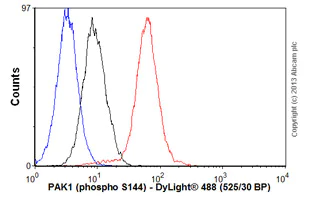
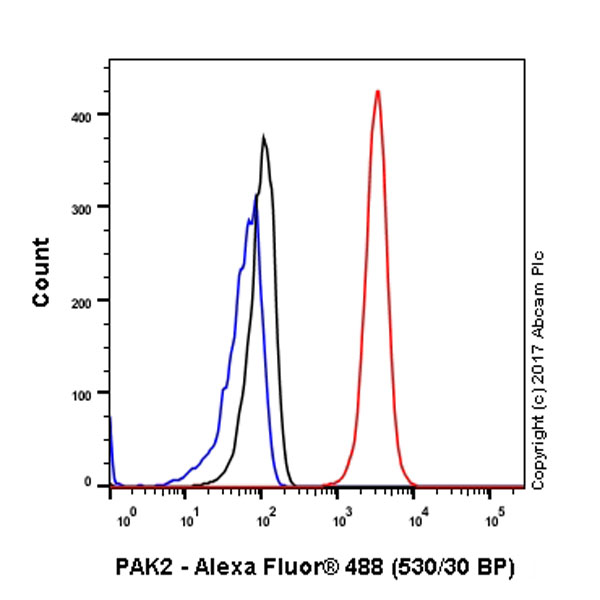
Flow Cytometry (Intracellular) - Anti-PAK1 (phospho S144) + PAK2 (phospho S141) + PAK3 (phospho S154) antibody [EP656Y] (AB40795)
Overlay histogram showing HeLa cells stained with unpurified ab40795 (red line). The cells were fixed with 80% methanol (5 min) and then permeabilized with 0.1% PBS-Tween for 20 min. The cells were then incubated in 1x PBS / 10% normal goat serum / 0.3M glycine to block non-specific protein-protein interactions followed by the antibody (ab40795, 1/100 dilution) for 30 min at 22°C. The secondary antibody used was DyLight® 488 goat anti-rabbit IgG (H+L) (ab96899) at 1/500 dilution for 30 min at 22°C. Isotype control antibody (black line) was rabbit IgG (monoclonal) (1μg/1x106 cells) used under the same conditions. Unlabelled sample (blue line) was also used as a control. Acquisition of >5,000 events were collected using a 20mW Argon ion laser (488nm) and 525/30 bandpass filter.
- IHC-P
Unknown
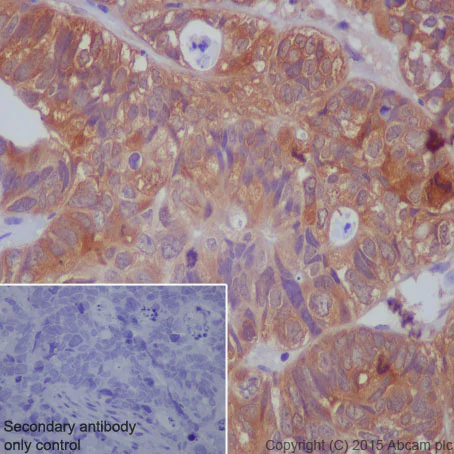
Immunohistochemistry (Formalin/PFA-fixed paraffin-embedded sections) - Anti-PAK1 (phospho S144) + PAK2 (phospho S141) + PAK3 (phospho S154) antibody [EP656Y] (AB40795)
ab40795 staining PAK1 (phospho S144) + PAK2 (phospho S141) + PAK3 (phospho S154) in human liver carcinoma tissue sections by Immunohistochemistry (IHC-P - paraformaldehyde-fixed, paraffin-embedded sections). Tissue was fixed with paraformaldehyde and antigen retrieval was by heat mediation in a EDTA buffer. Samples were incubated with primary antibody at a dilution of 1/100. A goat anti-rabbit IgG H&L (HRP) ab97051 was used as the secondary antibody at a dilution of 1/500.
Negative control 1 : PBS in place of primary antibody.
- ICC/IF
Unknown
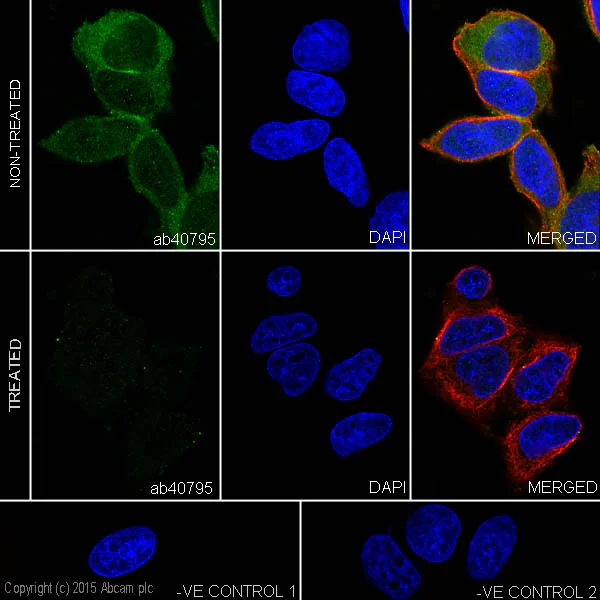
Immunocytochemistry/ Immunofluorescence - Anti-PAK1 (phospho S144) + PAK2 (phospho S141) + PAK3 (phospho S154) antibody [EP656Y] (AB40795)
ab40795 staining PAK1 (phospho S144) + PAK2 (phospho S141) + PAK3 (phospho S154) in HeLa (human cervix adenocarcinoma) cells, treated and untreated with Lambda Protein Phosphtase 31℃ for 5h by ICC/IF (Immunocytochemistry/immunofluorescence). Cells were fixed with 4% Paraformaldehyde and permeabilized with 0.1% Triton X-100. Samples were incubated with primary antibody at a dilution of 1/100. A goat anti rabbit IgG (Alexa Fluor® 488) (ab150077) was used as the secondary antibody. ab7291 and ab150120 were used as counterstains for primary antibody ab75748 and secondary antibody ab150077 respectively and DAPI was used as a nuclear counterstain.
Negative control 1 : Rabbit primary antibody and anti-mouse secondary antibody (ab150120)
Negative control 2 : Mouse primary antibody (ab7291) and anti-rabbit secondary antibody (ab150077)
- IP
Unknown
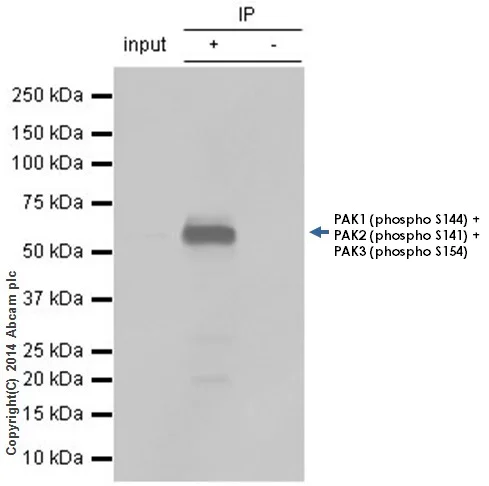
Immunoprecipitation - Anti-PAK1 (phospho S144) + PAK2 (phospho S141) + PAK3 (phospho S154) antibody [EP656Y] (AB40795)
ab40795 immunoprecipitating PAK1 (phospho S144) + PAK2 (phospho S141) + PAK3 (phospho S154). 10μg of HeLa (human cervix adenocarcinoma) whole cell lysate was incubated with primary antibody at a dilution of 1/40 and VeriBlot for IP Detection Reagent (HRP) (ab131366) at a dilution of 1/10000.
Lane 1 : HeLa whole cell lysate (10ug)
Lane 2 : ab40795 IP in HeLa whole cell lysate
Lane 3 : Rabbit monoclonal IgG (ab172730) instead of ab40795 in HeLa (human cervix adenocarcinoma) whole cell lysate
All lanes:
Immunoprecipitation - Anti-PAK1 (phospho S144) + PAK2 (phospho S141) + PAK3 (phospho S154) antibody [EP656Y] (ab40795)
false
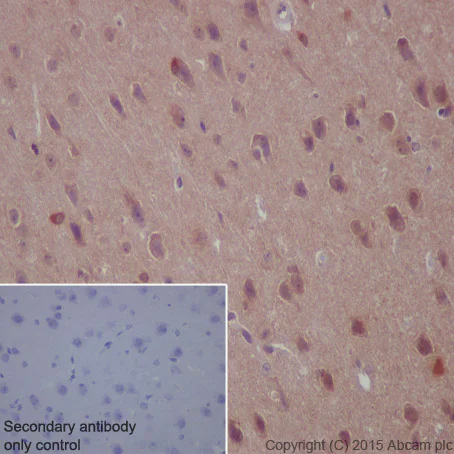
- IHC-P
Unknown
Immunohistochemistry (Formalin/PFA-fixed paraffin-embedded sections) - Anti-PAK1 (phospho S144) + PAK2 (phospho S141) + PAK3 (phospho S154) antibody [EP656Y] (AB40795)
ab40795 staining PAK1 (phospho S144) + PAK2 (phospho S141) + PAK3 (phospho S154) in mouse cerebral cortex tissue sections by Immunohistochemistry (IHC-P - paraformaldehyde-fixed, paraffin-embedded sections). Tissue was fixed with paraformaldehyde and antigen retrieval was by heat mediation in a EDTA buffer. Samples were incubated with primary antibody at a dilution of 1/100. A goat anti-rabbit IgG H&L (HRP) ab97051 was used as the secondary antibody at a dilution of 1/500.
Negative control 1 : PBS in place of primary antibody.
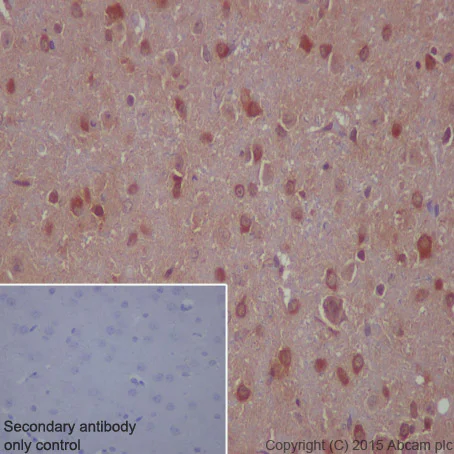
- IHC-P
Unknown
Immunohistochemistry (Formalin/PFA-fixed paraffin-embedded sections) - Anti-PAK1 (phospho S144) + PAK2 (phospho S141) + PAK3 (phospho S154) antibody [EP656Y] (AB40795)
ab40795 staining PAK1 (phospho S144) + PAK2 (phospho S141) + PAK3 (phospho S154) in rat cerebral cortex tissue sections by Immunohistochemistry (IHC-P - paraformaldehyde-fixed, paraffin-embedded sections). Tissue was fixed with paraformaldehyde and antigen retrieval was by heat mediation in a EDTA buffer. Samples were incubated with primary antibody at a dilution of 1/100. A goat anti-rabbit IgG H&L (HRP) ab97051 was used as the secondary antibody at a dilution of 1/500.
Negative control 1 : PBS in place of primary
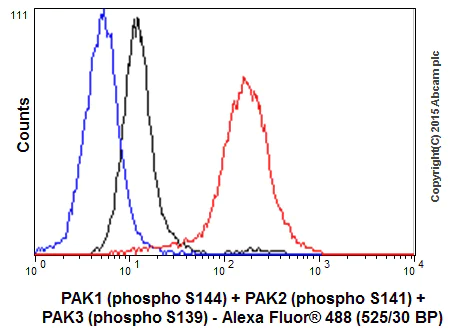
- Flow Cyt (Intra)
Unknown
Flow Cytometry (Intracellular) - Anti-PAK1 (phospho S144) + PAK2 (phospho S141) + PAK3 (phospho S154) antibody [EP656Y] (AB40795)
ab40795 staining PAK1 (phospho S144) + PAK2 (phospho S141) + PAK3 (phospho S154) in the human cell line NIH/3T3 (mouse embryo) by intracellular flow cytometry. Cells were fixed with 4% paraformaldehyde and the sample was incubated with the primary antibody at a dilution of 1/120. A goat anti rabbit IgG (Alexa Fluorr® 488) at a dilution of 1/500 was used as the secondary antibody.
Isoytype control : Rabbit monoclonal IgG (Black)
Unlabelled control : Cell without incubation with primary antibody and secondary antibody (Blue)
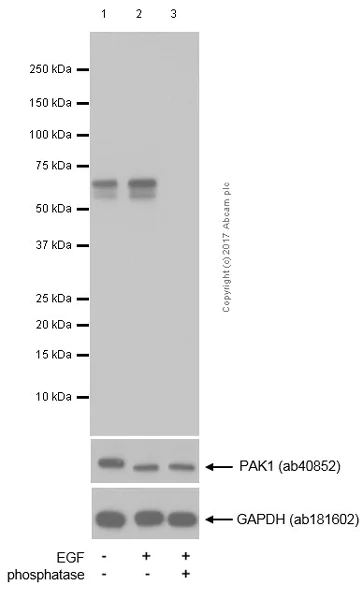
- WB
Lab
Western blot - Anti-PAK1 (phospho S144) + PAK2 (phospho S141) + PAK3 (phospho S154) antibody [EP656Y] (AB40795)
Blocking and dilution buffer : 5% NFDM/TBST.
All lanes:
Western blot - Anti-PAK1 (phospho S144) + PAK2 (phospho S141) + PAK3 (phospho S154) antibody [EP656Y] (ab40795) at 1/1000 dilution
Lane 1:
MCF7, grown in serum-free media overnight, whole cell lysate at 10 µg
Lane 2:
MCF7, grown in serum-free media overnight, then treated with EGF 1μg/ml for 10min, whole cell lysate at 10 µg
Lane 3:
MCF7, grown in serum-free media overnight, then treated with EGF 1μg/ml for 10min whole cell lysate, The membrane was incubated with phosphatase at 10 µg
Secondary
All lanes:
Western blot - Goat Anti-Rabbit IgG H&L (HRP) (<a href='/products/secondary-antibodies/goat-rabbit-igg-h-l-hrp-ab97051'>ab97051</a>) at 1/20000 dilution
Observed band size: 55 kDa
false
Exposure time: 1min
- WB
Lab
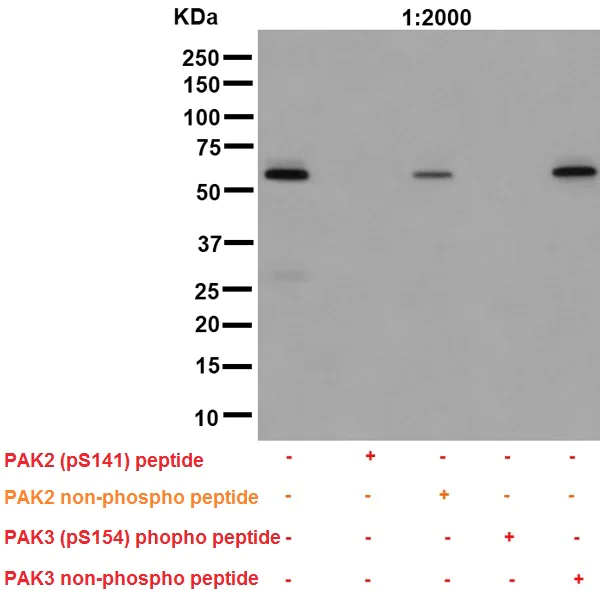
Western blot - Anti-PAK1 (phospho S144) + PAK2 (phospho S141) + PAK3 (phospho S154) antibody [EP656Y] (AB40795)
All lanes:
Western blot - Anti-PAK1 (phospho S144) + PAK2 (phospho S141) + PAK3 (phospho S154) antibody [EP656Y] (ab40795) at 1/2000 dilution
Lane 1:
HeLa cell lysate with None
Lane 2:
HeLa cell lysate with PAK2 (pS141)
Lane 3:
HeLa cell lysate with PAK2 non-phospho
Lane 4:
HeLa cell lysate with PAK3 (pS154)
Lane 5:
HeLa cell lysate with PAK3 non-phospho
false
- WB
Lab
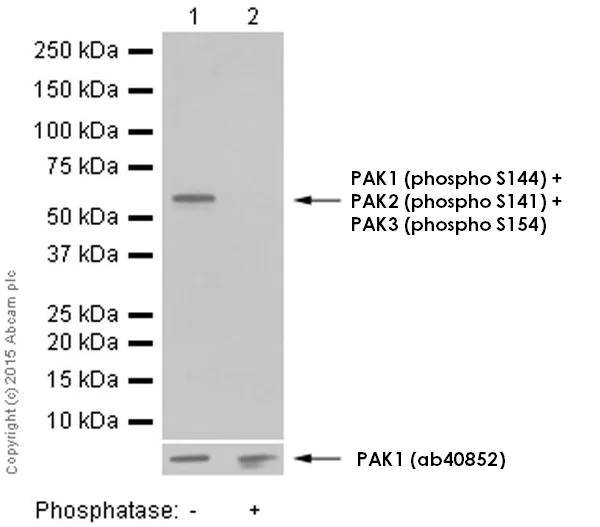
Western blot - Anti-PAK1 (phospho S144) + PAK2 (phospho S141) + PAK3 (phospho S154) antibody [EP656Y] (AB40795)
All lanes:
Western blot - Anti-PAK1 (phospho S144) + PAK2 (phospho S141) + PAK3 (phospho S154) antibody [EP656Y] (ab40795) at 1/10000 dilution
Lane 1:
HeLa whole cell lysate - untreated at 10 µg
Lane 2:
HeLa whole cell lysate - treated with phosphatase at 10 µg
Secondary
All lanes:
Western blot - Goat Anti-Rabbit IgG H&L (HRP) (<a href='/products/secondary-antibodies/goat-rabbit-igg-h-l-hrp-ab97051'>ab97051</a>) at 1/20000 dilution
false
- WB
Lab
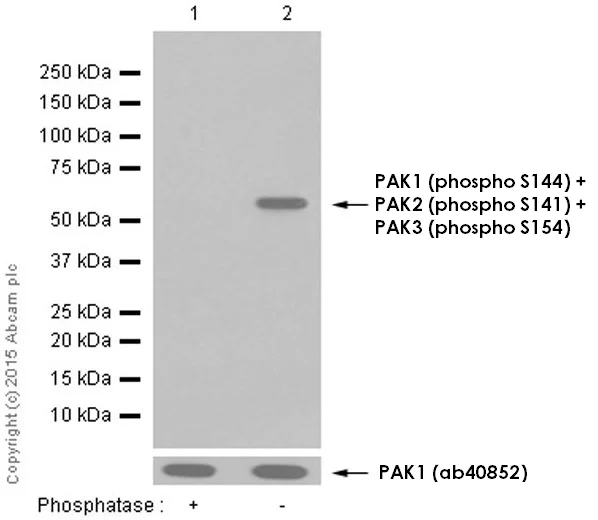
Western blot - Anti-PAK1 (phospho S144) + PAK2 (phospho S141) + PAK3 (phospho S154) antibody [EP656Y] (AB40795)
All lanes:
Western blot - Anti-PAK1 (phospho S144) + PAK2 (phospho S141) + PAK3 (phospho S154) antibody [EP656Y] (ab40795) at 1/10000 dilution
Lane 1:
RAW264.7 (mouse abelson murine leukemia virus-induced tumor) whole cell lysate - treated with phosphatase at 10 µg
Lane 2:
RAW264.7 (mouse abelson murine leukemia virus-induced tumor) whole cell lysate - untreated at 10 µg
Secondary
All lanes:
Western blot - Goat Anti-Rabbit IgG H&L (HRP) (<a href='/products/secondary-antibodies/goat-rabbit-igg-h-l-hrp-ab97051'>ab97051</a>) at 1/100000 dilution
false
- WB
Lab
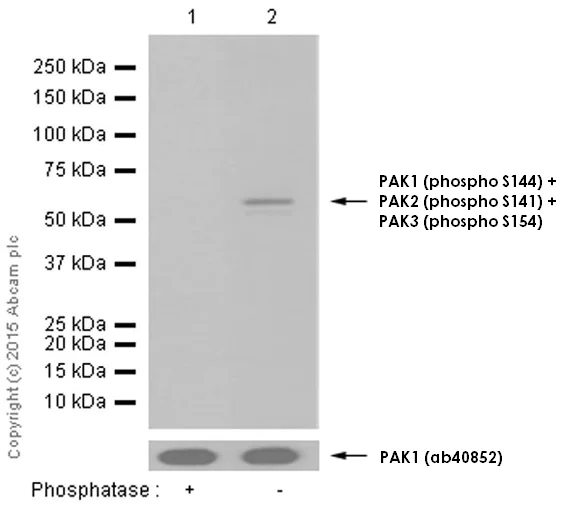
Western blot - Anti-PAK1 (phospho S144) + PAK2 (phospho S141) + PAK3 (phospho S154) antibody [EP656Y] (AB40795)
All lanes:
Western blot - Anti-PAK1 (phospho S144) + PAK2 (phospho S141) + PAK3 (phospho S154) antibody [EP656Y] (ab40795) at 1/50000 dilution
Lane 1:
C6 (rat glioma) whole cell lysate - treated with phosphatase at 10 µg
Lane 2:
C6 (rat glioma) whole cell lysate - untreated at 10 µg
Secondary
All lanes:
Western blot - Goat Anti-Rabbit IgG H&L (HRP) (<a href='/products/secondary-antibodies/goat-rabbit-igg-h-l-hrp-ab97051'>ab97051</a>) at 1/100000 dilution
false
- WB
CiteAb
Western blot - Anti-PAK1 (phospho S144) + PAK2 (phospho S141) + PAK3 (phospho S154) antibody [EP656Y] (AB40795)
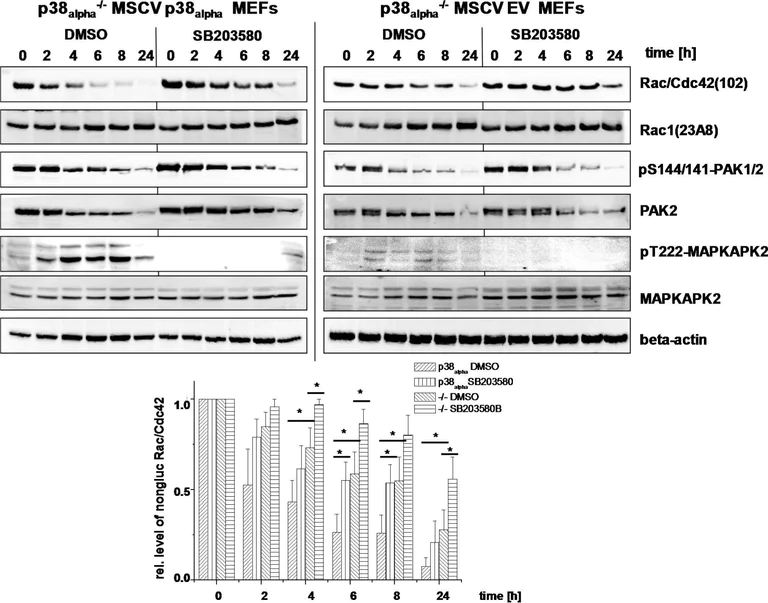
PAK1 (phospho S144) + PAK2 (phospho S141) + PAK3 (phospho S154) western blot using anti-PAK1 (phospho S144) + PAK2 (phospho S141) + PAK3 (phospho S154) antibody [EP656Y] ab40795. Publication image and figure legend from Schelle, I., Bruening, J., et al., 2016, Toxins (Basel), PubMed 28025502.
ab40795 was used in this publication in western blot. This may not be the same as the application(s) guaranteed by Abcam. For a full list of applications guaranteed by Abcam for ab40795 please see the product overview.
Effects of genetic deletion of p38alpha and of SB203580 treatment on TcsL-catalyzed Rac/Cdc42 glucosylation (time-dependency). p38alpha-/- MSCV p38alpha MEFs and p38alpha-/- MSCV empty vector (EV) MEFs were treated with TcsL (1 μg/mL) in the presence of SB203580 (10 μM) or DMSO alone for the indicated times. The cellular levels of non-glucosylated Rac/Cdc42, total Rac1, pS144/141-PAK1/2, PAK2, pT222-MAPKAPK2, MAPKAPK2, and beta-actin were analyzed by immunoblot using the indicated antibodies. Quantifications of immunoblots were performed using Kodak software and relative amounts of non-glucosylated Rac/Cdc42 versus the total levels of Rac1, respectively, are expressed as mean ± SD of three independent experiments. * indicates significant differences, p < 0.05, as analyzed using Student's t-test.
false
関連する標識済み抗体及び組成の異なる製品 (9)
-
Anti-PAK1+PAK2+PAK3 (phospho S141 + S144 + S154) antibody [EP656Y] - BSA and Azide free
-
660 APC
APC Anti-PAK1 (phospho S144) + PAK2 (phospho S141) + PAK3 (phospho S154) antibody [EP656Y]
-
519 Alexa Fluor® 488
Alexa Fluor® 488 Anti-PAK1 (pS144) + PAK2 (pS141) + PAK3 (pS154) antibody [EP656Y]
-
565 Alexa Fluor® 555
Alexa Fluor® 555 Anti-PAK1 (pS144) + PAK2 (pS141) + PAK3 (pS154) antibody [EP656Y]
-
603 Alexa Fluor® 568
Alexa Fluor® 568 Anti-PAK1 (pS144) + PAK2 (pS141) + PAK3 (pS154) antibody [EP656Y]
-
617 Alexa Fluor® 594
Alexa Fluor® 594 Anti-PAK1 (pS144) + PAK2 (pS141) + PAK3 (pS154) antibody [EP656Y]
-
775 Alexa Fluor® 750
Alexa Fluor® 750 Anti-PAK1+PAK2+PAK3 (phospho S141 + S144 + S154) antibody [EP656Y]
-
HRP Anti-PAK1 (phospho S144) + PAK2 (phospho S141) + PAK3 (phospho S154) antibody [EP656Y]
-
578 PE
PE Anti-PAK1 (phospho S144) + PAK2 (phospho S141) + PAK3 (phospho S154) antibody [EP656Y]
組合せ製品
Primary Antibodies
AB76293
20ul selling size|RabMAb|Recombinant|KO Validated
- 4
- 2
Primary Antibodies
AB187643
Anti-CDC42 antibody [EPR15620]
RabMAb|Recombinant|KO Validated|20ul selling size

- 4
- 2
Primary Antibodies
AB223849
20ul selling size|RabMAb|Recombinant|KO Validated|Trial Size

- 0
- 0
Reactivity data
製品の詳細
Patented technology
Our RabMAb® technology is a patented hybridoma-based technology for making rabbit monoclonal antibodies. For details on our patents, please refer to RabMAb® patents.
What are the advantages of a recombinant monoclonal antibody?
This product is a recombinant monoclonal antibody, which offers several advantages including:
- - High batch-to-batch consistency and reproducibility
- - Improved sensitivity and specificity
- - Long-term security of supply
- - Animal-free batch production
For more information, read more on recombinant antibodies.
出荷温度及び保存条件
製品の状態
精製方法
バッファー組成
出荷温度
短期保存期間
短期保存温度
長期保存温度
分注に関する情報
保管に関する情報
製品プロトコール
- Visit the General protocols
- Visit the Troubleshooting
ターゲットの情報
追加のターゲット
文献 (43)
Recent publications for all applications. Explore the full list and refine your search
Blood science (Baltimore, Md.) 5:249-257 PubMed37941919
2023
Applications
Unspecified application
Species
Unspecified reactive species
Cells 12: PubMed37443762
2023
Applications
Unspecified application
Species
Unspecified reactive species
Cancer science 114:3568-3582 PubMed37311571
2023
Applications
Unspecified application
Species
Unspecified reactive species
Molecular biology reports 50:2067-2076 PubMed36542238
2022
Applications
Unspecified application
Species
Unspecified reactive species
Antioxidants (Basel, Switzerland) 11: PubMed35453399
2022
Applications
Unspecified application
Species
Unspecified reactive species
Journal of cellular biochemistry 123:375-389 PubMed34750857
2021
Applications
Unspecified application
Species
Unspecified reactive species
PLoS pathogens 17:e1009902 PubMed34460869
2021
Applications
Unspecified application
Species
Unspecified reactive species
Journal of cell science 134: PubMed33558312
2021
Applications
Unspecified application
Species
Unspecified reactive species
Human molecular genetics 31:1-9 PubMed33693784
2021
Applications
Unspecified application
Species
Unspecified reactive species
Cell adhesion & migration 15:18-36 PubMed33464167
2021
Applications
Unspecified application
Species
Unspecified reactive species
Abcam product promise
Please note: All products are 'FOR RESEARCH USE ONLY. NOT FOR USE IN DIAGNOSTIC OR THERAPEUTIC PROCEDURES'.
For licensing inquiries, please contact partnerships@abcam.com