JavaScript is disabled in your browser. Please enable JavaScript to view this website.
AB53039

Anti-p63 抗体

Anti-p63 antibody

5

(10 Reviews)

|

(65 Publications)

Rabbit Polyclonal P63 antibody. Suitable for WB, ICC/IF and reacts with African green monkey, Human samples. Cited in 65 publications. Immunogen corresponding to Synthetic Peptide within Human TP63.

別名を表示する

KET, P63, P73H, P73L, TP73L, TP63, Tumor protein 63, p63, Chronic ulcerative stomatitis protein, Keratinocyte transcription factor KET, Transformation-related protein 63, Tumor protein p73-like, p40, p51, CUSP, p73L
3 Images
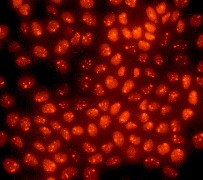
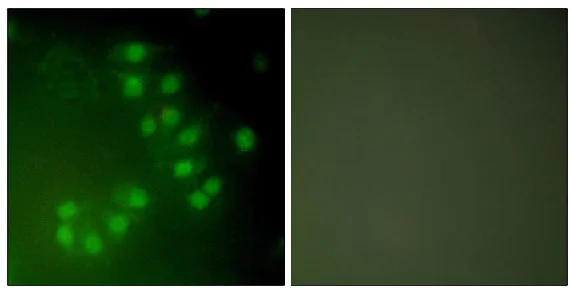
Immunocytochemistry/ Immunofluorescence - Anti-p63 antibody (AB53039)
  • ICC/IF

Supplier Data

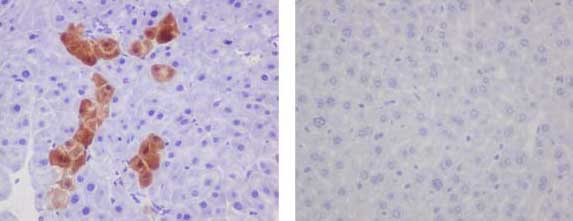
Immunocytochemistry/ Immunofluorescence - Anti-p63 antibody (AB53039)

Immunofluorescence analysis of A549 (Human lung carcinoma cell line) cells using ab53039 at 1/100 dilution. The picture on the right is blocked with the synthesized peptide.
Western blot - Anti-p63 antibody (AB53039)
  • WB

Unknown

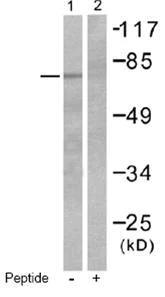
Western blot - Anti-p63 antibody (AB53039)

All lanes:

Western blot - Anti-p63 antibody (ab53039) at 1/500 dilution

Lane 1:

COS-7 (African green monkey kidney fibroblast-like cell line) cell extract

Lane 2:

COS-7 (African green monkey kidney fibroblast-like cell line) cell extract with peptide

Predicted band size: 77 kDa

Observed band size: 77 kDa

false
Western blot - Anti-p63 antibody (AB53039)
  • WB

Unknown

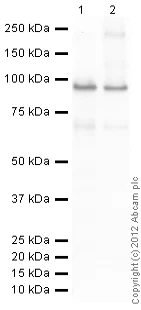
Western blot - Anti-p63 antibody (AB53039)

All lanes:

Western blot - Anti-p63 antibody (ab53039) at 1/1000 dilution

Lane 1:

Human p63 full length protein (<a href='/products/unavailable/human-p63-full-length-protein-ab101717'>ab101717</a>) at 0.1 µg

Lane 2:

Human p63 full length protein (<a href='/products/unavailable/human-p63-full-length-protein-ab101717'>ab101717</a>) at 0.01 µg

Secondary

All lanes:

Western blot - Goat Anti-Rabbit IgG H&L (HRP) preadsorbed (<a href='/products/secondary-antibodies/goat-rabbit-igg-h-l-hrp-preadsorbed-ab97080'>ab97080</a>) at 1/5000 dilution

Predicted band size: 77 kDa

true

Exposure time: 10s

Key facts

宿主種

Rabbit

クローン性

Polyclonal

アイソタイプ

IgG

キャリアフリー

No

交差種

Human, African green monkey

アプリケーション

ICC/IF, WB

applications

免疫原

Synthetic Peptide within Human TP63. The exact immunogen used to generate this antibody is proprietary information.

Q9H3D4

Reactivity data

{ "title": "Reactivity Data", "filters": { "stats": ["", "Species", "Dilution Info", "Notes"], "tabs": { "all-applications": {"fullname" : "All Applications", "shortname": "All Applications"}, "WB" : {"fullname" : "Western blot", "shortname":"WB"}, "ICCIF" : {"fullname" : "Immunocytochemistry/ Immunofluorescence", "shortname":"ICC/IF"} }, "product-promise": { "all": "all", "testedAndGuaranteed": "tested", "guaranteed": "expected", "predicted": "predicted", "notRecommended": "not-recommended" } }, "values": { "Human": { "WB-species-checked": "testedAndGuaranteed", "WB-species-dilution-info": "1/500 - 1/1000", "WB-species-notes": "<p></p>", "ICCIF-species-checked": "testedAndGuaranteed", "ICCIF-species-dilution-info": "1/100 - 1/500", "ICCIF-species-notes": "<p></p>" }, "African green monkey": { "WB-species-checked": "testedAndGuaranteed", "WB-species-dilution-info": "1/500 - 1/1000", "WB-species-notes": "<p></p>", "ICCIF-species-checked": "guaranteed", "ICCIF-species-dilution-info": "", "ICCIF-species-notes": "" } } }

出荷温度及び保存条件

製品の状態
Liquid
精製方法
Affinity purification Immunogen
精製に関する特記事項
Affinity purified from rabbit antiserum by affinity chromatography using epitope specific immunogen.
バッファー組成
pH: 7.4 Preservative: 0.02% Sodium azide Constituents: PBS, 50% Glycerol (glycerin, glycerine), 0.87% Sodium chloride
出荷温度
Blue Ice
短期保存温度
+4°C
長期保存温度
-20°C
保管に関する情報
Stable for 12 months at -20°C

補足情報

This supplementary information is collated from multiple sources and compiled automatically.

The p63 protein also known as TP63 or KET is a transcription factor that plays a role in the regulation of cell cycle and apoptosis. With a molecular mass of approximately 77 kDa it expresses predominantly in epithelial tissues such as those in the skin breast and prostate. The expression pattern of p63 makes it a useful marker in developmental biology and cancer diagnosis. Antibodies like '4A4' specifically recognize p63 in various assays including immunohistochemistry.
Biological function summary

P63 participates in the control of epithelial cell differentiation and proliferation. It functions as a member of the p53 family which includes p53 and p73. This family forms an important part of the complex regulatory network that maintains genomic stability. Research using methods like p63 staining in immunohistochemistry highlights its critical role in stratified epithelia. The gene encodes several isoforms with different biological activities impacting processes such as cellular senescence and development.

Pathways

P63 integrates into various signaling pathways that influence cellular growth and adherence. It notably impacts the Notch and Wnt pathways both of which are critical for developmental processes and cancer progression. Through these pathways p63 interacts with proteins like β-catenin and Notch receptors facilitating cross-talk that influences cell fate decisions. Its function relates closely to other transcription factors forming feedback loops that reinforce its regulatory impact.

P63 shows strong associations with ectodermal dysplasia and different types of cancers like squamous cell carcinoma. Mutations and altered expressions of p63 contribute to these pathologies by disrupting normal cell proliferation and differentiation. The protein interacts closely with p73 in cancer suggesting a compensatory role when p63 function is compromised. Understanding these connections can guide the development of targeted therapies and improve diagnostic accuracy.

製品プロトコール

For this product, it's our understanding that no specific protocols are required. You can visit:

ターゲットの情報

Acts as a sequence specific DNA binding transcriptional activator or repressor. The isoforms contain a varying set of transactivation and auto-regulating transactivation inhibiting domains thus showing an isoform specific activity. Isoform 2 activates RIPK4 transcription. May be required in conjunction with TP73/p73 for initiation of p53/TP53 dependent apoptosis in response to genotoxic insults and the presence of activated oncogenes. Involved in Notch signaling by probably inducing JAG1 and JAG2. Plays a role in the regulation of epithelial morphogenesis. The ratio of DeltaN-type and TA*-type isoforms may govern the maintenance of epithelial stem cell compartments and regulate the initiation of epithelial stratification from the undifferentiated embryonal ectoderm. Required for limb formation from the apical ectodermal ridge. Activates transcription of the p21 promoter.
See full target information TP63

文献 (65)

Recent publications for all applications. Explore the full list and refine your search

The Journal of clinical investigation 134: PubMed39545409

2024

MGA loss-of-function variants cause premature ovarian insufficiency.

Applications

Unspecified application

Species

Unspecified reactive species

Shuyan Tang,Ting Guo,Chengcheng Song,Lingbo Wang,Jun Zhang,Aleksandar Rajkovic,Xiaoqi Lin,Shiling Chen,Yujun Liu,Weidong Tian,Bangguo Wu,Shixuan Wang,Wenwen Wang,Yunhui Lai,Ao Wang,Shuhua Xu,Li Jin,Hanni Ke,Shidou Zhao,Yan Li,Yingying Qin,Feng Zhang,Zi-Jiang Chen

iScience 26:107568 PubMed37622003

2023

Estrogen receptor alpha regulates uterine epithelial lineage specification and homeostasis.

Applications

Unspecified application

Species

Unspecified reactive species

Jason A Rizo,Kimberly M Davenport,Wipawee Winuthayanon,Thomas E Spencer,Andrew M Kelleher

The Journal of investigative dermatology 144:73-83.e10 PubMed37543242

2023

ΔNp63 Regulates Homeostasis, Stemness, and Suppression of Inflammation in the Adult Epidermis.

Applications

Unspecified application

Species

Unspecified reactive species

Christopher E Eyermann,Xi Chen,Ozge S Somuncu,Jinyu Li,Alexander N Joukov,Jiang Chen,Evguenia M Alexandrova

mBio 13:e0148522 PubMed35862773

2022

A Retinol Derivative Inhibits SARS-CoV-2 Infection by Interrupting Spike-Mediated Cellular Entry.

Applications

Unspecified application

Species

Unspecified reactive species

Liangqin Tong,Lin Wang,Shumin Liao,Xiaoping Xiao,Jing Qu,Chunli Wu,Yibin Zhu,Wanbo Tai,Yanhong Huang,Penghua Wang,Liang Li,Renli Zhang,Ye Xiang,Gong Cheng

International journal of oral science 14:26 PubMed35581183

2022

METTL3-mediated mA RNA methylation regulates dorsal lingual epithelium homeostasis.

Applications

Unspecified application

Species

Unspecified reactive species

Qiuchan Xiong,Caojie Liu,Xin Zheng,Xinyi Zhou,Kexin Lei,Xiaohan Zhang,Qian Wang,Weimin Lin,Ruizhan Tong,Ruoshi Xu,Quan Yuan

Nature protocols 17:1658-1690 PubMed35546639

2022

Patient-derived and mouse endo-ectocervical organoid generation, genetic manipulation and applications to model infection.

Applications

Unspecified application

Species

Unspecified reactive species

Rajendra Kumar Gurumurthy,Stefanie Koster,Naveen Kumar,Thomas F Meyer,Cindrilla Chumduri

Nature metabolism 4:547-558 PubMed35534727

2022

A glucose-like metabolite deficient in diabetes inhibits cellular entry of SARS-CoV-2.

Applications

Unspecified application

Species

Unspecified reactive species

Liangqin Tong,Xiaoping Xiao,Min Li,Shisong Fang,Enhao Ma,Xi Yu,Yibin Zhu,Chunli Wu,Deyu Tian,Fan Yang,Jing Sun,Jing Qu,Nianzhen Zheng,Shumin Liao,Wanbo Tai,Shengyong Feng,Liming Zhang,Yuhan Li,Lin Wang,Xuelian Han,Shihui Sun,Long Yang,Hui Zhong,Jincun Zhao,Wenjun Liu,Xiaohui Liu,Penghua Wang,Liang Li,Guangyu Zhao,Renli Zhang,Gong Cheng

Cancers 14: PubMed35565305

2022

EMT, Stemness, and Drug Resistance in Biological Context: A 3D Tumor Tissue/In Silico Platform for Analysis of Combinatorial Treatment in NSCLC with Aggressive KRAS-Biomarker Signatures.

Applications

Unspecified application

Species

Unspecified reactive species

Matthias Peindl,Claudia Göttlich,Samantha Crouch,Niklas Hoff,Tamara Lüttgens,Franziska Schmitt,Jesús Guillermo Nieves Pereira,Celina May,Anna Schliermann,Corinna Kronenthaler,Danjouma Cheufou,Simone Reu-Hofer,Andreas Rosenwald,Elena Weigl,Thorsten Walles,Julia Schüler,Thomas Dandekar,Sarah Nietzer,Gudrun Dandekar

Frontiers in oncology 12:818437 PubMed35530312

2022

Intrinsic Differences in Spatiotemporal Organization and Stromal Cell Interactions Between Isogenic Lung Cancer Cells of Epithelial and Mesenchymal Phenotypes Revealed by High-Dimensional Single-Cell Analysis of Heterotypic 3D Spheroid Models.

Applications

Unspecified application

Species

Unspecified reactive species

Maria L Lotsberg,Gro V Røsland,Austin J Rayford,Sissel E Dyrstad,Camilla T Ekanger,Ning Lu,Kirstine Frantz,Linda E B Stuhr,Henrik J Ditzel,Jean Paul Thiery,Lars A Akslen,James B Lorens,Agnete S T Engelsen

The European respiratory journal 59: PubMed34385275

2022

expression identifies airway basal cells with high proliferative capacity and restricts lung squamous cell carcinoma growth.

Applications

Unspecified application

Species

Unspecified reactive species

Laura Succony,Sandra Gómez-López,Adam Pennycuick,Ahmed S N Alhendi,Derek Davies,Sarah E Clarke,Kate H C Gowers,Nicholas A Wright,Kim B Jensen,Sam M Janes
View all publications

Abcam product promise

当社は、高品質な試薬を通じてお客様の研究を力強くサポートすることをお約束いたします。ご使用いただく各段階で、常にお客様をサポートできる体制を整えております。万が一、製品が期待通りに機能しない場合は、「Abcam Product Promise」による当社保証制度に基づき、安心してご利用いただけます。
保証に関する詳細については利用規約をご確認ください。

Please note: All products are 'FOR RESEARCH USE ONLY. NOT FOR USE IN DIAGNOSTIC OR THERAPEUTIC PROCEDURES'.

For licensing inquiries, please contact partnerships@abcam.com