Anti-p53 (phospho S33) 抗体 [EP2393Y]
Anti-p53 (phospho S33) antibody [EP2393Y]
- RabMAb
- Recombinant
- Lab Essentials
- 20ul selling size
- 詳細を見る
5
(1 Review)
|
(2 Publications)
Rabbit Recombinant Monoclonal P53 phospho S33 antibody. Suitable for Dot, WB, ICC/IF and reacts with Synthetic peptide, Human samples. Cited in 2 publications.
別名を表示する
P53, TP53, Cellular tumor antigen p53, Antigen NY-CO-13, Phosphoprotein p53, Tumor suppressor p53

- ICC/IF
Unknown
Immunocytochemistry/ Immunofluorescence - Anti-p53 (phospho S33) antibody [EP2393Y] (AB75867)
ab75867 at 1/100 dilution staining phosphorylated p53 in A431 cells by Immunofluorescence.

- ICC/IF
Unknown
Immunocytochemistry/ Immunofluorescence - Anti-p53 (phospho S33) antibody [EP2393Y] (AB75867)
Immunocytochemistry/immunofluorescence staining of 4% PFA fixed; 0.1% Triton-X permeabilized A431 (human epidermoid carcinoma) cells with ab75867 at dilution of 1/500. The secondary antibody used was Alexa Fluor® 488; goat anti-rabbit IgG (ab150077) at a dilution of 1/1000. Nucleus was counter-stained with DAPI (blue). ab7291 a mouse anti-tubulin antibody (1/500) was used to stain tubulin along with ab150120 (AlexaFluor®594 goat anti-mouse secondary 1/1000).
Confocal image showed increased nuclear staining after ETP (etoposide; 25 μM 5h) treatment on A431 cells. The LP treatment decreased the increased nuclear staining caused by ETP.
ab179477 (1/500) was used as a Pan control for ab75867. The results showed nuclear staining on untreated ETP and ETP+LP treated Hela cells.

- WB
Lab
Western blot - Anti-p53 (phospho S33) antibody [EP2393Y] (AB75867)
Blocking and dilution buffer : 5% NFDM/TBST.
All lanes:
Western blot - Anti-p53 (phospho S33) antibody [EP2393Y] (ab75867) at 1/5000 dilution
Lane 1:
T-47D whole cell lysate - untreated at 10 µg
Lane 2:
T-47D whole cell lysate - treated with Etoposide at 10 µg
Lane 3:
T-47D whole cell lysate - treated with Etoposide followed by Alkaline phosphatase at 10 µg
Secondary
All lanes:
Western blot - Goat Anti-Rabbit IgG H&L (HRP) (<a href='/products/secondary-antibodies/goat-rabbit-igg-h-l-hrp-ab97051'>ab97051</a>) at 1/20000 dilution
Predicted band size: 43 kDa
Observed band size: 53 kDa
false
Exposure time: 1min

- Dot
Unknown
Dot Blot - Anti-p53 (phospho S33) antibody [EP2393Y] (AB75867)
Dot blot analysis of p53 (phospho S33) peptide (Lane 1) and p53 non-phospho peptide (Lane 2) labelling p53 (phospho S33) with ab75867 at a dilution of 1/1000. A peroxidase-conjugated goat anti-rabbit IgG (H+L) was used as the secondary antibody at a dilution of 1/2500.
Blocking and dilution buffer : 5% NFDM/TBST.
Exposure time : 3 minutes.
関連する標識済み抗体及び組成の異なる製品 (1)
-
Anti-p53 (phospho S33) antibody [EP2393Y] - BSA and Azide free
代替製品
Primary Antibodies
AB183544
Anti-p53 (acetyl K370) antibody [EPR17496]
RabMAb|Recombinant|Lab Essentials|20ul selling size

- 4
- 1
Primary Antibodies
AB32389
BOND RX™ Validated|RabMAb|Recombinant|KO Validated|Lab Essentials|20ul selling size|Advanced Validation

- 0
- 0
Primary Antibodies
AB75754
Anti-p53 (acetyl K382) antibody [EPR358(2)]
RabMAb|Recombinant|Lab Essentials|20ul selling size

- 5
- 4
Primary Antibodies
AB33889
Anti-p53 (phospho S392) antibody [EP155Y]
RabMAb|Lab Essentials|20ul selling size|Recombinant

- 3
- 1
Primary Antibodies
AB76242
Anti-p53 (phospho S46) antibody [EP42Y]
RabMAb|Recombinant|Lab Essentials|20ul selling size

- 0
- 0
Primary Antibodies
AB179477
RabMAb|Recombinant|KO Validated|Lab Essentials|20ul selling size
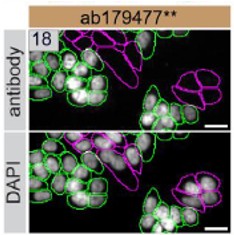
- 3
- 2
Primary Antibodies
AB223868
Anti-p53 (phospho S15) antibody [EPR64(N)] - ChIP Grade
RabMAb|Recombinant|Lab Essentials|20ul selling size|Advanced Validation

- 4
- 1
組合せ製品

Primary Antibodies
AB157454
Anti-p53 (phospho S20) antibody [EPR2156(2)]
RabMAb|Recombinant|Lab Essentials|20ul selling size
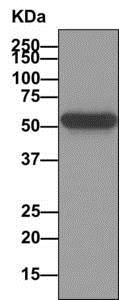
- 3
- 2
Primary Antibodies
AB223868
Anti-p53 (phospho S15) antibody [EPR64(N)] - ChIP Grade
RabMAb|Recombinant|Lab Essentials|20ul selling size|Advanced Validation
- 4
- 1
Primary Antibodies
AB1101
BOND RX™ Validated|KO Validated|Lab Essentials

- 4
- 14
Primary Antibodies
AB76242
Anti-p53 (phospho S46) antibody [EP42Y]
RabMAb|Recombinant|Lab Essentials|20ul selling size
- 0
- 0
Reactivity data
製品の詳細
Species reactivity
Mouse, Rat: We have preliminary internal testing data to indicate this antibody may not react with these species.
Please contact us for more information.
Patented technology
Our RabMAb® technology is a patented hybridoma-based technology for making rabbit monoclonal antibodies. For details on our patents, please refer to RabMAb® patents.
What are the advantages of a recombinant monoclonal antibody?
This product is a recombinant monoclonal antibody, which offers several advantages including:
- - High batch-to-batch consistency and reproducibility
- - Improved sensitivity and specificity
- - Long-term security of supply
- - Animal-free batch production
For more information, read more on recombinant antibodies.
出荷温度及び保存条件
製品の状態
精製方法
バッファー組成
出荷温度
短期保存温度
長期保存温度
保管に関する情報
補足情報
This supplementary information is collated from multiple sources and compiled automatically.
Biological function summary
P53 functions to control cell division and apoptosis serving as a guardian of the genome by preventing mutation accumulation. It does not form part of a larger complex under normal conditions but interacts with various other molecules to execute its functions. p53 can activate or suppress the transcription of numerous genes involved in cell cycle arrest DNA repair and programmed cell death allowing it to halt the progression of damaged cells and trigger repair mechanisms or eliminate those that cannot be repaired.
Pathways
P53 acts within several key biological pathways such as the p53 signaling pathway and the intrinsic apoptotic pathway. Its activity involves interaction with proteins like MDM2 which regulates p53 through ubiquitin-mediated degradation and ATM kinase which phosphorylates p53 in response to DNA damage. These interactions ensure appropriate cellular responses during stress and are vital for maintaining homeostasis.
製品プロトコール
- Visit the General protocols
- Visit the Troubleshooting
ターゲットの情報
文献 (2)
Recent publications for all applications. Explore the full list and refine your search
Acta pharmacologica Sinica 43:1033-1045 PubMed34188177
2021
Applications
Unspecified application
Species
Unspecified reactive species
Nature communications 7:10060 PubMed26725982
2016
Applications
Unspecified application
Species
Unspecified reactive species
Abcam product promise
Please note: All products are 'FOR RESEARCH USE ONLY. NOT FOR USE IN DIAGNOSTIC OR THERAPEUTIC PROCEDURES'.
For licensing inquiries, please contact partnerships@abcam.com