Anti-Orexin A 抗体 [EPR22803-259] - BSA and Azide free
Anti-Orexin A antibody [EPR22803-259] - BSA and Azide free
- BOND RX™ Validated
- RabMAb
- Recombinant
- 詳細を見る
Be the first to review this product! Submit a review
|
(1 Publication)
Rabbit Recombinant Monoclonal Orexin antibody. Carrier free. Suitable for ELISA, Dot, IHC-Fr, IHC-P and reacts with Mouse, Rat, Synthetic peptide samples. Cited in 1 publication.
別名を表示する
Ox, Ppox, Hcrt, Hypocretin neuropeptide precursor, Hypocretin, Orexin precursor, Prepro-orexin, Preprohypocretin
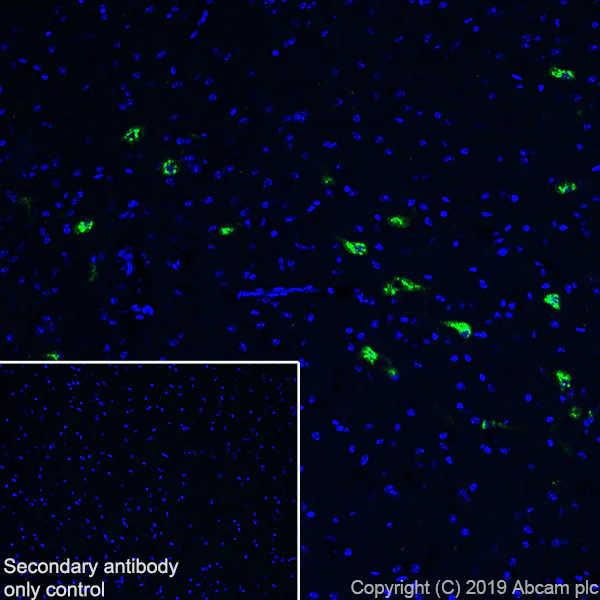
- IHC-Fr
Unknown
Immunohistochemistry (Frozen sections) - Anti-Orexin A antibody [EPR22803-259] - BSA and Azide free (AB256507)
Immunohistochemical analysis of frozen section of 4% PFA-fixed, 0.2 % Triton X-100 permeabilized mouse hypothalamus tissue labeling Orexin A with ab255294 at 1/500 dilution, followed by Goat Anti-Rabbit IgG H&L (Alexa Fluor® 488) (ab150077) at 1/1000 dilution (green). Positive staining on hypothalamic neurons (PMID : 9822755) is observed. The nuclear counterstain is DAPI (blue).
Secondary antibody only control : Used PBS instead of primary antibody, secondary antibody is Goat Anti-Rabbit IgG H&L (Alexa Fluor® 488) (ab150077) at 1/1000 dilution.
Heat mediated antigen retrieval using sodium citrate buffer (10mM citrate pH 6.0 + 0.05% Tween-20).
This data was developed using the same antibody clone in a different buffer formulation containing PBS, BSA, glycerol, and sodium azide (ab255294).
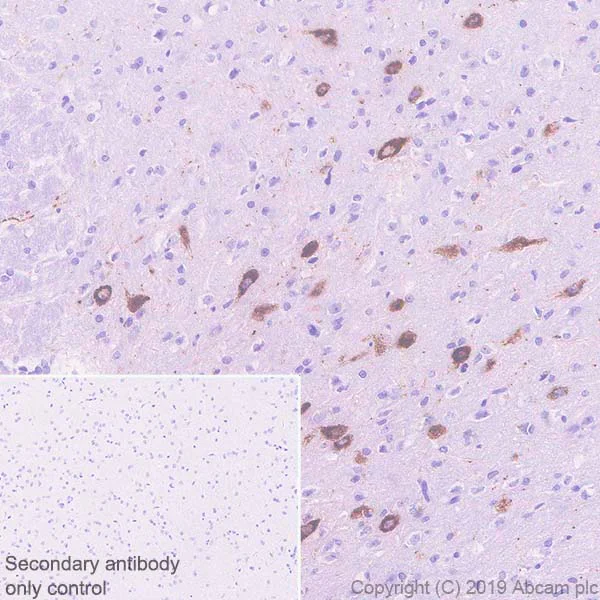
- IHC-P
Unknown
Immunohistochemistry (Formalin/PFA-fixed paraffin-embedded sections) - Anti-Orexin A antibody [EPR22803-259] - BSA and Azide free (AB256507)
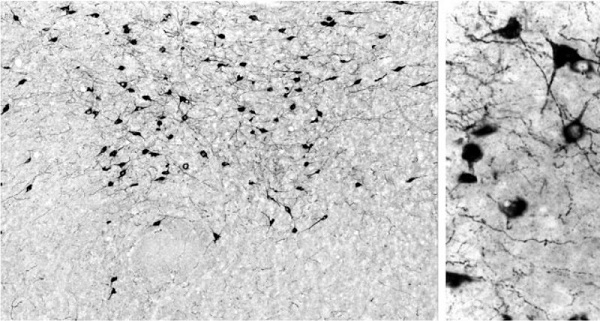
Immunohistochemical analysis of paraffin-embedded rat hypothalamus tissue labeling Orexin A with ab255294 at 1/1000 dilution, followed by Rabbit specific IHC polymer detection kit HRP/DAB (ab209101). Cytoplasmic staining in rat hypothalamus (PMID : 9419374) is observed. Counterstained with hematoxylin.
Secondary antibody only control : Used PBS instead of primary antibody, secondary antibody is Rabbit specific IHC polymer detection kit HRP/DAB (ab209101).
Heat mediated antigen retrieval with Tris-EDTA buffer (pH 9.0, epitope retrieval solution 2) for 20 mins.
The section was incubated with ab255294 for 15 mins at room temperature.
The immunostaining was performed on a Leica Biosystems BOND® RX instrument.
This data was developed using the same antibody clone in a different buffer formulation containing PBS, BSA, glycerol, and sodium azide (ab255294).
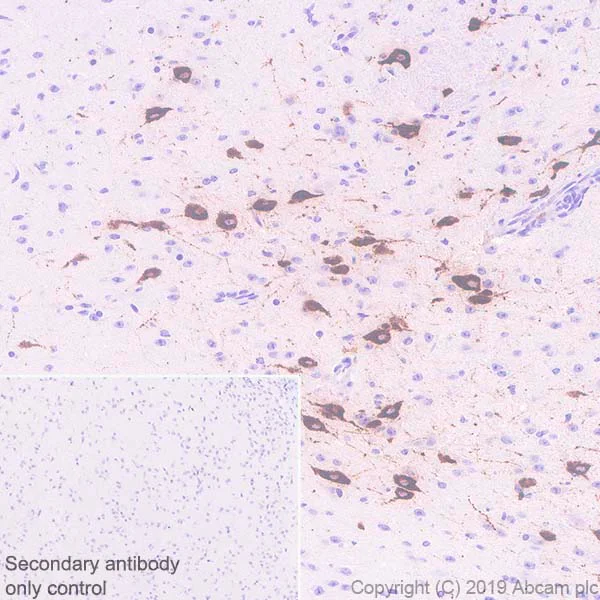
- IHC-P
Unknown
Immunohistochemistry (Formalin/PFA-fixed paraffin-embedded sections) - Anti-Orexin A antibody [EPR22803-259] - BSA and Azide free (AB256507)
Immunohistochemical analysis of paraffin-embedded mouse hypothalamus tissue labeling Orexin A with ab255294 at 1/1000 dilution, followed by Rabbit specific IHC polymer detection kit HRP/DAB (ab209101). Cytoplasmic staining in mouse hypothalamus (PMID : 9419374) is observed. Counterstained with hematoxylin.
Secondary antibody only control : Used PBS instead of primary antibody, secondary antibody is Rabbit specific IHC polymer detection kit HRP/DAB (ab209101).
Heat mediated antigen retrieval with Tris-EDTA buffer (pH 9.0, epitope retrieval solution 2) for 20 mins.
The section was incubated with ab255294 for 15 mins at room temperature.
The immunostaining was performed on a Leica Biosystems BOND® RX instrument.
This data was developed using the same antibody clone in a different buffer formulation containing PBS, BSA, glycerol, and sodium azide (ab255294).
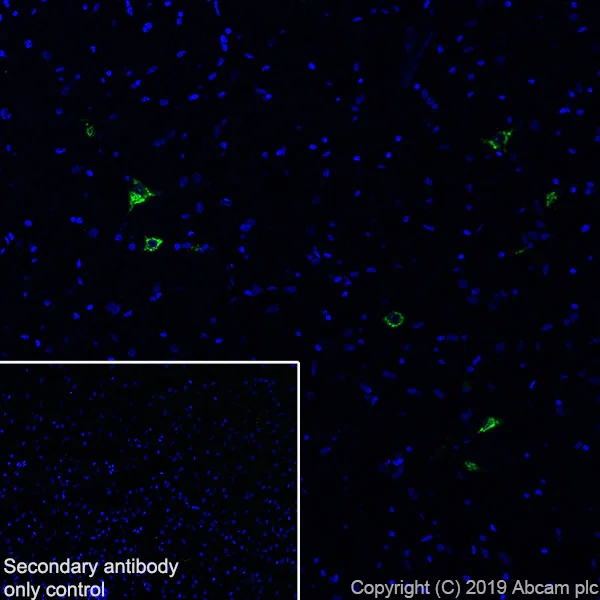
- IHC-Fr
Unknown
Immunohistochemistry (Frozen sections) - Anti-Orexin A antibody [EPR22803-259] - BSA and Azide free (AB256507)
Immunohistochemical analysis of frozen section of 4% PFA-fixed, 0.2 % Triton X-100 permeabilized rat hypothalamus tissue labeling Orexin A with ab255294 at 1/500 dilution, followed by Goat Anti-Rabbit IgG H&L (Alexa Fluor® 488) (ab150077) at 1/1000 dilution (green). Positive staining on hypothalamic neurons (PMID : 9822755) is observed. The nuclear counterstain is DAPI (blue).
Secondary antibody only control : Used PBS instead of primary antibody, secondary antibody is Goat Anti-Rabbit IgG H&L (Alexa Fluor® 488) (ab150077) at 1/1000 dilution.
Heat mediated antigen retrieval using sodium citrate buffer (10mM citrate pH 6.0 + 0.05% Tween-20).
This data was developed using the same antibody clone in a different buffer formulation containing PBS, BSA, glycerol, and sodium azide (ab255294).
- ELISA
Lab
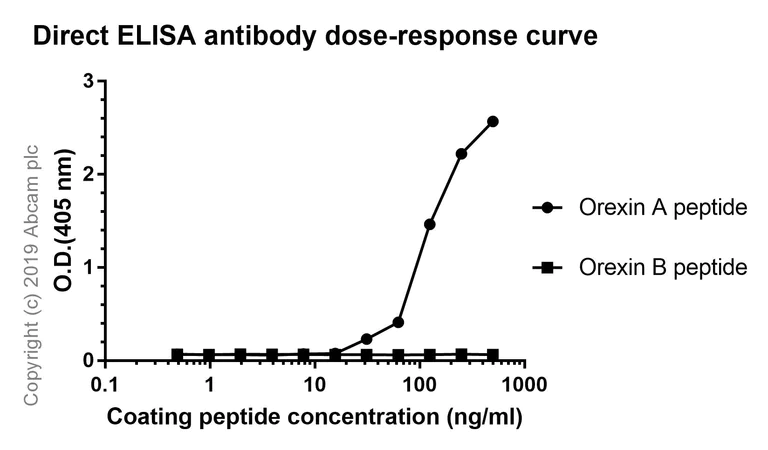
ELISA - Anti-Orexin A antibody [EPR22803-259] - BSA and Azide free (AB256507)
Direct ELISA antigen dose-response curve using ab255294 at 1 μg/mL. Antigen (mouse Orexin A peptide) concentration of 0.488-500 ng/mL. ab97048 Goat Anti-Rabbit IgG H&L (Alkaline Phosphatase) at 1/5000 was used as the secondary antibody.
This data was developed using the same antibody clone in a different buffer formulation containing PBS, BSA, glycerol, and sodium azide (ab255294).
- Dot
Unknown
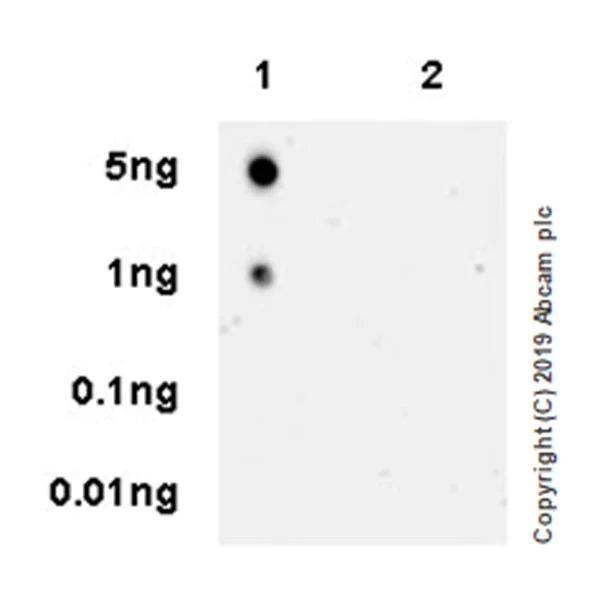
Dot Blot - Anti-Orexin A antibody [EPR22803-259] - BSA and Azide free (AB256507)
Dot blot analysis of Orexin A labeled with ab255294 at 1/1000 dilution.
Lane 1 : Mouse Orexin A peptide (aa33-65).
Lane 2 : Mouse Orexin B peptide (aa69-96).
Blocking and dilution buffer : 5% NFDM/TBST.
Exposure time : 3 minutes.
This data was developed using the same antibody clone in a different buffer formulation containing PBS, BSA, glycerol, and sodium azide (ab255294).
関連する標識済み抗体及び組成の異なる製品 (2)
-
Anti-Orexin A antibody [EPR22803-259]
-
Anti-Orexin antibody [EPR22803-259] - BSA and Azide free (Capture)
代替製品
組合せ製品

Sample Prep & Detection Kits
AB201795
Biotinylation Kit / Biotin Conjugation Kit (Fast, Type A) - Lightning-Link®

- 0
- 0
Primary Antibodies
AB274415
Anti-MCH antibody [EPR23778-94]
BOND RX™ Validated|RabMAb|Recombinant|20ul selling size

- 5
- 4
Primary Antibodies
AB320723
Anti-LRRC15 antibody [EPR28303-108]
20ul selling size|Recombinant|RabMAb
- 0
- 0
Primary Antibodies
AB302667
BOND RX™ Validated|Recombinant|Lab Essentials|KO Validated
- 0
- 0
Primary Antibodies
AB183734
RabMAb|Recombinant|Lab Essentials|20ul selling size
- 5
- 24
Reactivity data
製品の詳細
ab256507 is the carrier-free version of ab255294.
Patented technology
Our RabMAb® technology is a patented hybridoma-based technology for making rabbit monoclonal antibodies. For details on our patents, please refer to RabMAb® patents.
What are the advantages of a recombinant monoclonal antibody?
This product is a recombinant monoclonal antibody, which offers several advantages including:
- - High batch-to-batch consistency and reproducibility
- - Improved sensitivity and specificity
- - Long-term security of supply
- - Animal-free batch production
For more information, read more on recombinant antibodies.
Conjugation ready
Our carrier-free antibodies are typically supplied in a PBS-only formulation, purified and free of BSA, sodium azide and glycerol. This conjugation-ready format is designed for use with fluorochromes, metal isotopes, oligonucleotides, and enzymes, which makes them ideal for antibody labelling, functional and cell-based assays, flow-based assays (e.g. mass cytometry) and Multiplex Imaging applications.
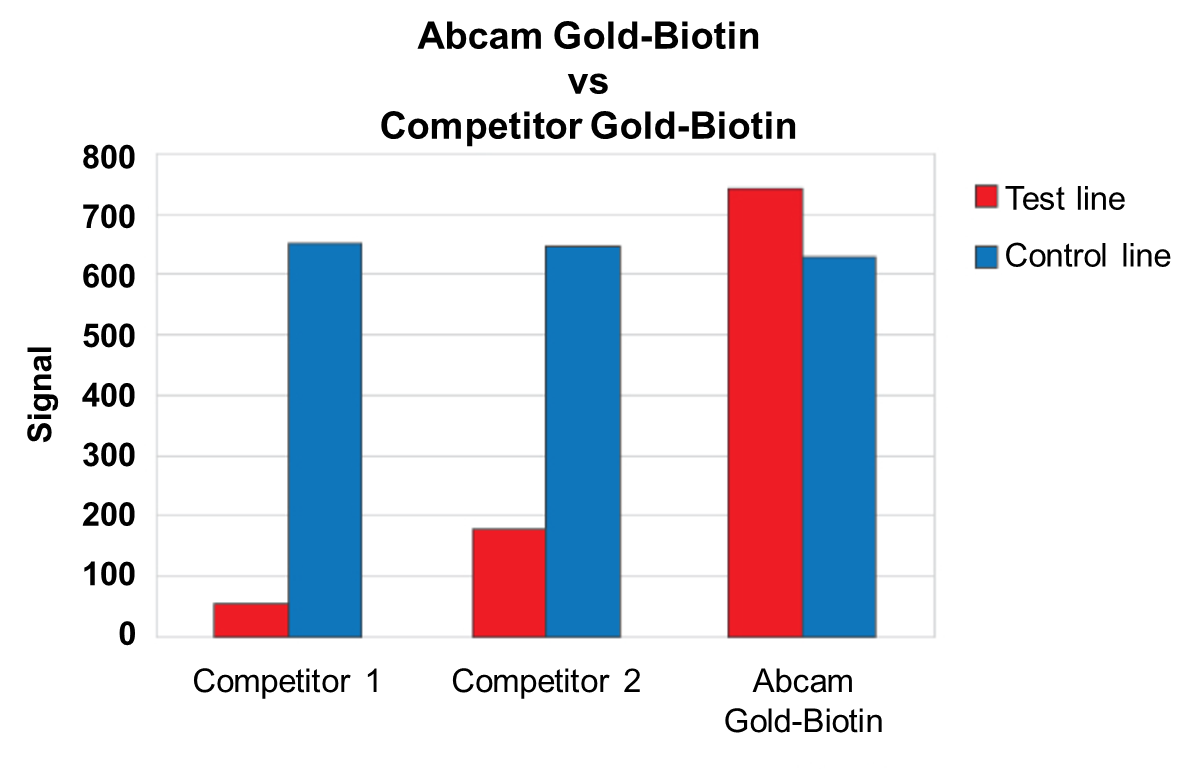
Use our conjugation kits for antibody conjugates that are ready-to-use in as little as 20 minutes with 1 minute hands-on-time and 100% antibody recovery: available for fluorescent dyes, HRP, biotin and gold.
Compatibility
This product is compatible with the Maxpar® Antibody Labeling Kit from Fluidigm, without the need for antibody preparation. Maxpar® is a trademark of Fluidigm Canada Inc.
出荷温度及び保存条件
製品の状態
精製方法
バッファー組成
出荷温度
短期保存温度
長期保存温度
保管に関する情報
補足情報
This supplementary information is collated from multiple sources and compiled automatically.
Biological function summary
Orexin A influences sleep-wake cycles and energy homeostasis. It acts independently not as part of a larger protein complex. It promotes wakefulness and regulates feeding behavior by activating orexin receptors which are G-protein-coupled receptors. These receptors are widely distributed throughout the brain indicating orexin A's role in maintaining alertness and energy expenditure. Furthermore it has interactions with several neuropeptides and neurotransmitters affecting reward systems and stress responses.
Pathways
The involvement of orexin A spans the sleep-wake regulation and energy metabolism pathways. This neuropeptide's function in the sleep-wake cycle involves interaction with neurotransmitters like norepinephrine and dopamine which enhance arousal. In energy metabolism it collaborates with proteins such as leptin and ghrelin influencing appetite and feeding behavior. Orexin A's ability to activate these pathways is important for the maintenance of energy balance and vigilance.
製品プロトコール
- Visit the General protocols
- Visit the Troubleshooting
ターゲットの情報
文献 (1)
Recent publications for all applications. Explore the full list and refine your search
Cell reports. Medicine 6:102024 PubMed40107247
2025
Applications
Unspecified application
Species
Unspecified reactive species
Abcam product promise
Please note: All products are 'FOR RESEARCH USE ONLY. NOT FOR USE IN DIAGNOSTIC OR THERAPEUTIC PROCEDURES'.
For licensing inquiries, please contact partnerships@abcam.com