Anti-NQO1 抗体 [EPR21230]
Anti-NQO1 antibody [EPR21230]
- Recombinant
- KO Validated
- 詳細を見る
Be the first to review this product! Submit a review
|
(4 Publications)
Rabbit Recombinant Monoclonal NQO1 antibody. Suitable for WB and reacts with Human samples. Cited in 4 publications.
別名を表示する
DIA4, NMOR1, NQO1, NAD(P)H dehydrogenase [quinone] 1, Azoreductase, DT-diaphorase, Menadione reductase, NAD(P)H:quinone oxidoreductase 1, Phylloquinone reductase, Quinone reductase 1, DTD, QR1

- WB
Lab
Western blot - Anti-NQO1 antibody [EPR21230] (AB213239)
ab213239 was shown to specifically react with NQO1 in wild type HAP1 cells. No band was observed when NQO1 knockout samples were used. Wild-type and NQO1 knockout samples were subjected to SDS-PAGE. The membrane was then blocked for an hour using 3% milk before being incubated with ab213239 and ab8245 (Mouse anti-GAPDH loading control) overnight at 4°C at a concentration of 1ug/ml and 1/20000 dilution respectively. Blots were developed with Goat anti-Rabbit IgG H&L (IRDye® 800CW) preadsorbed (ab216773) and Goat anti-Mouse IgG H&L (IRDye® 680RD) preadsorbed (ab216776) secondary antibodies at 1/20000 dilution for 1 hour at room temperature before imaging.
All lanes:
Western blot - Anti-NQO1 antibody [EPR21230] (ab213239) at 1 µg/mL
Lane 1:
HAP1 wild-type whole cell lysate at 40 µg
Lane 2:
NQO1 knockout whole cell lysate at 40 µg
Lane 3:
HepG2 whole cell lysate at 20 µg
Lane 4:
MEF1 whole cell lysate at 20 µg
Lane 5:
Human Kidney tissue lysate at 20 µg
Lane 6:
Mouse Kidney tissue lysate at 20 µg
Predicted band size: 31 kDa
false
代替製品
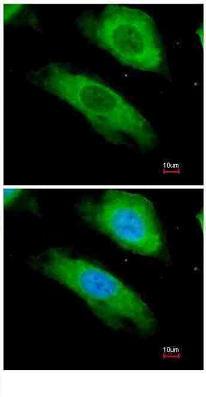
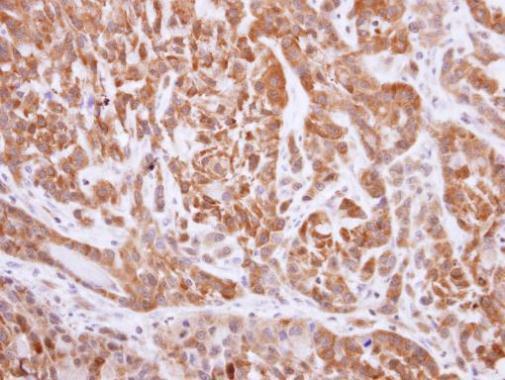
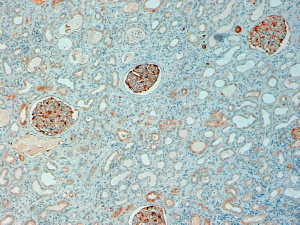
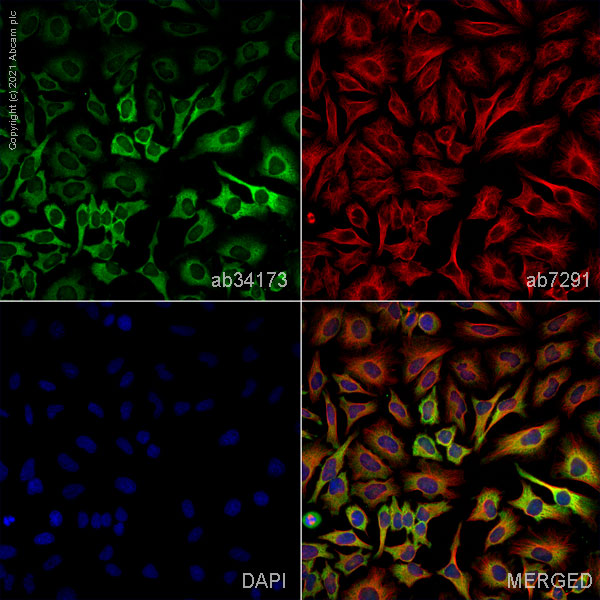
Primary Antibodies
AB264434
Anti-NQO1 antibody [A180] - BSA and Azide free
BOND RX™ Validated|KO Validated
- 0
- 0
Primary Antibodies
AB80588
20ul selling size|RabMAb|Recombinant|KO Validated
- 4
- 5
Primary Antibodies
AB239896
Anti-NQO1 antibody [EPR3309] - BSA and Azide free
RabMAb|Recombinant|KO Validated
- 0
- 0
組合せ製品
Primary Antibodies
AB62352
20ul selling size|RabMAb|Recombinant|KO Validated

- 4
- 34
Primary Antibodies
AB181602
Anti-GAPDH antibody [EPR16891] - Loading Control
RabMAb|Recombinant|Lab Essentials|20ul selling size

- 5
- 23
Primary Antibodies
AB115777
Anti-beta Actin antibody [SP124] - Cytoskeleton Marker
20ul selling size|RabMAb|Lab Essentials|Recombinant
- 4
- 1
Reactivity data
製品の詳細
This product was made using synthetic libraries and phage display technology.
This antibody is a recombinant chimeric antibody. Rabbit chimeric monoclonal antibody (Human Fab/ Rabbit Fc).
出荷温度及び保存条件
製品の状態
バッファー組成
出荷温度
短期保存期間
短期保存温度
長期保存温度
分注に関する情報
保管に関する情報
補足情報
This supplementary information is collated from multiple sources and compiled automatically.
Biological function summary
NQO1 serves a protective function against oxidative stress by reducing quinones and preventing redox cycling that generates reactive oxygen species. Part of a critical network its function integrates with the cellular defense mechanism assisting in maintaining cellular homeostasis. NQO1 helps metabolize xenobiotics and is associated with phase II detoxification working alongside enzymes like glutathione S-transferases but is not part of a complex.
Pathways
NQO1 is an important component of the antioxidant defense pathway participating in the direct enzymatic reduction of quinones protecting cells from oxidative damage. It also interfaces with the KEAP1-NRF2 pathway where the NQO1 gene is regulated by the NRF2 transcription factor that upregulates its expression in response to oxidative stress. NQO1 interlinks with proteins such as p53 through pathways related to apoptotic regulation and cellular stress responses.
製品プロトコール
- Visit the General protocols
- Visit the Troubleshooting
ターゲットの情報
文献 (4)
Recent publications for all applications. Explore the full list and refine your search
Cellular & molecular biology letters 30:115 PubMed41053540
2025
Applications
Unspecified application
Species
Unspecified reactive species
Current issues in molecular biology 46:1593-1606 PubMed38392221
2024
Applications
Unspecified application
Species
Unspecified reactive species
Experimental and therapeutic medicine 23:300 PubMed35340872
2022
Applications
Unspecified application
Species
Unspecified reactive species
RSC advances 9:36366-36373 PubMed35540614
2019
Applications
Unspecified application
Species
Unspecified reactive species
Abcam product promise
Please note: All products are 'FOR RESEARCH USE ONLY. NOT FOR USE IN DIAGNOSTIC OR THERAPEUTIC PROCEDURES'.
For licensing inquiries, please contact partnerships@abcam.com