JavaScript is disabled in your browser. Please enable JavaScript to view this website.
AB308452

Anti-Neuroligin 1 抗体 [EPR27213-94] - BSA and Azide free

Anti-Neuroligin 1 antibody [EPR27213-94] - BSA and Azide free

Be the first to review this product! Submit a review

|

(0 Publication)

Rabbit Recombinant Monoclonal Neuroligin 1 antibody. Carrier free. Suitable for Dot, WB and reacts with Transfected cell lysate - Human, Mouse, Rat samples.

別名を表示する

Kiaa1070, Nlgn1, Neuroligin-1
2 Images
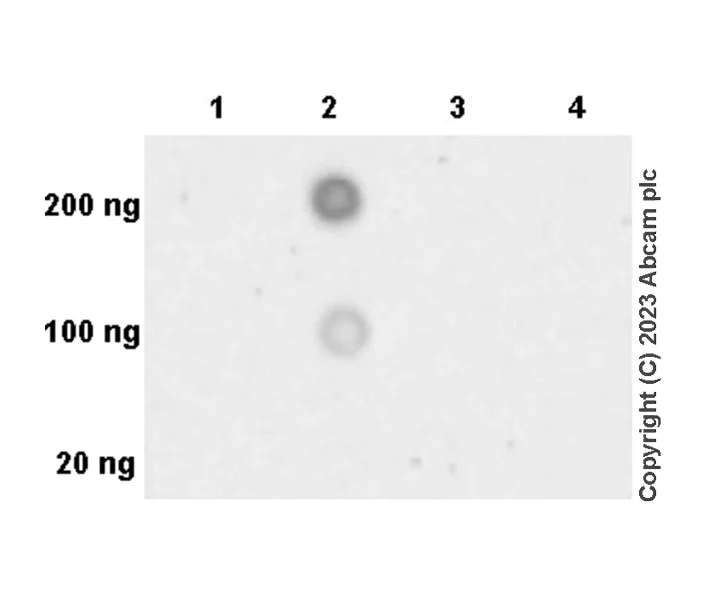
Dot Blot - Anti-Neuroligin 1 antibody [EPR27213-94] - BSA and Azide free (AB308452)
  • Dot

Supplier Data

Dot Blot - Anti-Neuroligin 1 antibody [EPR27213-94] - BSA and Azide free (AB308452)

This data was developed using ab308451, the same antibody clone in a different buffer formulation.

Blocking and diluting buffer and concentration : 5% NFDM/TBST.

This antibody does not cross-react with human NLGN2 and NLGN3.

Dot blot analysis of Neuroligin 1 using ab308451 at 1 : 1000 (0.4895 ug/ml) followed by a Goat Anti-Rabbit IgG, (H+L), Peroxidase conjugated (ab97051) at 1 : 100,000 dilution.

This blot was developed using a high sensitivity ECL substrate. The high-sensitivity ECL substrate used allows for the detection of proteins in the mid-femtogram range.

Exposure time : 180 seconds
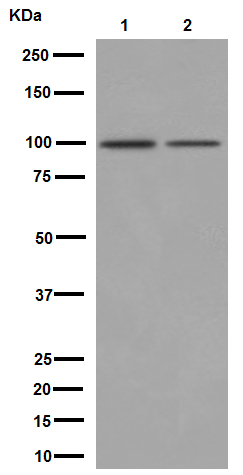
Western blot - Anti-Neuroligin 1 antibody [EPR27213-94] - BSA and Azide free (AB308452)
  • WB

Supplier Data

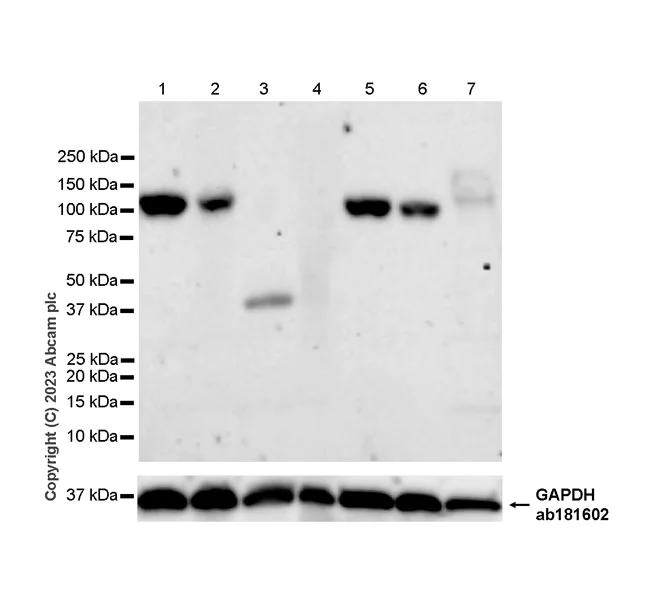
Western blot - Anti-Neuroligin 1 antibody [EPR27213-94] - BSA and Azide free (AB308452)

This data was produced using ab308451, the same antibody clone but in a different formulation. Negative control : liver (PMID : 18434543, 7736595), kidney (PMID : 18434543, 7736595). In Western blot, anti-GAPDH antibody (ab181602) loading control staining at 1/200000 dilution. Blocking/ Diluting buffer : 5% NFDM/TBST. Exposure time : 180 seconds.

Lane 1:

Mouse hypothalamus tissue lysate at 20 µg

Lane 2:

Mouse brain tissue lysate at 20 µg

Lane 3:

Mouse liver tissue lysate at 20 µg

Lane 4:

Mouse kidney tissue lysate at 20 µg

Lane 5:

Rat brain tissue lysate at 20 µg

Lane 6:

Rat hypothalamus tissue lysate at 20 µg

Lane 7:

Rat liver tissue lysate at 20 µg

Predicted band size: 94 kDa

Observed band size: 116 kDa

false

Exposure time: 180s

関連する標識済み抗体及び組成の異なる製品 (1)

Key facts

宿主種

Rabbit

クローン性

Monoclonal

クローン番号

EPR27213-94

アイソタイプ

IgG

キャリアフリー

Yes

交差種

Human, Mouse, Rat

アプリケーション

Dot, WB

applications

免疫原

The exact immunogen used to generate this antibody is proprietary information.

Reactivity data

{ "title": "Reactivity Data", "filters": { "stats": ["", "Species", "Dilution Info", "Notes"], "tabs": { "all-applications": {"fullname" : "All Applications", "shortname": "All Applications"}, "Dot" : {"fullname" : "Dot Blot", "shortname":"Dot"}, "WB" : {"fullname" : "Western blot", "shortname":"WB"}, "IHCP" : {"fullname" : "Immunohistochemistry (Formalin/PFA-fixed paraffin-embedded sections)", "shortname":"IHC-P"}, "IHCFr" : {"fullname" : "Immunohistochemistry (Frozen sections)", "shortname":"IHC-Fr"}, "ICCIF" : {"fullname" : "Immunocytochemistry/ Immunofluorescence", "shortname":"ICC/IF"}, "FlowCyt" : {"fullname" : "Flow Cytometry", "shortname":"Flow Cyt"}, "IP" : {"fullname" : "Immunoprecipitation", "shortname":"IP"} }, "product-promise": { "all": "all", "testedAndGuaranteed": "tested", "guaranteed": "expected", "predicted": "predicted", "notRecommended": "not-recommended" } }, "values": { "Human": { "Dot-species-checked": "predicted", "Dot-species-dilution-info": "", "Dot-species-notes": "", "WB-species-checked": "notRecommended", "WB-species-dilution-info": "", "WB-species-notes": "<p></p>", "IHCP-species-checked": "notRecommended", "IHCP-species-dilution-info": "", "IHCP-species-notes": "<p></p>", "IHCFr-species-checked": "notRecommended", "IHCFr-species-dilution-info": "", "IHCFr-species-notes": "", "ICCIF-species-checked": "notRecommended", "ICCIF-species-dilution-info": "", "ICCIF-species-notes": "", "FlowCyt-species-checked": "notRecommended", "FlowCyt-species-dilution-info": "", "FlowCyt-species-notes": "", "IP-species-checked": "notRecommended", "IP-species-dilution-info": "", "IP-species-notes": "" }, "Mouse": { "Dot-species-checked": "guaranteed", "Dot-species-dilution-info": "", "Dot-species-notes": "", "WB-species-checked": "testedAndGuaranteed", "WB-species-dilution-info": "", "WB-species-notes": "<p></p>", "IHCP-species-checked": "notRecommended", "IHCP-species-dilution-info": "", "IHCP-species-notes": "<p></p>", "IHCFr-species-checked": "notRecommended", "IHCFr-species-dilution-info": "", "IHCFr-species-notes": "<p></p>", "ICCIF-species-checked": "notRecommended", "ICCIF-species-dilution-info": "", "ICCIF-species-notes": "<p></p>", "FlowCyt-species-checked": "notRecommended", "FlowCyt-species-dilution-info": "", "FlowCyt-species-notes": "<p></p>", "IP-species-checked": "notRecommended", "IP-species-dilution-info": "", "IP-species-notes": "<p></p>" }, "Rat": { "Dot-species-checked": "guaranteed", "Dot-species-dilution-info": "", "Dot-species-notes": "", "WB-species-checked": "testedAndGuaranteed", "WB-species-dilution-info": "", "WB-species-notes": "<p></p>", "IHCP-species-checked": "notRecommended", "IHCP-species-dilution-info": "", "IHCP-species-notes": "<p></p>", "IHCFr-species-checked": "notRecommended", "IHCFr-species-dilution-info": "", "IHCFr-species-notes": "<p></p>", "ICCIF-species-checked": "notRecommended", "ICCIF-species-dilution-info": "", "ICCIF-species-notes": "<p></p>", "FlowCyt-species-checked": "notRecommended", "FlowCyt-species-dilution-info": "", "FlowCyt-species-notes": "<p></p>", "IP-species-checked": "notRecommended", "IP-species-dilution-info": "", "IP-species-notes": "" }, "Transfected cell lysate - Human": { "Dot-species-checked": "testedAndGuaranteed", "Dot-species-dilution-info": "", "Dot-species-notes": "<p></p>", "WB-species-checked": "notRecommended", "WB-species-dilution-info": "", "WB-species-notes": "", "IHCP-species-checked": "notRecommended", "IHCP-species-dilution-info": "", "IHCP-species-notes": "", "IHCFr-species-checked": "notRecommended", "IHCFr-species-dilution-info": "", "IHCFr-species-notes": "", "ICCIF-species-checked": "notRecommended", "ICCIF-species-dilution-info": "", "ICCIF-species-notes": "", "FlowCyt-species-checked": "notRecommended", "FlowCyt-species-dilution-info": "", "FlowCyt-species-notes": "", "IP-species-checked": "notRecommended", "IP-species-dilution-info": "", "IP-species-notes": "" } } }

製品の詳細

Patented technology
Our RabMAb® technology is a patented hybridoma-based technology for making rabbit monoclonal antibodies. For details on our patents, please refer to RabMAb® patents.

What are the advantages of a recombinant monoclonal antibody?
This product is a recombinant monoclonal antibody, which offers several advantages including:

  • - High batch-to-batch consistency and reproducibility
  • - Improved sensitivity and specificity
  • - Long-term security of supply
  • - Animal-free batch production

For more information, read more on recombinant antibodies.

Conjugation ready
Our carrier-free antibodies are typically supplied in a PBS-only formulation, purified and free of BSA, sodium azide and glycerol. This conjugation-ready format is designed for use with fluorochromes, metal isotopes, oligonucleotides, and enzymes, which makes them ideal for antibody labelling, functional and cell-based assays, flow-based assays (e.g. mass cytometry) and Multiplex Imaging applications.

Use our conjugation kits for antibody conjugates that are ready-to-use in as little as 20 minutes with 1 minute hands-on-time and 100% antibody recovery: available for fluorescent dyes, HRP, biotin and gold.

Compatibility
This product is compatible with the Maxpar® Antibody Labeling Kit from Fluidigm, without the need for antibody preparation. Maxpar® is a trademark of Fluidigm Canada Inc.

出荷温度及び保存条件

製品の状態
Liquid
精製方法
Affinity purification Protein A
バッファー組成
pH: 7.2 - 7.4 Constituents: PBS
出荷温度
Blue Ice
短期保存温度
+4°C
長期保存温度
+4°C

補足情報

This supplementary information is collated from multiple sources and compiled automatically.

Neuroligin 1 also known as NLGN1 is a member of the neuroligin family of cell adhesion molecules. It plays a significant mechanical role at synaptic junctions where it mediates synapse formation and maintenance. Neuroligin 1 weighs approximately 97 kDa and is mainly expressed in the brain particularly in postsynaptic densities of excitatory glutamatergic synapses. Neuroligin 1 interacts with neurexins on the presynaptic side facilitating trans-synaptic connections important for proper neuronal communication.
Biological function summary

Neuroligin 1 contributes to synaptic organization and signaling by being part of a larger protein complex. This complex involves postsynaptic scaffolding proteins such as PSD-95 which anchor neuroligin to the cytoskeleton and receptors like NMDA and AMPA receptors. Neuroligin 1 regulates synaptic stabilization and plasticity which are essential for learning and memory processes. Through these interactions it impacts synaptic strength and efficiency playing an integral role in the modulation of synaptic activity.

Pathways

Neuroligin 1 is a critical component of synaptic development and function pathways. It operates within the synaptic signaling and plasticity pathways affecting neurotransmitter function and reception. Neuroligin 1 functions in coordination with proteins such as neurexins and SHANK proteins to regulate the assembly and maturation of synapses. These interactions influence calcium signaling and involve the recruitment of other synaptic proteins that further contribute to synaptic modulation.

Neuroligin 1 is linked to neurological conditions like autism spectrum disorders (ASD) and schizophrenia. Mutations or dysregulations of neuroligin 1 impact synaptic connectivity leading to altered neuronal networks and communication deficits involved in these conditions. The balance of excitatory and inhibitory synaptic function that neuroligin and its binding partners including neurexins and SHANK3 control is directly implicated in the pathophysiology of these disorders. Disruptions in neuroligin-neurexin signaling pathways may therefore contribute to the synaptic dysfunctions observed in ASD and schizophrenia.

製品プロトコール

For this product, it's our understanding that no specific protocols are required. You can visit:

ターゲットの情報

Cell surface protein involved in cell-cell-interactions via its interactions with neurexin family members. Plays a role in synapse function and synaptic signal transmission, and probably mediates its effects by recruiting and clustering other synaptic proteins. May promote the initial formation of synapses, but is not essential for this. In vitro, triggers the de novo formation of presynaptic structures. May be involved in specification of excitatory synapses. Required to maintain wakefulness quality and normal synchrony of cerebral cortex activity during wakefulness and sleep (PubMed : 23716671). The protein is involved in nervous system development.
See full target information Nlgn1

Abcam product promise

当社は、高品質な試薬を通じてお客様の研究を力強くサポートすることをお約束いたします。ご使用いただく各段階で、常にお客様をサポートできる体制を整えております。万が一、製品が期待通りに機能しない場合は、「Abcam Product Promise」による当社保証制度に基づき、安心してご利用いただけます。
保証に関する詳細については利用規約をご確認ください。

Please note: All products are 'FOR RESEARCH USE ONLY. NOT FOR USE IN DIAGNOSTIC OR THERAPEUTIC PROCEDURES'.

For licensing inquiries, please contact partnerships@abcam.com