Anti-MyoD1 抗体 - C-terminal
Anti-MyoD1 antibody - C-terminal
- Lab Essentials
- 詳細を見る
Be the first to review this product! Submit a review
|
(3 Publications)
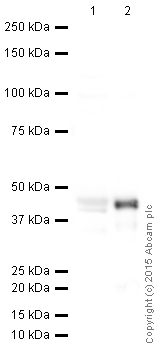
Rabbit Polyclonal MYOD1 antibody. C-terminal. Suitable for IHC-P and reacts with Human samples. Cited in 3 publications. Immunogen corresponding to Synthetic Peptide within Human MYOD1.
別名を表示する
BHLHC1, MYF3, MYOD, MYOD1, Myoblast determination protein 1, Class C basic helix-loop-helix protein 1, Myogenic factor 3, bHLHc1, Myf-3
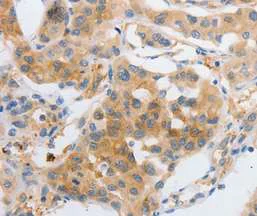
- IHC-P
Unknown
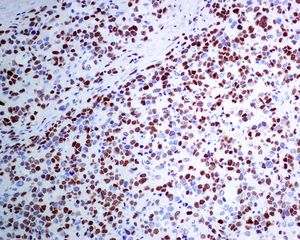
Immunohistochemistry (Formalin/PFA-fixed paraffin-embedded sections) - Anti-MyoD1 antibody - C-terminal (AB198251)
Immunohistochemical analysis of paraffin-embedded Human lung cancer tissue labeling MyoD1 with ab198251 at 1/20 dilution.
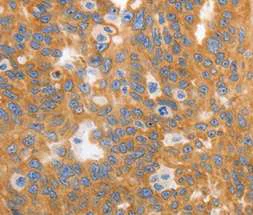
- IHC-P
Supplier Data
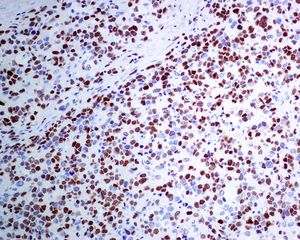
Immunohistochemistry (Formalin/PFA-fixed paraffin-embedded sections) - Anti-MyoD1 antibody - C-terminal (AB198251)
Immunohistochemical analysis of paraffin-embedded Human ovarian cancer tissue labeling MyoD1 with ab198251 at 1/20 dilution.
代替製品
Primary Antibodies
AB133627
Anti-MyoD1 antibody [EPR6653-131]
RabMAb|Recombinant|Lab Essentials|Advanced Validation|20ul selling size
- 4
- 11
Primary Antibodies
AB240073
Anti-MyoD1 antibody [EPR6653-131] - BSA and Azide free
Recombinant|Advanced Validation|RabMAb
- 0
- 0
組合せ製品
Primary Antibodies
AB32072
Anti-c-Myc antibody [Y69] - ChIP Grade
BOND RX™ Validated|KO Validated|RabMAb|Recombinant|Lab Essentials|20ul selling size|Advanced Validation

- 4
- 56
Primary Antibodies
AB124800
Anti-Myogenin antibody [EPR4789]
20ul selling size|RabMAb|Recombinant

- 5
- 3
Primary Antibodies
AB219650
Anti-PRAME antibody [EPR20330]
BOND RX™ Validated|RabMAb|Recombinant|20ul selling size

- 0
- 0
Primary Antibodies
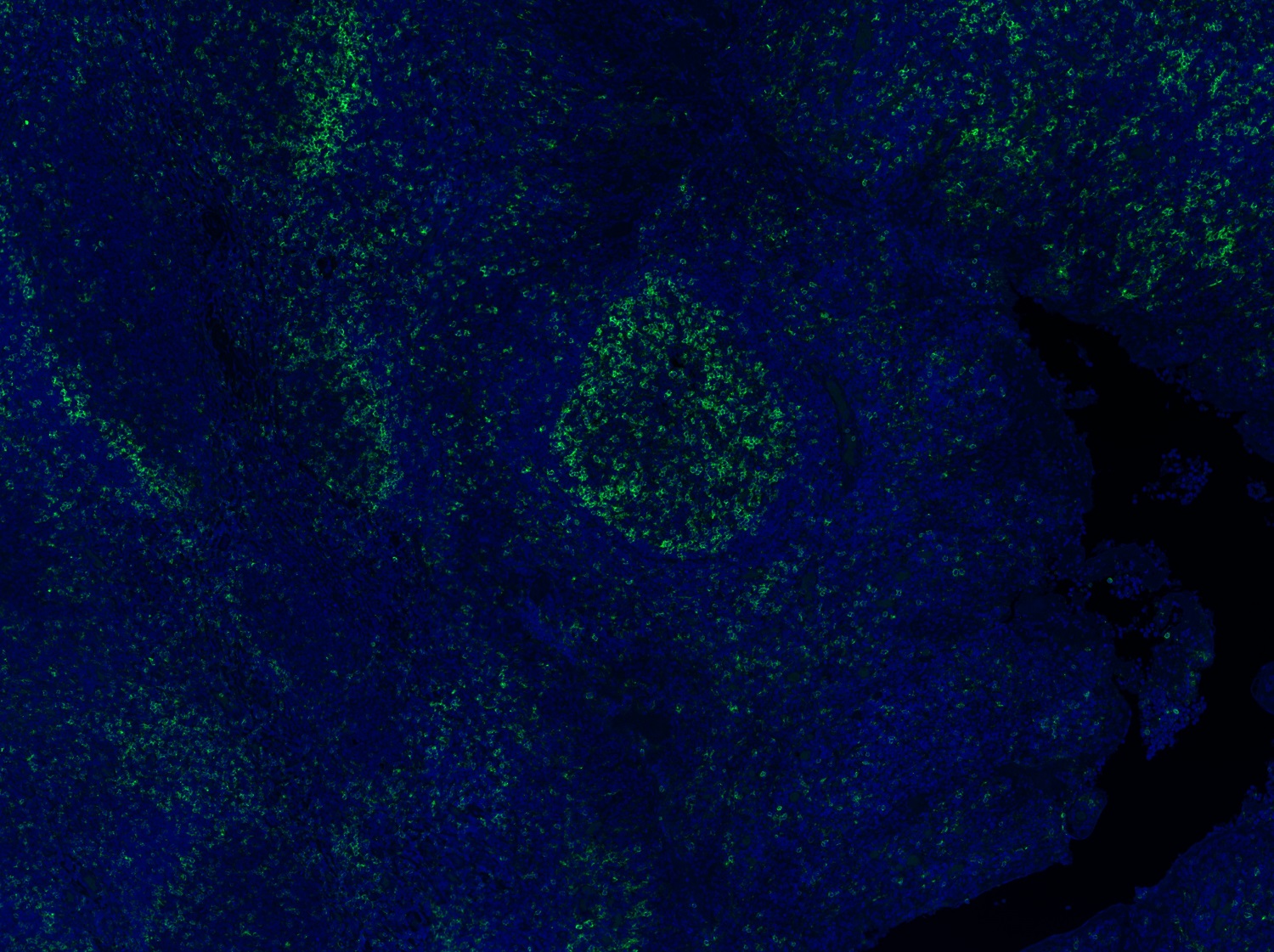
AB133616
BOND RX™ Validated|RabMAb|Recombinant|Lab Essentials|20ul selling size
- 5
- 20
Reactivity data
出荷温度及び保存条件
製品の状態
精製方法
バッファー組成
出荷温度
短期保存期間
短期保存温度
長期保存温度
分注に関する情報
保管に関する情報
補足情報
This supplementary information is collated from multiple sources and compiled automatically.
Biological function summary
MyoD1 plays an important role in muscle differentiation by activating muscle-specific genes. It belongs to the myogenic regulatory factor family and often operates within a protein complex alongside Myf5 and myogenin aiding in the conversion of mesodermal stem cells into muscle cells. These partnerships enhance its ability to initiate the muscle-specific gene expression that drives myogenesis. MyoD1 acts like a molecular switch shifting cells into the pathway leading to muscle formation.
Pathways
MyoD1 is an integral component of myogenesis and muscle regeneration pathways. MyoD1 interacts with key pathway components such as Myf5 and MRF4 which reinforce MyoD1 activity in muscle tissue lineage determination and cell cycle arrest during differentiation. The activity of MyoD1 in these pathways highlights its role in skeletal muscle growth. MyoD1 also demonstrates functional redundancy with Myogenin as both share overlapping roles in these critical pathways.
製品プロトコール
- Visit the General protocols
- Visit the Troubleshooting
ターゲットの情報
文献 (3)
Recent publications for all applications. Explore the full list and refine your search
Heliyon 10:e30603 PubMed38726149
2024
Applications
Unspecified application
Species
Unspecified reactive species
Molecular biology of the cell 31:1703-1713 PubMed32491970
2020
Applications
Unspecified application
Species
Unspecified reactive species
Cell stem cell 24:433-446.e7 PubMed30686765
2019
Applications
Unspecified application
Species
Unspecified reactive species
Abcam product promise
Please note: All products are 'FOR RESEARCH USE ONLY. NOT FOR USE IN DIAGNOSTIC OR THERAPEUTIC PROCEDURES'.
For licensing inquiries, please contact partnerships@abcam.com