JavaScript is disabled in your browser. Please enable JavaScript to view this website.
AB264211

Anti-METTL3 抗体

Anti-METTL3 antibody

0

(1 Review)

|

(0 Publication)

Rabbit Polyclonal METTL3 antibody. Suitable for IHC-P, IP and reacts with Human samples. Immunogen corresponding to Synthetic Peptide within Human METTL3 aa 500 to C-terminus.

別名を表示する

MTA70, METTL3, N(6)-adenosine-methyltransferase catalytic subunit METTL3, Methyltransferase-like protein 3, N(6)-adenosine-methyltransferase 70 kDa subunit, hMETTL3, MT-A70
2 Images
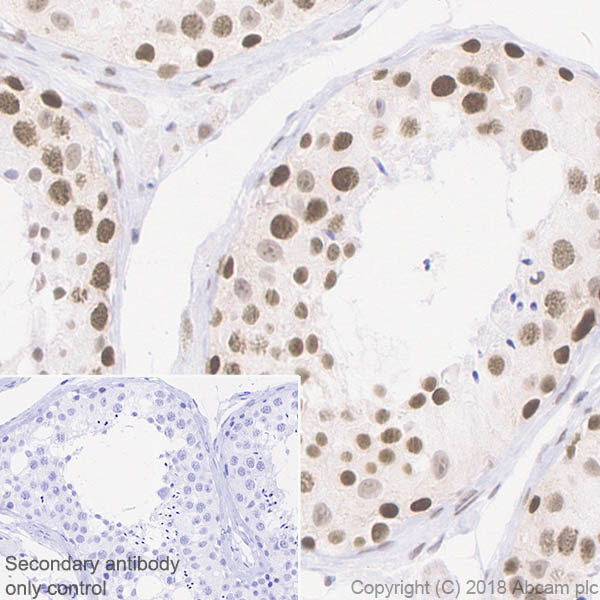
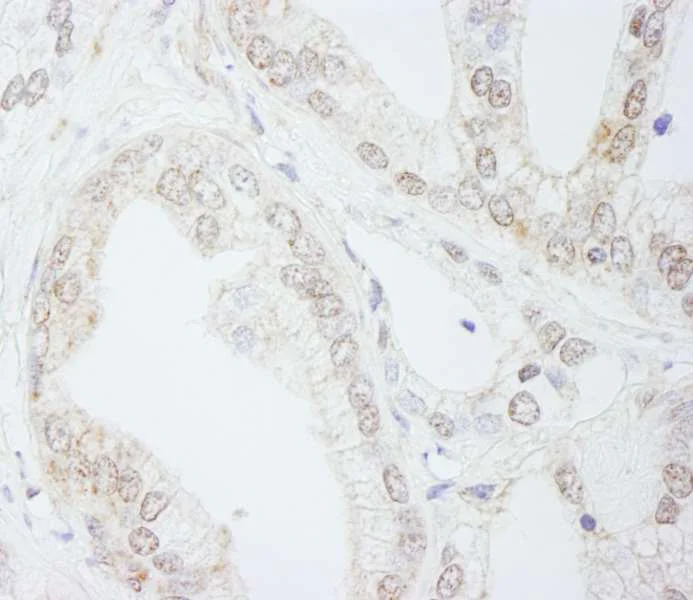
Immunohistochemistry (Formalin/PFA-fixed paraffin-embedded sections) - Anti-METTL3 antibody (AB264211)
  • IHC-P

Unknown

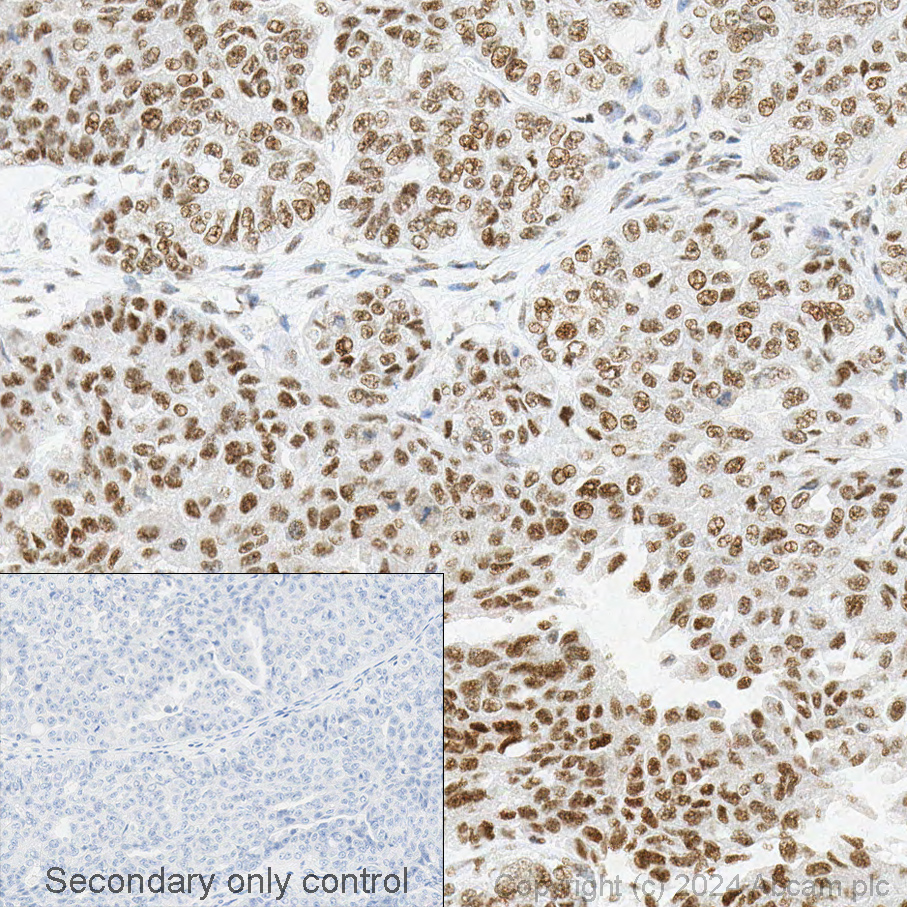
Immunohistochemistry (Formalin/PFA-fixed paraffin-embedded sections) - Anti-METTL3 antibody (AB264211)

Immunohistochemical analysis of FFPE human prostate carcinoma tissue section labeling METTL3 with ab264204 at 1/1,000 dilution. Detection : DAB.
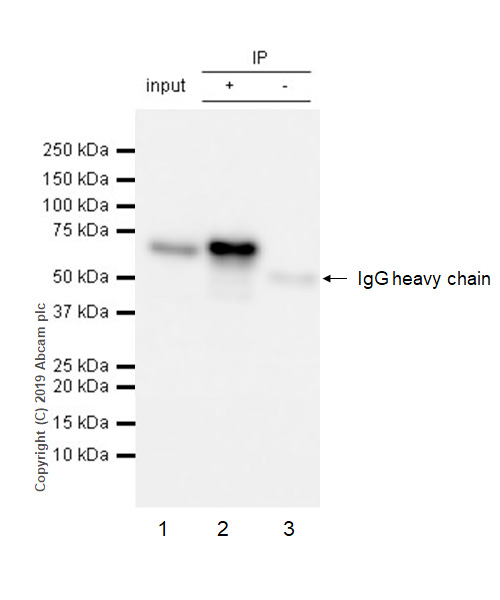
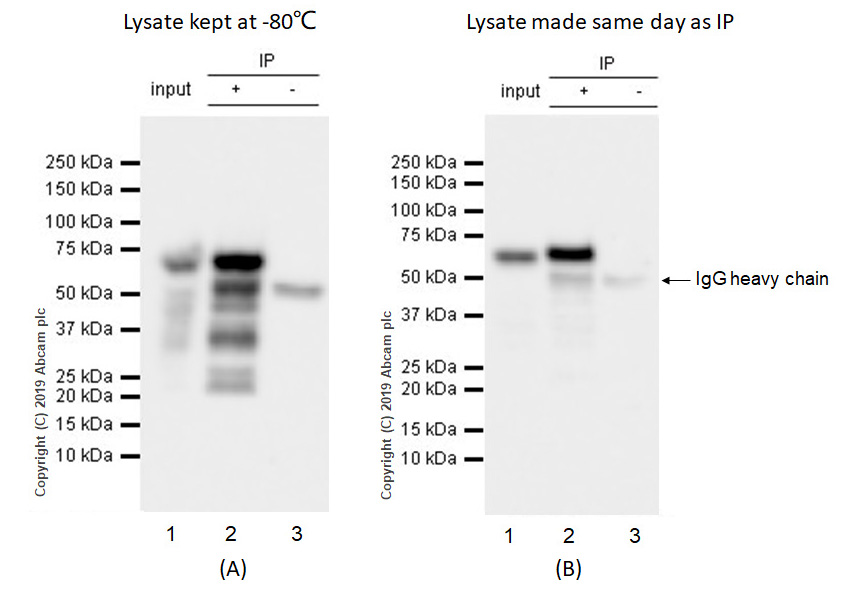
Immunoprecipitation - Anti-METTL3 antibody (AB264211)
  • IP

Supplier Data

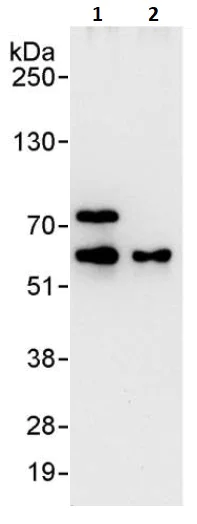
Immunoprecipitation - Anti-METTL3 antibody (AB264211)

METTL3 was immunoprecipitated from 1mg of HeLa (Human epithelial cell line from cervix adenocarcinoma) whole cell lysate with ab264211 at 3 μg/mg lysate. Western blot was performed from the immunoprecipitate using a different antibody.
Lane 1 : ab264211 IP in HeLa whole cell lysate.
Lane 2 : Control IgG.

Exposure time : 30 secs.

All lanes:

Immunoprecipitation - Anti-METTL3 antibody (ab264211)

Predicted band size: 64 kDa

false

Key facts

宿主種

Rabbit

クローン性

Polyclonal

アイソタイプ

IgG

キャリアフリー

No

交差種

Human

アプリケーション

IHC-P, IP

applications

免疫原

Synthetic Peptide within Human METTL3 aa 500 to C-terminus. The exact immunogen used to generate this antibody is proprietary information.

Q86U44

Reactivity data

{ "title": "Reactivity Data", "filters": { "stats": ["", "Species", "Dilution Info", "Notes"], "tabs": { "all-applications": {"fullname" : "All Applications", "shortname": "All Applications"}, "IHCP" : {"fullname" : "Immunohistochemistry (Formalin/PFA-fixed paraffin-embedded sections)", "shortname":"IHC-P"}, "IP" : {"fullname" : "Immunoprecipitation", "shortname":"IP"} }, "product-promise": { "all": "all", "testedAndGuaranteed": "tested", "guaranteed": "expected", "predicted": "predicted", "notRecommended": "not-recommended" } }, "values": { "Human": { "IHCP-species-checked": "testedAndGuaranteed", "IHCP-species-dilution-info": "1/500 - 1/2000", "IHCP-species-notes": "<p></p> Perform heat-mediated antigen retrieval with citrate buffer pH 6 before commencing with IHC staining protocol.", "IP-species-checked": "testedAndGuaranteed", "IP-species-dilution-info": "2-5 µg/mg of lysate", "IP-species-notes": "<p></p>" }, "Mouse": { "IHCP-species-checked": "predicted", "IHCP-species-dilution-info": "", "IHCP-species-notes": "", "IP-species-checked": "predicted", "IP-species-dilution-info": "", "IP-species-notes": "" } } }

出荷温度及び保存条件

製品の状態
Liquid
精製方法
Affinity purification Immunogen
バッファー組成
pH: 7 - 8 Preservative: 0.09% Sodium azide Constituents: Tris citrate/phosphate
出荷温度
Blue Ice
短期保存期間
1-2 weeks
短期保存温度
+4°C
長期保存温度
+4°C
分注に関する情報
Upon delivery aliquot
保管に関する情報
Avoid freeze / thaw cycle|Do Not Freeze

補足情報

This supplementary information is collated from multiple sources and compiled automatically.

The METTL3 protein also known as methyltransferase like 3 plays an important role in the modification of RNA. It is a component of the N6-adenosine-methyltransferase complex and is responsible for introducing the m6A mark on RNA. The molecular weight of METTL3 is approximately 70 kDa. This protein shows high expression in the human central nervous system and various cancer tissues indicating its broad significance.
Biological function summary

METTL3 contributes to the post-transcriptional regulation of gene expression by modulating m6A methylation. It functions as part of a complex with METTL14 and Wilms’ tumor 1-associating protein (WTAP) to execute this modification. The m6A mark influences RNA stability splicing export and translation affecting cellular processes significantly.

Pathways

METTL3 operates within critical pathways such as the mRNA stability and processing pathway. In these pathways METTL3 interacts with proteins like METTL14 and YTH domain-containing proteins which are important for m6A reader function. Together they regulate RNA processing events that influence cellular function and adaptation.

METTL3 associates strongly with cancer development and neurological disorders. In cancers alterations in METTL3 expression affect tumor progression and metastasis impacting oncogenes like MYC. In the realm of neurological disorders METTL3’s role in m6A modification affects RNA regulation aligning it with proteins like FTO which also participate in m6A demethylation processes. Understanding these connections highlights METTL3 as a potential target for therapeutic interventions.

製品プロトコール

For this product, it's our understanding that no specific protocols are required. You can visit:

ターゲットの情報

The METTL3-METTL14 heterodimer forms a N6-methyltransferase complex that methylates adenosine residues at the N(6) position of some RNAs and regulates various processes such as the circadian clock, differentiation of embryonic and hematopoietic stem cells, cortical neurogenesis, response to DNA damage, differentiation of T-cells and primary miRNA processing (PubMed : 22575960, PubMed : 24284625, PubMed : 25719671, PubMed : 25799998, PubMed : 26321680, PubMed : 26593424, PubMed : 27281194, PubMed : 27373337, PubMed : 27627798, PubMed : 28297716, PubMed : 29348140, PubMed : 29506078, PubMed : 30428350, PubMed : 9409616). In the heterodimer formed with METTL14, METTL3 constitutes the catalytic core (PubMed : 27281194, PubMed : 27373337, PubMed : 27627798). N6-methyladenosine (m6A), which takes place at the 5'-[AG]GAC-3' consensus sites of some mRNAs, plays a role in mRNA stability, processing, translation efficiency and editing (PubMed : 22575960, PubMed : 24284625, PubMed : 25719671, PubMed : 25799998, PubMed : 26321680, PubMed : 26593424, PubMed : 28297716, PubMed : 9409616). M6A acts as a key regulator of mRNA stability : methylation is completed upon the release of mRNA into the nucleoplasm and promotes mRNA destabilization and degradation (PubMed : 28637692). In embryonic stem cells (ESCs), m6A methylation of mRNAs encoding key naive pluripotency-promoting transcripts results in transcript destabilization, promoting differentiation of ESCs (By similarity). M6A regulates the length of the circadian clock : acts as an early pace-setter in the circadian loop by putting mRNA production on a fast-track for facilitating nuclear processing, thereby providing an early point of control in setting the dynamics of the feedback loop (By similarity). M6A also regulates circadian regulation of hepatic lipid metabolism (PubMed : 30428350). M6A regulates spermatogonial differentiation and meiosis and is essential for male fertility and spermatogenesis (By similarity). Also required for oogenesis (By similarity). Involved in the response to DNA damage : in response to ultraviolet irradiation, METTL3 rapidly catalyzes the formation of m6A on poly(A) transcripts at DNA damage sites, leading to the recruitment of POLK to DNA damage sites (PubMed : 28297716). M6A is also required for T-cell homeostasis and differentiation : m6A methylation of transcripts of SOCS family members (SOCS1, SOCS3 and CISH) in naive T-cells promotes mRNA destabilization and degradation, promoting T-cell differentiation (By similarity). Inhibits the type I interferon response by mediating m6A methylation of IFNB (PubMed : 30559377). M6A also takes place in other RNA molecules, such as primary miRNA (pri-miRNAs) (PubMed : 25799998). Mediates m6A methylation of Xist RNA, thereby participating in random X inactivation : m6A methylation of Xist leads to target YTHDC1 reader on Xist and promote transcription repression activity of Xist (PubMed : 27602518). M6A also regulates cortical neurogenesis : m6A methylation of transcripts related to transcription factors, neural stem cells, the cell cycle and neuronal differentiation during brain development promotes their destabilization and decay, promoting differentiation of radial glial cells (By similarity). METTL3 mediates methylation of pri-miRNAs, marking them for recognition and processing by DGCR8 (PubMed : 25799998). Acts as a positive regulator of mRNA translation independently of the methyltransferase activity : promotes translation by interacting with the translation initiation machinery in the cytoplasm (PubMed : 27117702). Its overexpression in a number of cancer cells suggests that it may participate in cancer cell proliferation by promoting mRNA translation (PubMed : 27117702). During human coronavirus SARS-CoV-2 infection, adds m6A modifications in SARS-CoV-2 RNA leading to decreased RIGI binding and subsequently dampening the sensing and activation of innate immune responses (PubMed : 33961823).
See full target information METTL3

Abcam product promise

当社は、高品質な試薬を通じてお客様の研究を力強くサポートすることをお約束いたします。ご使用いただく各段階で、常にお客様をサポートできる体制を整えております。万が一、製品が期待通りに機能しない場合は、「Abcam Product Promise」による当社保証制度に基づき、安心してご利用いただけます。
保証に関する詳細については利用規約をご確認ください。

Please note: All products are 'FOR RESEARCH USE ONLY. NOT FOR USE IN DIAGNOSTIC OR THERAPEUTIC PROCEDURES'.

For licensing inquiries, please contact partnerships@abcam.com