Anti-CD206抗体[EPR22489-7] - BSA and Azide free
Anti-CD206 antibody [EPR22489-7] - BSA and Azide free
- RabMAb
- Recombinant
- 詳細を見る
5
(2 Reviews)
|
(4 Publications)
Anti-CD206 antibody [EPR22489-7] - BSA and Azide free (ab254471) is a rabbit recombinant monoclonal antibody provided in a PBS only buffer for easy conjugation detecting CD206 in Western Blot, IHC-P. Suitable for Human.
- BSA, sodium azide, and glycerol-free for easy conjugation
- Biophysical QC for unrivalled batch-batch consistency
別名を表示する
CD206, CLEC13D, CLEC13DL, MRC1L1, MRC1, Macrophage mannose receptor 1, MMR, C-type lectin domain family 13 member D, C-type lectin domain family 13 member D-like, Human mannose receptor, Macrophage mannose receptor 1-like protein 1, hMR
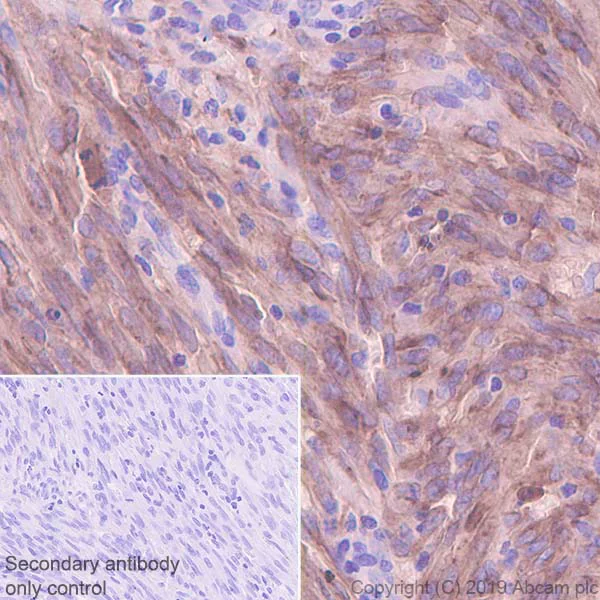
- IHC-P
Unknown
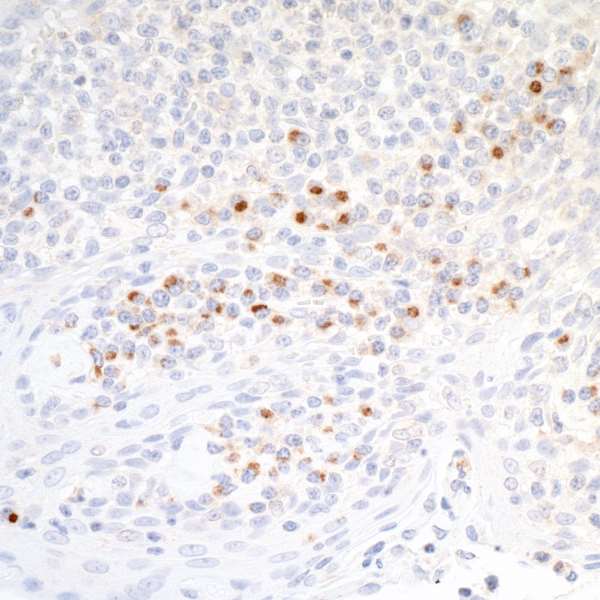
Immunohistochemistry (Formalin/PFA-fixed paraffin-embedded sections) - Anti-CD206 antibody [EPR22489-7] - BSA and Azide free (AB254471)
Immunohistochemical analysis of paraffin-embedded human Karposi's sarcoma tissue labeling CD206 with ab252921 at 1/4000 dilution, followed by Goat Anti-Rabbit IgG H&L (HRP) ready to use. Positive staining in tumor cells of human Kaposi's Sarcoma (PMID : 9060831) is observed. Counterstained with hematoxylin. Secondary antibody only control : Used PBS instead of primary antibody, secondary antibody is Goat Anti-Rabbit IgG H&L (HRP) ready to use. Heat mediated antigen retrieval using ab93684 (Tris/EDTA buffer, pH 9.0).
This data was developed using the same antibody clone in a different buffer formulation containing PBS, BSA, glycerol, and sodium azide (ab252921).
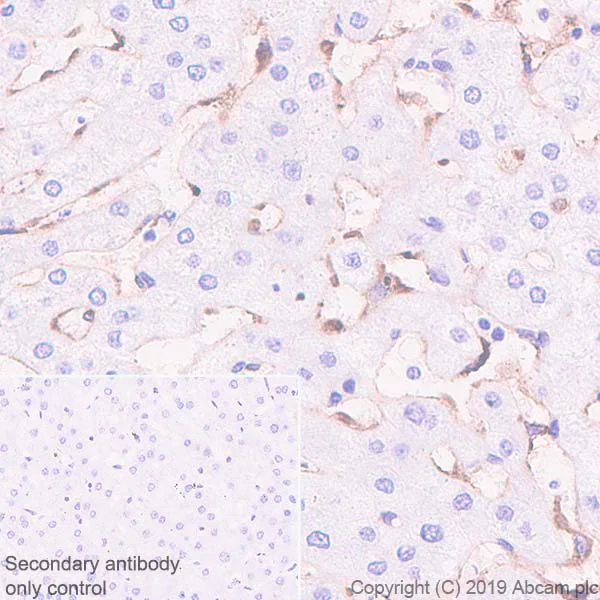
- IHC-P
Unknown
Immunohistochemistry (Formalin/PFA-fixed paraffin-embedded sections) - Anti-CD206 antibody [EPR22489-7] - BSA and Azide free (AB254471)
Immunohistochemical analysis of paraffin-embedded human liver tissue labeling CD206 with ab252921 at 1/4000 dilution, followed by Goat Anti-Rabbit IgG H&L (HRP) ready to use. Positive staining in macrophages (Kupffer cells) of human liver (PMID : 26938527) is observed. Counterstained with hematoxylin. Secondary antibody only control : Used PBS instead of primary antibody, secondary antibody is Goat Anti-Rabbit IgG H&L (HRP) ready to use. Heat mediated antigen retrieval using ab93684 (Tris/EDTA buffer, pH 9.0).
This data was developed using the same antibody clone in a different buffer formulation containing PBS, BSA, glycerol, and sodium azide (ab252921).
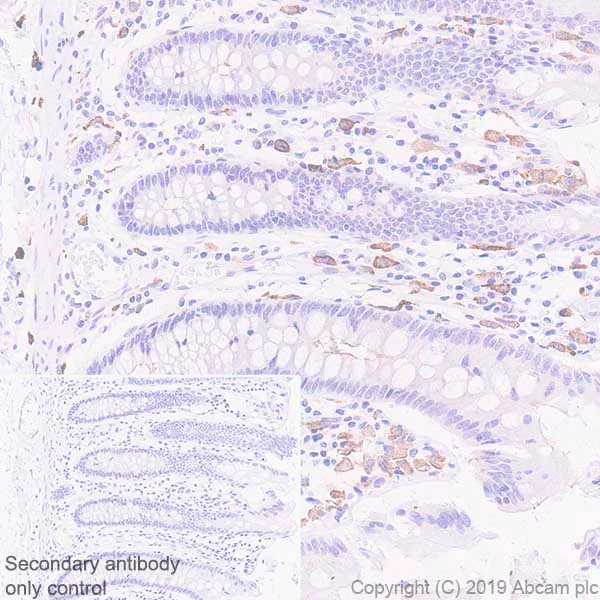
- IHC-P
Unknown
Immunohistochemistry (Formalin/PFA-fixed paraffin-embedded sections) - Anti-CD206 antibody [EPR22489-7] - BSA and Azide free (AB254471)
Immunohistochemical analysis of paraffin-embedded human colon tissue labeling CD206 with ab252921 at 1/4000 dilution, followed by Goat Anti-Rabbit IgG H&L (HRP) ready to use. Positive staining in macrophages of human colon (PMID : 9060831) is observed. Counterstained with hematoxylin. Secondary antibody only control : Used PBS instead of primary antibody, secondary antibody is Goat Anti-Rabbit IgG H&L (HRP) ready to use. Heat mediated antigen retrieval using ab93684 (Tris/EDTA buffer, pH 9.0).
This data was developed using the same antibody clone in a different buffer formulation containing PBS, BSA, glycerol, and sodium azide (ab252921).
関連する標識済み抗体及び組成の異なる製品 (4)
-
Anti-CD206 antibody [EPR22489-7]
-
519 Alexa Fluor® 488
Alexa Fluor® 488 Anti-CD206 antibody [EPR22489-7]
-
565 Alexa Fluor® 555
Alexa Fluor® 555 Anti-CD206 antibody [EPR22489-7]
-
665 Alexa Fluor® 647
Alexa Fluor® 647 Anti-CD206 antibody [EPR22489-7]
代替製品
Primary Antibodies
AB125028
Anti-CD206 antibody [EPR6828(B)]
RabMAb|Recombinant|20ul selling size|Trial Size|Trial Size
- 4
- 4
Primary Antibodies
AB209327
Anti-CD206 antibody [EPR6828(B)] - Low endotoxin, Azide free
RabMAb|Recombinant
- 0
- 0
組合せ製品
Primary Antibodies
AB213363
BOND RX™ Validated|RabMAb|Recombinant|Lab Essentials|20ul selling size|Advanced Validation

- 4
- 6
Primary Antibodies
AB182422
Anti-CD163 antibody [EPR19518]
BOND RX™ Validated|20ul selling size|RabMAb|Advanced Validation|Recombinant

- 5
- 17
Reactivity data
製品の詳細
What is this antibody validated in?
Anti-CD206 antibody [EPR22489-7] - BSA and Azide free (ab254471) is a rabbit recombinant monoclonal antibody and is validated for use in Western Blot (WB), Immunohistochemistry (IHC-P) in Human samples.
What is the molecular weight of CD206?
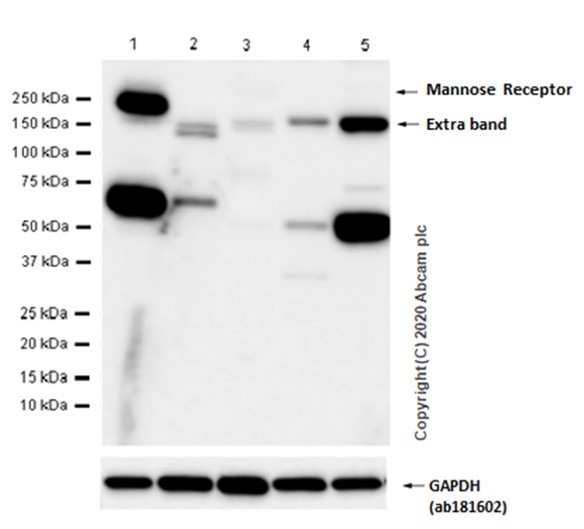
Anti-CD206 [EPR22489-7] - BSA and Azide free (ab254471) specifically detects a band for CD206 (UniProt: P22897) at a molecular weight of 166kDa.
Other related products
We have a range of other formats of antibody clone [EPR22489-7] also available for your convenience: ab252921, Carrier free - ab254471, Alexa Fluor® 488 - ab313398, Alexa Fluor® 647 - ab313671, Alexa Fluor® 555 - ab313731
Patented technology
Our RabMAb® technology is a patented hybridoma-based technology for making rabbit monoclonal antibodies. For details on our patents, please refer to RabMAb® patents.
What are the advantages of a recombinant monoclonal antibody?
This product is a recombinant monoclonal antibody, which offers several advantages including:
- - High batch-to-batch consistency and reproducibility
- - Improved sensitivity and specificity
- - Long-term security of supply
- - Animal-free batch production
For more information, read more on recombinant antibodies.
Conjugation ready
Our carrier-free antibodies are typically supplied in a PBS-only formulation, purified and free of BSA, sodium azide and glycerol. This conjugation-ready format is designed for use with fluorochromes, metal isotopes, oligonucleotides, and enzymes, which makes them ideal for antibody labelling, functional and cell-based assays, flow-based assays (e.g. mass cytometry) and Multiplex Imaging applications.
Use our conjugation kits for antibody conjugates that are ready-to-use in as little as 20 minutes with 1 minute hands-on-time and 100% antibody recovery: available for fluorescent dyes, HRP, biotin and gold.
Compatibility
This product is compatible with the Maxpar® Antibody Labeling Kit from Fluidigm, without the need for antibody preparation. Maxpar® is a trademark of Fluidigm Canada Inc.
出荷温度及び保存条件
製品の状態
精製方法
バッファー組成
出荷温度
短期保存温度
長期保存温度
保管に関する情報
補足情報
This supplementary information is collated from multiple sources and compiled automatically.
Biological function summary
The CD206 functions in pathogen recognition and clearance by binding to specific carbohydrates on the pathogen's surface. It is not part of a larger molecular complex but works independently to facilitate phagocytosis. The receptor is essential in immune responses allowing macrophages and dendritic cells to efficiently capture and process antigens for presentation to T cells. This enables the initiation of adaptive immune responses.
Pathways
Researchers know that the CD206 plays an important role in immune signaling pathways particularly in antigen processing and presentation. It interacts with proteins involved in these pathways including those necessary for the internalization and degradation of bound antigens. Moreover it works alongside scavenger receptors contributing to the regulation of immune and inflammatory responses.
製品プロトコール
- Visit the General protocols
- Visit the Troubleshooting
ターゲットの情報
文献 (4)
Recent publications for all applications. Explore the full list and refine your search
Nature immunology 26:1182-1197 PubMed40588561
2025
Applications
Unspecified application
Species
Unspecified reactive species
Frontiers in immunology 16:1508559 PubMed40078987
2025
Applications
Unspecified application
Species
Unspecified reactive species
Cell reports methods 3:100595 PubMed37741277
2023
Applications
Unspecified application
Species
Unspecified reactive species
Frontiers in bioengineering and biotechnology 10:816513 PubMed35402413
2022
Applications
Unspecified application
Species
Unspecified reactive species
Abcam product promise
Please note: All products are 'FOR RESEARCH USE ONLY. NOT FOR USE IN DIAGNOSTIC OR THERAPEUTIC PROCEDURES'.
For licensing inquiries, please contact partnerships@abcam.com