HRP Anti-Pan Trk 抗体 [EPR17341]
HRP Anti-Pan Trk antibody [EPR17341]
- RabMAb
- Recombinant
- 詳細を見る
Be the first to review this product! Submit a review
|
(1 Publication)
Rabbit Recombinant Monoclonal TrkB antibody - conjugated to HRP. Suitable for WB, IHC-P and reacts with Mouse, Rat, Human samples. Cited in 1 publication.
別名を表示する
TRKB, NTRK2, BDNF/NT-3 growth factors receptor, GP145-TrkB, Neurotrophic tyrosine kinase receptor type 2, TrkB tyrosine kinase, Tropomyosin-related kinase B, Trk-B
- WB
Lab
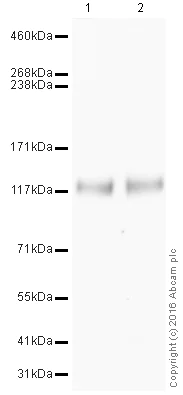
Western blot - HRP Anti-Pan Trk antibody [EPR17341] (AB209465)
This blot was produced using a 4-12% Bis-tris gel under the MOPS buffer system. The gel was run at 200V for 50 minutes before being transferred onto a Nitrocellulose membrane at 30V for 70 minutes. The membrane was then blocked for an hour using 2% Bovine Serum Albumin before being incubated with ab209465 overnight at 4°C. Antibody binding was visualised using ECL development solution ab133406.
All lanes:
Western blot - HRP Anti-Pan Trk antibody [EPR17341] (ab209465) at 1/5000 dilution
Lane 1:
Brain (Mouse) Tissue Lysate at 10 µg
Lane 2:
Brain (Rat) Tissue Lysate at 10 µg
Predicted band size: 92 kDa
Observed band size: 119 kDa
true
Exposure time: 20min
関連する標識済み抗体及び組成の異なる製品 (9)
-
Anti-Pan Trk antibody [EPR17341]
-
Anti-Pan Trk antibody [EPR17341] - BSA and Azide free
-
519 Alexa Fluor® 488
Alexa Fluor® 488 Anti-Pan Trk antibody [EPR17341]
-
565 Alexa Fluor® 555
Alexa Fluor® 555 Anti-Pan Trk antibody [EPR17341]
-
603 Alexa Fluor® 568
Alexa Fluor® 568 Anti-Pan Trk antibody [EPR17341]
-
617 Alexa Fluor® 594
Alexa Fluor® 594 Anti-Pan Trk antibody [EPR17341]
-
665 Alexa Fluor® 647
Alexa Fluor® 647 Anti-Pan Trk antibody [EPR17341]
-
775 Alexa Fluor® 750
Alexa Fluor® 750 Anti-Pan Trk antibody [EPR17341]
-
Biotin Anti-Pan Trk antibody [EPR17341]
代替製品

組合せ製品
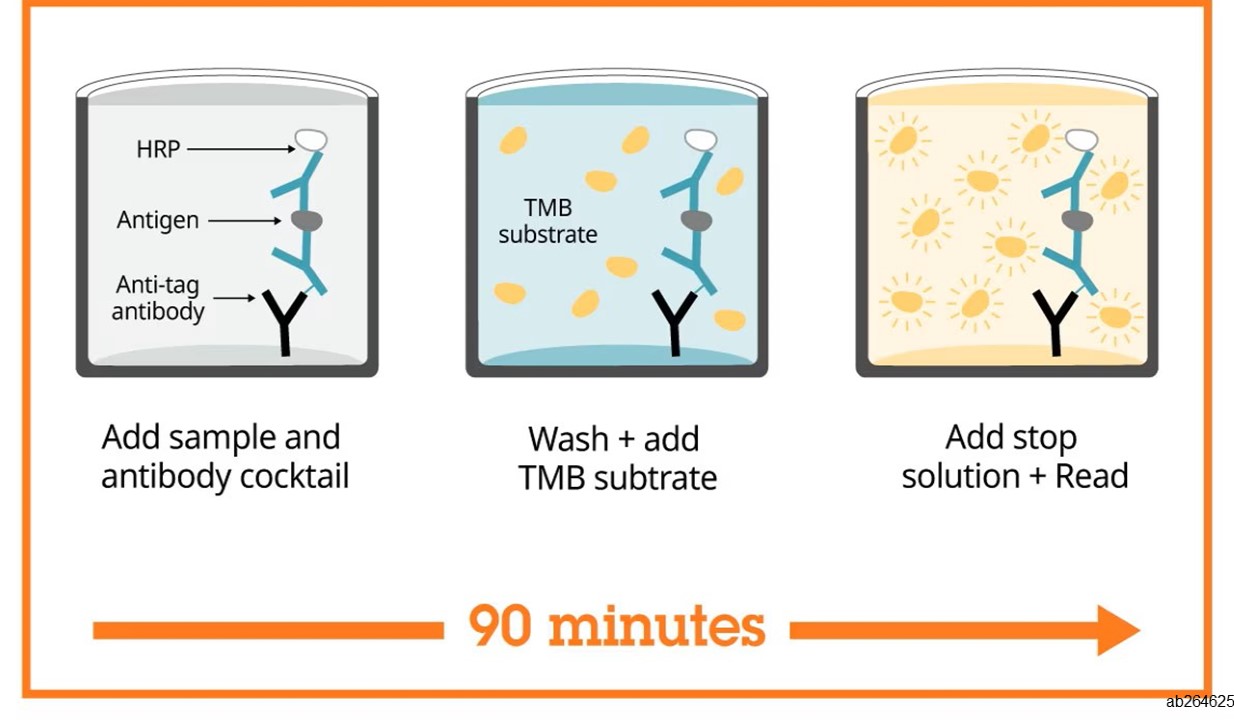
Primary Antibodies
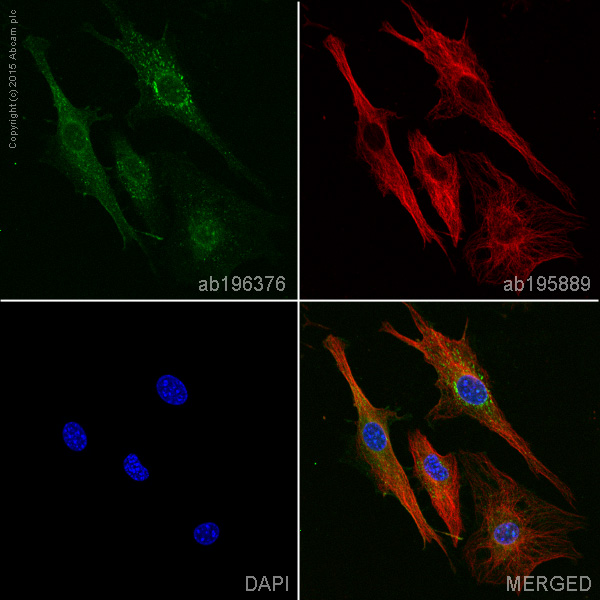
AB196376
Alexa Fluor® 488 Anti-PDGFR alpha + PDGFR beta antibody [Y92]
RabMAb|Recombinant
- 1
- 3
Primary Antibodies
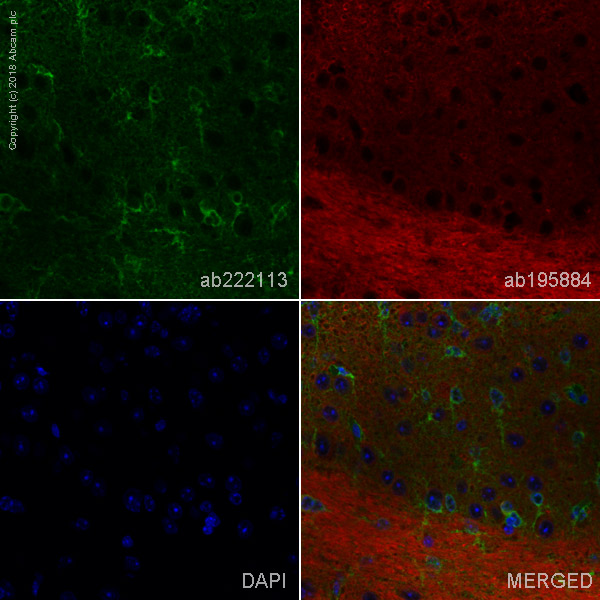
AB222113
Alexa Fluor® 488 Anti-BDNF antibody [EPR1292]
BOND RX™ Validated|RabMAb|Recombinant
- 0
- 0
Primary Antibodies
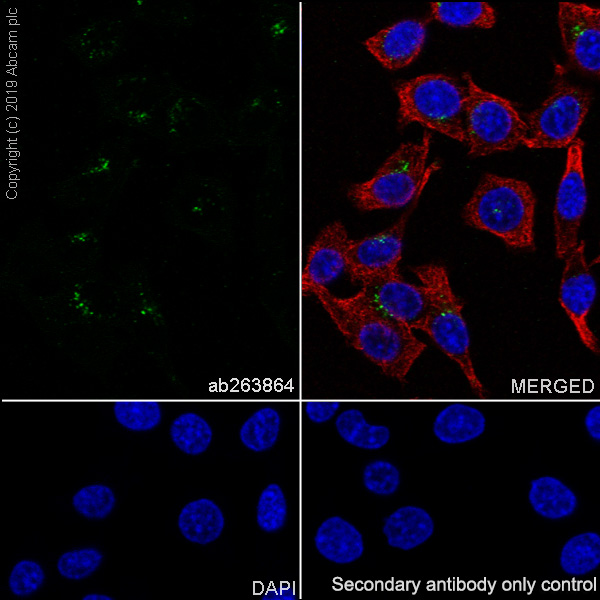
AB263864
Anti-Sortilin/NT3 antibody [EPR23093-58]
20ul selling size|BOND RX™ Validated|RabMAb|Recombinant
- 0
- 0
Reactivity data
製品の詳細
This is the Research Use Only (RUO) antibody of the clone that has been used in the in vitro diagnostic VENTANA pan-TRK (EPR17341) assay (an immunohistochemistry assay).
Patented technology
Our RabMAb® technology is a patented hybridoma-based technology for making rabbit monoclonal antibodies. For details on our patents, please refer to RabMAb® patents.
What are the advantages of a recombinant monoclonal antibody?
This product is a recombinant monoclonal antibody, which offers several advantages including:
- - High batch-to-batch consistency and reproducibility
- - Improved sensitivity and specificity
- - Long-term security of supply
- - Animal-free batch production
For more information, read more on recombinant antibodies.
出荷温度及び保存条件
製品の状態
精製方法
バッファー組成
出荷温度
短期保存期間
短期保存温度
長期保存温度
分注に関する情報
保管に関する情報
補足情報
This supplementary information is collated from multiple sources and compiled automatically.
Biological function summary
Pan Trk receptors play a vital role in the survival development and function of neurons by mediating the action of neurotrophins. They participate as part of a receptor complex activated by ligand binding which triggers autophosphorylation. These receptors modulate various processes like neuronal survival and differentiation. Pan Trk signals generally initiate upon binding neurotrophins leading to multiple intracellular events.
Pathways
Pan Trk receptors are central players in signaling pathways such as the MAPK/ERK and PI3K/AKT pathways. These pathways significantly impact cell survival and proliferation. Pan Trk often interacts with proteins like SHC and GRB2 to transmit signals downstream efficiently. These interactions are important for linking the surface receptor activation to the intracellular responses that govern cell growth and survival.
製品プロトコール
- Visit the General protocols
- Visit the Troubleshooting
ターゲットの情報
文献 (1)
Recent publications for all applications. Explore the full list and refine your search
Nucleic acids research 53: PubMed40598893
2025
Applications
Unspecified application
Species
Unspecified reactive species
Abcam product promise
Please note: All products are 'FOR RESEARCH USE ONLY. NOT FOR USE IN DIAGNOSTIC OR THERAPEUTIC PROCEDURES'.
For licensing inquiries, please contact partnerships@abcam.com