HRP Anti-Cytochrome C 抗体 [37BA11]
HRP Anti-Cytochrome C antibody [37BA11]
- BOND RX™ Validated
- 詳細を見る
Be the first to review this product! Submit a review
|
(1 Publication)
Anti-Cytochrome C antibody [37BA11] conjugated to HRP - suitable for IHC-P, Western blot, and reacts with human samples. Clone [37BA11] is a mouse monoclonal antibody cited in 2 publications.
別名を表示する
CYC, CYCS, Cytochrome c
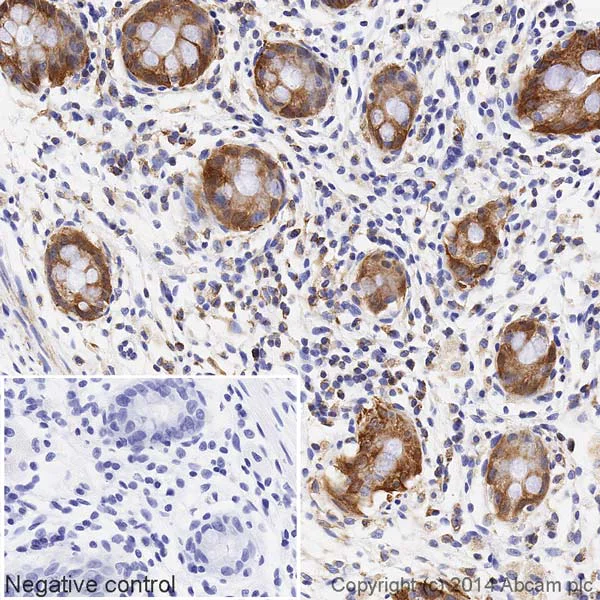
- IHC-P
Lab
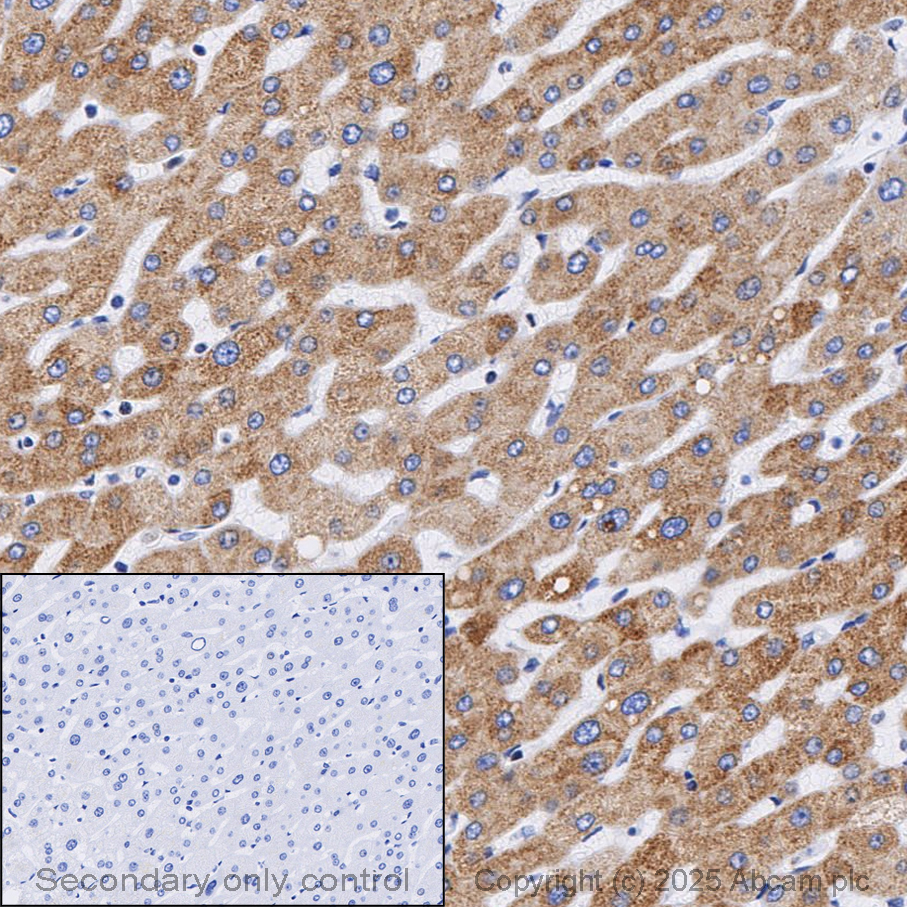
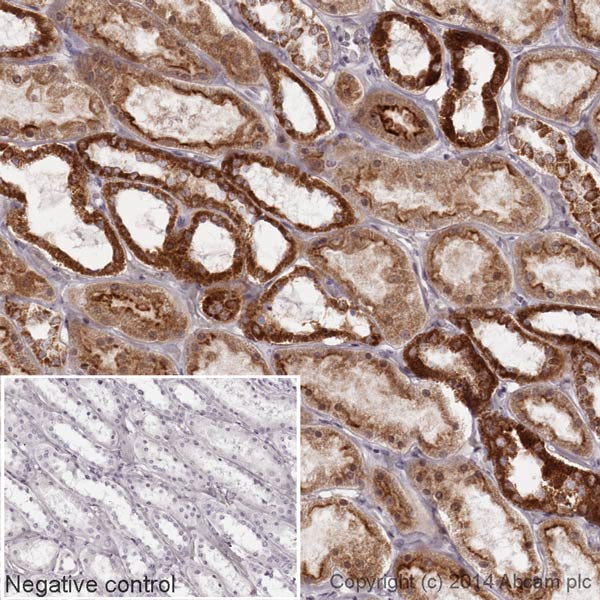
Immunohistochemistry (Formalin/PFA-fixed paraffin-embedded sections) - HRP Anti-Cytochrome C antibody [37BA11] (AB198489)
IHC image of Cytochrome C staining in a section of formalin-fixed paraffin-embedded normal human colon*, performed on a Leica BOND. The section was pre-treated using heat mediated antigen retrieval with sodium citrate buffer (pH6, epitope retrieval solution
- for 20mins. The section was then incubated with ab198489, 1/100 dilution, for 15 mins at room temperature. DAB was used as the chromogen. The section was then counterstained with haematoxylin and mounted with DPX. The inset negative control image is taken from an identical assay without primary antibody.
For other IHC staining systems (automated and non-automated) customers should optimize variable parameters such as antigen retrieval conditions, primary antibody concentration and antibody incubation times.
*Tissue obtained from the Human Research Tissue Bank, supported by the NIHR Cambridge Biomedical Research Centre
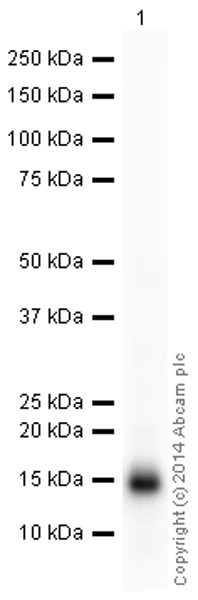
- WB
Lab
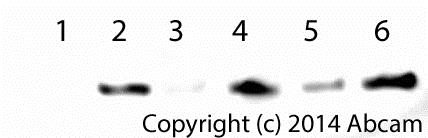
Western blot - HRP Anti-Cytochrome C antibody [37BA11] (AB198489)
This blot was produced using a 4-12% Bis-tris gel under the MES buffer system. The gel was run at 200V for 35 minutes before being transferred onto a Nitrocellulose membrane at 30V for 70 minutes. The membrane was then blocked for an hour using 2% Bovine Serum Albumin before being incubated with ab198489 overnight at 4°C. Antibody binding was visualised using ECL development solution ab133406.
All lanes:
Western blot - HRP Anti-Cytochrome C antibody [37BA11] (ab198489) at 1/5000 dilution
All lanes:
Human heart tissue lysate - mitochondrial extract (<a href='/products/unavailable/human-heart-tissue-lysate-mitochondrial-extract-ab110337'>ab110337</a>) at 10 µg
Predicted band size: 11 kDa
Observed band size: 12 kDa
true
Exposure time: 2s
関連する標識済み抗体及び組成の異なる製品 (3)
-
Anti-Cytochrome C antibody [37BA11]
-
519 Alexa Fluor® 488
Alexa Fluor® 488 Anti-Cytochrome C antibody [37BA11]
-
665 Alexa Fluor® 647
Alexa Fluor® 647 Anti-Cytochrome C antibody [37BA11]
代替製品
Primary Antibodies
AB192485
Alexa Fluor® 488 Anti-Cytochrome C antibody [EPR1327]
RabMAb|Recombinant
- 0
- 0
Primary Antibodies
AB192486
Alexa Fluor® 647 Anti-Cytochrome C antibody [EPR1327]
RabMAb|Recombinant
- 0
- 0
Primary Antibodies
AB133504
Anti-Cytochrome C antibody [EPR1327]
RabMAb|Recombinant|20ul selling size
- 5
- 2
Primary Antibodies
AB76237
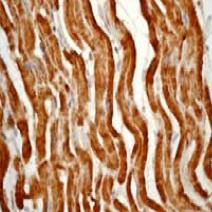
Anti-Cytochrome C antibody [EP1326-80-5-4]
20ul selling size|RabMAb|Recombinant
- 0
- 0
Primary Antibodies
AB218312
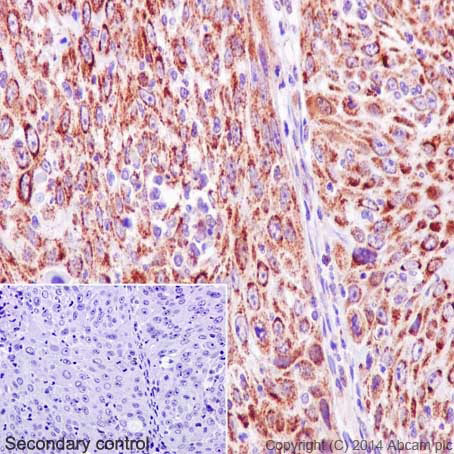
Anti-Cytochrome C antibody [EPR1327] - BSA and Azide free
RabMAb|Recombinant
- 0
- 0
Primary Antibodies
AB76107
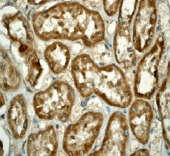
Anti-Cytochrome C antibody [EP1326-80-5]
BOND RX™ Validated|20ul selling size|RabMAb|Advanced Validation|Recombinant
- 4
- 4
組合せ製品

Primary Antibodies
AB209606
Alexa Fluor® 647 Anti-TOMM20 antibody [EPR15581-54] - Mitochondrial Marker
RabMAb|Recombinant

- 5
- 2
Reactivity data
出荷温度及び保存条件
製品の状態
精製方法
バッファー組成
出荷温度
短期保存期間
短期保存温度
長期保存温度
分注に関する情報
保管に関する情報
補足情報
This supplementary information is collated from multiple sources and compiled automatically.
Biological function summary
Cytochrome c contributes to the process of oxidative phosphorylation within mitochondria. It is not only an important electron carrier but it also plays a significant role in apoptosis. In the event of cellular stress cytochrome c releases into the cytosol and forms part of the apoptosome complex. This apoptosome activation leads to the caspase cascade driving programmed cell death. Therefore cytochrome C serves as both a mediator of energy production and a regulator of apoptosis.
Pathways
Cytochrome c is integral to the mitochondrial electron transport chain and apoptotic pathways. It interacts with proteins in these pathways such as cytochrome c oxidase in oxidative phosphorylation and Apaf-1 during apoptosis. The electron transport chain's function is dependent on the efficient transfer of electrons facilitated by cytochrome c ensuring ATP production in cellular respiration.
製品プロトコール
- Visit the General protocols
- Visit the Troubleshooting
ターゲットの情報
文献 (1)
Recent publications for all applications. Explore the full list and refine your search
Medicine 103:e39296 PubMed39151507
2024
Applications
Unspecified application
Species
Unspecified reactive species
Abcam product promise
Please note: All products are 'FOR RESEARCH USE ONLY. NOT FOR USE IN DIAGNOSTIC OR THERAPEUTIC PROCEDURES'.
For licensing inquiries, please contact partnerships@abcam.com