Anti-GLUD1 + GLUD2 抗体 [EPR11369(B)]
Anti-GLUD1 + GLUD2 antibody [EPR11369(B)]
- 20ul selling size
- RabMAb
- Recombinant
- 詳細を見る
4
(2 Reviews)
|
(24 Publications)
Rabbit Recombinant Monoclonal GLUD1 antibody. Suitable for IHC-P, WB, IP and reacts with Human, Mouse, Rat samples. Cited in 24 publications.
別名を表示する
GLUD, GLUD1, GDH 1, GLUDP1, GLUD2, GDH 2
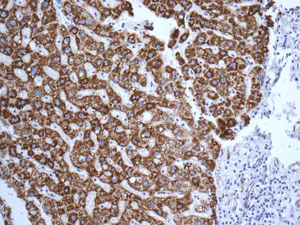
- IHC-P
Unknown
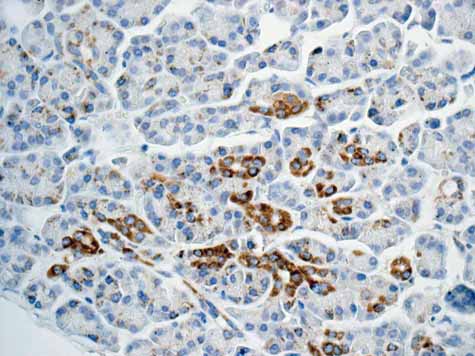
Immunohistochemistry (Formalin/PFA-fixed paraffin-embedded sections) - Anti-GLUD1 + GLUD2 antibody [EPR11369(B)] (AB166618)
Immunohistochemical analysis of paraffin-embedded Human liver tissue labeling GLUD1 with ab166618 at 1/250 dilution.
Perform heat mediated antigen retrieval with citrate buffer pH 6 before commencing with IHC staining protocol.
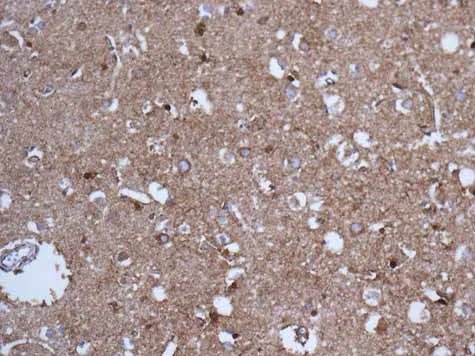
- IHC-P
Unknown
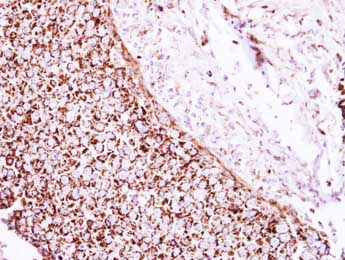
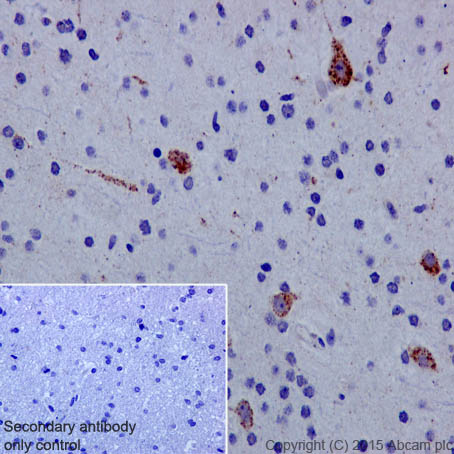
Immunohistochemistry (Formalin/PFA-fixed paraffin-embedded sections) - Anti-GLUD1 + GLUD2 antibody [EPR11369(B)] (AB166618)
ab166618 showing +ve staining in Human normal brain.
Perform heat mediated antigen retrieval with citrate buffer pH 6 before commencing with IHC staining protocol.
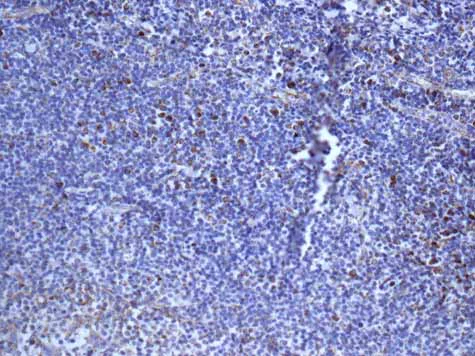
- IHC-P
Unknown
Immunohistochemistry (Formalin/PFA-fixed paraffin-embedded sections) - Anti-GLUD1 + GLUD2 antibody [EPR11369(B)] (AB166618)
ab166618 showing +ve staining in Human normal tonsil.
Perform heat mediated antigen retrieval with citrate buffer pH 6 before commencing with IHC staining protocol.
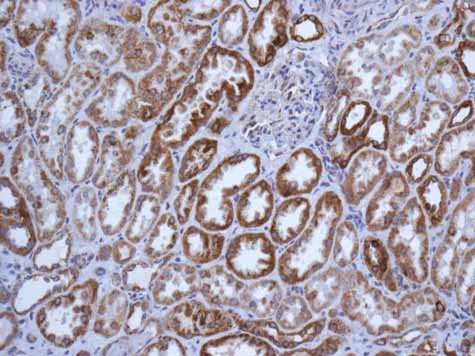
- IHC-P
Unknown
Immunohistochemistry (Formalin/PFA-fixed paraffin-embedded sections) - Anti-GLUD1 + GLUD2 antibody [EPR11369(B)] (AB166618)
ab166618 showing +ve staining in Human normal kidney.
Perform heat mediated antigen retrieval with citrate buffer pH 6 before commencing with IHC staining protocol.
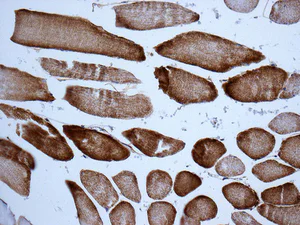
- IHC-P
Unknown
Immunohistochemistry (Formalin/PFA-fixed paraffin-embedded sections) - Anti-GLUD1 + GLUD2 antibody [EPR11369(B)] (AB166618)
Immunohistochemical analysis of paraffin-embedded Human skeletal muscle tissue labeling GLUD1 with ab166618 at 1/250 dilution.
Perform heat mediated antigen retrieval with citrate buffer pH 6 before commencing with IHC staining protocol.
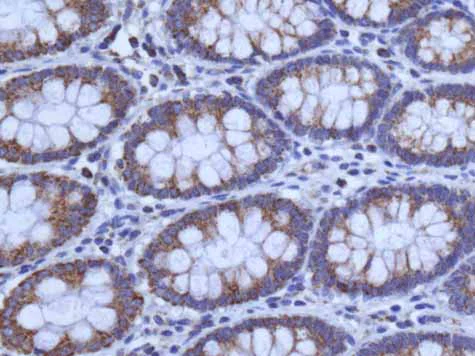
- IHC-P
Unknown
Immunohistochemistry (Formalin/PFA-fixed paraffin-embedded sections) - Anti-GLUD1 + GLUD2 antibody [EPR11369(B)] (AB166618)
ab166618 showing +ve staining in Human normal colon.
Perform heat mediated antigen retrieval with citrate buffer pH 6 before commencing with IHC staining protocol.
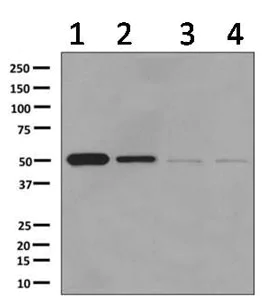
- WB
Unknown
Western blot - Anti-GLUD1 + GLUD2 antibody [EPR11369(B)] (AB166618)
All lanes:
Western blot - Anti-GLUD1 + GLUD2 antibody [EPR11369(B)] (ab166618) at 1/10000 dilution
Lane 1:
Human fetal liver lysates at 10 µg
Lane 2:
HepG2 lysates at 10 µg
Lane 3:
HeLa lysates at 10 µg
Lane 4:
293T lysates at 10 µg
false
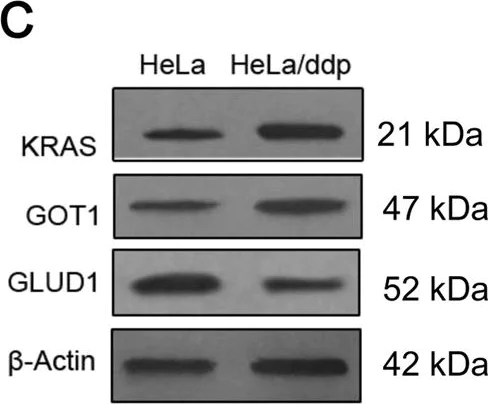
- WB
CiteAb
Western blot - Anti-GLUD1 + GLUD2 antibody [EPR11369(B)] (AB166618)
GLUD1 + GLUD2 western blot using anti-GLUD1 + GLUD2 antibody [EPR11369(B)] ab166618. Publication image and figure legend from Duan, G., Shi, M., et al., 2018, Sci Rep, PubMed 29511244.
ab166618 was used in this publication in western blot. This may not be the same as the application(s) guaranteed by Abcam. For a full list of applications guaranteed by Abcam for ab166618 please see the product overview.
Gln catabolism was enhanced in resistant cells to sustain cellular redox homeostasis. (A) qRT-PCR shows the relative expression of GLS mRNA in HeLa and HeLa/ddp cells. (B) Western blot analysis for GLS and β-Actin expression in HeLa and HeLa/ddp cells. (C) Western blot analysis of KRAS, GOT1, GLUD1 and β-Actin expression in HeLa and HeLa/ddp cells. (D) qRT-PCR shows the relative expression of KRAS mRNA in HeLa and HeLa/ddp cells. (E) The expression of GOT1 and β-Actin was determined by Western blot analysis in HeLa/ddp cells transfected with negative control shRNA or two independent shRNAs targeting GOT1 for 48 h. (F) HeLa/ddp cells were transfected with a negative control shRNA or shRNA targeting GOT1 for 48 h, and then the cells were seeded in 6-well plates. The medium was replaced the following day with Gln-free medium, and GSH (4 mM) was added to the medium following Gln withdrawal. (G) Relative clonogenic growth of HeLa and HeLa/ddp cells. GSH (4 mM) was added to the medium following Gln withdrawal. (H and I) Ralative proliferation of HeLa and HeLa/ddp cells determined by CFSE assay; the medium was replaced with corresponding medium and supplemented with GSH (4 mM) the following day. The error bars represent the s.d. of triplicate wells of a representative experiment (A–I). (J) Xenograft growth of HeLa/ddp cells expressing a control shRNA or a shRNA targeting GOT1 in mice (n = 5). The error bars represent the s.e.m.
false
関連する標識済み抗体及び組成の異なる製品 (1)
-
Anti-GLUD1 + GLUD2 antibody [EPR11369(B)] - BSA and Azide free
代替製品
Primary Antibodies
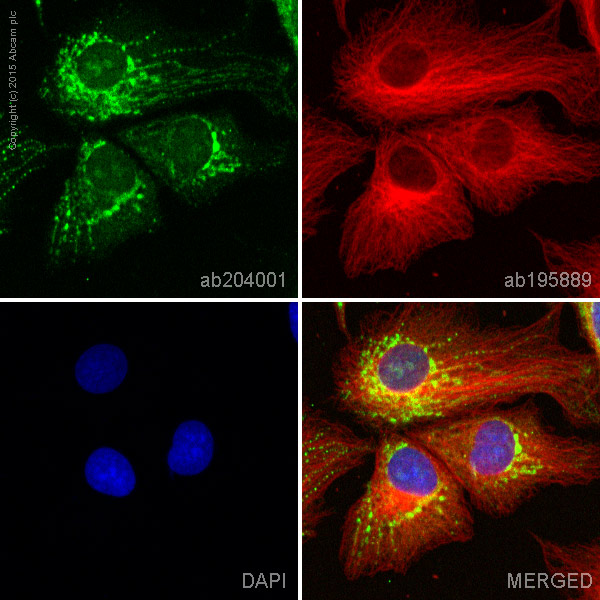
AB204001
Alexa Fluor® 488 Anti-GLUD1 + GLUD2 antibody [EPR11370]
RabMAb|Recombinant|Trial Size
- 0
- 0
組合せ製品

Primary Antibodies
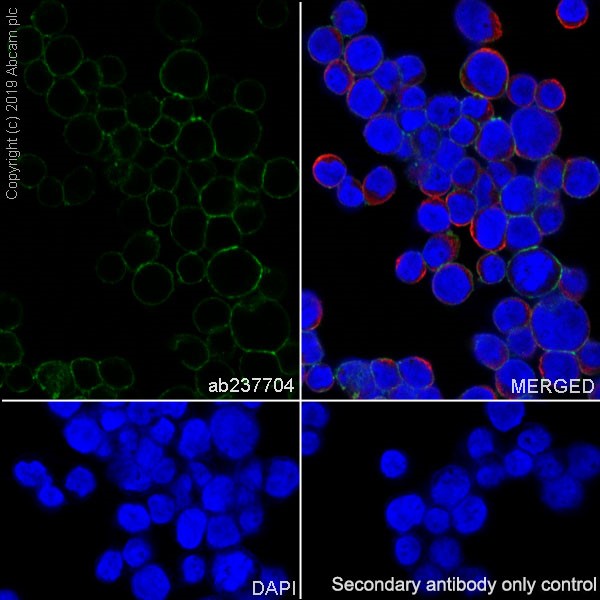
AB237704
Anti-SLC1A5/ASCT2 antibody [CAL33]
BOND RX™ Validated|20ul selling size|KO Validated|RabMAb|Recombinant
- 0
- 0
Primary Antibodies
AB172964
20ul selling size|RabMAb|Recombinant|KO Validated

- 5
- 2
Primary Antibodies
AB156876
Anti-Glutaminase antibody [EP7212]
20ul selling size|RabMAb|Recombinant|KO Validated
- 4
- 4
Primary Antibodies
AB16667
BOND RX™ Validated|KO Validated|RabMAb|Advanced Validation|Recombinant|20ul selling size

- 5
- 133
Reactivity data
製品の詳細
Patented technology
Our RabMAb® technology is a patented hybridoma-based technology for making rabbit monoclonal antibodies. For details on our patents, please refer to RabMAb® patents.
What are the advantages of a recombinant monoclonal antibody?
This product is a recombinant monoclonal antibody, which offers several advantages including:
- - High batch-to-batch consistency and reproducibility
- - Improved sensitivity and specificity
- - Long-term security of supply
- - Animal-free batch production
For more information, read more on recombinant antibodies.
出荷温度及び保存条件
製品の状態
精製方法
バッファー組成
出荷温度
短期保存温度
長期保存温度
分注に関する情報
保管に関する情報
補足情報
This supplementary information is collated from multiple sources and compiled automatically.
Biological function summary
These enzymes participate in critical processes like neurotransmitter regulation and energy production. GLUD1 and GLUD2 provide ammonia and α-ketoglutarate necessary for the Krebs cycle connecting amino acid catabolism to energy production. Although not typically part of a larger complex their activity modulates key metabolic pathways essential for cellular energy.
Pathways
GLUD1 and GLUD2 play central roles in nitrogen and tricarboxylic acid (TCA) cycles. Within these cycles they facilitate interactions with proteins like AMPK linking amino acid metabolism to cellular energy sensing. They influence energy homeostasis by modulating NADH and NADPH production further integrating with metabolic control pathways like gluconeogenesis.
製品プロトコール
- Visit the General protocols
- Visit the Troubleshooting
ターゲットの情報
追加のターゲット
文献 (24)
Recent publications for all applications. Explore the full list and refine your search
Oncogene 44:3386-3406 PubMed40696167
2025
Applications
Unspecified application
Species
Unspecified reactive species
Journal of orthopaedic surgery and research 20:542 PubMed40442713
2025
Applications
Unspecified application
Species
Unspecified reactive species
Life metabolism 3:loae002 PubMed39872214
2025
Applications
Unspecified application
Species
Unspecified reactive species
Nature communications 15:3468 PubMed38658571
2024
Applications
Unspecified application
Species
Unspecified reactive species
The Journal of biological chemistry 299:104795 PubMed37150320
2023
Applications
Unspecified application
Species
Unspecified reactive species
Nature metabolism 5:80-95 PubMed36717752
2023
Applications
Unspecified application
Species
Unspecified reactive species
eLife 11: PubMed35815941
2022
Applications
Unspecified application
Species
Unspecified reactive species
Cell metabolism 33:2380-2397.e9 PubMed34879239
2021
Applications
Unspecified application
Species
Unspecified reactive species
FASEB journal : official publication of the Federation of American Societies for Experimental Biology 35:e21765 PubMed34318967
2021
Applications
Unspecified application
Species
Unspecified reactive species
Cancer gene therapy 29:505-518 PubMed33833413
2021
Applications
Unspecified application
Species
Unspecified reactive species
Abcam product promise
Please note: All products are 'FOR RESEARCH USE ONLY. NOT FOR USE IN DIAGNOSTIC OR THERAPEUTIC PROCEDURES'.
For licensing inquiries, please contact partnerships@abcam.com