JavaScript is disabled in your browser. Please enable JavaScript to view this website.
AB153973

Anti-GLUD1 抗体

Anti-GLUD1 antibody

Be the first to review this product! Submit a review

|

(5 Publications)

Rabbit Polyclonal GLUD1 antibody. Suitable for IHC-P, WB, ICC/IF and reacts with Rat, Human, Drosophila melanogaster samples. Cited in 5 publications. Immunogen corresponding to Recombinant Fragment Protein within Human GLUD1 aa 50-400.

別名を表示する

GLUD, GLUD1, GDH 1
5 Images
Immunohistochemistry (Formalin/PFA-fixed paraffin-embedded sections) - Anti-GLUD1 antibody (AB153973)
  • IHC-P

Unknown

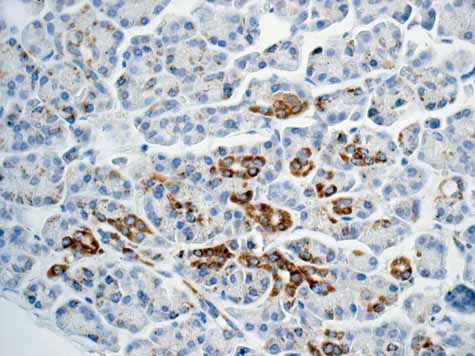
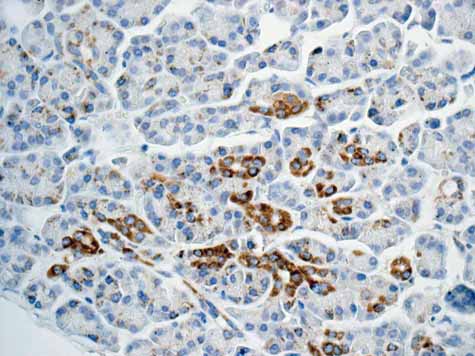
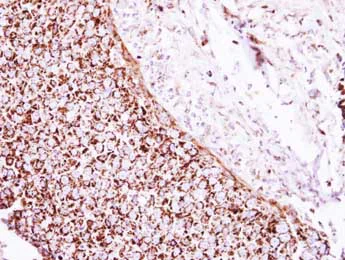
Immunohistochemistry (Formalin/PFA-fixed paraffin-embedded sections) - Anti-GLUD1 antibody (AB153973)

Immunohistochemical analysis of paraffin-embedded Human breast carcinoma tissue labeling GLUD1 with ab153973 at 1/250 dilution.
Immunocytochemistry/ Immunofluorescence - Anti-GLUD1 antibody (AB153973)
  • ICC/IF

Supplier Data

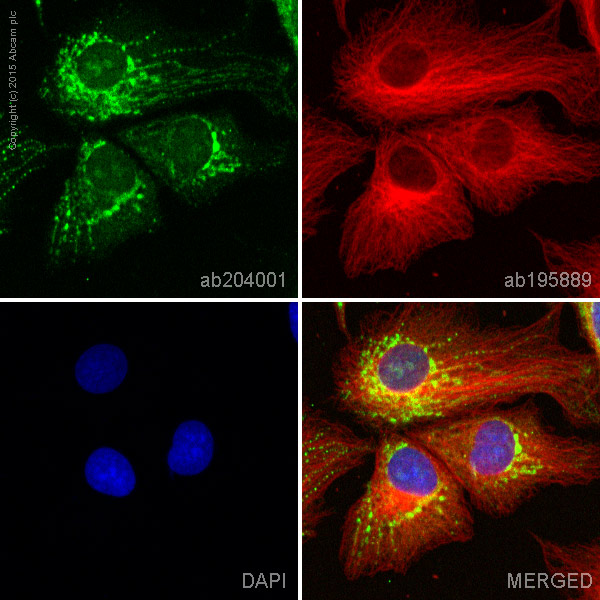
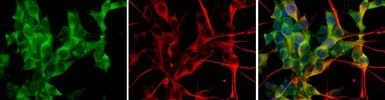
Immunocytochemistry/ Immunofluorescence - Anti-GLUD1 antibody (AB153973)

Immunofluorescence analysis of U-87 MG cells fixed in 4% paraformaldehyde at RT for 15 min labelling Glutamate Dehydrogenase protein at cytoplasm using ab153973 at a 1/500 dilution (Green). beta Tubulin 3/ Tuj1, stained by beta Tubulin 3/ Tuj1 antibody at a 1/200 dilution (Red). Hoechst 33342 was used for nuclear staining (Blue).
Immunocytochemistry/ Immunofluorescence - Anti-GLUD1 antibody (AB153973)
  • ICC/IF

Supplier Data

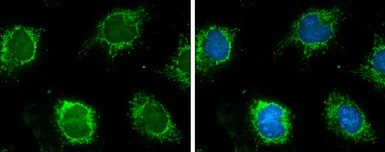
Immunocytochemistry/ Immunofluorescence - Anti-GLUD1 antibody (AB153973)

Immunofluorescence analysis of HeLa cells fixed in ice-cold MeOH for 5 min labelling Glutamate Dehydrogenase protein at mitochondria using ab153973 at a 1/500 dilution (Green). Hoechst 33342 was used for nuclear staining (Blue).
Immunohistochemistry (Formalin/PFA-fixed paraffin-embedded sections) - Anti-GLUD1 antibody (AB153973)
  • IHC-P

Supplier Data

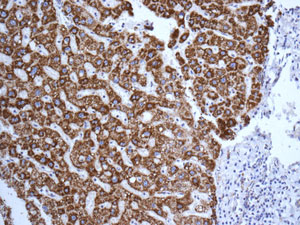
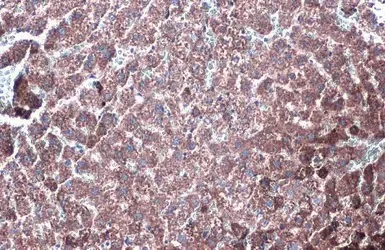
Immunohistochemistry (Formalin/PFA-fixed paraffin-embedded sections) - Anti-GLUD1 antibody (AB153973)

Immunohistochemical analysis of paraffin-embedded rat liver tissue stained for Glutamate Dehydrogenase protein at mitochondria with ab153973 at a 1/500 dilution.

Antigen retrieval : Citrate buffer, pH 6.0, 15 min.
Western blot - Anti-GLUD1 antibody (AB153973)
  • WB

Supplier Data

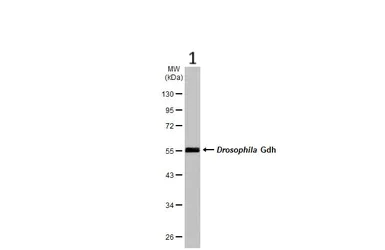
Western blot - Anti-GLUD1 antibody (AB153973)

Samples were separated by 10 % SDS.

All lanes:

Western blot - Anti-GLUD1 antibody (ab153973) at 1/1000 dilution

All lanes:

Drosophila tissue extract at 50 µg

Secondary

All lanes:

HRP-conjugated anti-rabbit IgG antibody

Predicted band size: 61 kDa

false

Key facts

宿主種

Rabbit

クローン性

Polyclonal

アイソタイプ

IgG

キャリアフリー

No

交差種

Drosophila melanogaster, Rat, Human

アプリケーション

ICC/IF, IHC-P, WB

applications

免疫原

Recombinant Fragment Protein within Human GLUD1 aa 50-400. The exact immunogen used to generate this antibody is proprietary information.

P00367

特異性

Due to high sequence homology with GLUD2 there is a potential for cross-reactivity.

Reactivity data

{ "title": "Reactivity Data", "filters": { "stats": ["", "Species", "Dilution Info", "Notes"], "tabs": { "all-applications": {"fullname" : "All Applications", "shortname": "All Applications"}, "IHCP" : {"fullname" : "Immunohistochemistry (Formalin/PFA-fixed paraffin-embedded sections)", "shortname":"IHC-P"}, "WB" : {"fullname" : "Western blot", "shortname":"WB"}, "ICCIF" : {"fullname" : "Immunocytochemistry/ Immunofluorescence", "shortname":"ICC/IF"} }, "product-promise": { "all": "all", "testedAndGuaranteed": "tested", "guaranteed": "expected", "predicted": "predicted", "notRecommended": "not-recommended" } }, "values": { "Human": { "IHCP-species-checked": "testedAndGuaranteed", "IHCP-species-dilution-info": "1/100 - 1/1000", "IHCP-species-notes": "<p>Perform heat mediated antigen retrieval before commencing with IHC staining protocol using 10mM Citrate buffer (pH6.0) or Tris-EDTA buffer (pH8.0).</p>", "WB-species-checked": "testedAndGuaranteed", "WB-species-dilution-info": "1/500 - 1/3000", "WB-species-notes": "<p></p>", "ICCIF-species-checked": "testedAndGuaranteed", "ICCIF-species-dilution-info": "1/100 - 1/1000", "ICCIF-species-notes": "<p></p>" }, "Mouse": { "IHCP-species-checked": "predicted", "IHCP-species-dilution-info": "", "IHCP-species-notes": "", "WB-species-checked": "predicted", "WB-species-dilution-info": "", "WB-species-notes": "", "ICCIF-species-checked": "predicted", "ICCIF-species-dilution-info": "", "ICCIF-species-notes": "" }, "Rat": { "IHCP-species-checked": "testedAndGuaranteed", "IHCP-species-dilution-info": "1/100 - 1/1000", "IHCP-species-notes": "<p>Perform heat mediated antigen retrieval before commencing with IHC staining protocol using 10mM Citrate buffer (pH6.0) or Tris-EDTA buffer (pH8.0).</p>", "WB-species-checked": "guaranteed", "WB-species-dilution-info": "", "WB-species-notes": "", "ICCIF-species-checked": "guaranteed", "ICCIF-species-dilution-info": "", "ICCIF-species-notes": "" }, "Cow": { "IHCP-species-checked": "predicted", "IHCP-species-dilution-info": "", "IHCP-species-notes": "", "WB-species-checked": "predicted", "WB-species-dilution-info": "", "WB-species-notes": "", "ICCIF-species-checked": "predicted", "ICCIF-species-dilution-info": "", "ICCIF-species-notes": "" }, "Drosophila melanogaster": { "IHCP-species-checked": "guaranteed", "IHCP-species-dilution-info": "", "IHCP-species-notes": "", "WB-species-checked": "testedAndGuaranteed", "WB-species-dilution-info": "1/500 - 1/3000", "WB-species-notes": "<p></p>", "ICCIF-species-checked": "guaranteed", "ICCIF-species-dilution-info": "", "ICCIF-species-notes": "" }, "Pig": { "IHCP-species-checked": "predicted", "IHCP-species-dilution-info": "", "IHCP-species-notes": "", "WB-species-checked": "predicted", "WB-species-dilution-info": "", "WB-species-notes": "", "ICCIF-species-checked": "predicted", "ICCIF-species-dilution-info": "", "ICCIF-species-notes": "" }, "Xenopus laevis": { "IHCP-species-checked": "predicted", "IHCP-species-dilution-info": "", "IHCP-species-notes": "", "WB-species-checked": "predicted", "WB-species-dilution-info": "", "WB-species-notes": "", "ICCIF-species-checked": "predicted", "ICCIF-species-dilution-info": "", "ICCIF-species-notes": "" }, "Xenopus tropicalis": { "IHCP-species-checked": "predicted", "IHCP-species-dilution-info": "", "IHCP-species-notes": "", "WB-species-checked": "predicted", "WB-species-dilution-info": "", "WB-species-notes": "", "ICCIF-species-checked": "predicted", "ICCIF-species-dilution-info": "", "ICCIF-species-notes": "" } } }

出荷温度及び保存条件

製品の状態
Liquid
精製方法
Affinity purification Immunogen
バッファー組成
pH: 7 Preservative: 0.025% Proclin 300 Constituents: PBS, 20% Glycerol (glycerin, glycerine), 1% BSA
出荷温度
Blue Ice
短期保存温度
+4°C
長期保存温度
-20°C
分注に関する情報
Upon delivery aliquot
保管に関する情報
Avoid freeze / thaw cycle

補足情報

This supplementary information is collated from multiple sources and compiled automatically.

GLUD1 also known as glutamate dehydrogenase 1 is an enzyme that catalyzes the reversible oxidative deamination of glutamate to α-ketoglutarate and ammonia playing an important role in amino acid metabolism. The molecular mass of GLUD1 is approximately 61 kDa. It is expressed in many tissues with notably high levels in liver kidney and neural tissues. GLUD1 is essential for maintaining the balance between amino acid and carbohydrate metabolism.
Biological function summary

GLUD1 facilitates nitrogen and carbon homeostasis through its role in amino acid breakdown and energy metabolism. Although not part of a complex GLUD1's activity impacts central metabolic processes influencing cellular energy status and neurotransmitter regulation. The enzyme contributes to the glutamate-glutamine cycle which is important for neurotransmission in the brain. Its regulation by ADP GDP and other molecules enables cells to adapt to energetic demands.

Pathways

GLUD1 is integral to the tricarboxylic acid (TCA) cycle and urea cycle impacting both energy production and detoxification of ammonia. In the TCA cycle GLUD1 influences the availability of α-ketoglutarate interfacing with enzymes such as isocitrate dehydrogenase. In the urea cycle it aids in converting ammonia to urea in the liver. Additionally GLUD1's function connects with glutamine synthetase in managing amino acid synthesis and degradation.

GLUD1 is associated with congenital hyperinsulinism and hepatic encephalopathy. Hyperinsulinism often results from mutations in GLUD1 which lead to excessive insulin release due to increased leucine sensitivity. In hepatic encephalopathy GLUD1's role in ammonia detoxification becomes important with impaired function potentially leading to elevated ammonia levels and neurological dysfunction. Understanding GLUD1's interactions with other proteins such as those in insulin signaling pathways could further elucidate its impact on these medical conditions.

製品プロトコール

For this product, it's our understanding that no specific protocols are required. You can visit:

ターゲットの情報

Mitochondrial glutamate dehydrogenase that catalyzes the conversion of L-glutamate into alpha-ketoglutarate. Plays a key role in glutamine anaplerosis by producing alpha-ketoglutarate, an important intermediate in the tricarboxylic acid cycle (PubMed : 11032875, PubMed : 11254391, PubMed : 16023112, PubMed : 16959573). Plays a role in insulin homeostasis (PubMed : 11297618, PubMed : 9571255). May be involved in learning and memory reactions by increasing the turnover of the excitatory neurotransmitter glutamate (By similarity).
See full target information GLUD1

文献 (5)

Recent publications for all applications. Explore the full list and refine your search

Journal of orthopaedic surgery and research 20:542 PubMed40442713

2025

A-485 alleviates postmenopausal osteoporosis by activating GLUD1 deacetylation through the SENP1-Sirt3 signal pathway.

Applications

Unspecified application

Species

Unspecified reactive species

Yinghong Ma,Xiaohua Zou,Qianhong Jian,Jiaxin Dong,Xianbing Huang,Yue Zhai,Li Qian

Frontiers in cell and developmental biology 9:719187 PubMed34765600

2021

Transcriptional Repression of Ferritin Light Chain Increases Ferroptosis Sensitivity in Lung Adenocarcinoma.

Applications

Unspecified application

Species

Unspecified reactive species

Yikun Wang,Shiyu Qiu,Hong Wang,Jiangtao Cui,Xiaoting Tian,Yayou Miao,Congcong Zhang,Leiqun Cao,Lifang Ma,Xin Xu,Yongxia Qiao,Xiao Zhang

The Journal of cell biology 220: PubMed34623384

2021

PINK1 drives production of mtDNA-containing extracellular vesicles to promote invasiveness.

Applications

Unspecified application

Species

Unspecified reactive species

Nicolas Rabas,Sarah Palmer,Louise Mitchell,Shehab Ismail,Andrea Gohlke,Joel S Riley,Stephen W G Tait,Payam Gammage,Leandro Lemgruber Soares,Iain R Macpherson,Jim C Norman

Veterinary and comparative oncology 16:239-245 PubMed29266697

2017

Expression of the glutamine metabolism-related proteins glutaminase 1 and glutamate dehydrogenase in canine mammary tumours.

Applications

Unspecified application

Species

Unspecified reactive species

J-E Ryu,H-K Park,H-J Choi,H-B Lee,H-J Lee,H Lee,E-S Yu,W-C Son

Endocrine-related cancer 20:339-48 PubMed23507704

2013

Expression of glutamine metabolism-related proteins according to molecular subtype of breast cancer.

Applications

Unspecified application

Species

Unspecified reactive species

Sewha Kim,Do Hee Kim,Woo-Hee Jung,Ja Seung Koo
View all publications

Abcam product promise

当社は、高品質な試薬を通じてお客様の研究を力強くサポートすることをお約束いたします。ご使用いただく各段階で、常にお客様をサポートできる体制を整えております。万が一、製品が期待通りに機能しない場合は、「Abcam Product Promise」による当社保証制度に基づき、安心してご利用いただけます。
保証に関する詳細については利用規約をご確認ください。

Please note: All products are 'FOR RESEARCH USE ONLY. NOT FOR USE IN DIAGNOSTIC OR THERAPEUTIC PROCEDURES'.

For licensing inquiries, please contact partnerships@abcam.com