Anti-Gephyrin 抗体 [EPR12651(B)]
Anti-Gephyrin antibody [EPR12651(B)]
- RabMAb
- Recombinant
- KO Validated
- 詳細を見る
Be the first to review this product! Submit a review
|
(4 Publications)
Rabbit Recombinant Monoclonal Gephyrin antibody. Suitable for IHC-P, ICC/IF, WB, Flow Cyt (Intra) and reacts with Human, Rat, Mouse samples. Cited in 4 publications.
別名を表示する
GPH, KIAA1385, GPHN, Gephyrin
- Flow Cyt (Intra)
Supplier Data
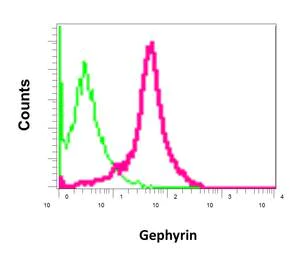
Flow Cytometry (Intracellular) - Anti-Gephyrin antibody [EPR12651(B)] (AB177154)
Intracellular flow cytometric analysis of permeabilized 293T cells labeling Gephyrinwith ab177154 at 1/10 dilution (red), or a rabbit IgG (negative) (green).
- IHC-P
Supplier Data
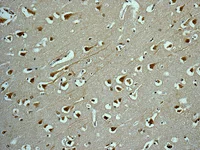
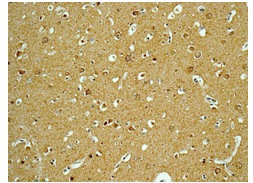
Immunohistochemistry (Formalin/PFA-fixed paraffin-embedded sections) - Anti-Gephyrin antibody [EPR12651(B)] (AB177154)
Immunohistochemical analysis of paraffin-embedded Human brain tissue labeling Gephyrin with ab177154 at 1/50 dilution.
Perform heat mediated antigen retrieval before commencing with IHC staining protocol.
- ICC/IF
Unknown
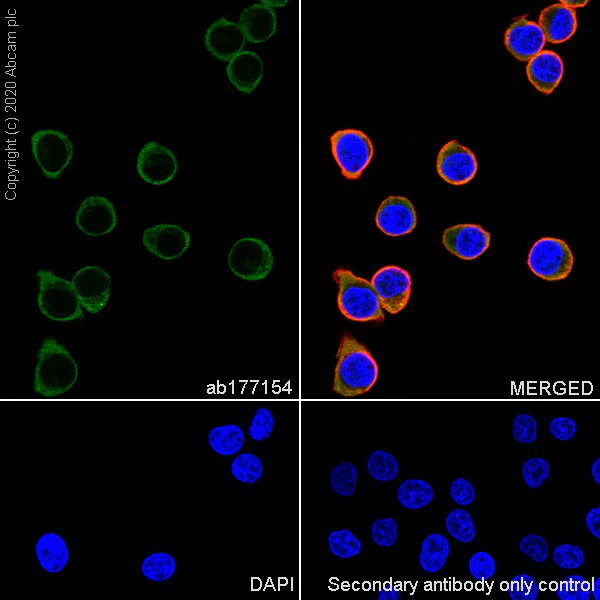
Immunocytochemistry/ Immunofluorescence - Anti-Gephyrin antibody [EPR12651(B)] (AB177154)
Immunofluorescent analysis of 4% Paraformaldehyde-fixed, 0.1% TritonX-100 permeabilized Jurkat cells labelling Gephyrin with ab177154 at 1/100 dilution, followed by ab150077 Goat Anti-Rabbit IgG H&L (Alexa Fluor® 488) antibody at 1/1000 dilution (2 μg/mL) (Green). Confocal image showing cytoplasmic staining in Jurkat cell line. ab195889 Anti-alpha Tubulin mouse monoclonal antibody - Microtubule Marker (Alexa Fluor® 594) was used to counterstain tubulin at 1/200 dilution (2.5 μg/mL) (Red). The Nuclear counterstain was DAPI (Blue).
Secondary antibody only control : PBS instead of the primary antibody.
- ICC/IF
Unknown
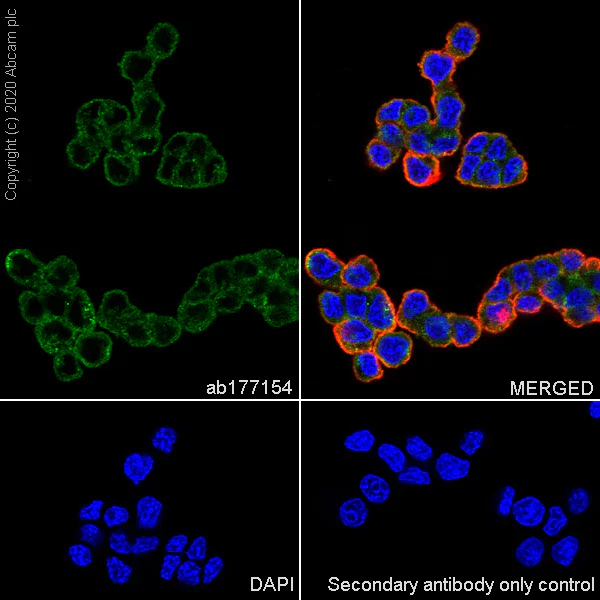
Immunocytochemistry/ Immunofluorescence - Anti-Gephyrin antibody [EPR12651(B)] (AB177154)
Immunofluorescent analysis of 4% Paraformaldehyde-fixed, 0.1% TritonX-100 permeabilized PC-12 cells labelling Gephyrin with ab177154 at 1/100 dilution, followed by ab150077 Goat Anti-Rabbit IgG H&L (Alexa Fluor® 488) antibody at 1/1000 dilution (2 μg/mL) (Green). Confocal image showing cytoplasmic staining in PC-12 cell line. ab195889 Anti-alpha Tubulin mouse monoclonal antibody - Microtubule Marker (Alexa Fluor® 594) was used to counterstain tubulin at 1/200 dilution (2.5 μg/mL) (Red). The Nuclear counterstain was DAPI (Blue).
Secondary antibody only control : PBS instead of the primary antibody.
- WB
Lab
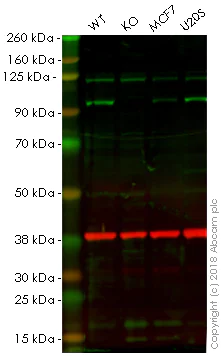
Western blot - Anti-Gephyrin antibody [EPR12651(B)] (AB177154)
Lanes 1 - 4 : Merged signal (red and green). Green - ab177154 observed at 90 kDa. Red - loading control, ab9484, observed at 37 kDa.
ab177154 was shown to recognize Gephyrin in wild-type HAP1 cells as signal was lost at the expected MW in GPHN (Gephyrin) knockout cells. Additional cross-reactive bands were observed in the wild-type and knockout cells. Wild-type and GPHN (Gephyrin) knockout samples were subjected to SDS-PAGE. ab177154 and ab9484 (Mouse anti-GAPDH loading control) were incubated overnight at 4°C at 1 μg/ml and 1/20000 dilution respectively. Blots were developed with Goat anti-Rabbit IgG H&L (IRDye® 800CW) preabsorbed ab216773 and Goat anti-Mouse IgG H&L (IRDye® 680RD) preabsorbed ab216776 secondary antibodies at 1/20000 dilution for 1 hour at room temperature before imaging.
All lanes:
Western blot - Anti-Gephyrin antibody [EPR12651(B)] (ab177154) at 1 µg/mL
Lane 1:
Wild-type HAP1 whole cell lysate at 20 µg
Lane 2:
GPHN (Gephyrin) knockout HAP1 whole cell lysate at 20 µg
Lane 3:
MCF7 whole cell lysate at 20 µg
Lane 4:
U2OS whole cell lysate at 20 µg
Predicted band size: 80 kDa
Observed band size: 90 kDa
false
- WB
Supplier Data
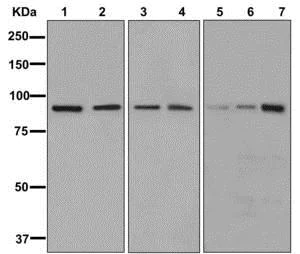
Western blot - Anti-Gephyrin antibody [EPR12651(B)] (AB177154)
All lanes:
Western blot - Anti-Gephyrin antibody [EPR12651(B)] (ab177154) at 1/1000 dilution
Lane 1:
Human fetal brain lysate at 10 µg
Lane 2:
293T lysate at 10 µg
Lane 3:
Jurkat lysate at 10 µg
Lane 4:
SH-SY5Y lysate at 10 µg
Lane 5:
C6 lysate at 10 µg
Lane 6:
Raw264.7 lysate at 10 µg
Lane 7:
PC-12 lysate at 10 µg
Secondary
All lanes:
Goat anti-rabbit HRP at 1/2000 dilution
Predicted band size: 80 kDa
false
関連する標識済み抗体及び組成の異なる製品 (10)
-
Anti-Gephyrin antibody [EPR12651(B)] - BSA and Azide free
-
660 APC
APC Anti-Gephyrin antibody [EPR12651(B)]
-
519 Alexa Fluor® 488
Alexa Fluor® 488 Anti-Gephyrin antibody [EPR12651(B)]
-
565 Alexa Fluor® 555
Alexa Fluor® 555 Anti-Gephyrin antibody [EPR12651(B)]
-
603 Alexa Fluor® 568
Alexa Fluor® 568 Anti-Gephyrin antibody [EPR12651(B)]
-
617 Alexa Fluor® 594
Alexa Fluor® 594 Anti-Gephyrin antibody [EPR12651(B)]
-
665 Alexa Fluor® 647
Alexa Fluor® 647 Anti-Gephyrin antibody [EPR12651(B)]
-
775 Alexa Fluor® 750
Alexa Fluor® 750 Anti-Gephyrin antibody [EPR12651(B)]
-
HRP Anti-Gephyrin antibody [EPR12651(B)]
-
578 PE
PE Anti-Gephyrin antibody [EPR12651(B)]
代替製品
組合せ製品
Primary Antibodies
AB192757
Anti-PSD95 antibody [K28/43] - Synaptic Marker
BOND RX™ Validated|Lab Essentials
- 0
- 0
Primary Antibodies
AB308062
Anti-SLC32A1/VGAT antibody [EPR26258-9]
BOND RX™ Validated|20ul selling size|RabMAb|Recombinant
- 0
- 0
Primary Antibodies
AB227805
Anti-VGluT1 antibody [EPR22269]
BOND RX™ Validated|RabMAb|Recombinant|20ul selling size

- 5
- 7
Primary Antibodies
AB32127
Anti-Synaptophysin antibody [YE269] - Synaptic Marker
20ul selling size|BOND RX™ Validated|RabMAb|Recombinant|KO Validated

- 5
- 39
Reactivity data
製品の詳細
Patented technology
Our RabMAb® technology is a patented hybridoma-based technology for making rabbit monoclonal antibodies. For details on our patents, please refer to RabMAb® patents.
What are the advantages of a recombinant monoclonal antibody?
This product is a recombinant monoclonal antibody, which offers several advantages including:
- - High batch-to-batch consistency and reproducibility
- - Improved sensitivity and specificity
- - Long-term security of supply
- - Animal-free batch production
For more information, read more on recombinant antibodies.
出荷温度及び保存条件
製品の状態
精製方法
バッファー組成
出荷温度
短期保存期間
短期保存温度
長期保存温度
分注に関する情報
保管に関する情報
補足情報
This supplementary information is collated from multiple sources and compiled automatically.
Biological function summary
Gephyrin's function extends beyond receptor clustering. It plays a part in the larger postsynaptic density complex. This scaffolding capability allows gephyrin to organize inhibitory synapses critical for maintaining neuronal excitability and plasticity. The protein contributes by tethering receptors to the cytoskeleton which stabilizes synaptic structures and allows dynamic interactions with other proteins in the synapse.
Pathways
Gephyrin interacts with the inhibitory signaling pathway. This pathway includes important proteins like GABA receptors and glycine receptors which mediate inhibitory synaptic transmission in the central nervous system. Gephyrin's interactions facilitate the formation of gephyrin clusters which influence synaptic inhibition by crosslinking with tubulin and microtubules significantly impacting neuronal signaling.
製品プロトコール
- Visit the General protocols
- Visit the Troubleshooting
ターゲットの情報
文献 (4)
Recent publications for all applications. Explore the full list and refine your search
Scientific reports 15:12137 PubMed40204929
2025
Applications
Unspecified application
Species
Unspecified reactive species
Aging cell 23:e14209 PubMed38825816
2024
Applications
Unspecified application
Species
Unspecified reactive species
iScience 27:109603 PubMed38638569
2024
Applications
Unspecified application
Species
Unspecified reactive species
Physiological reports 11:e15673 PubMed37078449
2023
Applications
Unspecified application
Species
Unspecified reactive species
Abcam product promise
Please note: All products are 'FOR RESEARCH USE ONLY. NOT FOR USE IN DIAGNOSTIC OR THERAPEUTIC PROCEDURES'.
For licensing inquiries, please contact partnerships@abcam.com