FITC Anti-PD-1/CD279 抗体 [RMP1-30]
FITC Anti-PD-1/CD279 antibody [RMP1-30]
Be the first to review this product! Submit a review
|
(1 Publication)
Anti-PD-1/CD279 antibody [RMP1-30] conjugated to FITC - suitable for flow cytometry, and reacts with mouse samples. Clone [RMP1-30] is a rat monoclonal antibody and one of the most commonly used clones for flow cytometry.
Design your panel with our interactive flow cytometry panel builder. Click here.
別名を表示する
CD279, Pd1, Pdcd1, Programmed cell death protein 1, Protein PD-1, mPD-1
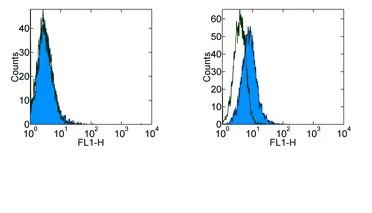
- Flow Cyt
Unknown
Flow Cytometry - FITC Anti-PD-1/CD279 antibody [RMP1-30] (AB93579)
Staining of 3-day unstimulated (left) and 3-day ConA activated (right) BALB/c splenocytes with 0.25 µg of FITC Rat IgG2b isotype control (open histogram), or 0.25 µg of ab93579 (colored histogram). Total viable cells were used for analysis.
関連する標識済み抗体及び組成の異なる製品 (1)
-
450 violetFluor™ 450
violetFluor™ 450 Anti-PD-1/CD279 antibody [RMP1-30]
代替製品
Primary Antibodies
AB137132
Anti-PD-1/CD279 antibody [EPR4877(2)]
BOND RX™ Validated|20ul selling size|RabMAb|Recombinant

- 5
- 5
Primary Antibodies
AB186928
Anti-PD-1/CD279 antibody [EPR4877(2)] - BSA and Azide free
BOND RX™ Validated|RabMAb|Recombinant
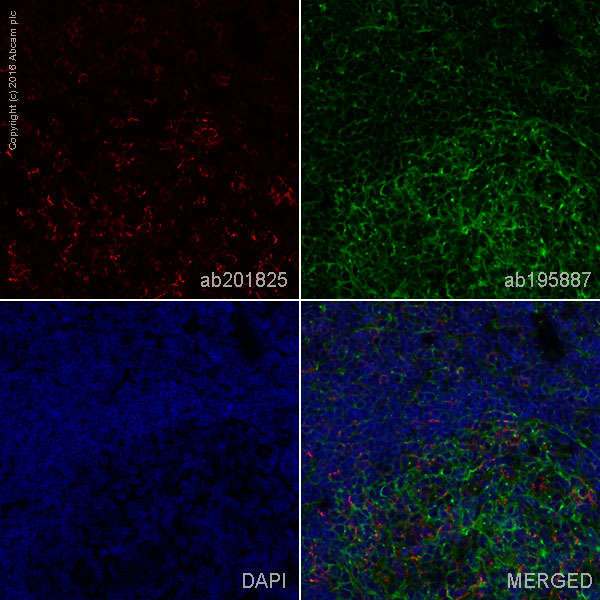
- 1
- 1
Primary Antibodies
AB201825
Alexa Fluor® 647 Anti-PD-1/CD279 antibody [EPR4877(2)]
RabMAb|Recombinant
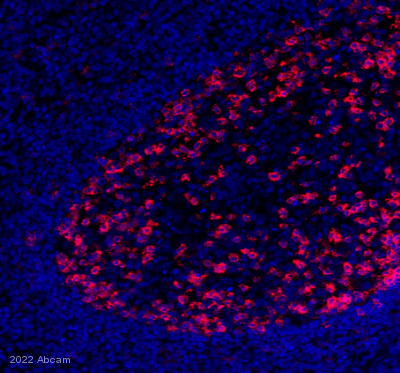
- 5
- 1
Primary Antibodies
AB206378
Anti-PD-1/CD279 (phospho Y248) antibody [EPR19821]
20ul selling size|RabMAb|Recombinant|Trial Size

- 0
- 0
Primary Antibodies
AB214421
Anti-PD-1/CD279 antibody [EPR20665]
20ul selling size|RabMAb|Recombinant
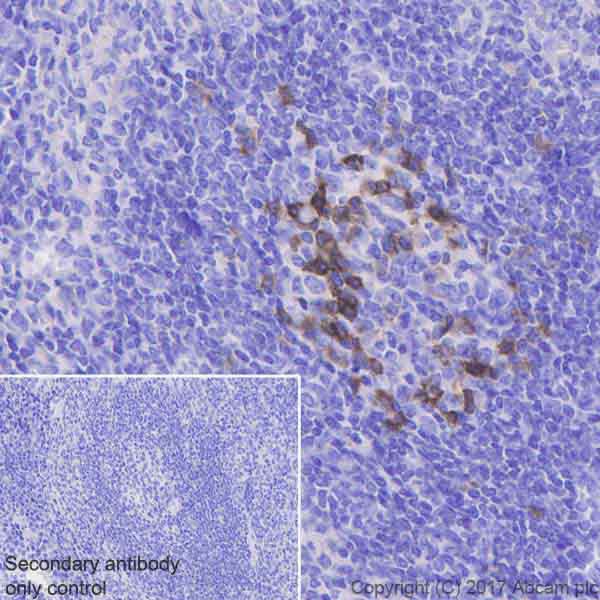
- 4
- 3
Primary Antibodies
AB228857
Anti-PD-1/CD279 antibody [EPR20665] - BSA and Azide free
RabMAb|Recombinant
- 4
- 2
Primary Antibodies
AB234960
Anti-PD-1/CD279 (phospho Y248) antibody [EPR19821] - BSA and Azide free
RabMAb|Recombinant

- 0
- 0
組合せ製品
Primary Antibodies
AB237365
Alexa Fluor® 647 Anti-CD8 alpha antibody [EPR21769]
BOND RX™ Validated|RabMAb|Recombinant

- 0
- 0
Reactivity data
製品の詳細
出荷温度及び保存条件
製品の状態
精製方法
バッファー組成
出荷温度
短期保存温度
長期保存温度
補足情報
This supplementary information is collated from multiple sources and compiled automatically.
Biological function summary
PD1 serves as an inhibitory receptor acting as a checkpoint in the immune system. It becomes part of an immune-suppressive complex when it binds with its ligands PD-L1 or PD-L2 which are expressed on various cell types including some tumor cells. This interaction suppresses the proliferation of T cells and cytokine production contributing to immune homeostasis. By controlling T cell activity PD1 limits autoimmunity but can also reduce the immune system's capability to attack cancer cells.
Pathways
PD1 functions in the immune checkpoint pathway a critical regulatory circuit in immune regulation. The engagement of PD1 with its ligands initiates a cascade that inhibits the function and proliferation of T cells through downstream SHP-2 phosphatase activity. This pathway frequently involves other regulatory proteins like CTLA-4 and is an important mechanism by which the body modulates immune responses. Related pathways often intersect with those involving T cell receptor signaling and contribute to the overall modulation of immune activity.
製品プロトコール
- Visit the General protocols
- Visit the Troubleshooting
ターゲットの情報
文献 (1)
Recent publications for all applications. Explore the full list and refine your search
Journal of immunology (Baltimore, Md. : 1950) 172:3994-8 PubMed15034010
2004
Applications
Unspecified application
Species
Unspecified reactive species
Abcam product promise
Please note: All products are 'FOR RESEARCH USE ONLY. NOT FOR USE IN DIAGNOSTIC OR THERAPEUTIC PROCEDURES'.
For licensing inquiries, please contact partnerships@abcam.com