JavaScript is disabled in your browser. Please enable JavaScript to view this website.
AB193214

Anti-Eph receptor A4/SEK (phospho Y596) 抗体

Anti-Eph receptor A4/SEK (phospho Y596) antibody

Be the first to review this product! Submit a review

|

(2 Publications)

Rabbit Polyclonal Eph receptor A4/SEK phospho Y596 antibody. Suitable for WB and reacts with Human samples. Cited in 2 publications. Immunogen corresponding to Synthetic Peptide within Human EPHA4 pY596.

別名を表示する

HEK8, SEK, TYRO1, EPHA4, Ephrin type-A receptor 4, EPH-like kinase 8, Tyrosine-protein kinase TYRO1, Tyrosine-protein kinase receptor SEK, EK8, hEK8
1 Images
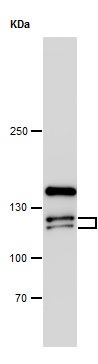
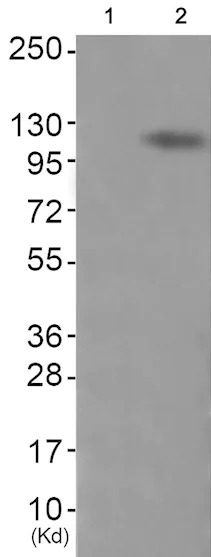
Western blot - Anti-Eph receptor A4/SEK (phospho Y596) antibody (AB193214)
  • WB

Supplier Data

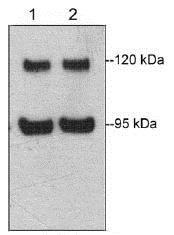
Western blot - Anti-Eph receptor A4/SEK (phospho Y596) antibody (AB193214)

All lanes:

Western blot - Anti-Eph receptor A4/SEK (phospho Y596) antibody (ab193214) at 1/500 dilution

Lane 1:

Jurkat cell extract with antigen-specific peptide

Lane 2:

Jurkat cell extract

Predicted band size: 110 kDa

false

Key facts

宿主種

Rabbit

クローン性

Polyclonal

アイソタイプ

IgG

キャリアフリー

No

交差種

Human

アプリケーション

WB

applications

免疫原

Synthetic Peptide within Human EPHA4 pY596. The exact immunogen used to generate this antibody is proprietary information.

P54764

Reactivity data

{ "title": "Reactivity Data", "filters": { "stats": ["", "Species", "Dilution Info", "Notes"], "tabs": { "all-applications": {"fullname" : "All Applications", "shortname": "All Applications"}, "WB" : {"fullname" : "Western blot", "shortname":"WB"} }, "product-promise": { "all": "all", "testedAndGuaranteed": "tested", "guaranteed": "expected", "predicted": "predicted", "notRecommended": "not-recommended" } }, "values": { "Human": { "WB-species-checked": "testedAndGuaranteed", "WB-species-dilution-info": "1/500 - 1/1000", "WB-species-notes": "<p></p>" }, "Mouse": { "WB-species-checked": "predicted", "WB-species-dilution-info": "", "WB-species-notes": "" } } }

出荷温度及び保存条件

製品の状態
Liquid
精製方法
Affinity purification Immunogen
精製に関する特記事項
ab193214 was purified by affinity-chromatography using an-epitope specific phosphopeptide. Non-phosphopeptide specific antibodies were removed by chromatography using non-phosphopeptide.
バッファー組成
pH: 7.4 Preservative: 0.02% Sodium azide Constituents: PBS, 50% Glycerol (glycerin, glycerine), 0.87% Sodium chloride
出荷温度
Blue Ice
短期保存期間
1-2 weeks
短期保存温度
+4°C
長期保存温度
-20°C
分注に関する情報
Upon delivery aliquot
保管に関する情報
Avoid freeze / thaw cycle

補足情報

This supplementary information is collated from multiple sources and compiled automatically.

The Eph receptor A4 also known as SEK is a type of ephrin receptor that plays a significant role in cellular communication. It belongs to the Eph protein family and it is classified as a receptor tyrosine kinase. EphA4 has an approximate molecular mass of 110 kDa. It is mainly expressed in the nervous system although it can also be found in other tissues including the vascular and skeletal systems. This receptor has an important function in mediating signal transduction upon binding with their ephrin ligands.
Biological function summary

EphA4 plays a critical role in developmental processes particularly in the development of the nervous system and vascular patterning. The receptor engages in bidirectional signaling meaning that signals are transmitted not only into the receptor-expressing cells but also into the ephrin-expressing ones. EphA4 is part of complexes that can include multiple receptor and ephrin molecules which allows for the modulation of cell adhesion and migration. These processes are essential for forming tissue boundaries and axon guidance.

Pathways

EphA4 signaling is involved in two significant pathways: the Eph/ephrin signaling pathway and the cytoskeletal remodeling pathway. In the Eph/ephrin signaling pathway EphA4 interacts with various ephrin ligands leading to changes in cellular architecture and behavior. The cytoskeletal remodeling pathway involves interactions with proteins such as Rho and Ras which coordinate cytoskeletal changes necessary for cell movement and positioning. These pathways are integral to processes like axon guidance and cell migration underpinning EphA4’s role in development.

EphA4 has been implicated in conditions such as amyotrophic lateral sclerosis (ALS) and cancer metastasis. In the context of ALS EphA4's interaction with proteins like RhoA affects axonal repair and neuron survival contributing to the disease's progression. Regarding cancer EphA4 influences tumor growth and spread with its signaling pathways impacting cellular invasion and angiogenesis. Understanding these aspects of EphA4 activity assists in developing therapeutic strategies for these disorders.

製品プロトコール

For this product, it's our understanding that no specific protocols are required. You can visit:

ターゲットの情報

Receptor tyrosine kinase which binds membrane-bound ephrin family ligands residing on adjacent cells, leading to contact-dependent bidirectional signaling into neighboring cells. The signaling pathway downstream of the receptor is referred to as forward signaling while the signaling pathway downstream of the ephrin ligand is referred to as reverse signaling. Highly promiscuous, it has the unique property among Eph receptors to bind and to be physiologically activated by both GPI-anchored ephrin-A and transmembrane ephrin-B ligands including EFNA1 and EFNB3. Upon activation by ephrin ligands, modulates cell morphology and integrin-dependent cell adhesion through regulation of the Rac, Rap and Rho GTPases activity. Plays an important role in the development of the nervous system controlling different steps of axonal guidance including the establishment of the corticospinal projections. May also control the segregation of motor and sensory axons during neuromuscular circuit development. In addition to its role in axonal guidance plays a role in synaptic plasticity. Activated by EFNA1 phosphorylates CDK5 at 'Tyr-15' which in turn phosphorylates NGEF regulating RHOA and dendritic spine morphogenesis. In the nervous system, also plays a role in repair after injury preventing axonal regeneration and in angiogenesis playing a role in central nervous system vascular formation. Additionally, its promiscuity makes it available to participate in a variety of cell-cell signaling regulating for instance the development of the thymic epithelium. During development of the cochlear organ of Corti, regulates pillar cell separation by forming a ternary complex with ADAM10 and CADH1 which facilitates the cleavage of CADH1 by ADAM10 and disruption of adherens junctions (By similarity). Phosphorylates CAPRIN1, promoting CAPRIN1-dependent formation of a membraneless compartment (By similarity).
See full target information EPHA4 pY596

文献 (2)

Recent publications for all applications. Explore the full list and refine your search

Nucleic acids research 53: PubMed40042815

2025

Deletion of Xist repeat B disrupts cell cycle and asymmetric cell division through Usp9x hyperactivation in mice.

Applications

Unspecified application

Species

Unspecified reactive species

Mingming Liang,Lichao Zhang,Heng Gong,Li Yang,Haijun Wang,Na Song,Liangxue Lai,Wanhua Xie,Zhanjun Li

Breast cancer research : BCR 21:88 PubMed31387614

2019

Vasculogenic mimicry is associated with trastuzumab resistance of HER2-positive breast cancer.

Applications

Unspecified application

Species

Unspecified reactive species

Ami Hori,Masafumi Shimoda,Yasuto Naoi,Naofumi Kagara,Tomonori Tanei,Tomohiro Miyake,Kenzo Shimazu,Seung Jin Kim,Shinzaburo Noguchi
View all publications

Abcam product promise

当社は、高品質な試薬を通じてお客様の研究を力強くサポートすることをお約束いたします。ご使用いただく各段階で、常にお客様をサポートできる体制を整えております。万が一、製品が期待通りに機能しない場合は、「Abcam Product Promise」による当社保証制度に基づき、安心してご利用いただけます。
保証に関する詳細については利用規約をご確認ください。

Please note: All products are 'FOR RESEARCH USE ONLY. NOT FOR USE IN DIAGNOSTIC OR THERAPEUTIC PROCEDURES'.

For licensing inquiries, please contact partnerships@abcam.com