Anti-EGFR (deleted E746 + L747 + R748 + E749 + A750) 抗体 [SP111]
Anti-EGFR (deleted E746 + L747 + R748 + E749 + A750) antibody [SP111]
- RabMAb
- Recombinant
- Lab Essentials
- 20ul selling size
- 詳細を見る
Be the first to review this product! Submit a review
|
(1 Publication)
Rabbit Recombinant Monoclonal EGFR deleted 746-750 + L747 + R748 + E749 + A750 antibody. Suitable for Flow Cyt, WB, IHC-P, ICC/IF and reacts with Human samples. Cited in 1 publication.
別名を表示する
ERBB, ERBB1, HER1, EGFR, Epidermal growth factor receptor, Proto-oncogene c-ErbB-1, Receptor tyrosine-protein kinase erbB-1
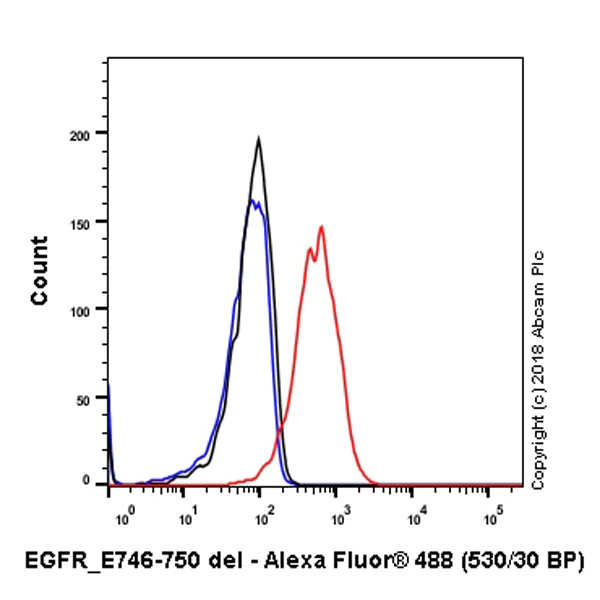
- Flow Cyt
Unknown
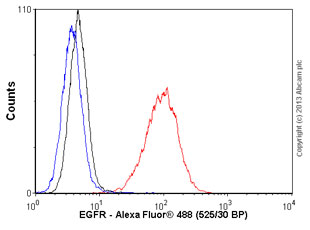
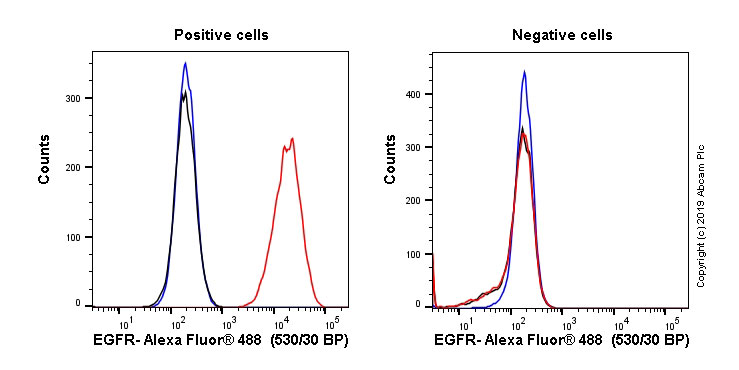
Flow Cytometry - Anti-EGFR (deleted E746 + L747 + R748 + E749 + A750) antibody [SP111] (AB227737)
Flow Cytometry analysis of HCC827(Human lung adenocarcinoma epithelial cell) cells labeling EGFR with purified ab227737 at 1 : 400 dilution (1.02 µg/ml) Red. Cells were fixed with 4% paraformaldehyde . A Goat anti rabbit IgG (Alexa Fluor® 488, ab150077) secondary antibody was used at 1 : 2000 dilution. Isotype control - Rabbit monoclonal IgG (ab172730) / Black. Unlabeled control - Unlabelled cells / Blue.
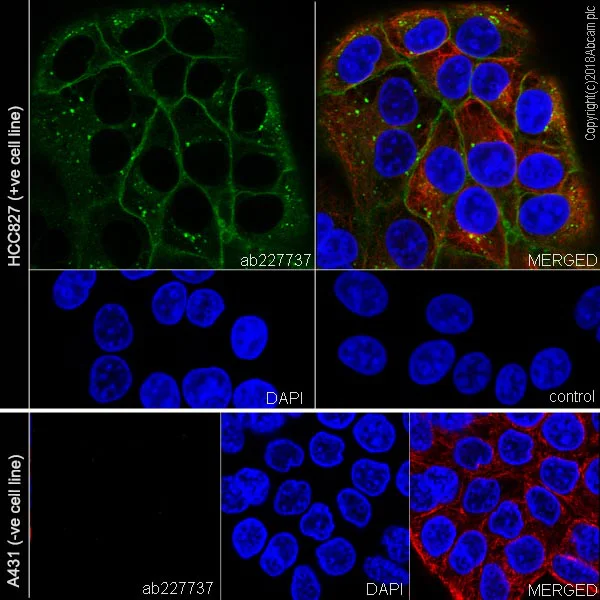
- ICC/IF
Unknown
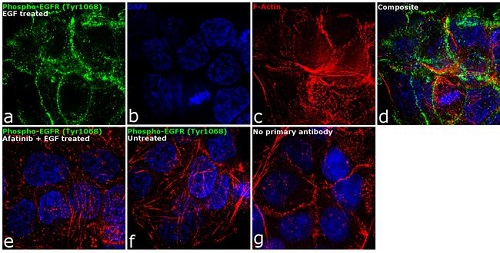
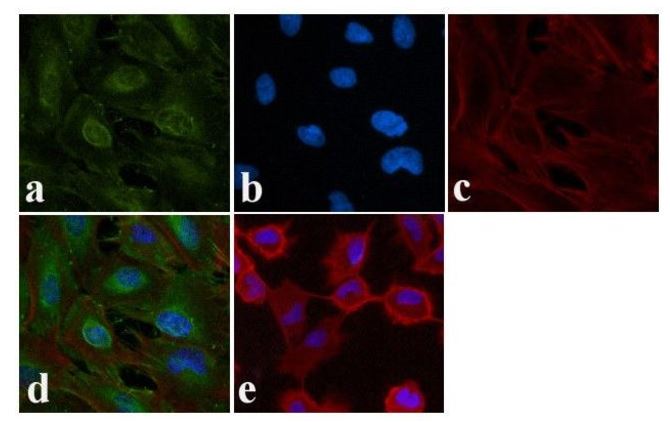
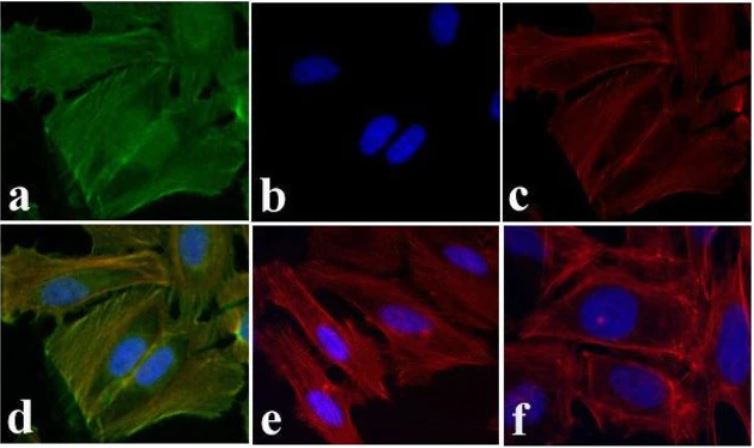
Immunocytochemistry/ Immunofluorescence - Anti-EGFR (deleted E746 + L747 + R748 + E749 + A750) antibody [SP111] (AB227737)
Immunocytochemistry/ Immunofluorescence analysis of HCC827(human lung adenocarcinoma epithelial cell), negative control :
A431(human epidermoid carcinoma epithelial cell) cells labeling EGFR with purified ab227737 at 1 : 100 (4.1 µg/ml). Cells were fixed in 100% Methanol and permeabilized with None. Cells were counterstained with ab195889 Anti-alpha Tubulin antibody [DM1A] - Microtubule Marker (Alexa Fluor® 594) 1 : 200 (2.5 µg/ml). Goat anti rabbit IgG (Alexa Fluor® 488, ab150077) was used as the secondary antibody at 1 : 1000 (2 µg/ml) dilution. DAPI nuclear counterstain. PBS instead of the primary antibody was used as the secondary antibody only control.
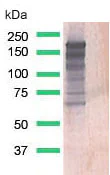
- WB
Supplier Data
Western blot - Anti-EGFR (deleted E746 + L747 + R748 + E749 + A750) antibody [SP111] (AB227737)
All lanes:
Western blot - Anti-EGFR (deleted E746 + L747 + R748 + E749 + A750) antibody [SP111] (ab227737) at 1/300 dilution
All lanes:
HCC827 cell lysate
Predicted band size: 134 kDa
false
関連する標識済み抗体及び組成の異なる製品 (8)
-
Anti-EGFR (deleted E746 + L747 + R748 + E749 + A750) antibody [SP111] - BSA and Azide free
-
660 APC
APC Anti-EGFR (deleted E746 + L747 + R748 + E749 + A750) antibody [SP111]
-
519 Alexa Fluor® 488
Alexa Fluor® 488 Anti-EGFR (deleted E746 + L747 + R748 + E749 + A750) antibody [SP111]
-
565 Alexa Fluor® 555
Alexa Fluor® 555 Anti-EGFR (deleted E746 + L747 + R748 + E749 + A750) antibody [SP111]
-
617 Alexa Fluor® 594
Alexa Fluor® 594 Anti-EGFR (deleted E746 + L747 + R748 + E749 + A750) antibody [SP111]
-
665 Alexa Fluor® 647
Alexa Fluor® 647 Anti-EGFR (deleted E746 + L747 + R748 + E749 + A750) antibody [SP111]
-
775 Alexa Fluor® 750
Alexa Fluor® 750 Anti-EGFR (deleted E746 + L747 + R748 + E749 + A750) antibody [SP111]
-
578 PE
PE Anti-EGFR (deleted E746 + L747 + R748 + E749 + A750) antibody [SP111]
代替製品
Primary Antibodies
AB231
20ul selling size|Lab Essentials|Recombinant
- 4
- 7
組合せ製品
Primary Antibodies
AB40815
Anti-EGFR (phospho Y1068) antibody [EP774Y]
RabMAb|Recombinant|Lab Essentials|20ul selling size

- 4
- 14
Primary Antibodies
AB16661
Anti-Progesterone Receptor antibody [SP2]
BOND RX™ Validated|20ul selling size|RabMAb|Advanced Validation|Recombinant
- 4
- 4
Primary Antibodies
AB216574
Anti-Met (c-Met) antibody [EPR19067]
20ul selling size|RabMAb|Recombinant|KO Validated
- 0
- 0
Primary Antibodies
AB16667
BOND RX™ Validated|KO Validated|RabMAb|Advanced Validation|Recombinant|20ul selling size

- 5
- 133
Reactivity data
製品の詳細
Patented technology
Our RabMAb® technology is a patented hybridoma-based technology for making rabbit monoclonal antibodies. For details on our patents, please refer to RabMAb® patents.
What are the advantages of a recombinant monoclonal antibody?
This product is a recombinant monoclonal antibody, which offers several advantages including:
- - High batch-to-batch consistency and reproducibility
- - Improved sensitivity and specificity
- - Long-term security of supply
- - Animal-free batch production
For more information, read more on recombinant antibodies.
出荷温度及び保存条件
製品の状態
精製方法
バッファー組成
出荷温度
短期保存期間
短期保存温度
長期保存温度
分注に関する情報
保管に関する情報
補足情報
This supplementary information is collated from multiple sources and compiled automatically.
Biological function summary
The EGFR protein plays an important role in cellular communication and signaling processes. EGFR pairs with other receptor family members to form active dimers or even higher-order complexes which in turn initiate intracellular signaling cascades. Through these complexes EGFR influences many processes including cell differentiation and repair. This function of EGFR makes it an integral part of mammalian biology affecting how cells respond to their environment by mediating changes in gene expression.
Pathways
EGFR is a central player in the MAPK and PI3K/Akt signaling pathways. Alongside other protein partners like KRAS and PI3 kinase it contributes to transmitting signals from the cell surface to the nucleus affecting gene transcription and cell behavior. These pathways are important for normal cell growth and division and aberrations in these pathways can lead to excessive or insufficient cell proliferation.
製品プロトコール
- Visit the General protocols
- Visit the Troubleshooting
ターゲットの情報
文献 (1)
Recent publications for all applications. Explore the full list and refine your search
Bioengineered 13:5126-5140 PubMed35170372
2022
Applications
Unspecified application
Species
Unspecified reactive species
Abcam product promise
Please note: All products are 'FOR RESEARCH USE ONLY. NOT FOR USE IN DIAGNOSTIC OR THERAPEUTIC PROCEDURES'.
For licensing inquiries, please contact partnerships@abcam.com