Anti-Cytochrome C 抗体 [6H2.B4]
Anti-Cytochrome C antibody [6H2.B4]
Be the first to review this product! Submit a review
|
(2 Publications)
Mouse Monoclonal Cytochrome C antibody. Suitable for Flow Cyt, ICC/IF and reacts with Human samples. Cited in 2 publications. Immunogen corresponding to Full Length Protein corresponding to Rat Cycs.
別名を表示する
CYC, CYCS, Cytochrome c
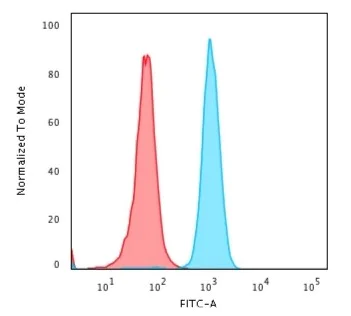
- Flow Cyt
Supplier Data
Flow Cytometry - Anti-Cytochrome C antibody [6H2.B4] (AB270249)
Flow cytometric analysis of PFA-fixed HeLa cells labeling cytochrome C using ab270249 at 2μg/106 cells followed by goat anti-mouse IgG-CF488 (Blue); goat anti-mouse IgG-CF488 is control (Red).
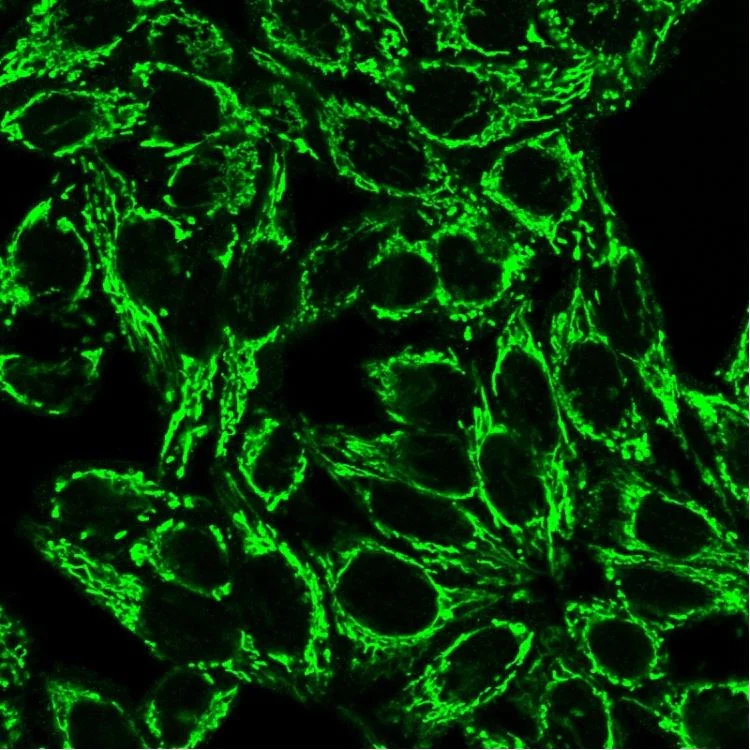
- ICC/IF
Supplier Data
Immunocytochemistry/ Immunofluorescence - Anti-Cytochrome C antibody [6H2.B4] (AB270249)
Immunofluorescence analysis of HeLa cells labeling Cytochrome C (Green) using ab270249 at 2μg/ml, followed by goat anti-mouse IgG-CF488 (Green).
代替製品
Primary Antibodies
AB133504
Anti-Cytochrome C antibody [EPR1327]
RabMAb|Recombinant|20ul selling size
- 5
- 2
Primary Antibodies
AB76237
Anti-Cytochrome C antibody [EP1326-80-5-4]
20ul selling size|RabMAb|Recombinant
- 0
- 0
Primary Antibodies
AB218312
Anti-Cytochrome C antibody [EPR1327] - BSA and Azide free
RabMAb|Recombinant
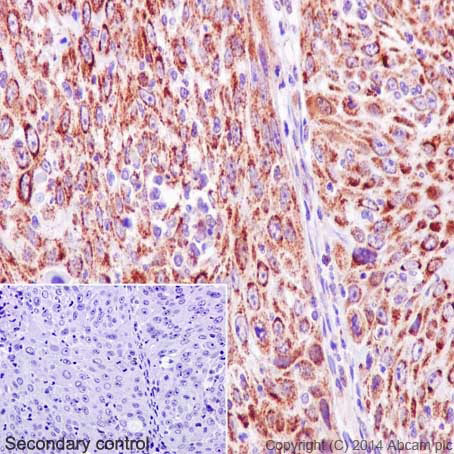
- 0
- 0
Primary Antibodies
AB247438
Anti-Cytochrome C antibody [EP1326-80-5] - BSA and Azide free
BOND RX™ Validated|RabMAb|Advanced Validation|Recombinant
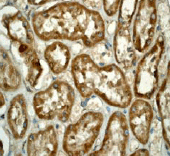
- 0
- 0
Primary Antibodies
AB76107
Anti-Cytochrome C antibody [EP1326-80-5]
BOND RX™ Validated|20ul selling size|RabMAb|Advanced Validation|Recombinant
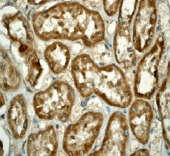
- 4
- 4
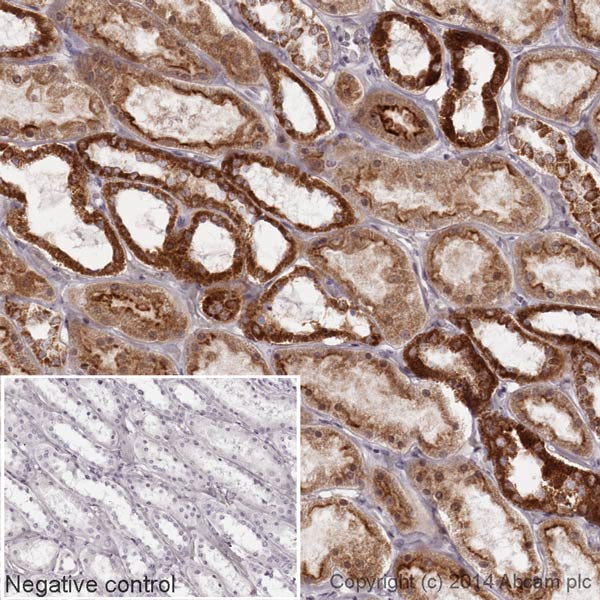
組合せ製品
Primary Antibodies
AB177487
Anti-NeuN antibody [EPR12763] - Neuronal Marker
BOND RX™ Validated|RabMAb|Recombinant|Lab Essentials|20ul selling size|Advanced Validation
- 5
- 76

Primary Antibodies
AB281588
Anti-MAP2 antibody [RM1010] - Neuronal Marker
RabMAb|Recombinant|Lab Essentials|20ul selling size
- 0
- 0
Primary Antibodies
AB184787
Anti-Caspase-3 antibody [EPR18297]
20ul selling size|RabMAb|Recombinant|KO Validated
- 3
- 3
Reactivity data
出荷温度及び保存条件
製品の状態
精製方法
精製に関する特記事項
バッファー組成
出荷温度
短期保存期間
短期保存温度
長期保存温度
分注に関する情報
保管に関する情報
補足情報
This supplementary information is collated from multiple sources and compiled automatically.
Biological function summary
Cytochrome c contributes to the process of oxidative phosphorylation within mitochondria. It is not only an important electron carrier but it also plays a significant role in apoptosis. In the event of cellular stress cytochrome c releases into the cytosol and forms part of the apoptosome complex. This apoptosome activation leads to the caspase cascade driving programmed cell death. Therefore cytochrome C serves as both a mediator of energy production and a regulator of apoptosis.
Pathways
Cytochrome c is integral to the mitochondrial electron transport chain and apoptotic pathways. It interacts with proteins in these pathways such as cytochrome c oxidase in oxidative phosphorylation and Apaf-1 during apoptosis. The electron transport chain's function is dependent on the efficient transfer of electrons facilitated by cytochrome c ensuring ATP production in cellular respiration.
製品プロトコール
- Visit the General protocols
- Visit the Troubleshooting
ターゲットの情報
文献 (2)
Recent publications for all applications. Explore the full list and refine your search
Hepatology communications 9: PubMed40366121
2025
Applications
Unspecified application
Species
Unspecified reactive species
International journal of stem cells 18:49-58 PubMed38973150
2024
Applications
Unspecified application
Species
Unspecified reactive species
Abcam product promise
Please note: All products are 'FOR RESEARCH USE ONLY. NOT FOR USE IN DIAGNOSTIC OR THERAPEUTIC PROCEDURES'.
For licensing inquiries, please contact partnerships@abcam.com