JavaScript is disabled in your browser. Please enable JavaScript to view this website.
AB2399

Anti-cIAP1 抗体

Anti-cIAP1 antibody

Be the first to review this product! Submit a review

|

(17 Publications)

Rabbit Polyclonal cIAP1 antibody. Suitable for WB and reacts with Human samples. Cited in 17 publications. Immunogen corresponding to Synthetic Peptide within Human BIRC2.

別名を表示する

API1, MIHB, RNF48, BIRC2, Baculoviral IAP repeat-containing protein 2, Cellular inhibitor of apoptosis 1, IAP homolog B, Inhibitor of apoptosis protein 2, RING finger protein 48, RING-type E3 ubiquitin transferase BIRC2, TNFR2-TRAF-signaling complex protein 2, C-IAP1, hIAP-2, hIAP2
1 Images
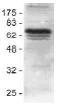
Western blot - Anti-cIAP1 antibody (AB2399)
  • WB

Unknown

Western blot - Anti-cIAP1 antibody (AB2399)

All lanes:

Western blot - Anti-cIAP1 antibody (ab2399)

All lanes:

Jurkat Cell lysate

Predicted band size: 70 kDa

Observed band size: 70 kDa

false

Key facts

宿主種

Rabbit

クローン性

Polyclonal

アイソタイプ

IgG

キャリアフリー

No

交差種

Human

アプリケーション

WB

applications

免疫原

Synthetic Peptide within Human BIRC2. The exact immunogen used to generate this antibody is proprietary information.

Q13490

Reactivity data

{ "title": "Reactivity Data", "filters": { "stats": ["", "Species", "Dilution Info", "Notes"], "tabs": { "all-applications": {"fullname" : "All Applications", "shortname": "All Applications"}, "WB" : {"fullname" : "Western blot", "shortname":"WB"} }, "product-promise": { "all": "all", "testedAndGuaranteed": "tested", "guaranteed": "expected", "predicted": "predicted", "notRecommended": "not-recommended" } }, "values": { "Human": { "WB-species-checked": "testedAndGuaranteed", "WB-species-dilution-info": "1-4 µg/mL", "WB-species-notes": "<p></p>" } } }

製品の詳細

This product is manufactured by BioVision, an Abcam company and was previously called 3180 Anti-cIAP-1 (HIAP-2) Polyclonal Antibody.

出荷温度及び保存条件

製品の状態
Liquid
精製方法
Affinity purification Immunogen
バッファー組成
Preservative: 0.03% Proclin 300 Constituents: PBS, 30% Glycerol (glycerin, glycerine), 0.5% BSA, 0.015% EDTA
出荷温度
Blue Ice
長期保存温度
-20°C
分注に関する情報
Upon delivery aliquot
保管に関する情報
Avoid freeze / thaw cycle

補足情報

This supplementary information is collated from multiple sources and compiled automatically.

The cellular inhibitor of apoptosis protein 1 (cIAP1) also referred to as BIRC2 is a protein with a molecular mass of approximately 70 kDa. cIAP1 belongs to the inhibitor of apoptosis (IAP) family and contains several distinct domains important for its function including three Baculoviral IAP Repeat (BIR) domains a ubiquitin-associated (UBA) domain and a really interesting new gene (RING) domain. This protein is expressed in various tissues but predominantly in cells engaged in apoptosis regulation such as immune cells.
Biological function summary

CIAP1 plays an important role in regulating apoptosis by inhibiting the activity of certain caspases including caspase-3 and caspase-7. It is often part of larger protein complexes that include other members of the IAP family such as cIAP2. By binding directly to tumor necrosis factor receptor-associated factors (TRAFs) cIAP1 helps modulate signaling pathways that determine cell survival or death contributing to cellular homeostasis.

Pathways

CIAP1 is intricately involved in the NF-κB signaling pathway and the TNF receptor signaling pathway. Its interaction with TRAFs links it to these critical pathways helping to control inflammatory and immune responses. Other proteins related to cIAP1 through these pathways include RIP1 and TRAF2 both important for transmitting signals that affect cell fate decisions.

CIAP1 has significant implications in cancer and autoimmune disorders. In many cancers overexpression of cIAP1 contributes to uncontrolled cell proliferation by preventing apoptosis therefore aiding tumor survival and progression. Moreover its dysregulation is linked to disorders such as rheumatoid arthritis where improper cell death regulation leads to tissue damage. cIAP1 interacts with and regulates the activity of the protein XIAP in contributing to these diseases making it a potential target for therapeutic interventions.

製品プロトコール

For this product, it's our understanding that no specific protocols are required. You can visit:

ターゲットの情報

Multi-functional protein which regulates not only caspases and apoptosis, but also modulates inflammatory signaling and immunity, mitogenic kinase signaling, and cell proliferation, as well as cell invasion and metastasis. Acts as an E3 ubiquitin-protein ligase regulating NF-kappa-B signaling and regulates both canonical and non-canonical NF-kappa-B signaling by acting in opposite directions : acts as a positive regulator of the canonical pathway and suppresses constitutive activation of non-canonical NF-kappa-B signaling. The target proteins for its E3 ubiquitin-protein ligase activity include : RIPK1, RIPK2, RIPK3, RIPK4, CASP3, CASP7, CASP8, TRAF2, DIABLO/SMAC, MAP3K14/NIK, MAP3K5/ASK1, IKBKG/NEMO, IKBKE and MXD1/MAD1. Can also function as an E3 ubiquitin-protein ligase of the NEDD8 conjugation pathway, targeting effector caspases for neddylation and inactivation. Acts as an important regulator of innate immune signaling via regulation of Toll-like receptors (TLRs), Nodlike receptors (NLRs) and RIG-I like receptors (RLRs), collectively referred to as pattern recognition receptors (PRRs). Protects cells from spontaneous formation of the ripoptosome, a large multi-protein complex that has the capability to kill cancer cells in a caspase-dependent and caspase-independent manner. Suppresses ripoptosome formation by ubiquitinating RIPK1 and CASP8. Can stimulate the transcriptional activity of E2F1. Plays a role in the modulation of the cell cycle.
See full target information BIRC2

文献 (17)

Recent publications for all applications. Explore the full list and refine your search

Nature communications 13:5493 PubMed36123338

2022

Extracellular fibrinogen-binding protein released by intracellular Staphylococcus aureus suppresses host immunity by targeting TRAF3.

Applications

Unspecified application

Species

Unspecified reactive species

Xiaokai Zhang,Tingrong Xiong,Lin Gao,Yu Wang,Luxuan Liu,Tian Tian,Yun Shi,Jinyong Zhang,Zhuo Zhao,Dongshui Lu,Ping Luo,Weijun Zhang,Ping Cheng,Haiming Jing,Qiang Gou,Hao Zeng,Dapeng Yan,Quanming Zou

Oncology reports 47: PubMed35211761

2022

Inhibition of cIAP1 in the effective suppression of chemotherapy‑resistant hepatoblastoma.

Applications

Unspecified application

Species

Unspecified reactive species

Ryo Tsukada,Motonari Nomura,Takehisa Ueno,Hiroomi Okuyama

Cellular & molecular immunology 18:1512-1527 PubMed32024978

2020

The deubiquitinase OTUB1 augments NF-κB-dependent immune responses in dendritic cells in infection and inflammation by stabilizing UBC13.

Applications

Unspecified application

Species

Unspecified reactive species

Floriana Mulas,Xu Wang,Shanshan Song,Gopala Nishanth,Wenjing Yi,Anna Brunn,Pia-Katharina Larsen,Berend Isermann,Ulrich Kalinke,Antonio Barragan,Michael Naumann,Martina Deckert,Dirk Schlüter

Experimental hematology & oncology 9:1 PubMed31908904

2020

The SMAC mimetic LCL-161 selectively targets JAK2 mutant cells.

Applications

Unspecified application

Species

Unspecified reactive species

Brianna M Craver,Thanh Kim Nguyen,Jenny Nguyen,Hellen Nguyen,Christy Huynh,Sarah J Morse,Angela G Fleischman

Molecular cancer therapeutics 18:364-375 PubMed30530769

2018

Combined PPARγ Activation and XIAP Inhibition as a Potential Therapeutic Strategy for Ovarian Granulosa Cell Tumors.

Applications

Unspecified application

Species

Unspecified reactive species

Dilys T H Leung,Trang Nguyen,Edwina May Oliver,Juliana Matti,Maria Alexiadis,John Silke,Thomas W Jobling,Peter J Fuller,Simon Chu

Experimental and therapeutic medicine 14:4586-4594 PubMed29104666

2017

raises anticancer effect of geniposide in HSC-3 human oral squamous cell carcinoma cells.

Applications

Unspecified application

Species

Unspecified reactive species

Zhou Cheng,Hui Xu,Xiaoping Wang,Zuoye Liu

Nature communications 8:425 PubMed28871172

2017

The cytoplasmic nuclear receptor RARγ controls RIP1 initiated cell death when cIAP activity is inhibited.

Applications

Unspecified application

Species

Unspecified reactive species

Qing Xu,Siriporn Jitkaew,Swati Choksi,Chamila Kadigamuwa,Jianhui Qu,Moran Choe,Jonathan Jang,Chengyu Liu,Zheng-Gang Liu

Oncotarget 7:39458-39472 PubMed27223062

2016

Reactivation of Smac-mediated apoptosis in chronic lymphocytic leukemia cells: mechanistic studies of Smac mimetic.

Applications

Unspecified application

Species

Unspecified reactive species

Kumudha Balakrishnan,Min Fu,Francesco Onida,William G Wierda,Michael J Keating,Varsha Gandhi

Journal of Cancer 7:746-57 PubMed27076857

2016

Silencing of hERG1 Gene Inhibits Proliferation and Invasion, and Induces Apoptosis in Human Osteosarcoma Cells by Targeting the NF-κB Pathway.

Applications

WB

Species

Human

Wenrong Zeng,Qingjun Liu,Zhida Chen,Xinyu Wu,Yuanfu Zhong,Jin Wu

Oncotarget 6:8960-73 PubMed25840421

2015

Dual targeting of microtubule and topoisomerase II by α-carboline derivative YCH337 for tumor proliferation and growth inhibition.

Applications

Unspecified application

Species

Human

Jun-Mei Yi,Xiao-Fei Zhang,Xia-Juan Huan,Shan-Shan Song,Wei Wang,Qian-Ting Tian,Yi-Ming Sun,Yi Chen,Jian Ding,Ying-Qing Wang,Chun-Hao Yang,Ze-Hong Miao
View all publications

Abcam product promise

当社は、高品質な試薬を通じてお客様の研究を力強くサポートすることをお約束いたします。ご使用いただく各段階で、常にお客様をサポートできる体制を整えております。万が一、製品が期待通りに機能しない場合は、「Abcam Product Promise」による当社保証制度に基づき、安心してご利用いただけます。
保証に関する詳細については利用規約をご確認ください。

Please note: All products are 'FOR RESEARCH USE ONLY. NOT FOR USE IN DIAGNOSTIC OR THERAPEUTIC PROCEDURES'.

For licensing inquiries, please contact partnerships@abcam.com