Anti-CDKN2A/p14ARF 抗体
Anti-CDKN2A/p14ARF antibody
Be the first to review this product! Submit a review
|
(21 Publications)
Rabbit Polyclonal p14ARF antibody. Suitable for IHC-P, ICC/IF and reacts with Human samples. Cited in 21 publications.
別名を表示する
CDKN2, MLM, CDKN2A, Tumor suppressor ARF, Alternative reading frame, Cyclin-dependent kinase inhibitor 2A, p14ARF, ARF
- ICC/IF
Unknown
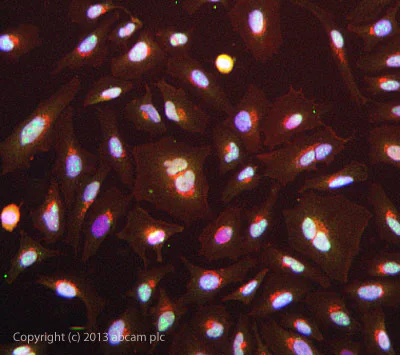
Immunocytochemistry/ Immunofluorescence - Anti-CDKN2A/p14ARF antibody (AB3642)
ICC/IF image of ab3642 stained HeLa cells. The cells were 4% formaldehyde fixed (10 min) and then incubated in 1%BSA / 10% normal goat serum / 0.3M glycine in 0.1% PBS-Tween for 1h to permeabilise the cells and block non-specific protein-protein interactions. The cells were then incubated with the antibody ab3642 at 1μg/ml overnight at +4°C. The secondary antibody (green) was DyLight® 488 goat anti- rabbit (ab96899) IgG (H+L) used at a 1/250 dilution for 1h. Alexa Fluor® 594 WGA was used to label plasma membranes (red) at a 1/200 dilution for 1h. DAPI was used to stain the cell nuclei (blue) at a concentration of 1.43μM.
- ICC/IF
Lab
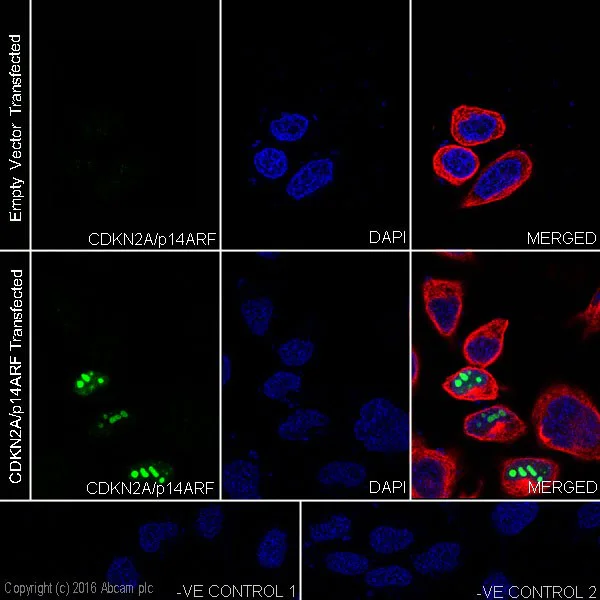
Immunocytochemistry/ Immunofluorescence - Anti-CDKN2A/p14ARF antibody (AB3642)
Confocal image showing nuclear staining increased after HeLa cells transfected with CDKN2A/p14ARF.
ICC/IF image of ab3642 stained HeLa cells. The cells were 4% paraformaldehyde fixed and then incubated in 0.1% trixtonX-100 to permeabilise the cells and block non-specific protein-protein interactions. The cells were then incubated with primary antibody ab3642 at a dilution of 1/250. An AlexaFluor®594 goat anti-mouse secondary IgG (ab150077) was used at a 1/1000 dilution. Anti-tubulin (ab7291) and an AlexaFluor®594 goat anti-mouse IgG (ab150120) were used as counterstains, both at a dilution of 1/1000. DAPI was used to stain the cell nuclei blue.
- IHC-P
AbReview2399****
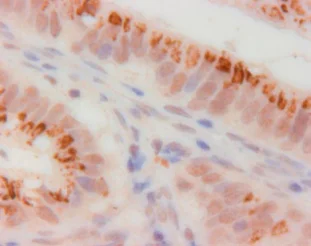
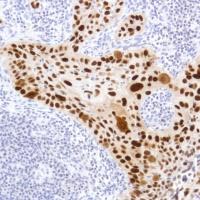
Immunohistochemistry (Formalin/PFA-fixed paraffin-embedded sections) - Anti-CDKN2A/p14ARF antibody (AB3642)
Immunohistochemical analysis of human cervical adenocarcinomas tissue labelling p14 with ab3642 at 1/200 dilution in PBS/1% BSA. Staining was most prominent in the nuclei but other staining, most likely aspecific staining, was observed in apical vacuoles.
Dilutions of 1/100, 1/200 and 1/400 were tested.
1/100 dilution was a bit too weak and 1/400 gave too much background so in the end the dilution of 1/200 in PBS containing 1% BSA was used.
Several heat induced antigen retrieval methods were used (citrate and EDTA-Tris, both in microwave and autoclave).
Image supplied as part of the review submitted by Joost van Galen.
代替製品
Primary Antibodies
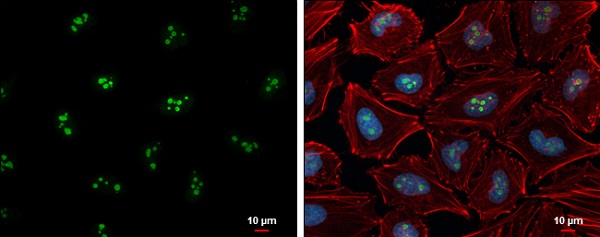
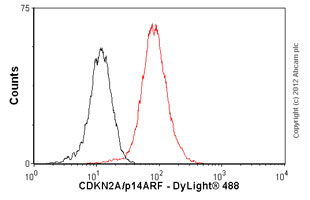
AB216602
Anti-CDKN2A/p14ARF antibody [SP271]
20ul selling size|RabMAb|Recombinant
- 0
- 0
Primary Antibodies
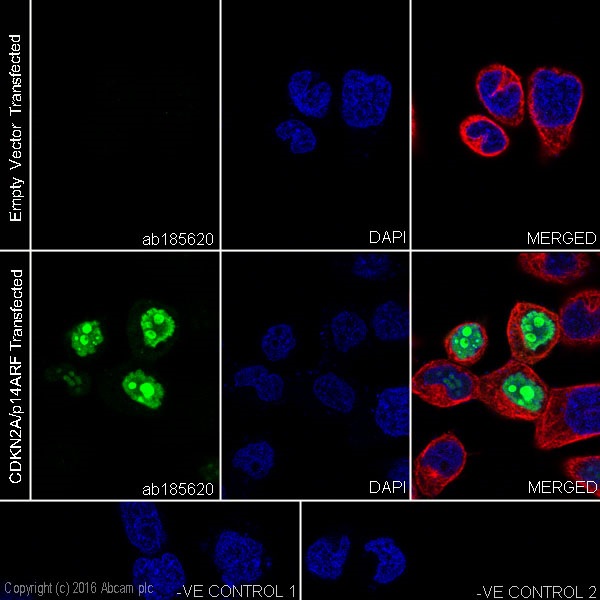
AB185620
Anti-CDKN2A/p14ARF antibody [EPR17878]
20ul selling size|RabMAb|Recombinant|KO Validated
- 0
- 0
Primary Antibodies
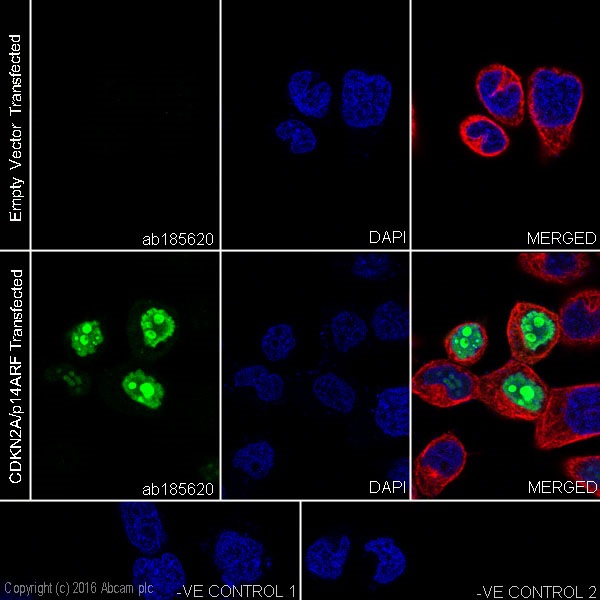
AB224273
Anti-CDKN2A/p14ARF antibody [EPR17878] - BSA and Azide free
RabMAb|Recombinant|KO Validated
- 1
- 1
Primary Antibodies
AB271999
Anti-CDKN2A/p14ARF antibody [SP271] - BSA and Azide free
RabMAb|Recombinant
- 0
- 0
組合せ製品
Primary Antibodies
AB109520
RabMAb|Recombinant|KO Validated|Lab Essentials|20ul selling size

- 5
- 17

Primary Antibodies
AB9485
Anti-GAPDH antibody - Loading Control
BOND RX™ Validated|Lab Essentials

- 5
- 88

Reactivity data
出荷温度及び保存条件
製品の状態
精製方法
バッファー組成
出荷温度
長期保存温度
分注に関する情報
保管に関する情報
製品プロトコール
- Visit the General protocols
- Visit the Troubleshooting
ターゲットの情報
文献 (21)
Recent publications for all applications. Explore the full list and refine your search
Cell biology and toxicology 40:24 PubMed38653919
2024
Applications
Unspecified application
Species
Unspecified reactive species
Medicine 102:e35531 PubMed37986346
2023
Applications
Unspecified application
Species
Unspecified reactive species
Chemical & pharmaceutical bulletin 70:885-891 PubMed36450587
2022
Applications
Unspecified application
Species
Unspecified reactive species
Frontiers in oncology 12:807597 PubMed36052249
2022
Applications
Unspecified application
Species
Unspecified reactive species
Cell death and differentiation : PubMed33504946
2021
Applications
Unspecified application
Species
Unspecified reactive species
Pigment cell & melanoma research 32:474-478 PubMed30672662
2019
Applications
Unspecified application
Species
Unspecified reactive species
Journal of ovarian research 12:4 PubMed30651135
2019
Applications
Unspecified application
Species
Unspecified reactive species
Oncogenesis 7:50 PubMed29904067
2018
Applications
Unspecified application
Species
Unspecified reactive species
Oncology letters 15:2795-2800 PubMed29435006
2018
Applications
Unspecified application
Species
Unspecified reactive species
Oncotarget 7:78095-78109 PubMed27801668
2016
Applications
WB
Species
Human
Abcam product promise
Please note: All products are 'FOR RESEARCH USE ONLY. NOT FOR USE IN DIAGNOSTIC OR THERAPEUTIC PROCEDURES'.
For licensing inquiries, please contact partnerships@abcam.com