Anti-CD81 抗体 [EPR21916]
Anti-CD81 antibody [EPR21916]
- 20ul selling size
- RabMAb
- Recombinant
- 詳細を見る
3
(3 Reviews)
|
(21 Publications)
Anti-CD81 antibody [EPR21916] (ab219209) is a rabbit monoclonal antibody detecting CD81 in Flow Cytometry, IHC-P, ICC/IF. Suitable for Human.
- Biophysical QC for unrivalled batch-batch consistency
- Over 10 publications
別名を表示する
CD81, TAPA1, TSPAN28, CD81 antigen, 26 kDa cell surface protein TAPA-1, Target of the antiproliferative antibody 1, Tetraspanin-28, Tspan-28
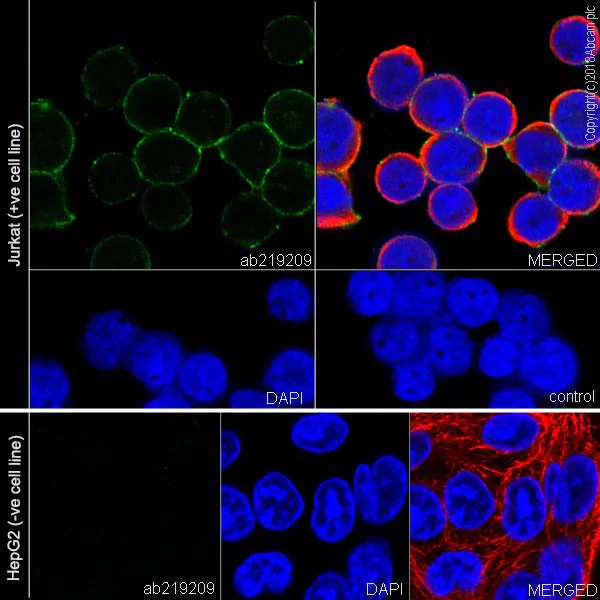
- ICC/IF
Supplier Data
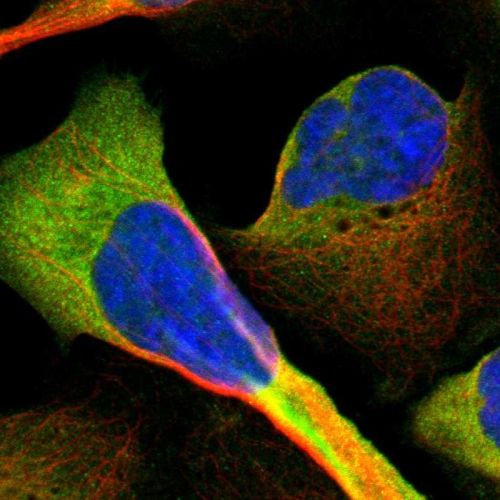
Immunocytochemistry/ Immunofluorescence - Anti-CD81 antibody [EPR21916] (AB219209)
Immunofluorescent analysis of 100% methanol-fixed Jurkat (human T cell leukemia cell line from peripheral blood) cells and HepG2 (human liver hepatocellular carcinoma cell line) cells labeling CD81 with ab219209 at 1/100 dilution followed by Goat Anti-Rabbit IgG H&L (Alexa Fluor® 488) (ab150077) secondary antibody at 1/1000 dilution (green).
Confocal image showing membranous staining in Jurkat cells.
Negative control : HepG2 (PMID : 16641285).
The nuclear counter stain is DAPI (blue). Tubulin is detected with Anti-alpha Tubulin antibody [DM1A] - Microtubule Marker (Alexa Fluor® 594) (ab195889) (red) at 1/200 dilution.
Secondary antibody only control : Used PBS instead of primary antibody, secondary antibody is Goat Anti-Rabbit IgG H&L (Alexa Fluor® 488) (ab150077) secondary antibody at 1/1000 dilution.
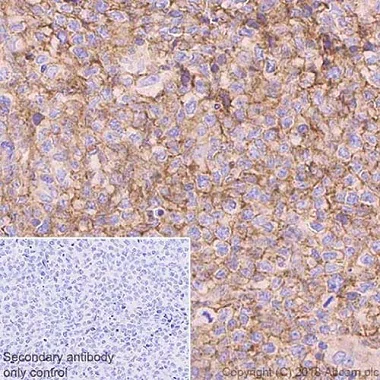
- IHC-P
Supplier Data
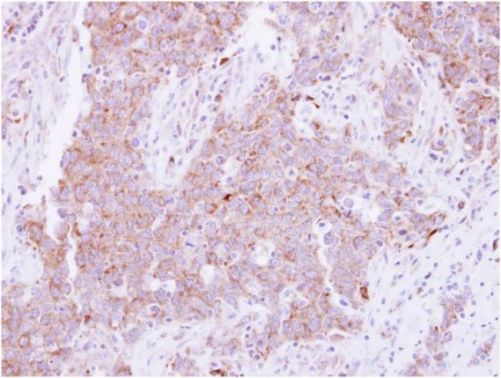
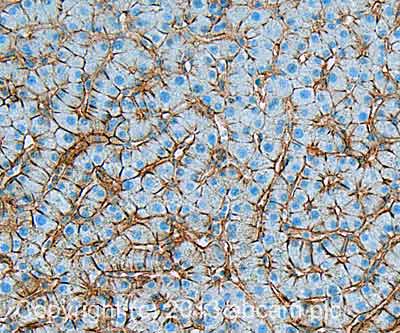
Immunohistochemistry (Formalin/PFA-fixed paraffin-embedded sections) - Anti-CD81 antibody [EPR21916] (AB219209)
Immunohistochemical analysis of paraffin-embedded human diffuse large B cell lymphoma tissue labeling CD81 with ab219209 at 1/1000 dilution, followed by Goat Anti-Rabbit IgG H&L (HRP) Ready to use. Positive staining on tumor cells of human diffuse large B cell lymphoma (PMID : 20004001). Counter stained with hematoxylin.
Secondary antibody only control : Used PBS instead of primary antibody, secondary antibody is Goat Anti-Rabbit IgG H&L (HRP) Ready to use.
Perform heat mediated antigen retrieval using ab93684 (Tris/EDTA buffer, pH 9.0).
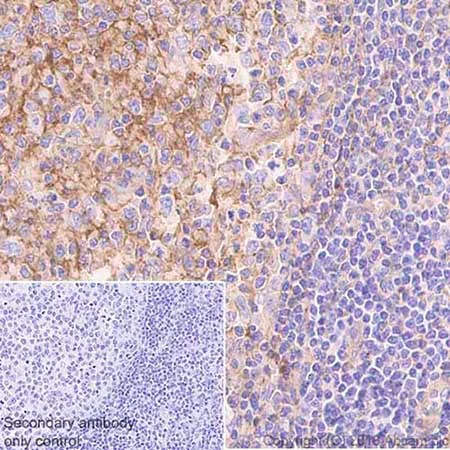
- IHC-P
Supplier Data
Immunohistochemistry (Formalin/PFA-fixed paraffin-embedded sections) - Anti-CD81 antibody [EPR21916] (AB219209)
Immunohistochemical analysis of paraffin-embedded human tonsil tissue labeling CD81 with ab219209 at 1/1000 dilution, followed by Goat Anti-Rabbit IgG H&L (HRP) Ready to use. Positive staining in the germinal center of human tonsil (PMID : 20004001). Counter stained with hematoxylin.
Secondary antibody only control : Used PBS instead of primary antibody, secondary antibody is Goat Anti-Rabbit IgG H&L (HRP) Ready to use.
Perform heat mediated antigen retrieval using ab93684 (Tris/EDTA buffer, pH 9.0).
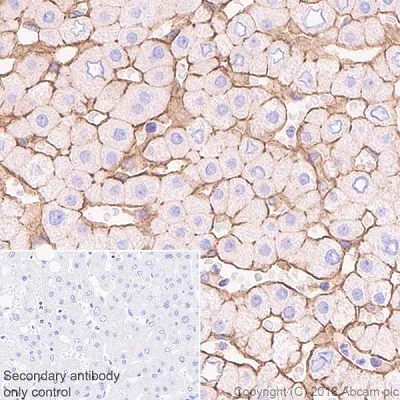
- IHC-P
Supplier Data
Immunohistochemistry (Formalin/PFA-fixed paraffin-embedded sections) - Anti-CD81 antibody [EPR21916] (AB219209)
Immunohistochemical analysis of paraffin-embedded human liver tissue labeling CD81 with ab219209 at 1/1000 dilution, followed by Goat Anti-Rabbit IgG H&L (HRP) Ready to use. Mainly membranous staining in human liver (PMID : 19489072). Counter stained with hematoxylin.
Secondary antibody only control : Used PBS instead of primary antibody, secondary antibody is Goat Anti-Rabbit IgG H&L (HRP) Ready to use.
Perform heat mediated antigen retrieval using ab93684 (Tris/EDTA buffer, pH 9.0).
- Flow Cyt
Supplier Data
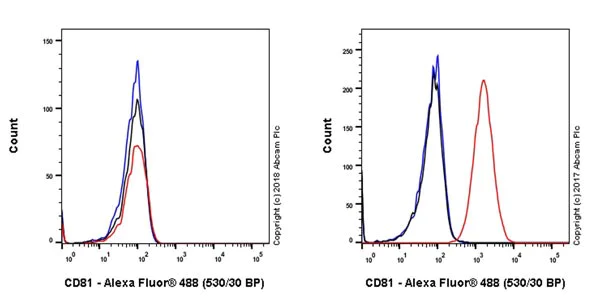
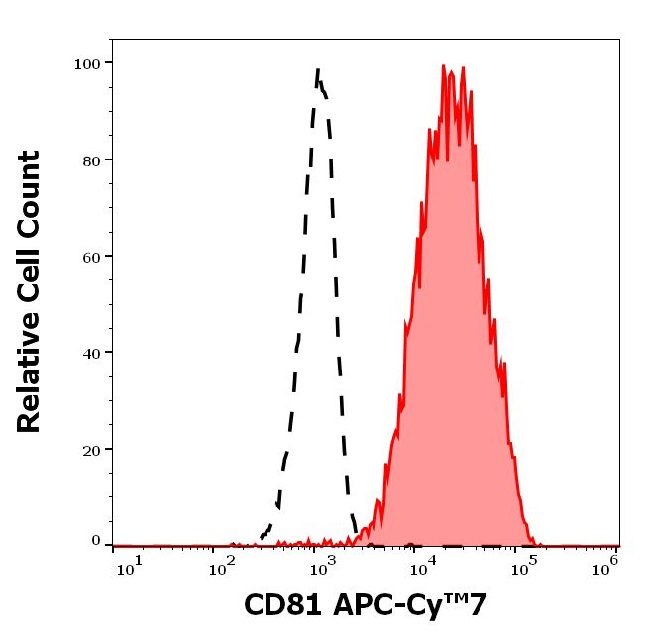
Flow Cytometry - Anti-CD81 antibody [EPR21916] (AB219209)
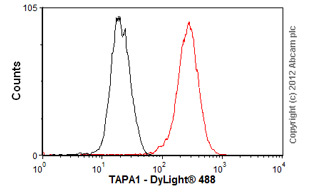
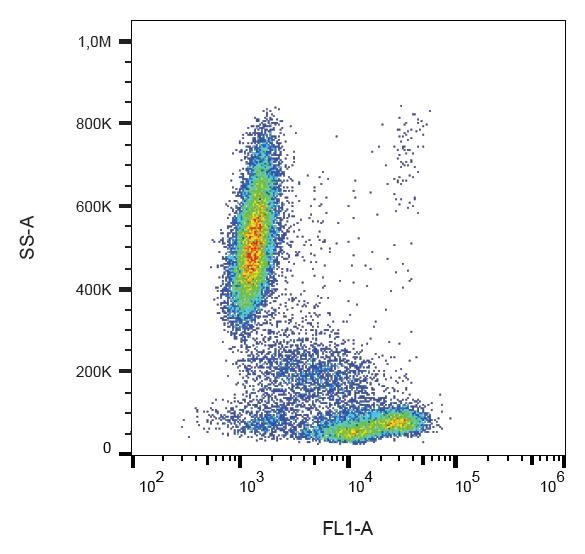
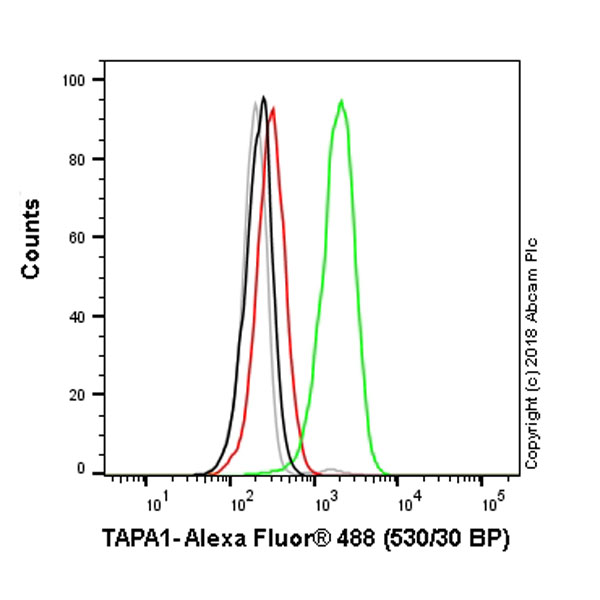
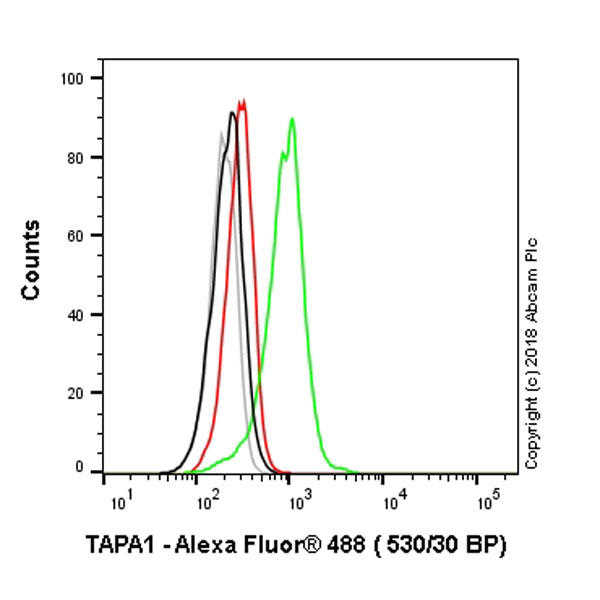
Flow cytometric analysis of Jurkat (human T cell leukemia cell line from peripheral blood) cells and HepG2 (human liver hepatocellular carcinoma cell line) cell lines labeling CD81 with ab219209 at 1/600 dilution (red) compared with a Rabbit IgG, monoclonal [EPR25A] - Isotype Control (ab172730) (black) and an unlabeled control (cells incubated with secondary antibody only) (blue). Goat Anti-Rabbit IgG H&L (Alexa Fluor® 488) (ab150077) at 1/2000 dilution was used as the secondary antibody.
Gated on viable cells.
Negative control : HepG2 (PMID : 16641285).
関連する標識済み抗体及び組成の異なる製品 (6)
-
Anti-CD81 antibody [EPR21916] - BSA and Azide free
-
660 APC
APC Anti-CD81 antibody [EPR21916]
-
519 Alexa Fluor® 488
Alexa Fluor® 488 Anti-CD81 antibody [EPR21916]
-
617 Alexa Fluor® 594
Alexa Fluor® 594 Anti-CD81 antibody [EPR21916]
-
665 Alexa Fluor® 647
Alexa Fluor® 647 Anti-CD81 antibody [EPR21916]
-
578 PE
PE Anti-CD81 antibody [EPR21916]
代替製品
組合せ製品
Primary Antibodies
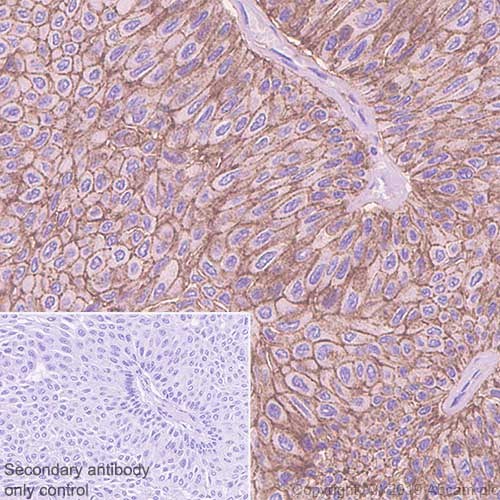
AB236630
Anti-CD9 antibody [EPR23105-121]
20ul selling size|BOND RX™ Validated|RabMAb|Recombinant|KO Validated
- 5
- 4
Primary Antibodies
AB125011
Anti-TSG101 antibody [EPR7130(B)]
20ul selling size|BOND RX™ Validated|RabMAb|Recombinant

- 4
- 10
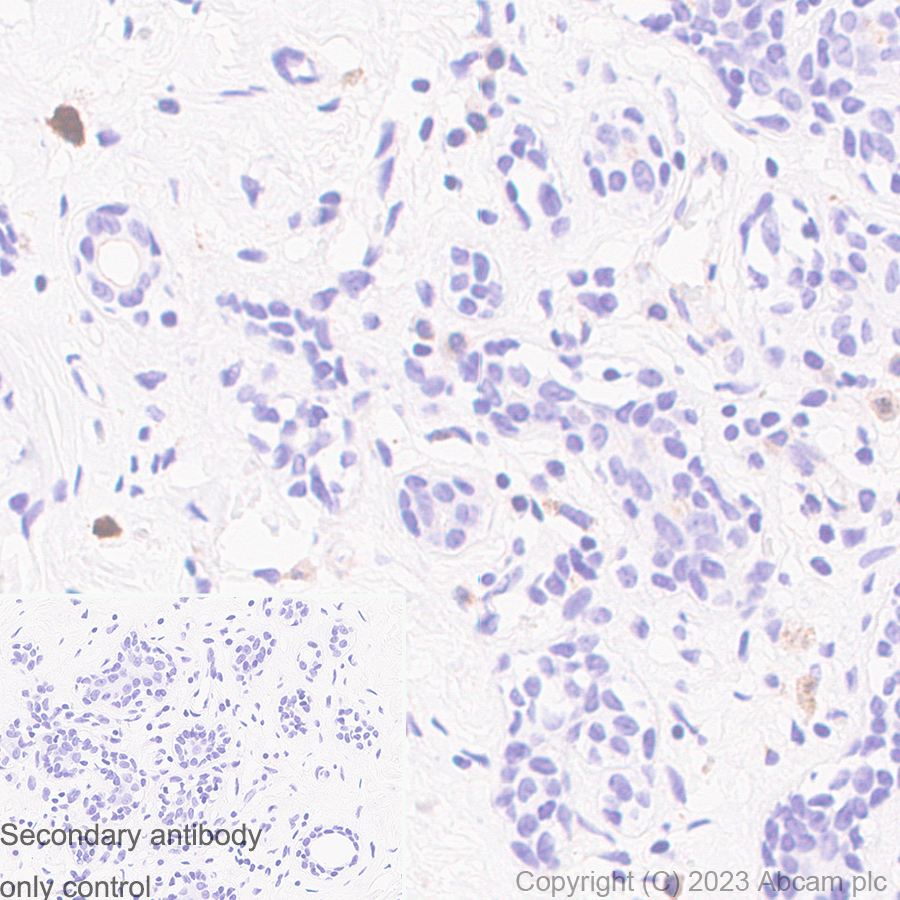
Primary Antibodies
AB315108
BOND RX™ Validated|20ul selling size|RabMAb|Recombinant
- 0
- 0

Reactivity data
製品の詳細
What is this antibody validated in?
Anti-CD81 antibody [EPR21916] (ab219209) is a rabbit recombinant monoclonal antibody and is validated for use in Flow Cytometry (Flow Cyt), Immunohistochemistry (IHC-P), Immunocytochemistry/immunofluorescence (ICC/IF) in Human samples.
Trusted by the scientific community
Anti-CD81 [EPR21916] (ab219209) was first used in a scientific publication in 2018 and has been cited over 10 times in peer-reviewed journals.
Other related products
We have a range of other formats of antibody clone [EPR21916] also available for your convenience: ab219209, Carrier free - ab233692, PE - ab283757, Alexa Fluor® 594 - ab286809, Alexa Fluor® 488 - ab302976, Alexa Fluor® 647 - ab303459, APC - ab314278
Patented technology
Our RabMAb® technology is a patented hybridoma-based technology for making rabbit monoclonal antibodies. For details on our patents, please refer to RabMAb® patents.
What are the advantages of a recombinant monoclonal antibody?
This product is a recombinant monoclonal antibody, which offers several advantages including:
- - High batch-to-batch consistency and reproducibility
- - Improved sensitivity and specificity
- - Long-term security of supply
- - Animal-free batch production
For more information, read more on recombinant antibodies.
Trial sizes available!
Test your antibody or perform pre-screening before committing to a larger quantity. Sold in 20µl. Discover our selection of trial-size antibodies.
出荷温度及び保存条件
製品の状態
精製方法
バッファー組成
出荷温度
短期保存期間
短期保存温度
長期保存温度
分注に関する情報
保管に関する情報
補足情報
This supplementary information is collated from multiple sources and compiled automatically.
Biological function summary
CD81 interacts with other tetraspanins and forms complexes within the membrane to regulate cellular signaling trafficking and adhesion. It participates in the assembly of larger tetraspanin-enriched microdomains which are important for efficient signaling and functional variety. These complexes modulate cell morphology proliferation and development influencing immune responses and pathogen entry to cells. The presence of CD81 in diverse tissues implies its involvement in a wide range of cellular processes forming essential complexes with proteins like integrins that further engage in tissue repair and immunological defense.
Pathways
CD81 plays significant roles in the immune system and viral entry pathways. It interacts with other proteins like CD9 and CD19 within the immune response pathways regulating lymphocyte activation and differentiation. CD81 is notably a coreceptor in the hepatitis C virus (HCV) entry pathway facilitating viral attachment and fusion into host cells. These interactions illustrate CD81's involvement in modulation of immune cell responses and influence on pathogen infection processes integrating into the complex cellular pathways important for maintaining homeostasis and response to external stimuli.
製品プロトコール
- Visit the General protocols
- Visit the Troubleshooting
ターゲットの情報
文献 (21)
Recent publications for all applications. Explore the full list and refine your search
Scientific reports 15:13797 PubMed40258894
2025
Applications
Unspecified application
Species
Unspecified reactive species
Journal of nanobiotechnology 23:51 PubMed39875954
2025
Applications
Unspecified application
Species
Unspecified reactive species
Journal of lipid research 65:100657 PubMed39326787
2024
Applications
Unspecified application
Species
Unspecified reactive species
Bioactive materials 37:1-13 PubMed38515611
2024
Applications
Unspecified application
Species
Unspecified reactive species
Acta neuropathologica communications 12:35 PubMed38414005
2024
Applications
Unspecified application
Species
Unspecified reactive species
Cell transplantation 32:9636897231219830 PubMed38102784
2023
Applications
Unspecified application
Species
Unspecified reactive species
Organogenesis 19:2285836 PubMed38031805
2023
Applications
Unspecified application
Species
Unspecified reactive species
European journal of histochemistry : EJH 67: PubMed37503653
2023
Applications
Unspecified application
Species
Unspecified reactive species
International journal of medical sciences 20:542-550 PubMed37057214
2023
Applications
Unspecified application
Species
Unspecified reactive species
International journal of oncology 62: PubMed36799165
2023
Applications
Unspecified application
Species
Unspecified reactive species
Abcam product promise
Please note: All products are 'FOR RESEARCH USE ONLY. NOT FOR USE IN DIAGNOSTIC OR THERAPEUTIC PROCEDURES'.
For licensing inquiries, please contact partnerships@abcam.com