JavaScript is disabled in your browser. Please enable JavaScript to view this website.
AB1318

Anti-CD63 抗体 [NK1/C3]

Anti-CD63 antibody [NK1/C3]

4

(1 Review)

|

(30 Publications)

Mouse Monoclonal CD63 antibody. Suitable for ICC/IF, IHC-P, Flow Cyt and reacts with Human samples. Cited in 30 publications. Immunogen corresponding to Cell preparation containing MeWo cell line protein.

別名を表示する

CD63, MLA1, TSPAN30, CD63 antigen, Granulophysin, Lysosomal-associated membrane protein 3, Lysosome integral membrane protein 1, Melanoma-associated antigen ME491, OMA81H, Ocular melanoma-associated antigen, Tetraspanin-30, LAMP-3, Limp1, Tspan-30
4 Images
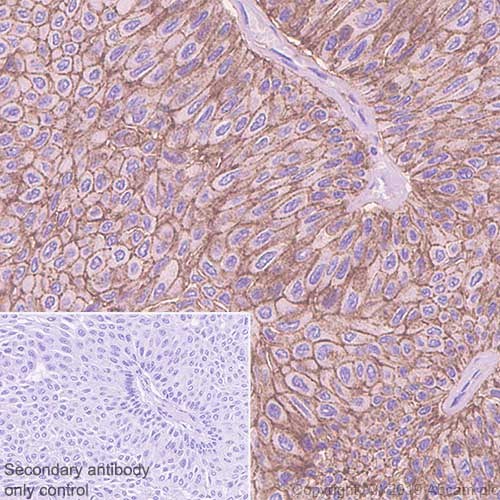
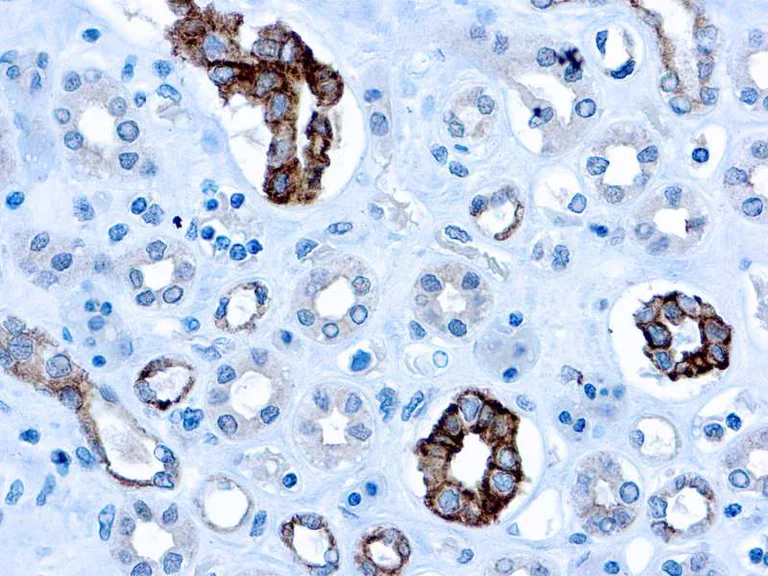
Immunohistochemistry (Formalin/PFA-fixed paraffin-embedded sections) - Anti-CD63 antibody [NK1/C3] (AB1318)
  • IHC-P

Supplier Data

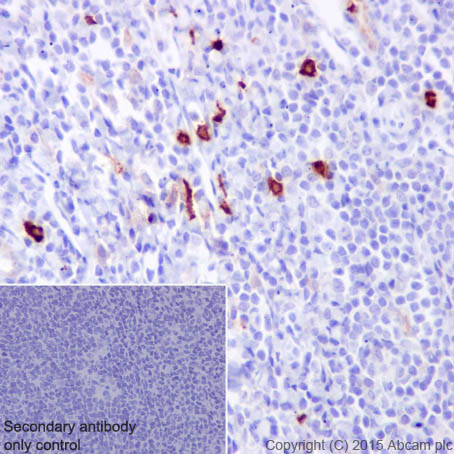
Immunohistochemistry (Formalin/PFA-fixed paraffin-embedded sections) - Anti-CD63 antibody [NK1/C3] (AB1318)

Formalin-fixed, paraffin-embeded human melanoma tissue stained for CD63 using ab1318 at 1/100 dilution in immunohistochemical analysis. Antigen retrieval with citrate buffer pH 6.0
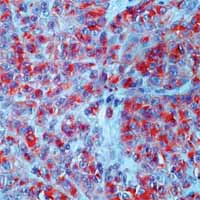
Immunohistochemistry (Formalin/PFA-fixed paraffin-embedded sections) - Anti-CD63 antibody [NK1/C3] (AB1318)
  • IHC-P

Unknown

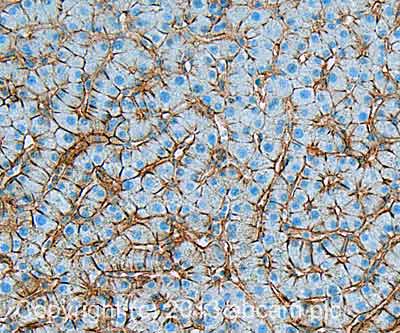
Immunohistochemistry (Formalin/PFA-fixed paraffin-embedded sections) - Anti-CD63 antibody [NK1/C3] (AB1318)

ab1318 staining human melanoma by IHC-P.
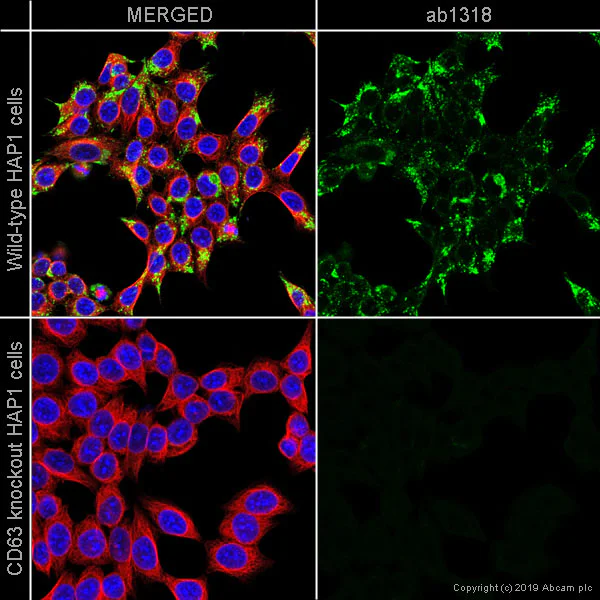
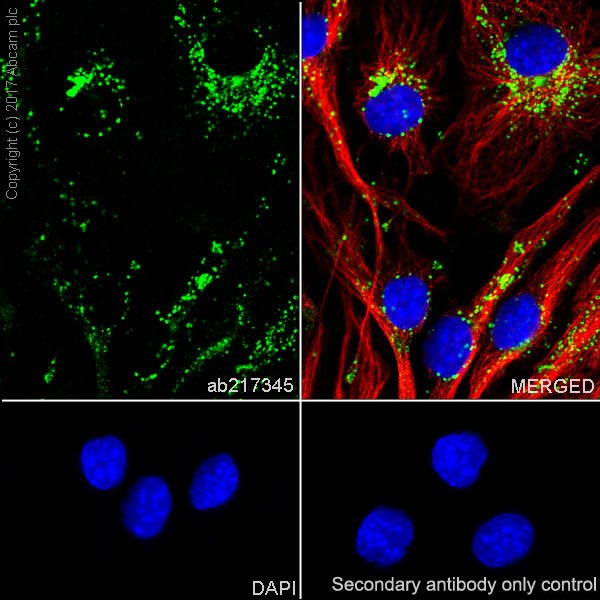
Immunocytochemistry/ Immunofluorescence - Anti-CD63 antibody [NK1/C3] (AB1318)
  • ICC/IF

Lab

Immunocytochemistry/ Immunofluorescence - Anti-CD63 antibody [NK1/C3] (AB1318)

ab1318 staining CD63 in wild-type HAP1 cells (top panel) and CD63 knockout HAP1 cells (bottom panel). The cells were fixed with 100% methanol (5min), permeabilized with 0.1% Triton X-100 for 5 minutes and then blocked with 1% BSA/10% normal goat serum/0.3M glycine in 0.1% PBS-Tween for 1h. The cells were then incubated with ab1318 at 1ug/ml and ab6046 (Tubulin) at 1/1000 dilution overnight at +4°C, followed by a further incubation at room temperature for 1h with a goat secondary antibody to mouse IgG (Alexa Fluor® 488) (ab150117) at 2 μg/ml (shown in green) and a goat secondary antibody to rabbit IgG (Alexa Fluor® 594) (ab150080) at 2 μg/ml (shown in pseudo color red). Nuclear DNA was labelled in blue with DAPI.

Image was taken with a confocal microscope (Leica-Microsystems, TCS SP8).
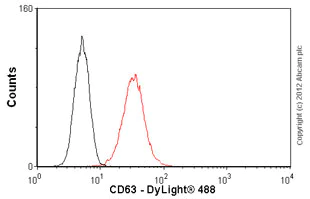
Flow Cytometry - Anti-CD63 antibody [NK1/C3] (AB1318)
  • Flow Cyt

Unknown

Flow Cytometry - Anti-CD63 antibody [NK1/C3] (AB1318)

Overlay histogram showing HL60 cells stained with ab1318 (red line). The cells were fixed with 4% paraformaldehyde (10 min) and then permeabilized with 0.1% PBS-Tween for 20 min. The cells were then incubated in 1x PBS / 10% normal goat serum / 0.3M glycine to block non-specific protein-protein interactions followed by the antibody (ab1318, 1/100 dilution) for 30 min at 22°C. The secondary antibody used was DyLight® 488 goat anti-Mouse IgG (H+L) (ab96879) at 1/500 dilution for 30 min at 22°C. Isotype control antibody (black line) was Mouse IgG1 [ICIGG1] (ab91353, 2 μg/1x106 cells) used under the same conditions. Acquisition of >5,000 events was performed. This antibody gave a positive signal in HL60 cells fixed with 80% methanol (5 min)/permeabilized with 0.1% PBS-Tween for 20 min used under the same conditions.

Key facts

宿主種

Mouse

クローン性

Monoclonal

クローン番号

NK1/C3

アイソタイプ

IgG1

軽鎖のタイプ

kappa

キャリアフリー

No

交差種

Human

アプリケーション

ICC/IF, IHC-P, Flow Cyt

applications

免疫原

The exact immunogen used to generate this antibody is proprietary information.

特異性

This antibody is specific to a 53 kD protein, expressed on activated platelets. CD63 is a lysosomal membrane glycoprotein that is translocated to plasma membrane after platelet activation. It is also expressed on granulocytes, B cells and T cells.

Reactivity data

{ "title": "Reactivity Data", "filters": { "stats": ["", "Species", "Dilution Info", "Notes"], "tabs": { "all-applications": {"fullname" : "All Applications", "shortname": "All Applications"}, "ICCIF" : {"fullname" : "Immunocytochemistry/ Immunofluorescence", "shortname":"ICC/IF"}, "IHCP" : {"fullname" : "Immunohistochemistry (Formalin/PFA-fixed paraffin-embedded sections)", "shortname":"IHC-P"}, "FlowCyt" : {"fullname" : "Flow Cytometry", "shortname":"Flow Cyt"} }, "product-promise": { "all": "all", "testedAndGuaranteed": "tested", "guaranteed": "expected", "predicted": "predicted", "notRecommended": "not-recommended" } }, "values": { "Human": { "ICCIF-species-checked": "testedAndGuaranteed", "ICCIF-species-dilution-info": "1-5 µg/mL", "ICCIF-species-notes": "<p>Signal can be observed in cells fixed with methanol or PFA.</p>", "IHCP-species-checked": "testedAndGuaranteed", "IHCP-species-dilution-info": "1/100 - 1/200", "IHCP-species-notes": "<p></p>", "FlowCyt-species-checked": "testedAndGuaranteed", "FlowCyt-species-dilution-info": "1/100", "FlowCyt-species-notes": "<p>(Also see PMID 19129916).</p><p><a href='/products/primary-antibodies/mouse-igg1-kappa-monoclonal-15-6e10a7-isotype-control-ab170190'>ab170190</a> - Mouse monoclonal IgG1, is suitable for use as an isotype control with this antibody.</p>" } } }

製品の詳細

CD63 is expressed on activated platelets. CD63 is a lysosomal membrane glycoprotein that is translocated to plasma membrane after platelet activation. It is also present in monocytes and macrophages and is weakly expressed in granulocytes, B, and T cells. CD63 is identical to the melanoma-associated antigen ME491 and to the platelet antigen PTLGP40.

出荷温度及び保存条件

製品の状態
Liquid
精製度
IgG fraction
バッファー組成
pH: 7.3 - 7.5 Preservative: 0.05% Sodium azide Constituents: 1% BSA
出荷温度
Blue Ice
短期保存期間
1-2 weeks
短期保存温度
+4°C
長期保存温度
-20°C
保管に関する情報
Avoid freeze / thaw cycle

補足情報

This supplementary information is collated from multiple sources and compiled automatically.

CD63 is a protein commonly known as LAMP-3 a member of the tetraspanin family with a molecular weight of approximately 25-65 kDa depending on post-translational modifications such as glycosylation. It resides mainly on the membrane of intracellular vesicles such as lysosomes and platelets. CD63 also appears on the surface of activated cells particularly in immune cells. Researchers often use CD63 as a marker in assays including CD63 western blot techniques due to its distinct expression patterns.
Biological function summary

CD63 participates in various cellular processes including membrane trafficking cell adhesion and signal transduction. It associates with integrins and other tetraspanins forming complexes that influence cellular adhesion and migration. Through its role in exosome formation CD63 contributes significantly to intercellular communication by facilitating the transfer of proteins lipids and RNA between cells.

Pathways

CD63 plays a role in pathways linked to cell proliferation and migration and immune response regulation. Within the integrin-mediated signaling pathway CD63 interacts with proteins such as integrins to promote cell adhesion and migration. CD63 also links to vesicle trafficking pathways collaborating with proteins involved in exocytosis and endocytosis which affect cell membrane restructuring and intracellular transport.

CD63 shows connections with cancer and immune system disorders. Its role in promoting cell adhesion and migration links it with cancer metastasis including melanoma and breast cancer where CD63 expression levels often rise. Additionally CD63 associates with allergic reactions due to its involvement in histamine release where it impacts immune proteins like FcεRI which participate in allergy pathogenesis.

製品プロトコール

For this product, it's our understanding that no specific protocols are required. You can visit:

ターゲットの情報

Functions as a cell surface receptor for TIMP1 and plays a role in the activation of cellular signaling cascades. Plays a role in the activation of ITGB1 and integrin signaling, leading to the activation of AKT, FAK/PTK2 and MAP kinases. Promotes cell survival, reorganization of the actin cytoskeleton, cell adhesion, spreading and migration, via its role in the activation of AKT and FAK/PTK2. Plays a role in VEGFA signaling via its role in regulating the internalization of KDR/VEGFR2. Plays a role in intracellular vesicular transport processes, and is required for normal trafficking of the PMEL luminal domain that is essential for the development and maturation of melanocytes. Plays a role in the adhesion of leukocytes onto endothelial cells via its role in the regulation of SELP trafficking. May play a role in mast cell degranulation in response to Ms4a2/FceRI stimulation, but not in mast cell degranulation in response to other stimuli.
See full target information CD63

文献 (30)

Recent publications for all applications. Explore the full list and refine your search

Aging 16:12379-12391 PubMed39213192

2024

Cigarette smoke-induced exosomal miR-221-3p facilitates M1 macrophage polarization via the STAT3 pathway in chronic obstructive pulmonary disease.

Applications

Unspecified application

Species

Unspecified reactive species

Hui Jia,Wei He,Bo Wu,Zhaoshuang Zhong,Yuele Chang,Yang Liu,Min Wang,Shuyue Xia

International journal of medical sciences 20:1744-1754 PubMed37928882

2023

Increased Expression of Tetraspanins, ALIX and HSP-70 in the Placenta Tissue of Women with Chronic Venous Disease during Pregnancy.

Applications

Unspecified application

Species

Unspecified reactive species

Miguel A Ortega,María Asunción Sánchez-Gil,Oscar Fraile-Martínez,Cielo García-Montero,Luis G Guijarro,Raúl Diaz-Pedrero,Laura Lopez-Gonzalez,Juan De Leon-Luis,Coral Bravo,Melchor Álvarez-Mon,Julia Bujan,Miguel A Saez,Natalio García-Honduvilla

Stem cells international 2023:4980871 PubMed36970598

2023

Extracellular Vesicles Secreted by TGF-1-Treated Mesenchymal Stem Cells Promote Fracture Healing by SCD1-Regulated Transference of LRP5.

Applications

Unspecified application

Species

Unspecified reactive species

Zihui Zhou,Chenyang Guo,Xulong Sun,Zhengwei Ren,Jie Tao

PLoS pathogens 19:e1011090 PubMed36634130

2023

Exosomes mediate Coxsackievirus B3 transmission and expand the viral tropism.

Applications

Unspecified application

Species

Unspecified reactive species

Yuxuan Fu,Sidong Xiong

Theranostics 12:6527-6547 PubMed36185612

2022

Single-cell transcriptome profiling of the human endometrium of patients with recurrent implantation failure.

Applications

Unspecified application

Species

Unspecified reactive species

Zhen-Zhen Lai,Yun Wang,Wen-Jie Zhou,Zhou Liang,Jia-Wei Shi,Hui-Li Yang,Feng Xie,Wei-Dong Chen,Rui Zhu,Ce Zhang,Jie Mei,Jian-Yuan Zhao,Jiang-Feng Ye,Tao Zhang,Ming-Qing Li

Thoracic cancer 13:2723-2731 PubMed36054073

2022

Lung-specific exosomes for co-delivery of CD47 blockade and cisplatin for the treatment of non-small cell lung cancer.

Applications

Unspecified application

Species

Unspecified reactive species

Zhilei Cui,Zhengshang Ruan,Junxiang Zeng,Jinyuan Sun,Wenjing Ye,Weiguo Xu,Xuejun Guo,Linlin Zhang,Lin Song

International journal of molecular sciences 23: PubMed36012196

2022

Protease Profile of Tumor-Associated Mast Cells in Melanoma.

Applications

Unspecified application

Species

Unspecified reactive species

Dmitri Atiakshin,Andrey Kostin,Igor Buchwalow,Vera Samoilova,Markus Tiemann

Metallomics : integrated biometal science 14: PubMed35657681

2022

Rhenium(I) conjugates as tools for tracking cholesterol in cells.

Applications

Unspecified application

Species

Unspecified reactive species

Joanna Lazniewska,Christie Bader,Shane M Hickey,Stavros Selemidis,John O'Leary,Peter V Simpson,Stefano Stagni,Sally E Plush,Massimiliano Massi,Doug Brooks

Cell death discovery 8:269 PubMed35606376

2022

Transfer of microRNA-22-3p by M2 macrophage-derived extracellular vesicles facilitates the development of ankylosing spondylitis through the PER2-mediated Wnt/β-catenin axis.

Applications

Unspecified application

Species

Unspecified reactive species

Chong Liu,Tuo Liang,Zide Zhang,Jiarui Chen,Jang Xue,Xinli Zhan,Liang Ren

Frontiers in oncology 12:756109 PubMed35651785

2022

Cancer-Secreted Exosomal MiR-620 Inhibits ESCC Aerobic Glycolysis FOXM1/HER2 Pathway and Promotes Metastasis.

Applications

Unspecified application

Species

Unspecified reactive species

Yanbo Zhu,Fang Li,Yilong Wan,Hansi Liang,Si Li,Bo Peng,Liqun Shao,Yunyun Xu,Dong Jiang
View all publications

Abcam product promise

当社は、高品質な試薬を通じてお客様の研究を力強くサポートすることをお約束いたします。ご使用いただく各段階で、常にお客様をサポートできる体制を整えております。万が一、製品が期待通りに機能しない場合は、「Abcam Product Promise」による当社保証制度に基づき、安心してご利用いただけます。
保証に関する詳細については利用規約をご確認ください。

Please note: All products are 'FOR RESEARCH USE ONLY. NOT FOR USE IN DIAGNOSTIC OR THERAPEUTIC PROCEDURES'.

For licensing inquiries, please contact partnerships@abcam.com