JavaScript is disabled in your browser. Please enable JavaScript to view this website.
AB83137

Biotin Anti-IGF1 抗体

Biotin Anti-IGF1 antibody

Be the first to review this product! Submit a review

|

(1 Publication)

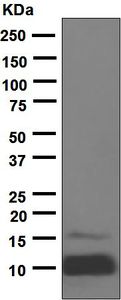
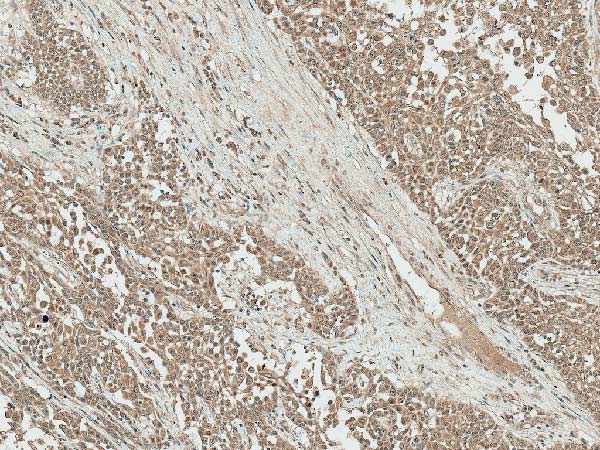
Anti-IGF1 antibody conjugated to Biotin is a rabbit polyclonal antibody suitable for Western blot, sELISA, and reacts with human samples.

別名を表示する

IBP1, IGF-1, IGF1, Insulin-like growth factor 1, Insulin-like growth factor I, Mechano growth factor, Somatomedin-C, IGF-I, MGF

Key facts

宿主種

Rabbit

クローン性

Polyclonal

アイソタイプ

IgG

標識

Biotin

励起波長/蛍光波長
キャリアフリー

Yes

交差種

Human

アプリケーション

WB, sELISA

applications

免疫原

Recombinant Full Length Protein corresponding to Human IGF1.

P05019

Reactivity data

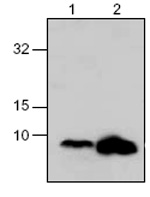
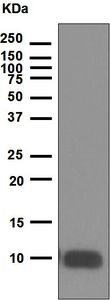
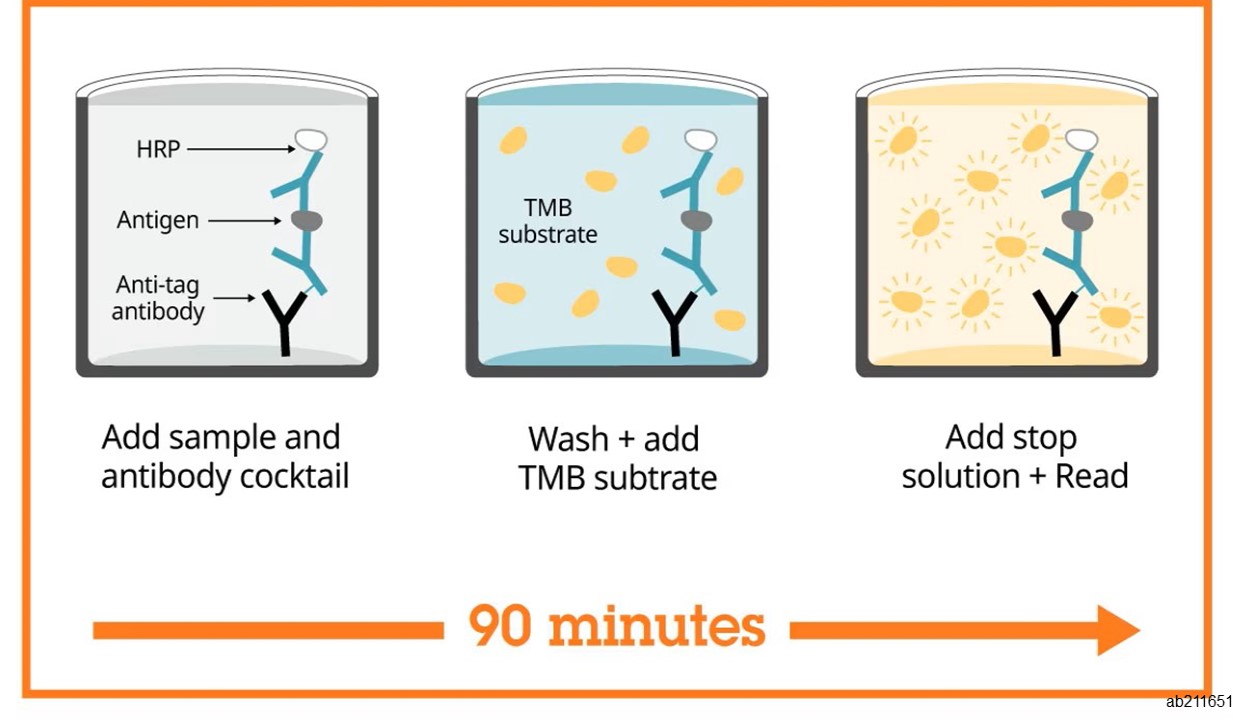
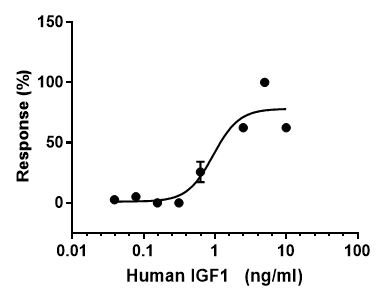
{ "title": "Reactivity Data", "filters": { "stats": ["", "Species", "Dilution Info", "Notes"], "tabs": { "all-applications": {"fullname" : "All Applications", "shortname": "All Applications"}, "WB" : {"fullname" : "Western blot", "shortname":"WB"}, "sELISA" : {"fullname" : "Sandwich ELISA", "shortname":"sELISA"} }, "product-promise": { "all": "all", "testedAndGuaranteed": "tested", "guaranteed": "expected", "predicted": "predicted", "notRecommended": "not-recommended" } }, "values": { "Human": { "WB-species-checked": "guaranteed", "WB-species-dilution-info": "", "WB-species-notes": "<p>Used in conjunction with compatible secondary reagents the detection limit for recombinant hIGF-I is 1.5 - 3.0 ng/lane, under either reducing or non-reducing conditions.</p>", "sELISA-species-checked": "guaranteed", "sELISA-species-dilution-info": "", "sELISA-species-notes": "<p>Allows for the detection of at least 0.2 - 0.4 ng/well of recombinant IGF1.</p>" } } }

出荷温度及び保存条件

製品の状態
Lyophilized
再構成
Centrifuge vial prior to opening. Reconstitute in sterile PBS containing 0.1% BSA to a concentration of 1.0 mg/ml.
精製方法
Affinity purification Protein A
精製に関する特記事項
ab83137 is sterile filtered.
バッファー組成
Constituents: PBS
出荷温度
Blue Ice
短期保存期間
1-2 weeks
短期保存温度
+4°C
長期保存温度
-20°C
保管に関する情報
Avoid freeze / thaw cycle

補足情報

This supplementary information is collated from multiple sources and compiled automatically.

The insulin-like growth factor 1 or IGF1 is a protein hormone that plays an important mechanical role in growth and development. Alternative names for IGF1 include somatomedin C. This protein has a mass of approximately 7.6 kDa and is mainly produced by the liver. IGF1 is expressed in a range of tissues including muscle bone and cartilage reflecting its importance in various physiological processes. Its production is stimulated by growth hormone and it acts in an autocrine and paracrine manner to exert its effects.
Biological function summary

IGF1 stimulates growth and proliferation of cells most notably impacting the development of the skeletal system and the regulation of apoptosis. It is not part of a larger protein complex but it interacts closely with IGF1 receptor to execute its functions. By binding to this receptor IGF1 activates intracellular signaling cascades that promote anabolic effects which include increased uptake of glucose and amino acids contributing to muscle and tissue growth.

Pathways

IGF1 operates within the PI3K-Akt and MAPK signaling pathways which are significant for cell survival and proliferation. Its interaction with proteins like IGF binding protein 3 (IGFBP3) modulates its availability and activity in the bloodstream. These pathways are critical for mediating the effects of growth hormone highlighting the role of IGF1 in systemic growth and metabolism regulation.

Alterations in IGF1 levels associate with growth abnormalities such as Laron syndrome and acromegaly. Laron syndrome results from the body's inability to use IGF1 properly due to receptor defects while acromegaly occurs from excessive IGF1 production often due to pituitary tumors. Furthermore aberrant IGF1 signaling connects to cancer development where it can drive tumor growth and metastasis. Drugs targeting IGF1 and its pathway components continue to be researched for therapeutic potential in these conditions.

製品プロトコール

For this product, it's our understanding that no specific protocols are required. You can visit:

ターゲットの情報

The insulin-like growth factors, isolated from plasma, are structurally and functionally related to insulin but have a much higher growth-promoting activity. May be a physiological regulator of [1-14C]-2-deoxy-D-glucose (2DG) transport and glycogen synthesis in osteoblasts. Stimulates glucose transport in bone-derived osteoblastic (PyMS) cells and is effective at much lower concentrations than insulin, not only regarding glycogen and DNA synthesis but also with regard to enhancing glucose uptake. May play a role in synapse maturation (PubMed : 21076856, PubMed : 24132240). Ca(2+)-dependent exocytosis of IGF1 is required for sensory perception of smell in the olfactory bulb (By similarity). Acts as a ligand for IGF1R. Binds to the alpha subunit of IGF1R, leading to the activation of the intrinsic tyrosine kinase activity which autophosphorylates tyrosine residues in the beta subunit thus initiating a cascade of down-stream signaling events leading to activation of the PI3K-AKT/PKB and the Ras-MAPK pathways. Binds to integrins ITGAV : ITGB3 and ITGA6 : ITGB4. Its binding to integrins and subsequent ternary complex formation with integrins and IGFR1 are essential for IGF1 signaling. Induces the phosphorylation and activation of IGFR1, MAPK3/ERK1, MAPK1/ERK2 and AKT1 (PubMed : 19578119, PubMed : 22351760, PubMed : 23243309, PubMed : 23696648). As part of the MAPK/ERK signaling pathway, acts as a negative regulator of apoptosis in cardiomyocytes via promotion of STUB1/CHIP-mediated ubiquitination and degradation of ICER-type isoforms of CREM (By similarity).
See full target information IGF1

文献 (1)

Recent publications for all applications. Explore the full list and refine your search

Experimental dermatology 32:403-412 PubMed36457234

2022

CCL6 promotes M2 polarization and inhibits macrophage autophagy by activating PI3-kinase/Akt signalling pathway during skin wound healing.

Applications

Unspecified application

Species

Unspecified reactive species

Xiao Feng,Yu Ji,Ce Zhang,Tingting Jin,Jingyu Li,Jincai Guo
View all publications

Abcam product promise

当社は、高品質な試薬を通じてお客様の研究を力強くサポートすることをお約束いたします。ご使用いただく各段階で、常にお客様をサポートできる体制を整えております。万が一、製品が期待通りに機能しない場合は、「Abcam Product Promise」による当社保証制度に基づき、安心してご利用いただけます。
保証に関する詳細については利用規約をご確認ください。

Please note: All products are 'FOR RESEARCH USE ONLY. NOT FOR USE IN DIAGNOSTIC OR THERAPEUTIC PROCEDURES'.

For licensing inquiries, please contact partnerships@abcam.com