Biotin Anti-5-methylcytosine (5-mC) 抗体 [5MC-CD] - Azide free
Biotin Anti-5-methylcytosine (5-mC) antibody [5MC-CD] - Azide free
Be the first to review this product! Submit a review
|
(2 Publications)
Anti-5-methylcytosine (5-mC) antibody [5MC-CD] conjugated to Biotin - suitable for ICC/IF. Clone [5MC-CD] is a mouse monoclonal antibody cited in 5 publications.
別名を表示する
5 Methycytosine, 5-Me Cytidine, 5-Me Cytosine, 5-Methyl-Cytidine, 5-Methyl-Cytosine, 5-MethylCytidine, 5-MethylCytosine, 5-mC, 5-meC, methyl CpG
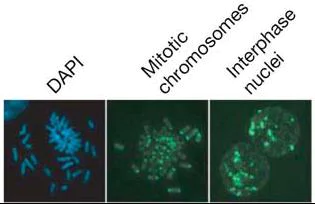
- ICC/IF
Supplier Data
Immunocytochemistry/ Immunofluorescence - Biotin Anti-5-methylcytosine (5-mC) antibody [5MC-CD] - Azide free (AB179914)
Immunofluorescence analysis of mouse embryonic cells, labeling 5-Methyl Cytosine using ab179914 at a 1/50 dilution. DAPI was used to stain DNA (magenta).
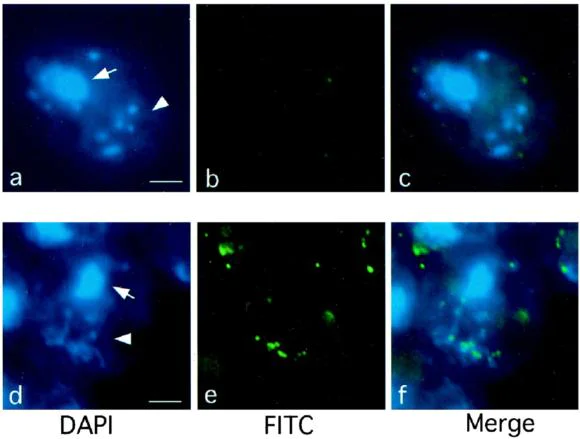
- ICC/IF
Supplier Data
Immunocytochemistry/ Immunofluorescence - Biotin Anti-5-methylcytosine (5-mC) antibody [5MC-CD] - Azide free (AB179914)
Immunofluorescence analysis of Clamydomonas me-1 cells, labeling 5-Methyl Cytosine using ab179914 at a 1/50 dilution, followed by FITC-conjugated secondary antibody (green). DAPI was used to stain DNA (magenta). Upper panels (a, b and c) correspond to vegetative cells and lower panels (d, e and f) to gametes.
関連する標識済み抗体及び組成の異なる製品 (1)
-
Anti-5-methylcytosine (5-mC) antibody [5MC-CD]
代替製品


組合せ製品


Reactivity data
出荷温度及び保存条件
製品の状態
精製度
バッファー組成
出荷温度
短期保存期間
短期保存温度
長期保存温度
分注に関する情報
保管に関する情報
補足情報
This supplementary information is collated from multiple sources and compiled automatically.
Biological function summary
Cytosine methylation affects DNA-protein interactions leading to changes in chromatin structure and the regulation of gene activity. 5-methylcytosine is an important player in the chromatin modification complex where it collaborates with other epigenetic marks to control gene expression profiles. This modified nucleotide helps to stabilize gene silencing maintaining the closed chromatin state which inhibits the transcription machinery's access to specific genomic regions. Such silencing is vital during processes like X-chromosome inactivation and imprinting.
Pathways
Researchers have identified 5-mC within two critical pathways: DNA methylation and demethylation cycle and histone modification pathway. In the DNA methylation pathway 5-mC interacts closely with proteins like DNA methyltransferases (DNMTs) which directly add methyl groups to cytosine bases. In the context of histone modification 5-mC influences the binding of methyl-CpG-binding domain (MBD) proteins which read and interpret methylated DNA marks affecting histone modification and DNA accessibility.
製品プロトコール
- Visit the General protocols
- Visit the Troubleshooting
文献 (2)
Recent publications for all applications. Explore the full list and refine your search
Biosensors 12: PubMed35323432
2022
Applications
Unspecified application
Species
Unspecified reactive species
Oncotarget 8:105440-105457 PubMed29285262
2017
Applications
Unspecified application
Species
Unspecified reactive species
Abcam product promise
Please note: All products are 'FOR RESEARCH USE ONLY. NOT FOR USE IN DIAGNOSTIC OR THERAPEUTIC PROCEDURES'.
For licensing inquiries, please contact partnerships@abcam.com