JavaScript is disabled in your browser. Please enable JavaScript to view this website.
AB169763

Anti-ARPC5L 抗体 [EPR10274]

Anti-ARPC5L antibody [EPR10274]

Be the first to review this product! Submit a review

|

(8 Publications)

Rabbit Recombinant Monoclonal ARPC5L antibody. Suitable for IHC-P, WB, ICC/IF, Flow Cyt (Intra) and reacts with Human samples. Cited in 8 publications.

別名を表示する

Actin-related protein 2/3 complex subunit 5-like protein, Arp2/3 complex 16 kDa subunit 2, ARC16-2, ARPC5L
5 Images
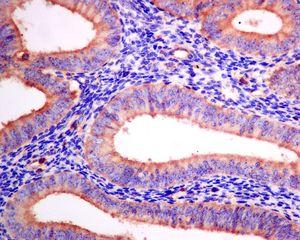
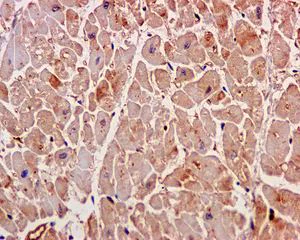
Immunohistochemistry (Formalin/PFA-fixed paraffin-embedded sections) - Anti-ARPC5L antibody [EPR10274] (AB169763)
  • IHC-P

Supplier Data

Immunohistochemistry (Formalin/PFA-fixed paraffin-embedded sections) - Anti-ARPC5L antibody [EPR10274] (AB169763)

Immunohistochemical analysis of paraffin embedded Human heart tissue labeling ARPC5L with ab169763 at 1/250.

Perform heat mediated antigen retrieval with citrate buffer pH 6 before commencing with IHC staining protocol.
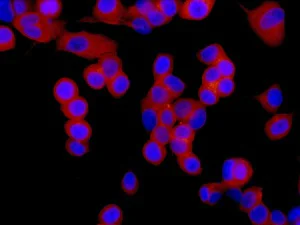
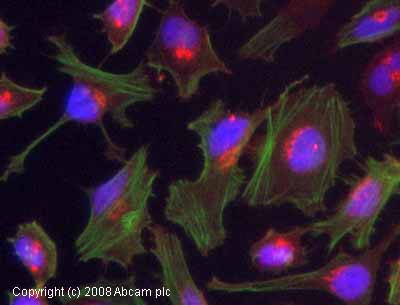
Immunocytochemistry/ Immunofluorescence - Anti-ARPC5L antibody [EPR10274] (AB169763)
  • ICC/IF

Supplier Data

Immunocytochemistry/ Immunofluorescence - Anti-ARPC5L antibody [EPR10274] (AB169763)

Immunofluorescent analysis of MCF7 cells labeling ARPC5 with ab169763 at 1/250 (red) with DAPI staining (blue).
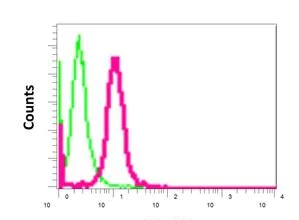
Flow Cytometry (Intracellular) - Anti-ARPC5L antibody [EPR10274] (AB169763)
  • Flow Cyt (Intra)

Supplier Data

Flow Cytometry (Intracellular) - Anti-ARPC5L antibody [EPR10274] (AB169763)

Intracellular flow cytometrical analysis of permeabilized MOLT4 cells with ab169763 antibody at a dilution of 1/10 (red) or a rabbit IgG (negative) (green).
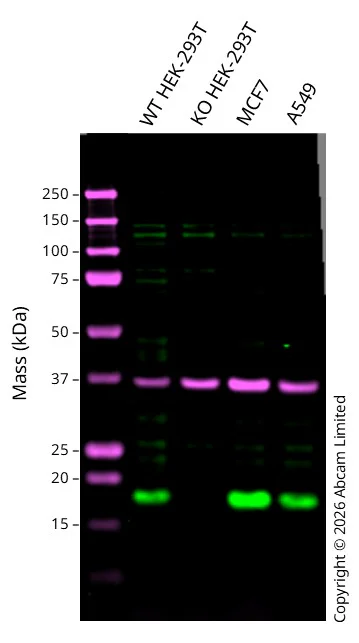
Western blot - Anti-ARPC5L antibody [EPR10274] (AB169763)
  • WB

Lab

Western blot - Anti-ARPC5L antibody [EPR10274] (AB169763)

Western blot : Anti-ARPC5L antibody [EPR10274] ab169763 staining at 1/5000 dilution, shown in green; Mouse anti GAPDH ab8245 loading control staining at 1/20000 dilution, shown in magenta. A band was observed at 18 kDa in Wild-type HEK-293T cell line with no signal observed at this size in ARPC5L knockout HEK-293T cell line. To generate this image, samples were run on an SDS-PAGE gel then transferred onto a nitrocellulose membrane. Membranes were blocked in 5% Milk in TBS-0.1 % Tween® 20 (TBS-T) before incubation with primary antibodies overnight at 4 °C. Blots were washed four times in TBS-T, incubated with secondary antibodies for 1 h at room temperature, washed again four times then imaged. Secondary antibodies used were Goat anti-Rabbit 800CW and Goat anti-Mouse 680RD at 1/20,000 dilution.

All lanes:

Western blot - Anti-ARPC5L antibody [EPR10274] (ab169763) at 1/5000 dilution

Lane 1:

Wild-type HEK-293T cell lysates at 20 µg

Lane 2:

Western blot - Human ARPC5L knockout HEK-293T cell line (<a href='/products/cell-lines/human-arpc5l-knockout-hek-293t-cell-line-ab266399'>ab266399</a>) at 20 µg

Lane 3:

MCF7 cell lysates at 20 µg

Lane 4:

A549 cell lysates at 20 µg

Secondary

All lanes:

Goat anti-Rabbit 800CW & Goat anti-Mouse 680RD at 1/20000 dilution

Predicted band size: 16 kDa

Observed band size: 18 kDa

false
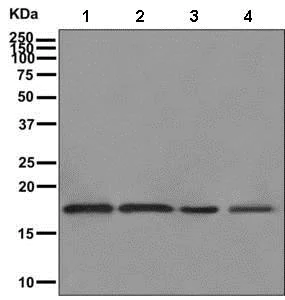
Western blot - Anti-ARPC5L antibody [EPR10274] (AB169763)
  • WB

Supplier Data

Western blot - Anti-ARPC5L antibody [EPR10274] (AB169763)

All lanes:

Western blot - Anti-ARPC5L antibody [EPR10274] (ab169763) at 1/1000 dilution

Lane 1:

U87-MG lysate at 10 µg

Lane 2:

MCF7 lysate at 10 µg

Lane 3:

MOLT4 lysate at 10 µg

Lane 4:

Fetal brain lysate at 10 µg

Predicted band size: 17 kDa

false

関連する標識済み抗体及び組成の異なる製品 (1)

  • Carrier free

    Anti-ARPC5L antibody [EPR10274] - BSA and Azide free

Key facts

宿主種

Rabbit

クローン性

Monoclonal

クローン番号

EPR10274

アイソタイプ

IgG

キャリアフリー

No

交差種

Human

アプリケーション

WB, IHC-P, ICC/IF, Flow Cyt (Intra)

applications

免疫原

The exact immunogen used to generate this antibody is proprietary information.

Reactivity data

{ "title": "Reactivity Data", "filters": { "stats": ["", "Species", "Dilution Info", "Notes"], "tabs": { "all-applications": {"fullname" : "All Applications", "shortname": "All Applications"}, "IHCP" : {"fullname" : "Immunohistochemistry (Formalin/PFA-fixed paraffin-embedded sections)", "shortname":"IHC-P"}, "WB" : {"fullname" : "Western blot", "shortname":"WB"}, "ICCIF" : {"fullname" : "Immunocytochemistry/ Immunofluorescence", "shortname":"ICC/IF"}, "FlowCytIntra" : {"fullname" : "Flow Cytometry (Intracellular)", "shortname":"Flow Cyt (Intra)"} }, "product-promise": { "all": "all", "testedAndGuaranteed": "tested", "guaranteed": "expected", "predicted": "predicted", "notRecommended": "not-recommended" } }, "values": { "Human": { "IHCP-species-checked": "testedAndGuaranteed", "IHCP-species-dilution-info": "1/250 - 1/500", "IHCP-species-notes": "<p></p>", "WB-species-checked": "testedAndGuaranteed", "WB-species-dilution-info": "1/1000 - 1/5000", "WB-species-notes": "<p></p>", "ICCIF-species-checked": "testedAndGuaranteed", "ICCIF-species-dilution-info": "1/250 - 1/500", "ICCIF-species-notes": "<p></p>", "FlowCytIntra-species-checked": "testedAndGuaranteed", "FlowCytIntra-species-dilution-info": "1/10 - 1/100", "FlowCytIntra-species-notes": "<p><a href='/products/primary-antibodies/rabbit-igg-monoclonal-epr25a-isotype-control-ab172730'>ab172730</a> - Rabbit monoclonal IgG, is suitable for use as an isotype control with this antibody.</p>" }, "Mouse": { "IHCP-species-checked": "predicted", "IHCP-species-dilution-info": "", "IHCP-species-notes": "", "WB-species-checked": "predicted", "WB-species-dilution-info": "", "WB-species-notes": "", "ICCIF-species-checked": "predicted", "ICCIF-species-dilution-info": "", "ICCIF-species-notes": "", "FlowCytIntra-species-checked": "predicted", "FlowCytIntra-species-dilution-info": "", "FlowCytIntra-species-notes": "" }, "Rat": { "IHCP-species-checked": "predicted", "IHCP-species-dilution-info": "", "IHCP-species-notes": "", "WB-species-checked": "predicted", "WB-species-dilution-info": "", "WB-species-notes": "", "ICCIF-species-checked": "predicted", "ICCIF-species-dilution-info": "", "ICCIF-species-notes": "", "FlowCytIntra-species-checked": "predicted", "FlowCytIntra-species-dilution-info": "", "FlowCytIntra-species-notes": "" } } }

製品の詳細

Patented technology
Our RabMAb® technology is a patented hybridoma-based technology for making rabbit monoclonal antibodies. For details on our patents, please refer to RabMAb® patents.

What are the advantages of a recombinant monoclonal antibody?
This product is a recombinant monoclonal antibody, which offers several advantages including:

  • - High batch-to-batch consistency and reproducibility
  • - Improved sensitivity and specificity
  • - Long-term security of supply
  • - Animal-free batch production

For more information, read more on recombinant antibodies.

出荷温度及び保存条件

製品の状態
Liquid
精製方法
Affinity purification Protein A
バッファー組成
pH: 7.2 - 7.4 Preservative: 0.01% Sodium azide Constituents: PBS, 40% Glycerol (glycerin, glycerine), 0.05% BSA
出荷温度
Conditional Ambient
短期保存期間
1-2 weeks
短期保存温度
+4°C
長期保存温度
-20°C
分注に関する情報
Upon delivery aliquot
保管に関する情報
Avoid freeze / thaw cycle

補足情報

This supplementary information is collated from multiple sources and compiled automatically.

ARPC5L also known as Actin-Related Protein 2/3 Complex Subunit 5-Like is a smaller subunit of the ARP2/3 complex with a molecular mass around 16 kDa. This protein acts mechanically as an important regulator in the nucleation of new actin filaments aiding in the branching of the actin cytoskeleton. Scientists detect ARPC5L expression across diverse human tissues pointing to its broad role in cellular dynamics.
Biological function summary

ARPC5L aids actin filament dynamics as part of the ARP2/3 complex. This complex essential for cellular shape and motility helps drive the formation of lamellipodia and filopodian important structures in cell migration. Its function in remodeling the cytoskeleton makes it important in processes such as endocytosis and intracellular trafficking contributing to normal cell function and response to external stimuli.

Pathways

ARPC5L works within the cytoskeletal remodeling and cell motility pathways. Within the Wnt signaling pathway it plays a role in the regulation of cytoskeletal organization letting cells respond to signaling cues. The protein associates with others like ARPC1 and ARPC2 to facilitate these structural changes highlighting its importance to cellular adaptability and movement.

ARPC5L has connections to cancers including breast and colorectal cancer. Abnormal regulation or mutation of the ARP2/3 complex can lead to altered cell migration and invasiveness contributing to cancer progression. The protein's interaction with elements of the Rho family such as RhoA and Rac1 integrates it into processes often hijacked in malignancies impacting how cells move invade and adhere.

製品プロトコール

For this product, it's our understanding that no specific protocols are required. You can visit:

ターゲットの情報

May function as component of the Arp2/3 complex which is involved in regulation of actin polymerization and together with an activating nucleation-promoting factor (NPF) mediates the formation of branched actin networks.
See full target information ARPC5L

文献 (8)

Recent publications for all applications. Explore the full list and refine your search

Cells 13: PubMed38786098

2024

PI 3-Kinase and the Histone Methyl-Transferase KMT2D Collaborate to Induce Arp2/3-Dependent Migration of Mammary Epithelial Cells.

Applications

Unspecified application

Species

Unspecified reactive species

Karina D Rysenkova,Julia Gaboriaud,Artem I Fokin,Raphaëlle Toubiana,Alexandre Bense,Camil Mirdass,Mélissa Jin,Minh Chau N Ho,Elizabeth Glading,Sophie Vacher,Laura Courtois,Ivan Bièche,Alexis M Gautreau

Disease models & mechanisms 16: PubMed37382373

2023

ARPC5 deficiency leads to severe early-onset systemic inflammation and mortality.

Applications

Unspecified application

Species

Unspecified reactive species

Elena Sindram,Andrés Caballero-Oteyza,Naoko Kogata,Shaina Chor Mei Huang,Zahra Alizadeh,Laura Gámez-Díaz,Mohammad Reza Fazlollhi,Xiao Peng,Bodo Grimbacher,Michael Way,Michele Proietti

Nature communications 14:3708 PubMed37349293

2023

Inherited ARPC5 mutations cause an actinopathy impairing cell motility and disrupting cytokine signaling.

Applications

Unspecified application

Species

Unspecified reactive species

Cristiane J Nunes-Santos,HyeSun Kuehn,Brigette Boast,SuJin Hwang,Douglas B Kuhns,Jennifer Stoddard,Julie E Niemela,Danielle L Fink,Stefania Pittaluga,Mones Abu-Asab,John S Davies,Valarie A Barr,Tomoki Kawai,Ottavia M Delmonte,Marita Bosticardo,Mary Garofalo,Magda Carneiro-Sampaio,Raz Somech,Mohammad Gharagozlou,Nima Parvaneh,Lawrence E Samelson,Thomas A Fleisher,Anne Puel,Luigi D Notarangelo,Bertrand Boisson,Jean-Laurent Casanova,Beata Derfalvi,Sergio D Rosenzweig

Science advances 9:eadd6495 PubMed36662867

2023

ArpC5 isoforms regulate Arp2/3 complex-dependent protrusion through differential Ena/VASP positioning.

Applications

Unspecified application

Species

Unspecified reactive species

Florian Fäßler,Manjunath G Javoor,Julia Datler,Hermann Döring,Florian W Hofer,Georgi Dimchev,Victor-Valentin Hodirnau,Jan Faix,Klemens Rottner,Florian K M Schur

The Journal of cell biology 220: PubMed34106209

2021

MICAL2 enhances branched actin network disassembly by oxidizing Arp3B-containing Arp2/3 complexes.

Applications

Unspecified application

Species

Unspecified reactive species

Chiara Galloni,Davide Carra,Jasmine V G Abella,Svend Kjær,Pavithra Singaravelu,David J Barry,Naoko Kogata,Christophe Guérin,Laurent Blanchoin,Michael Way

Biology open 9: PubMed32661131

2020

Cryo-EM of human Arp2/3 complexes provides structural insights into actin nucleation modulation by ARPC5 isoforms.

Applications

Unspecified application

Species

Unspecified reactive species

Ottilie von Loeffelholz,Andrew Purkiss,Luyan Cao,Svend Kjaer,Naoko Kogata,Guillaume Romet-Lemonne,Michael Way,Carolyn A Moores

Cancer science 110:3788-3801 PubMed31571309

2019

Pimozide suppresses cancer cell migration and tumor metastasis through binding to ARPC2, a subunit of the Arp2/3 complex.

Applications

Unspecified application

Species

Unspecified reactive species

Jiyeon Choi,Yu-Jin Lee,Yae Jin Yoon,Cheol-Hee Kim,Seung-Jin Park,Seon-Young Kim,Nam Doo Kim,Dong Cho Han,Byoung-Mog Kwon

The Journal of biological chemistry 294:14149-14162 PubMed31366728

2019

CNS cell type-specific gene profiling of P301S tau transgenic mice identifies genes dysregulated by progressive tau accumulation.

Applications

Unspecified application

Species

Unspecified reactive species

Yazi D Ke,Gabriella Chan,Kristie Stefanoska,Carol Au,Mian Bi,Julius Müller,Magdalena Przybyla,Astrid Feiten,Emmanuel Prikas,Glenda M Halliday,Olivier Piguet,Matthew C Kiernan,Michael Kassiou,John R Hodges,Clement T Loy,John S Mattick,Arne Ittner,Jillian J Kril,Greg T Sutherland,Lars M Ittner
View all publications

Abcam product promise

当社は、高品質な試薬を通じてお客様の研究を力強くサポートすることをお約束いたします。ご使用いただく各段階で、常にお客様をサポートできる体制を整えております。万が一、製品が期待通りに機能しない場合は、「Abcam Product Promise」による当社保証制度に基づき、安心してご利用いただけます。
保証に関する詳細については利用規約をご確認ください。

Please note: All products are 'FOR RESEARCH USE ONLY. NOT FOR USE IN DIAGNOSTIC OR THERAPEUTIC PROCEDURES'.

For licensing inquiries, please contact partnerships@abcam.com