JavaScript is disabled in your browser. Please enable JavaScript to view this website.
AB312761

Alexa Fluor® 568 Anti-Ubiquitin (linkage-specific K63) 抗体 [EPR8590-448]

Alexa Fluor® 568 Anti-Ubiquitin (linkage-specific K63) antibody [EPR8590-448]

Be the first to review this product! Submit a review

|

(0 Publication)

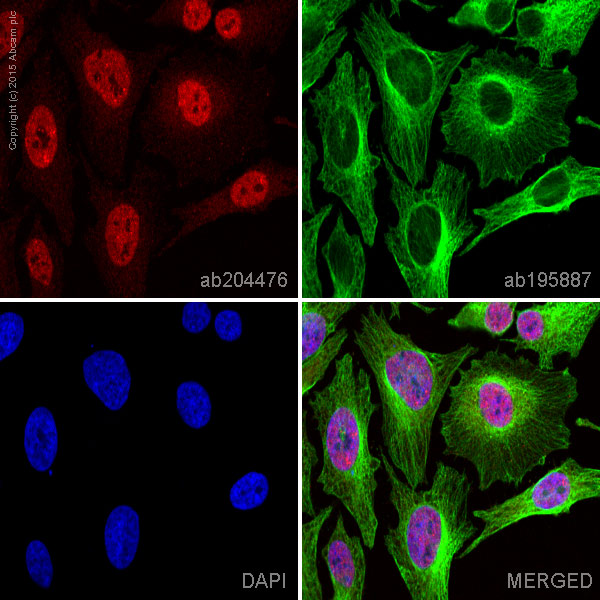
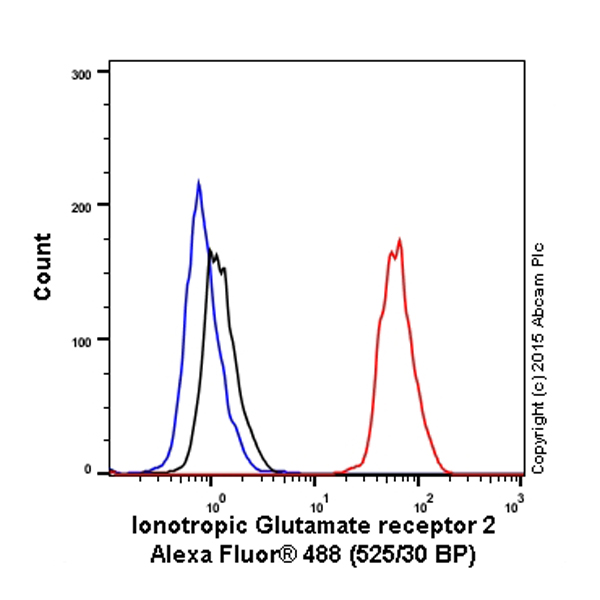
Rabbit Recombinant Monoclonal UBC Linkage-specific K63 antibody - conjugated to Alexa Fluor® 568. Suitable for Target Binding Affinity, Antibody Labelling, Flow Cyt (Intra), IHC-P and reacts with Human, Mouse, Rat samples.

別名を表示する

Polyubiquitin-C, UBC

関連する標識済み抗体及び組成の異なる製品 (11)

  • Unconjugated

    Anti-Ubiquitin (linkage-specific K63) antibody [EPR8590-448]

  • Carrier free

    Anti-Ubiquitin (linkage-specific K63) antibody [EPR8590-448] - Low endotoxin, Azide free

  • Carrier free

    Anti-Ubiquitin (linkage-specific K63) antibody [EPR8590-448] - BSA and Azide free

  • 660 APC

    APC Anti-Ubiquitin (linkage-specific K63) antibody [EPR8590-448]

  • 519 Alexa Fluor® 488

    Alexa Fluor® 488 Anti-Ubiquitin (linkage-specific K63) antibody [EPR8590-448]

  • 565 Alexa Fluor® 555

    Alexa Fluor® 555 Anti-Ubiquitin (linkage-specific K63) antibody [EPR8590-448]

  • 617 Alexa Fluor® 594

    Alexa Fluor® 594 Anti-Ubiquitin (linkage-specific K63) antibody [EPR8590-448]

  • 665 Alexa Fluor® 647

    Alexa Fluor® 647 Anti-Ubiquitin (linkage-specific K63) antibody [EPR8590-448]

  • 775 Alexa Fluor® 750

    Alexa Fluor® 750 Anti-Ubiquitin (linkage-specific K63) antibody [EPR8590-448]

  • HRP

    HRP Anti-Ubiquitin (linkage-specific K63) antibody [EPR8590-448]

  • 578 PE

    PE Anti-Ubiquitin (linkage-specific K63) antibody [EPR8590-448]

Key facts

宿主種

Rabbit

クローン性

Monoclonal

クローン番号

EPR8590-448

アイソタイプ

IgG

標識

Alexa Fluor® 568

励起波長/蛍光波長

Ex: 578nm, Em: 603nm

キャリアフリー

No

交差種

Human, Mouse, Rat

アプリケーション

IHC-P, Target Binding Affinity, Antibody Labelling, Flow Cyt (Intra)

applications

免疫原

The exact immunogen used to generate this antibody is proprietary information.

Reactivity data

{ "title": "Reactivity Data", "filters": { "stats": ["", "Species", "Dilution Info", "Notes"], "tabs": { "all-applications": {"fullname" : "All Applications", "shortname": "All Applications"}, "TargetBindingAffinity" : {"fullname" : "Target Binding Affinity", "shortname":"Target Binding Affinity"}, "AntibodyLabelling" : {"fullname" : "Antibody Labelling", "shortname":"Antibody Labelling"}, "FlowCytIntra" : {"fullname" : "Flow Cytometry (Intracellular)", "shortname":"Flow Cyt (Intra)"}, "IHCP" : {"fullname" : "Immunohistochemistry (Formalin/PFA-fixed paraffin-embedded sections)", "shortname":"IHC-P"} }, "product-promise": { "all": "all", "testedAndGuaranteed": "tested", "guaranteed": "expected", "predicted": "predicted", "notRecommended": "not-recommended" } }, "values": { "Human": { "TargetBindingAffinity-species-checked": "guaranteed", "TargetBindingAffinity-species-dilution-info": "", "TargetBindingAffinity-species-notes": "", "AntibodyLabelling-species-checked": "guaranteed", "AntibodyLabelling-species-dilution-info": "", "AntibodyLabelling-species-notes": "", "FlowCytIntra-species-checked": "guaranteed", "FlowCytIntra-species-dilution-info": "", "FlowCytIntra-species-notes": "<p></p>", "IHCP-species-checked": "guaranteed", "IHCP-species-dilution-info": "", "IHCP-species-notes": "<p></p>" }, "Mouse": { "TargetBindingAffinity-species-checked": "guaranteed", "TargetBindingAffinity-species-dilution-info": "", "TargetBindingAffinity-species-notes": "", "AntibodyLabelling-species-checked": "guaranteed", "AntibodyLabelling-species-dilution-info": "", "AntibodyLabelling-species-notes": "", "FlowCytIntra-species-checked": "guaranteed", "FlowCytIntra-species-dilution-info": "", "FlowCytIntra-species-notes": "<p></p>", "IHCP-species-checked": "guaranteed", "IHCP-species-dilution-info": "", "IHCP-species-notes": "<p></p>" }, "Rat": { "TargetBindingAffinity-species-checked": "guaranteed", "TargetBindingAffinity-species-dilution-info": "", "TargetBindingAffinity-species-notes": "", "AntibodyLabelling-species-checked": "guaranteed", "AntibodyLabelling-species-dilution-info": "", "AntibodyLabelling-species-notes": "", "FlowCytIntra-species-checked": "guaranteed", "FlowCytIntra-species-dilution-info": "", "FlowCytIntra-species-notes": "<p></p>", "IHCP-species-checked": "guaranteed", "IHCP-species-dilution-info": "", "IHCP-species-notes": "<p></p>" } } }

製品の詳細

Patented technology
Our RabMAb® technology is a patented hybridoma-based technology for making rabbit monoclonal antibodies. For details on our patents, please refer to RabMAb® patents.

What are the advantages of a recombinant monoclonal antibody?
This product is a recombinant monoclonal antibody, which offers several advantages including:

  • - High batch-to-batch consistency and reproducibility
  • - Improved sensitivity and specificity
  • - Long-term security of supply
  • - Animal-free batch production

For more information, read more on recombinant antibodies.

How are conjugated primary antibodies validated?
This conjugated primary antibody is released using a quantitative quality control method that evaluates binding affinity post-conjugation and efficiency of antibody labeling.
For suitable applications and species reactivity, please refer to the unconjugated version of this clone.

出荷温度及び保存条件

製品の状態
Liquid
精製方法
Affinity purification Protein A
バッファー組成
pH: 7.4 Preservative: 0.02% Sodium azide Constituents: PBS, 30% Glycerol (glycerin, glycerine), 1% BSA
出荷温度
Blue Ice
短期保存期間
1-2 weeks
短期保存温度
+4°C
長期保存温度
-20°C
分注に関する情報
Upon delivery aliquot
保管に関する情報
Avoid freeze / thaw cycle|Store in the dark

補足情報

This supplementary information is collated from multiple sources and compiled automatically.

Ubiquitin K63 only is a modification of the protein ubiquitin which involves linking ubiquitin molecules through lysine 63 (K63) to form a chain. Ubiquitin itself is a small protein with a mass of about 8.6 kDa and it can be found throughout the cell. This specific type of ubiquitin chain is not involved in tagging proteins for degradation but instead serves other signaling functions. Ubiquitin K63 only chains assemble on a variety of substrate proteins influencing their activity and interactions.
Biological function summary

The K63-linked ubiquitin chains play an important role in cellular signaling processes and protein interactions. These chains often act as docking sites for proteins involved in processes like DNA repair cell signaling and endocytosis. Ubiquitin K63 only chains also participate in forming protein complexes that aid in signal transduction. Furthermore they help modulate the activity of proteins involved in immune responses by facilitating their interaction with other signaling molecules.

Pathways

K63-linked ubiquitin chains have a big role in the NF-kappa B signaling pathway and the DNA damage response pathway. In the NF-kappa B pathway these ubiquitin chains help activate the pathway by aiding in the assembly of essential protein complexes like the IKK complex. In the DNA damage response pathway K63-linked ubiquitination assists in recruiting the appropriate repair proteins to sites of damage interacting with proteins like BRCA1 to facilitate repair mechanisms.

Abnormalities in K63-linked ubiquitination have been implicated in cancer and neurodegenerative diseases. Dysregulated K63 ubiquitin linkage can lead to improper signaling in the NF-kappa B pathway contributing to cancer progression by affecting genes related to cell growth and survival. In neurodegenerative diseases faulty K63 ubiquitination can disrupt protein homeostasis and cellular stress responses potentially involving proteins like Parkin which associates with mitochondrial quality control and Parkinson's disease pathology.

製品プロトコール

For this product, it's our understanding that no specific protocols are required. You can visit:

ターゲットの情報

Ubiquitin. Exists either covalently attached to another protein, or free (unanchored). When covalently bound, it is conjugated to target proteins via an isopeptide bond either as a monomer (monoubiquitin), a polymer linked via different Lys residues of the ubiquitin (polyubiquitin chains) or a linear polymer linked via the initiator Met of the ubiquitin (linear polyubiquitin chains). Polyubiquitin chains, when attached to a target protein, have different functions depending on the Lys residue of the ubiquitin that is linked : Lys-6-linked may be involved in DNA repair; Lys-11-linked is involved in ERAD (endoplasmic reticulum-associated degradation) and in cell-cycle regulation; Lys-29-linked is involved in proteotoxic stress response and cell cycle; Lys-33-linked is involved in kinase modification; Lys-48-linked is involved in protein degradation via the proteasome; Lys-63-linked is involved in endocytosis, DNA-damage responses as well as in signaling processes leading to activation of the transcription factor NF-kappa-B. Linear polymer chains formed via attachment by the initiator Met lead to cell signaling. Ubiquitin is usually conjugated to Lys residues of target proteins, however, in rare cases, conjugation to Cys or Ser residues has been observed. When polyubiquitin is free (unanchored-polyubiquitin), it also has distinct roles, such as in activation of protein kinases, and in signaling. During ubiquitination, the acceptor ubiquitin is positioned in the active site via direct interaction with the E2 ubiquitin-conjugating enzymes such as UBE2R2 (PubMed : 38326650). As a monoubiquitin, its C-terminal glycine is recognized as a C-degron by Cul2-RING (CRL2) E3 ubiquitin-protein ligase complexes (PubMed : 39548056).
See full target information UBC Linkage-specific K63

Abcam product promise

当社は、高品質な試薬を通じてお客様の研究を力強くサポートすることをお約束いたします。ご使用いただく各段階で、常にお客様をサポートできる体制を整えております。万が一、製品が期待通りに機能しない場合は、「Abcam Product Promise」による当社保証制度に基づき、安心してご利用いただけます。
保証に関する詳細については利用規約をご確認ください。

Please note: All products are 'FOR RESEARCH USE ONLY. NOT FOR USE IN DIAGNOSTIC OR THERAPEUTIC PROCEDURES'.

For licensing inquiries, please contact partnerships@abcam.com