JavaScript is disabled in your browser. Please enable JavaScript to view this website.
AB190479

Anti-acetyl Lysine 抗体 [RM101]

Anti-acetyl Lysine antibody [RM101]

5

(2 Reviews)

|

(52 Publications)

Anti-acetyl Lysine antibody [RM101] (ab190479) is a rabbit monoclonal antibody detecting acetyl Lysine in Western Blot, Flow Cytometry, IP, IHC-P, ICC/IF, ELISA, ChIP.

- Recombinant format for unrivalled batch-batch consistency
- Over 20 publications

別名を表示する

pan acetyl Lysine
4 Images
Immunocytochemistry/ Immunofluorescence - Anti-acetyl Lysine antibody [RM101] (AB190479)
  • ICC/IF

Supplier Data

Immunocytochemistry/ Immunofluorescence - Anti-acetyl Lysine antibody [RM101] (AB190479)

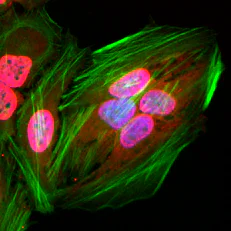
Immunocytochemical staining of HeLa cells labelling Acetyl Lysine with ab190479 at 1 : 100. Actin filaments are labelled using fluorescein phalloidin (green), and nuclei are stained with DAPI (blue).
Immunocytochemistry/ Immunofluorescence - Anti-acetyl Lysine antibody [RM101] (AB190479)
  • ICC/IF

Supplier Data

Immunocytochemistry/ Immunofluorescence - Anti-acetyl Lysine antibody [RM101] (AB190479)

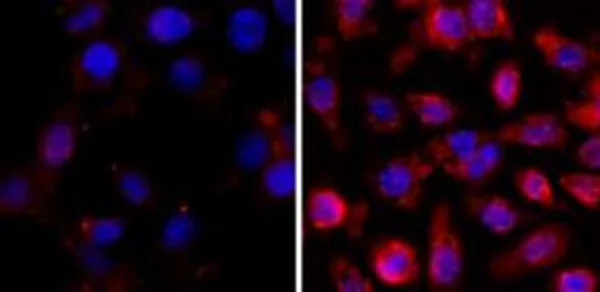
Immunofluorescent analysis of A431cells nontreated (left) or treated with Trichostatin A (right), using ab190479 at 1/500 followed by a PE conjugated secondary antibody (red) and DAPI (blue).
Immunoprecipitation - Anti-acetyl Lysine antibody [RM101] (AB190479)
  • IP

Supplier Data

Immunoprecipitation - Anti-acetyl Lysine antibody [RM101] (AB190479)

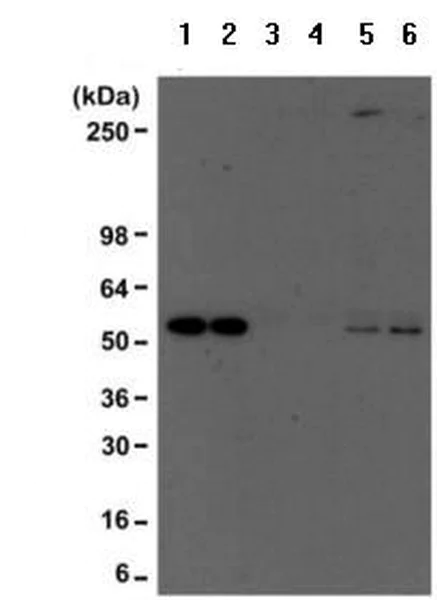
Lane 1 : A431 whole cell lysate

Lane 2 : A431 whole cell lysate (pretreated with Trichostatin A)

Lane 3 : A431 whole cell lysate immunoprecipitated with Rabbit IgG

Lane 4 : A431 whole cell lysate (pretreated with Trichostatin A) immunoprecipitated with Rabbit IgG

Lane 5 : A431 whole cell lysate immunoprecipitated with ab190479 at 1/500
Lane 6 : A431 whole cell lysate (pretreated with Trichostatin A) immunoprecipitated with ab190479 at 1/500

Western blot performed using anti-PTEN mouse monoclonal antibody.

All lanes:

Immunoprecipitation - Anti-acetyl Lysine antibody [RM101] (ab190479)

false
Western blot - Anti-acetyl Lysine antibody [RM101] (AB190479)
  • WB

Unknown

Western blot - Anti-acetyl Lysine antibody [RM101] (AB190479)

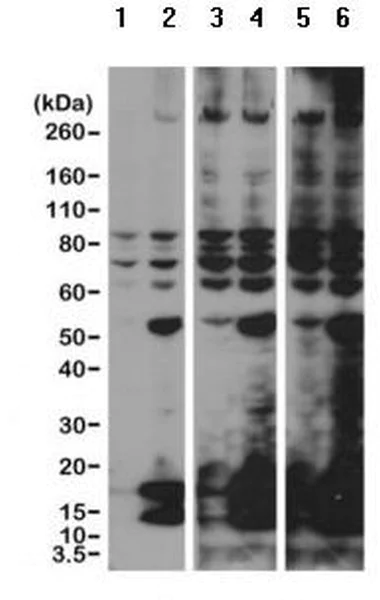
Exposure time increased from blot on left (lanes 1, 2) to blot on right (lanes 5,6).

All lanes:

Western blot - Anti-acetyl Lysine antibody [RM101] (ab190479) at 1/2000 dilution

Lanes 1, 3 and 5:

Lysate of nontreated HeLa cells

Lanes 2, 4 and 6:

Lysate of HeLa cells treated with Trichostatin A

true

Key facts

宿主種

Rabbit

クローン性

Monoclonal

クローン番号

RM101

アイソタイプ

IgG

キャリアフリー

No

アプリケーション

ChIP, ICC/IF, WB, Flow Cyt, IP, ELISA, IHC-P

applications

特異性

<p>ab190479 reacts to lysine-acetylated proteins. No cross reactivity with nonacetylated lysine, or lysine with other modification.</p>

Reactivity data

{ "title": "Reactivity Data", "filters": { "stats": ["", "Species", "Dilution Info", "Notes"], "tabs": { "all-applications": {"fullname" : "All Applications", "shortname": "All Applications"}, "IP" : {"fullname" : "Immunoprecipitation", "shortname":"IP"}, "ChIP" : {"fullname" : "ChIP", "shortname":"ChIP"}, "FlowCyt" : {"fullname" : "Flow Cytometry", "shortname":"Flow Cyt"}, "ELISA" : {"fullname" : "ELISA", "shortname":"ELISA"}, "WB" : {"fullname" : "Western blot", "shortname":"WB"}, "IHCP" : {"fullname" : "Immunohistochemistry (Formalin/PFA-fixed paraffin-embedded sections)", "shortname":"IHC-P"}, "ICCIF" : {"fullname" : "Immunocytochemistry/ Immunofluorescence", "shortname":"ICC/IF"} }, "product-promise": { "all": "all", "testedAndGuaranteed": "tested", "guaranteed": "expected", "predicted": "predicted", "notRecommended": "not-recommended" } }, "values": { "Modified Amino Acid": { "IP-species-checked": "testedAndGuaranteed", "IP-species-dilution-info": "1/100 - 1/500", "IP-species-notes": "<p></p>", "ChIP-species-checked": "guaranteed", "ChIP-species-dilution-info": "1/100 - 1/500", "ChIP-species-notes": "<p></p>", "FlowCyt-species-checked": "guaranteed", "FlowCyt-species-dilution-info": "", "FlowCyt-species-notes": "<p><a href='/products/primary-antibodies/rabbit-igg-monoclonal-epr25a-isotype-control-ab172730'>ab172730</a> - Rabbit monoclonal IgG, is suitable for use as an isotype control with this antibody.</p>", "ELISA-species-checked": "guaranteed", "ELISA-species-dilution-info": "", "ELISA-species-notes": "<p></p>", "WB-species-checked": "testedAndGuaranteed", "WB-species-dilution-info": "1/500 - 1/2000", "WB-species-notes": "<p></p>", "IHCP-species-checked": "guaranteed", "IHCP-species-dilution-info": "1/100 - 1/500", "IHCP-species-notes": "<p></p>", "ICCIF-species-checked": "testedAndGuaranteed", "ICCIF-species-dilution-info": "1/100 - 1/500", "ICCIF-species-notes": "<p></p>" } } }

製品の詳細

Anti-acetyl Lysine antibody [RM101] (ab190479) is a rabbit recombinant monoclonal antibody and is validated for use in ChIP, ELISA, Flow Cyt, ICC/IF, IHC-P, IP, WB in human, mouse, rat samples.

Anti-acetyl Lysine antibody [RM101] (ab190479) has been cited over 26 times in peer reviewed journals and is trusted by the scientific community.

Abcam's high quality manufacturing and validation processes ensure Anti-acetyl Lysine antibody [RM101] (ab190479) has high sensitivity and specificity alongside high lot-to-lot consistency and reproducibility.

Anti-acetyl Lysine antibody [RM101] (ab190479) specifically detects pan acetyl Lysine and is sold in 100 µL selling sizes.

出荷温度及び保存条件

製品の状態
Liquid
精製方法
Affinity purification Protein A
バッファー組成
Preservative: 0.09% Sodium azide Constituents: PBS, 50% Glycerol (glycerin, glycerine), 1% BSA
出荷温度
Blue Ice
短期保存期間
1-2 weeks
短期保存温度
+4°C
長期保存温度
-20°C
分注に関する情報
Upon delivery aliquot
保管に関する情報
Avoid freeze / thaw cycle

補足情報

This supplementary information is collated from multiple sources and compiled automatically.

Acetyl lysine often referred to as acetylated lysine is a modification of the amino acid lysine where an acetyl group is transferred to the lysine residue. This modification impacts the mass of the lysine residue slightly altering its properties. Acetyl lysine occurs in histone proteins and this modification is an important regulator of chromatin structure and function. The acetylation of lysine residues happens frequently in the nucleus of eukaryotic cells where histone acetylases (HATs) facilitate this process. Known alternatively as lysine acetylation it represents an important post-translational modification impacting gene expression regulation.
Biological function summary

Acetylation adds an acetyl group to the lysine which changes its positive charge reducing chromatin compaction and enhancing gene transcription. The acetyl lysine modification is not acting alone; it forms part of larger histone modification complexes. By altering chromatin structure acetyl lysine regulates the accessibility of transcription factors to DNA influencing various biological processes like DNA repair replication and cell cycle progression. The interaction between acetyl lysine and chromatin remodeling complexes plays a significant role in epigenetic regulation.

Pathways

Acetyl lysine is central to epigenetic regulatory pathways significantly impacting gene expression and cellular growth pathways. The acetylation process involves histone acetylases (HATs) such as the p300/CBP complex which adds acetyl groups to specific lysines on histones increasing transcriptional activity. Conversely histone deacetylases (HDACs) remove acetyl groups decreasing transcription. The balance of these modifications involves critical pathways such as the TGF-beta signaling pathway and the NF-kB pathway linking acetyl lysine with numerous cellular activities and protein interactions.

Dysregulation of acetyl lysine levels is associated with cancer and neurodegenerative diseases. In cancer the aberrant acetylation of lysine impacts expression of oncogenes and tumor suppressor genes contributing to carcinogenesis. Proteins like p53 which relies on acetylation for activation become functionally impaired. Also in neurodegenerative disorders such as Alzheimer's disease histone acetylation imbalances disrupt neuronal function and gene expression. The involvement of the sirtuin family of proteins which act as NAD+-dependent deacetylases connects lysine acetylation to these diseases highlighting its importance in maintaining normal cellular functions and its role in pathological states.

製品プロトコール

For this product, it's our understanding that no specific protocols are required. You can visit:

文献 (52)

Recent publications for all applications. Explore the full list and refine your search

Food science & nutrition 13:e71009 PubMed40994455

2025

Screening Based on Structural and Biological Verification of Stachyose as a PPARγ-Modulating Ligand for the Treatment of Non-Alcoholic Fatty Liver Disease.

Applications

Unspecified application

Species

Unspecified reactive species

Binbo Fang,Mengyuan Li,Feng Jiang,Weisong Dong,Weizhi Zhang,Lifan Lin,Yongheng Bai,Jianjian Zheng

Naunyn-Schmiedeberg's archives of pharmacology : PubMed40514518

2025

Alpha-asarone relieves nasal inflammation, epithelial barrier damage, and mitochondrial damage in allergic rhinitis by inhibiting mitochondrial ROS via the SIRT1/PGC-1α pathway.

Applications

Unspecified application

Species

Unspecified reactive species

Bin Xu,Weimin Gao,Haitong Li,Xiaojuan Cao,Xiaohong Chen,Nannan Dong,Lingfang Wu,Yunzhen Luo

Journal of orthopaedic surgery and research 20:542 PubMed40442713

2025

A-485 alleviates postmenopausal osteoporosis by activating GLUD1 deacetylation through the SENP1-Sirt3 signal pathway.

Applications

Unspecified application

Species

Unspecified reactive species

Yinghong Ma,Xiaohua Zou,Qianhong Jian,Jiaxin Dong,Xianbing Huang,Yue Zhai,Li Qian

Cell death discovery 11:210 PubMed40301310

2025

Acetylated KIAA1429 by TIP60 facilitates metastasis and immune evasion of hepatocellular carcinoma via N6-methyladenosine-KDM5B-mediated regulation of FoxO1.

Applications

Unspecified application

Species

Unspecified reactive species

Hu Quan,Huijun Zhou,Fei Chen,Jie Chen,Yun He,Hua Xiao,Jia Liu,Lei Shi,Wei Xie,Pan Chen,Jia Luo

CytoJournal 22:30 PubMed40260071

2025

Embryonic lethal abnormal vision like 1-stabilized histone deacetylase 6 promotes hepatic stellate cell activation to accelerate liver fibrosis progression through ribosomal protein S5 downregulation.

Applications

Unspecified application

Species

Unspecified reactive species

Qin Wang,Wenjie Zhang,Jianping Wang,Li Zhang,Yiwen Qiu,Yan Cheng

The Tohoku journal of experimental medicine : PubMed40128950

2025

Tubacin Decelerates TGF-β1-Induced Pro-Fibrotic Effects on Human Dermal Fibroblasts by Regulating HDAC6-Mediated Deacetylation of α-Tubulin and Hsp90.

Applications

Unspecified application

Species

Unspecified reactive species

Yanli Wang,Liu Yang,Tao Wang,Xiuli Li,Xin Zhang

Cell biochemistry and function 43:e70064 PubMed40103178

2025

HDAC4-AS1/CTCF Transcriptionally Represses HDAC4 Under Stress, Whereas HDAC4 Inhibits Stress-Induced Syncytiotrophoblast Cellular Pyroptosis by Deacetylating NLRP3 and GSDMD.

Applications

Unspecified application

Species

Unspecified reactive species

Juan Du,Qinghong Ji,Lihua Dong,Lanlan Wang,Gang Xin

Science advances 11:eads5717 PubMed40073144

2025

Y chromosome-linked UTY modulates sex differences in valvular fibroblast methylation in response to nanoscale extracellular matrix cues.

Applications

Unspecified application

Species

Unspecified reactive species

Rayyan M Gorashi,Talia Baddour,Sarah J Chittle,Nicole E Félix Vélez,Michaela A Wenning,Kristi S Anseth,Luisa Mestroni,Brisa Peña,Peng Guo,Brian A Aguado

Advanced science (Weinheim, Baden-Wurttemberg, Germany) 12:e2411235 PubMed39976201

2025

SIRT3-Mediated Deacetylation of DRP1 Prevents Mitochondrial Dysfunction in Parkinson's Disease.

Applications

Unspecified application

Species

Unspecified reactive species

Ye Xi,Kai Tao,Xiaomin Wen,Dayun Feng,Zifan Mai,Hui Ding,Honghui Mao,Mingming Wang,Qian Yang,Jie Xiang,Jie Zhang,Shengxi Wu

Cell & bioscience 15:24 PubMed39972392

2025

KAT8 catalyzes the acetylation of SEPP1 at lysine 247/249 and modulates the activity of CD8 T cells via LRP8 to promote anti-tumor immunity in pancreatic cancer.

Applications

Unspecified application

Species

Unspecified reactive species

Zhongfei Zhu,Gang Nie,Xiaobo Peng,Xianbao Zhan,Dan Ding
View all publications

Abcam product promise

当社は、高品質な試薬を通じてお客様の研究を力強くサポートすることをお約束いたします。ご使用いただく各段階で、常にお客様をサポートできる体制を整えております。万が一、製品が期待通りに機能しない場合は、「Abcam Product Promise」による当社保証制度に基づき、安心してご利用いただけます。
保証に関する詳細については利用規約をご確認ください。

Please note: All products are 'FOR RESEARCH USE ONLY. NOT FOR USE IN DIAGNOSTIC OR THERAPEUTIC PROCEDURES'.

For licensing inquiries, please contact partnerships@abcam.com