Anti-A1BG 抗体 [EPR9830(B)]
Anti-A1BG antibody [EPR9830(B)]
- RabMAb
- Recombinant
- 詳細を見る
Be the first to review this product! Submit a review
|
(2 Publications)
Rabbit Recombinant Monoclonal A1BG antibody. Suitable for WB, ICC/IF and reacts with Human samples. Cited in 2 publications.
別名を表示する
Alpha-1B-glycoprotein, Alpha-1-B glycoprotein, A1BG

- ICC/IF
Unknown
Immunocytochemistry/ Immunofluorescence - Anti-A1BG antibody [EPR9830(B)] (AB156009)
Immunofluorescent analysis of HeLa cells labeling A1BG with ab156009 at 1/250.

- WB
Unknown
Western blot - Anti-A1BG antibody [EPR9830(B)] (AB156009)
All lanes:
Western blot - Anti-A1BG antibody [EPR9830(B)] (ab156009) at 1/1000 dilution
All lanes:
Human plasma lysate at 10 µg
Secondary
All lanes:
HRP labelled goat anti-rabbit at 1/2000 dilution
Predicted band size: 54 kDa
Observed band size: 54 kDa
false
関連する標識済み抗体及び組成の異なる製品 (1)
-
Anti-A1BG antibody [EPR9830(B)] - BSA and Azide free
代替製品


組合せ製品

Primary Antibodies
AB207303
Anti-alpha 1 Antitrypsin antibody [EPR17087-50]
RabMAb|Recombinant|KO Validated|20ul selling size

- 4
- 2
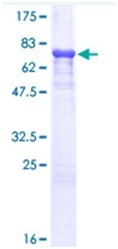

Reactivity data
製品の詳細
Species reactivity
Mouse, Rat: We have preliminary internal testing data to indicate this antibody may not react with these species.
Please contact us for more information.
Patented technology
Our RabMAb® technology is a patented hybridoma-based technology for making rabbit monoclonal antibodies. For details on our patents, please refer to RabMAb® patents.
What are the advantages of a recombinant monoclonal antibody?
This product is a recombinant monoclonal antibody, which offers several advantages including:
- - High batch-to-batch consistency and reproducibility
- - Improved sensitivity and specificity
- - Long-term security of supply
- - Animal-free batch production
For more information, read more on recombinant antibodies.
出荷温度及び保存条件
製品の状態
精製方法
バッファー組成
出荷温度
短期保存温度
長期保存温度
分注に関する情報
保管に関する情報
補足情報
This supplementary information is collated from multiple sources and compiled automatically.
Biological function summary
The function of A1BG involves interaction with cysteine proteinase inhibitors though it is not part of any known large protein complex. It participates in the regulation of protease activity by sequestering inhibitors from the active site of proteases. This regulation plays a role in maintaining balanced proteolytic activity in tissues which is important for processes such as inflammation and tissue remodeling.
Pathways
A1BG is involved in metabolic processes of extracellular proteins. The protein does not interact directly with major signaling pathways but it influences them indirectly by modulating enzymatic activity. A1BG interacts with alpha-2-macroglobulin which is part of the protease inhibitor category and is also involved in the immune response. This relationship impacts the bioavailability and activity of various cytokines and growth factors affecting pathways like inflammation control and extracellular matrix organization.
製品プロトコール
- Visit the General protocols
- Visit the Troubleshooting
ターゲットの情報
文献 (2)
Recent publications for all applications. Explore the full list and refine your search
Frontiers in endocrinology 16:1642916 PubMed41040861
2025
Applications
Unspecified application
Species
Unspecified reactive species
Fetal diagnosis and therapy 47:497-506 PubMed32097912
2020
Applications
Unspecified application
Species
Unspecified reactive species
Abcam product promise
Please note: All products are 'FOR RESEARCH USE ONLY. NOT FOR USE IN DIAGNOSTIC OR THERAPEUTIC PROCEDURES'.
For licensing inquiries, please contact partnerships@abcam.com